When Elwood's Clay Soil Wins, We Clean Up the Damage
Your basement didn’t flood because of bad luck. Elwood’s high water table and clay-heavy soil make this happen to a lot of homes here and when it does, the clock starts immediately. We respond fast, handle your insurance, and take care of everything from water extraction to full restoration.
I needed a professional consultation explanation of procedure for safe removal of Asbestos in my apartment complex. Without having an account yet, I was very impressed with the caring, knowledgeable and generous advice offered by Jessica, and will look forward to doing business in the future. Thank you so much! I feel much more informed about a sometimes scary endeavor. Peace. Nancy Silva Mineola, NY.
Mia Munoz
Used this company to clean up some water flood in my house. They were fast and easy to work with.very professional, Would recommend to anyone!
Nini Valle
Great company, had a flood and they responded quickly and efficiently. Billed my insurance company directly. I highly recommend this company!
joe colapietro, jr
I had pipe freeze in my basement right before a snow storm and they made to within an hour to help start the clean up process. They we by our side throughout the entire process and even helped with the insurance company. They did such a great job with the cleanup, repair, remidiation, I contracted them to perform the repairs and finishes in the basement. They came with enough manpower and material to get the job done. Leo and Jessica were nothing but a pleasure to deal with!!
Cristian Arredondo c
I had some water damage in my home and Green Island was able to take care of my issue quickly and effectively. I am very pleased with the work they did. They responded quickly and were very professional.
Michael M
Outstanding service! From the office to the field crew everyone was friendly, helpful and responsive. I highly recommend Green Island Group.
Most of the homes along Cuba Hill Road, Elwood Road, and the surrounding streets were built in the 1950s and 60s. That’s a good thing in a lot of ways but it also means your basement walls, pipe insulation, and flooring may contain materials that weren’t considered hazardous until decades later. When water gets in and saturates those materials, you’re not just dealing with a wet floor. You may be dealing with disturbed asbestos or lead, and most water damage companies aren’t licensed to touch either one. We are.
Beyond the hidden hazard angle, there’s the mold reality. Mold starts growing within 24 to 48 hours of flooding faster in a poorly ventilated basement that hasn’t seen a renovation since the Carter administration. The longer water sits, the deeper it gets into framing, subfloor, and drywall, and the more expensive the fix becomes. Acting quickly isn’t just about comfort. It’s about keeping a manageable problem from becoming a major reconstruction job.
What you’re left with after we finish isn’t just a dry basement. It’s a documented, properly remediated space with the paperwork your insurance company needs, the clearance testing that confirms the job was done right, and zero guesswork about what was left behind.
Every License That Matters for Elwood's Older Homes
We’ve been doing restoration work across Suffolk County for over 12 years and more than 5,000 completed projects in New York. We hold a Suffolk County General Contractor license, NYS DOL Asbestos and Mold certifications, and USEPA Lead and RRP credentials. For a hamlet like Elwood where the median home was built in 1963, that licensing stack isn’t background noise it’s the difference between a cleanup that’s actually complete and one that leaves a liability behind your drywall.
We’re also a NYS-certified Minority and Woman-Owned Business, led by CEO Jessica Dussan and VP Leo Torres. That means when you call, there are real people accountable for the outcome not a franchise dispatch center routing your job to whoever’s available. The Town of Huntington is our backyard. Elwood is a community we know and a market we’ve served, and we treat every home here the way we’d want our own treated.
From Standing Water to Finished Basement Here's the Honest Walkthrough
The first thing we do when we arrive is assess the full scope not just the visible water, but what’s behind the walls, under the flooring, and inside the framing. In Elwood’s older Cape Cods and hi-ranches, that initial assessment includes checking for potential asbestos-containing materials in pipe insulation, floor tiles, and ceiling tiles before any demolition or extraction begins. That step alone separates a proper cleanup from one that creates a bigger problem.
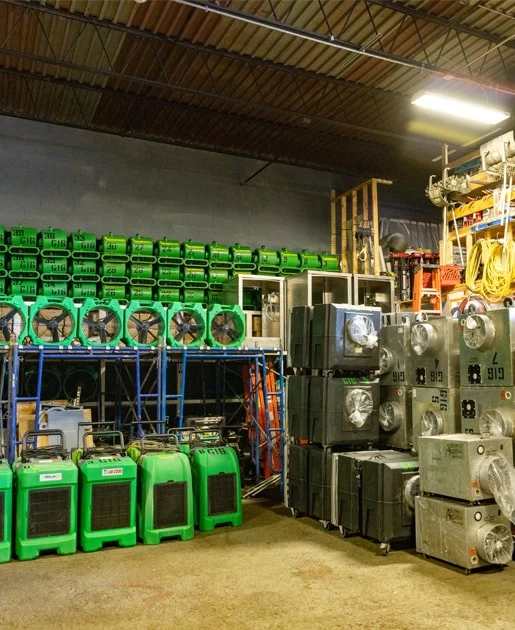
Once the assessment is done, we extract standing water and deploy industrial drying equipment dehumidifiers, air movers, and moisture monitoring calibrated to the specific conditions of your basement. Suffolk County’s humidity levels and clay soil mean the drying process here takes longer than in drier climates, and we account for that rather than pulling equipment too early and leaving moisture in the structure.
From there, we handle mold prevention treatment, any necessary removal of compromised materials, and structural repairs under our General Contractor license. We document everything throughout photos, moisture readings, material reports because your insurance adjuster is going to ask for it, and we want you walking into that conversation fully prepared. We bill your carrier directly, so you’re not stuck in the middle managing paperwork during an already stressful situation.
Full-Scope Restoration Built for Elwood's Housing Stock
What we deliver isn’t a single-trade service. It’s the complete picture water extraction, structural drying, mold remediation, hazardous material handling, and reconstruction, all under one licensed contractor operating in Suffolk County. You don’t coordinate three separate companies or wonder whether the mold guy is working off what the water guy left behind. One team, one scope, one point of contact.
For homes in Elwood specifically, that full-scope approach matters more than it does in newer construction markets. The 1960s Cape Cods and hi-ranches that define this neighborhood weren’t built with modern moisture barriers or drainage systems. When water gets in whether from a failed sump pump during a nor’easter, a burst pipe in an uninsulated wall, or groundwater pushing through the foundation during a heavy spring thaw it tends to go further and stay longer than it would in a newer build. We’ve seen it enough times in the Town of Huntington to know exactly what to look for.
If your home is in The Seasons at Elwood or another newer construction, the scope is different but the standard isn’t. Every job gets the same documentation, the same drying protocol, and the same licensed oversight regardless of whether the home was built in 1963 or 2020.
Does homeowners insurance cover flooded basement cleanup in Elwood, NY?
It depends on what caused the flooding, and this is where a lot of Elwood homeowners get caught off guard. Standard homeowners insurance typically covers sudden, accidental water damage a burst pipe, a washing machine line that failed, an HVAC drain that backed up. What it generally does not cover is flooding from external sources like groundwater or surface water entering through the foundation, which is classified as flood damage and requires separate flood insurance through the National Flood Insurance Program.
The tricky middle ground is sump pump failure. Some policies cover it, some don’t, and many require a specific sump pump rider to be included. If your sump gave out during a nor’easter and your basement flooded as a result, that outcome may or may not be covered depending on your specific policy language. We document the cause and scope of damage thoroughly and communicate directly with your adjuster so you’re not trying to interpret your policy while standing in a wet basement at midnight.
How quickly does mold start growing after a basement floods?
Mold can begin colonizing within 24 to 48 hours of water intrusion and in a basement that doesn’t get a lot of airflow, that timeline can move faster. The issue isn’t just visible mold on walls. It’s what’s happening inside the drywall, behind baseboards, and underneath flooring where moisture gets trapped and stays warm. By the time you see a spot, the growth is already well established in the structure around it.
This is especially relevant in Elwood’s older housing stock. Basements in 1960s Cape Cods and hi-ranches often have original drywall and wood framing that absorbs moisture quickly and releases it slowly. If the drying process isn’t started within the first day, you’re almost certainly looking at mold remediation on top of water damage cleanup which adds significant cost and time to the job. The fastest call you make after discovering a flooded basement is the most important financial decision in the whole process.
My Elwood home was built in the 1960s should I be worried about asbestos when cleaning up a flooded basement?
Yes, and it’s worth taking seriously. Homes built before 1980 which covers the vast majority of Elwood’s housing stock, given the hamlet’s 1963 median construction year commonly contain asbestos in pipe insulation, vinyl floor tiles, ceiling tiles, and joint compound. When a basement floods and water saturates these materials, it can disturb fibers that were otherwise stable and contained. That’s when exposure risk becomes real.
The problem is that most water damage companies are not licensed to handle asbestos-containing materials. They’ll extract the water and dry the space, but if they’re cutting into walls or removing flooring without proper testing and containment protocols, they may be creating a hazard that didn’t exist before they arrived. We hold NYS DOL Asbestos certification, which means we assess for these materials before any demolition begins, follow proper containment and disposal procedures under New York State law, and document everything. If asbestos is present, we handle it legally, safely, and as part of the same project, not as a separate referral.
How long does flooded basement cleanup and drying typically take?
For a straightforward water intrusion with no mold or hazardous materials involved, the drying phase typically takes three to five days with professional equipment running continuously. That’s the minimum for structural drying to reach acceptable moisture levels not just surface dryness, but actual readings inside the walls and subfloor that confirm the material is safe to close up.
In practice, most Elwood basements take a bit longer than that estimate. Suffolk County’s climate particularly in spring and fall when humidity is high and temperatures fluctuate slows the evaporation process. Clay soil around the foundation can also continue pushing moisture toward the slab even after the initial water is extracted, which means monitoring and adjusting the drying setup over several days rather than setting equipment and walking away. If mold remediation, asbestos handling, or reconstruction is also part of the scope, the full timeline extends accordingly but we give you a clear picture of what to expect from the first assessment forward.
What causes most basement flooding in Elwood, and can it be prevented?
The most common cause we see in Elwood is sump pump failure during a storm specifically during the nor’easters and heavy rain events that hit Long Island in fall and spring. Elwood’s clay soil doesn’t drain efficiently, so when sustained rainfall saturates the ground, water has nowhere to go except toward your foundation. A functioning sump pump manages that pressure. When the pump fails or when the power goes out and there’s no battery backup the water wins.
Beyond sump failure, hydrostatic pressure from the high water table is a consistent factor in this area. Homes along lower-lying streets or near the hilly terrain on the west side of Elwood near Berkeley Jackson County Park can see more groundwater intrusion than homes on higher ground. Prevention comes down to maintaining your sump system, ensuring it has a battery backup rated for the volume your soil demands, and keeping your foundation drainage clear. We can assess your basement’s specific vulnerability as part of a post-cleanup evaluation and give you a straight answer on what’s worth addressing before the next storm season.
How does Green Island Group handle the insurance claim process for basement flooding?
We handle the documentation side of the claim from the moment we arrive photos, moisture readings, material assessments, cause-of-loss documentation everything an adjuster is going to ask for. We’ve worked with insurance carriers on enough Suffolk County claims to know what gets approved quickly and what creates delays, and we structure our documentation accordingly.
From there, we communicate directly with your adjuster and bill your carrier directly. You don’t receive an invoice and then wait to be reimbursed. You’re not the go-between for conversations between us and the insurance company. For Elwood homeowners who are managing a stressful situation and don’t want to spend the next three weeks on the phone with their carrier, that direct billing process is genuinely one of the most useful things we offer. It’s also something multiple customers have called out specifically in their reviews not because we asked them to, but because it made a real difference in how the whole experience felt.