When the Bay Pushes Back, Your Basement Pays First
Islip holds New York State’s all-time rainfall record for a reason the Great South Bay doesn’t forgive. When your basement floods, we’re on-site within the hour, day or night.
I needed a professional consultation explanation of procedure for safe removal of Asbestos in my apartment complex. Without having an account yet, I was very impressed with the caring, knowledgeable and generous advice offered by Jessica, and will look forward to doing business in the future. Thank you so much! I feel much more informed about a sometimes scary endeavor. Peace. Nancy Silva Mineola, NY.
Mia Munoz
Used this company to clean up some water flood in my house. They were fast and easy to work with.very professional, Would recommend to anyone!
Nini Valle
Great company, had a flood and they responded quickly and efficiently. Billed my insurance company directly. I highly recommend this company!
joe colapietro, jr
I had pipe freeze in my basement right before a snow storm and they made to within an hour to help start the clean up process. They we by our side throughout the entire process and even helped with the insurance company. They did such a great job with the cleanup, repair, remidiation, I contracted them to perform the repairs and finishes in the basement. They came with enough manpower and material to get the job done. Leo and Jessica were nothing but a pleasure to deal with!!
Cristian Arredondo c
I had some water damage in my home and Green Island was able to take care of my issue quickly and effectively. I am very pleased with the work they did. They responded quickly and were very professional.
Michael M
Outstanding service! From the office to the field crew everyone was friendly, helpful and responsive. I highly recommend Green Island Group.
Water you can’t see is the problem most cleanups miss. A shop vac and a box fan might make the floor look dry, but moisture trapped inside the walls of a 1960s Islip home doesn’t just sit there it feeds mold, and mold starts growing within 24 to 48 hours of a flood. By the time you smell it, the remediation cost has already jumped significantly.
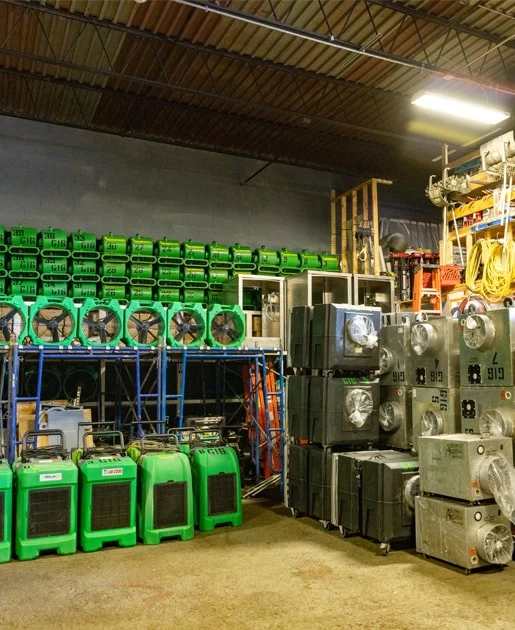
What changes when the job is done right is that you actually know it’s dry. We use industrial dehumidifiers, thermal imaging, and moisture meters to tell the real story not a visual check and a handshake. For Islip homes built in the 1950s, 60s, and 70s, that process also means checking whether the water disturbed asbestos pipe insulation or lead-based materials, because those materials are common in this housing stock and disturbing them without the right licenses creates a separate problem on top of the flood.
The outcome you’re looking for isn’t just water removed. It’s a basement that’s fully dried, documented, treated, and ready whether that means moving back in, filing an insurance claim, or starting repairs.
Licensed for Everything a South Shore Basement Can Throw At You
We’ve been handling environmental restoration and remediation across Long Island and New York City for over 12 years, with more than 5,000 completed projects across the state. Our CEO Jessica Dussan and VP Leo Torres run the company directly and our names show up in real customer reviews, not just on a website bio page, because we’re actually involved in the work.
The licensing stack matters here more than most places. We hold a Suffolk County General Contractor license, NYS DOL Mold and Asbestos certifications, USEPA Lead and RRP credentials, and are an approved emergency response contractor for the NYS Office of General Services meaning New York State has independently vetted our company to respond to public emergencies. For a community like Islip, where homes along and south of Montauk Highway were built in an era when asbestos was standard and the Great South Bay keeps the water table unpredictable, that depth of licensing isn’t a bonus. It’s what the job actually requires.
We also serve neighboring East Islip, West Islip, and Central Islip this isn’t a new market entry. It’s an extension of work we’re already doing in your immediate area.
What Actually Happens From the First Call to the Final Check
When you call, someone answers not a voicemail, not a scheduling portal. We operate 24 hours a day, 365 days a year, and the goal is to have a crew at your door within the hour. In Islip, where a summer thunderstorm can drop several inches in under an hour and the water table along the South Shore is already sitting close to the surface, getting there fast isn’t just good service it’s the difference between a manageable cleanup and a mold remediation job on top of it.
Once on-site, the first step is assessing the water category. Clean water from a burst pipe is handled differently than groundwater that backed up through your floor drain or sewage that came up through the system and Islip homes with aging infrastructure see all three. Extraction comes next, followed by structural drying using industrial-grade equipment, not residential fans. Moisture readings are taken at multiple points and tracked over time, not estimated by feel.
If the water reached materials that may contain asbestos or lead which is a real possibility in pre-1980 homes throughout Islip that’s handled under the same roof, under the right licenses, without subcontracting to a second company and waiting for their schedule to open up. Once everything is verified dry and treated, we prepare the documentation for your insurance claim, and if structural repairs are needed, our General Contractor license covers that too. One company, start to finish.
The Full Scope, Not Just the Part That's Easy to Bill
Flooded basement cleanup in Islip isn’t a single service it’s a sequence, and every step matters. It starts with emergency water extraction and moves through structural drying, antimicrobial treatment, moisture verification, material removal where needed, and full documentation for your insurance carrier. We bill your insurance directly and handle adjuster communication, which multiple independent customer reviews confirm it’s not a claim, it’s a documented pattern.
For Islip homeowners specifically, our service accounts for what south shore homes actually look like. The median construction year in this hamlet is 1966, and roughly one in five homes here was built before 1950. That means the scope of a basement cleanup frequently involves evaluating pipe insulation, floor tile adhesive, ceiling materials, and wall systems for asbestos-containing materials before any demolition begins. Under NYS DOL and USEPA regulations, disturbing those materials without the proper credentials isn’t just a liability it’s illegal. We hold every license required to handle it legally and completely.
The Town of Islip’s own stormwater management ordinances also prohibit discharging contaminated water into the MS4 storm system something unlicensed contractors routinely ignore and homeowners get cited for. Compliance with those rules is built into how we operate, not treated as optional. If your basement is in or near a FEMA Special Flood Hazard Area along the Great South Bay shoreline, we can also help you understand what permit requirements may apply to any structural repairs before work begins.
Does homeowners insurance cover flooded basement cleanup in Islip, NY?
It depends on the source of the water, and the distinction matters more than most people realize. Standard homeowners insurance typically covers sudden, accidental water damage a pipe that bursts, a washing machine that overflows, a water heater that fails. What it generally does not cover is flooding from an external source, meaning water that enters from outside the home through the ground, through a storm drain backup, or from surface flooding during a rain event.
For Islip homeowners, that line gets complicated fast. The Great South Bay’s tidal influence means your water table can rise even without a major storm, and when it does, the water entering your basement may be classified as groundwater intrusion rather than a covered peril. Separate flood insurance through the National Flood Insurance Program (NFIP) covers that category the Town of Islip participates in the NFIP, and many homeowners in designated flood zones carry it. If you’re not sure what you have, we handle insurance documentation and communicate directly with your adjuster, so you’re not navigating that conversation alone while also managing a wet basement.
How fast does mold grow after a basement flood on Long Island?
Mold can begin growing within 24 to 48 hours of a flooding event and on Long Island’s South Shore, where summer humidity is high and older homes often have limited vapor barriers, that window closes quickly. It’s not just visible mold on surfaces that’s the concern. Mold growing inside wall cavities, behind drywall, or under subfloor material can go undetected for weeks while it spreads and worsens air quality throughout the home.
The August 2014 flooding in Islip 13.57 inches in a single 24-hour period, the highest ever recorded in New York State left a lot of basements that were cleaned up visually but never fully dried or tested. Some of those homes are still dealing with residual moisture issues a decade later. The only way to confirm a basement is truly dry is with moisture meters and thermal imaging, not a visual check. If drying is verified incomplete and mold is found, remediation costs typically run $2,000 to $8,000 or more on top of the original cleanup which is why response time and proper drying technique aren’t negotiable.
What's the difference between water extraction and full basement flood remediation?
Water extraction is one step in a larger process it’s removing the standing water. Remediation is everything that comes after: structural drying, moisture monitoring, antimicrobial treatment, material removal if needed, documentation, and verification that the space is safe. A lot of companies stop at extraction and call it done. That’s where problems start.
In a home with plaster walls, wood subfloor, or older insulation which describes a significant portion of Islip’s housing stock water doesn’t just evaporate once the visible puddles are gone. It migrates into structural materials and stays there unless it’s actively pulled out with industrial dehumidifiers and air movers running over multiple days. The drying process is monitored with readings taken at specific intervals, not estimated by feel or appearance. Full remediation means you have documentation showing moisture levels returned to acceptable ranges which matters both for your own peace of mind and for any insurance claim or future home sale.
My Islip basement flooded and I found old pipe insulation is that asbestos?
It very well could be. Homes built before the mid-1970s frequently used asbestos in pipe insulation, floor tile and tile adhesive, ceiling tiles, and joint compound and Islip’s median home construction year is 1966, with a significant portion of the housing stock predating 1950. If your basement flood disturbed that insulation or soaked materials you’re not sure about, the responsible move is to treat it as potentially hazardous until it’s tested.
You cannot identify asbestos-containing materials by sight. Testing requires a licensed professional to collect a sample and send it to an accredited lab. If asbestos is confirmed, the abatement must be performed by a contractor holding a NYS DOL Asbestos license and the work must follow specific containment, removal, and disposal protocols regulated by the state. We hold that license, along with USEPA Lead and RRP certifications for lead-based paint, which is equally common in pre-1978 Islip homes. If you hire a water damage company that isn’t licensed for this work, they either won’t identify the hazard or they’ll subcontract it creating delays, additional costs, and a gap in accountability that you’ll be left managing.
Can I clean up a flooded basement myself instead of hiring a professional?
For minor water intrusion a small amount of clean water from a known source, caught quickly a capable homeowner can manage the initial response. But most basement flooding situations in Islip don’t fit that description. Groundwater intrusion, sump pump failures, sewage backups, and storm-driven flooding all involve water that carries contaminants, and drying those situations properly requires equipment that isn’t available at a hardware store.
The deeper issue is documentation. If you’re filing an insurance claim and most Islip homeowners with significant water damage should be your carrier will want documentation of the source, the extent of damage, and the drying process. A professional remediation company provides moisture readings, photos, and a written scope that supports your claim. A DIY cleanup, even a thorough one, typically doesn’t. There’s also the hazmat question: if your home was built before 1980 and the water disturbed pipe insulation or floor tile, attempting to remove those materials yourself without proper testing and licensed abatement creates a legal and health liability that far exceeds the cost of hiring the right contractor from the start.
How much does flooded basement cleanup typically cost in Islip, NY?
The honest answer is that it varies based on the size of the space, the source and category of the water, how long it sat before extraction began, and whether hazardous materials are involved. For a straightforward water extraction and drying job in a smaller basement with clean water caught quickly, costs can start in the $1,500 to $3,000 range. For larger spaces, contaminated water, extended drying timelines, or situations involving mold remediation or asbestos abatement, the total can climb significantly often $5,000 to $15,000 or more depending on scope.
In Islip specifically, the age of the housing stock means the hazmat question comes up more often than in newer communities, and that affects cost. What most homeowners don’t realize is that a properly documented professional cleanup often ends up costing them far less out of pocket than they expect, because the work is covered fully or partially by homeowners insurance or NFIP flood insurance. We bill insurance directly and handle the adjuster communication, which removes the part of this process that most people find the most stressful figuring out what’s covered while standing in a wet basement trying to make decisions under pressure.