When the Water Table Works Against You, Response Time Is Everything
North Bellport’s high water table and aging drainage along Montauk Highway mean basement flooding hits harder and spreads faster here. We respond 24/7 and handle your insurance claim directly.
I needed a professional consultation explanation of procedure for safe removal of Asbestos in my apartment complex. Without having an account yet, I was very impressed with the caring, knowledgeable and generous advice offered by Jessica, and will look forward to doing business in the future. Thank you so much! I feel much more informed about a sometimes scary endeavor. Peace. Nancy Silva Mineola, NY.
Mia Munoz
Used this company to clean up some water flood in my house. They were fast and easy to work with.very professional, Would recommend to anyone!
Nini Valle
Great company, had a flood and they responded quickly and efficiently. Billed my insurance company directly. I highly recommend this company!
joe colapietro, jr
I had pipe freeze in my basement right before a snow storm and they made to within an hour to help start the clean up process. They we by our side throughout the entire process and even helped with the insurance company. They did such a great job with the cleanup, repair, remidiation, I contracted them to perform the repairs and finishes in the basement. They came with enough manpower and material to get the job done. Leo and Jessica were nothing but a pleasure to deal with!!
Cristian Arredondo c
I had some water damage in my home and Green Island was able to take care of my issue quickly and effectively. I am very pleased with the work they did. They responded quickly and were very professional.
Michael M
Outstanding service! From the office to the field crew everyone was friendly, helpful and responsive. I highly recommend Green Island Group.
Once the water is gone, your basement should actually be done not just visually dry while moisture hides inside the framing and insulation. That distinction matters a lot in North Bellport, where homes built in the 1960s and 1970s have wall cavities and subfloor materials that absorb water fast and hold it longer than modern construction. We use moisture meters and thermal imaging to confirm dryness in the places you can’t see, and we document every reading which protects your insurance claim and gives you real proof the job was finished correctly.
The proximity to Bellport Bay also means that when a major storm rolls through, it’s not just your home that floods it’s the whole drainage system. Saturated ground, overwhelmed storm drains, and a water table that’s already close to the surface combine to make basement flooding in this area more aggressive than most homeowners expect the first time they experience it. What looks like a few inches of standing water can mean significant moisture has already wicked into the structure behind your walls.
When the cleanup is done right, you’re not just getting a dry floor you’re getting documented dryness, a clear mold risk assessment, and a basement you can actually use again without wondering what’s growing behind the drywall.
Licensed Basement Flood Remediation, Suffolk County
The Licensing Stack That Actually Matters in Older North Bellport Homes
We’ve completed more than 5,000 restoration projects across New York State, and we hold every license that matters when a flood cleanup gets complicated NYS DOL Mold, NYS DOL Asbestos, USEPA Lead, USEPA RRP, and a Suffolk County General Contractor license that covers work under Town of Brookhaven jurisdiction. That last part matters because North Bellport falls under Brookhaven Town for permits and code enforcement, and not every contractor serving this area is properly licensed to operate here.
A lot of mid-century homes in North Bellport the ones that went up during the Hagerman Land Company development era contain asbestos insulation, asbestos floor tiles, or lead-based paint. When a basement floods and those materials get disturbed, you need a contractor who is legally authorized to handle them. Most water damage companies aren’t. We are, and we handle it all under one contract so you’re not managing multiple vendors during an already stressful situation.
We’re also an approved emergency response contractor for the NYS Office of General Services meaning New York State has independently vetted us. That’s not a marketing badge. It’s a public record.
Emergency Basement Flooding Remediation, North Bellport
No Handoffs, No Gaps Here's What Our Process Actually Looks Like
When you call, we respond around the clock 24 hours a day, every day of the year. The first thing we do on-site is assess the source and category of the water. That distinction matters: a burst pipe is Category 1, storm-driven groundwater is Category 2, and sewage backup is Category 3. Each one requires a different approach, and in North Bellport, where aging municipal sewer infrastructure and a high water table create real sewage backup risk during heavy storms, we see Category 3 events more often than most homeowners expect.
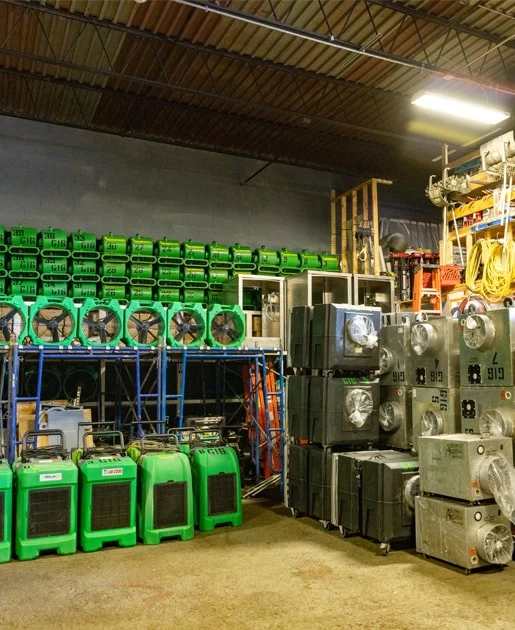
Once the category is confirmed, we extract the standing water and set up industrial-grade drying equipment dehumidifiers, air movers, and where needed, desiccant systems for deeper structural drying. We don’t pull equipment after a day and call it done. We monitor moisture readings throughout the process and only close out the drying phase when the numbers confirm the structure is actually dry. If mold is present or if testing reveals asbestos or lead in disturbed materials which is a real possibility in homes built before 1980 along the Montauk Highway corridor we handle remediation and abatement on the same job, under the same contract.
Throughout the entire process, we document everything for your insurance claim: photos, moisture logs, scope of work, and material testing results. We communicate directly with your adjuster so you’re not stuck in the middle translating between a contractor and an insurance company.
Flooded Basement Cleaning Services, North Bellport NY
One Contract Covers What North Bellport Basements Actually Need
Flooded basement cleanup in North Bellport isn’t a one-size situation. The service we deliver adapts to what’s actually in front of us and in a community with a housing stock that spans from the 1960s to the present, that range is wide. At minimum, every job includes water extraction, structural drying with verified moisture readings, and a mold risk assessment. If mold is confirmed, we remediate it under our NYS DOL Mold license. If testing reveals asbestos or lead in disturbed materials common in pre-1980 homes throughout the hamlet we handle abatement under our NYS DOL Asbestos and USEPA Lead certifications. Reconstruction of damaged drywall, framing, or flooring is handled under our Suffolk County General Contractor license.
Insurance documentation is built into every job. We photograph the damage before, during, and after. We log moisture readings at every stage. We write the scope of work in language your adjuster can work with, and we bill your carrier directly when coverage applies. For North Bellport homeowners who depend on insurance to make a restoration project financially manageable, that direct billing process isn’t a bonus it’s the whole point.
Sewage backup cleanup is also part of what we handle. Given the South Shore’s aging sewer infrastructure and the frequency of storm-driven backups in the 11713 area, it comes up more than most people expect. Category 3 events require OSHA-compliant containment and disposal not just a mop and a fan.
Why does my North Bellport basement keep flooding every time it rains hard?
North Bellport sits on a low-elevation section of the South Shore with a water table that’s already close to the surface under normal conditions. When heavy rain hits, the surrounding soil saturates quickly and once the ground is saturated, there’s nowhere for additional water to go except into your basement through foundation cracks, window wells, or floor drains. The drainage systems along the Montauk Highway corridor were built for a different era and a different volume of rainfall, and they regularly get overwhelmed during modern storm events.
This isn’t a problem unique to one house or one street. It’s a structural condition that affects a wide portion of the hamlet, particularly in homes built during the mid-20th century development period when modern drainage engineering wasn’t part of the design. A professional cleanup addresses the immediate event, but if you’re experiencing this repeatedly, it’s worth having a conversation about long-term waterproofing and sump pump capacity because the water table isn’t going anywhere.
How fast does mold start growing after a basement floods in my home?
Mold can begin active growth within 24 to 48 hours of a flooding event and in North Bellport’s older housing stock, where wall cavities and insulation materials have often absorbed moisture from previous events, the conditions for rapid growth are already partially in place before the current flood even happens. That’s not meant to alarm you, but it does mean the timeline for getting professional drying equipment in place is tighter than most people realize.
The bigger issue is that mold doesn’t announce itself. It grows inside wall cavities, behind insulation, and under subfloor materials where a visual inspection won’t catch it. A cleanup that looks finished on the surface can leave active mold growth hidden in the structure. That’s why thermal imaging and moisture meters matter they find the moisture that’s feeding mold growth in places you can’t see, and they give you documented proof that the drying was done completely, not just visually.
Does homeowners insurance cover flooded basement cleanup in New York?
It depends on the cause of the flooding, and the distinction matters more than most homeowners expect. Standard homeowners insurance in New York typically covers sudden and accidental water damage a burst pipe, a failed water heater, or an appliance leak. It generally does not cover flooding caused by surface water or groundwater rising from outside the home, which is classified as flood damage and requires a separate NFIP or private flood insurance policy.
For North Bellport homeowners, this is a real and relevant distinction. Storm-driven basement flooding caused by overwhelmed drainage or groundwater infiltration may not be covered under a standard policy. Sewage backup coverage is also often excluded unless you’ve added a specific rider. The honest answer is: call your insurer and confirm your coverage before you assume. What we can do is document the damage in a way that gives your adjuster everything they need to make a coverage determination quickly and if coverage applies, we bill them directly so you’re not out of pocket waiting for reimbursement.
Could my North Bellport home have asbestos or lead that gets disturbed during cleanup?
If your home was built before 1980 which applies to a significant portion of North Bellport’s housing stock from the Hagerman Land Company development era there is a real possibility that asbestos insulation, asbestos floor tiles, or lead-based paint are present somewhere in the structure. Under normal conditions, these materials are stable and don’t pose an immediate risk. But when a basement floods and walls, ceilings, or flooring materials are damaged or need to be removed during cleanup, those materials can be disturbed and become a health hazard.
Most water damage companies are not licensed to handle asbestos or lead. If they encounter these materials mid-job, they either stop work entirely or, worse, continue without proper containment. We hold NYS DOL Asbestos certification and USEPA Lead certification, meaning we can identify, test, contain, and remediate these materials as part of the same cleanup process no work stoppage, no second contractor, no gap in the job. If you’re not sure when your home was built, your Suffolk County property records through the Town of Brookhaven assessor’s office can confirm it.
What's the difference between water mitigation and full water damage restoration?
Water mitigation is the emergency phase extracting standing water, setting up drying equipment, and stopping the damage from spreading further. It’s the immediate response. Restoration is everything that comes after: repairing or replacing damaged drywall, flooring, insulation, framing, and any other structural components that were affected. Some companies only do one or the other, which means you end up managing a handoff between a mitigation crew and a separate reconstruction contractor.
In a community like North Bellport, where a basement flood can involve water damage, mold, asbestos abatement, and structural repair all in the same event, that handoff creates real problems scheduling gaps, unclear accountability, and insurance documentation that doesn’t tell a complete story. We handle both phases under one contract and one license set. You don’t have to coordinate between vendors or wonder who’s responsible for what. The job starts with extraction and ends with a finished, documented, fully restored basement.
How do I document basement flood damage properly for an insurance claim in NY?
The most important thing you can do before anyone touches the water is take photos and video of everything the standing water level, the affected walls and flooring, any damaged belongings, and any visible structural damage. Do this before extraction begins, because once the water is gone, the visual evidence of how severe the event was starts to disappear quickly. Your insurer will want to see the condition of the basement at the time of loss, not after cleanup.
Beyond your own photos, professional documentation from the remediation contractor carries significant weight with adjusters. That means moisture readings logged at multiple points throughout the drying process, a written scope of work that identifies every affected material and why it needs to be replaced, and lab results if asbestos or mold testing was performed. Under New York State requirements, mold remediation work must be performed by a NYS DOL licensed contractor and that licensing documentation should be part of your claim file. We provide all of this as standard practice on every job, and we communicate directly with your adjuster so the documentation gets where it needs to go without you having to act as the go-between.