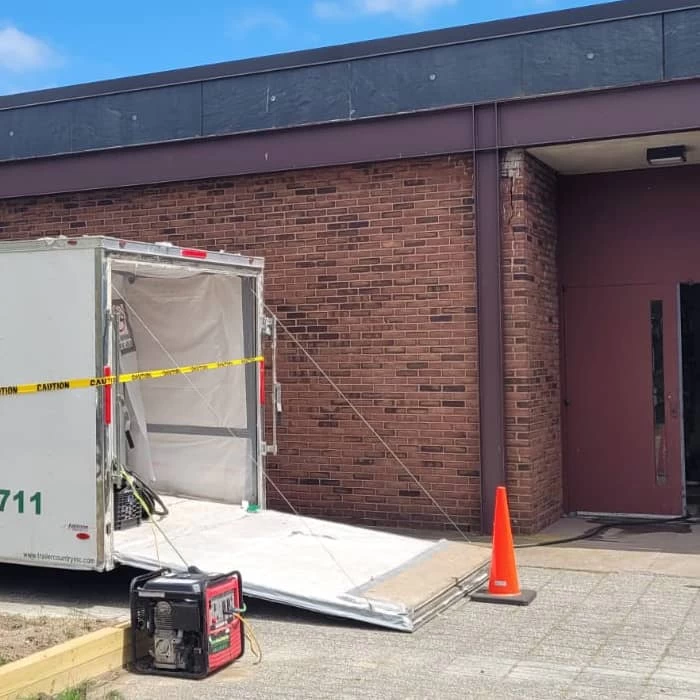
Flooded Basement Cleanup in Port Jefferson Station, NY
When the North Shore Storms Hit Port Jefferson Station, Your Basement Pays the Price
Port Jefferson Station has been named one of the hardest-hit communities on Long Island and if your basement is underwater right now, you already know why. We respond fast, handle your insurance, and see the job through from water extraction to full restoration.
I needed a professional consultation explanation of procedure for safe removal of Asbestos in my apartment complex. Without having an account yet, I was very impressed with the caring, knowledgeable and generous advice offered by Jessica, and will look forward to doing business in the future. Thank you so much! I feel much more informed about a sometimes scary endeavor. Peace. Nancy Silva Mineola, NY.
Mia Munoz
Used this company to clean up some water flood in my house. They were fast and easy to work with.very professional, Would recommend to anyone!
Nini Valle
Great company, had a flood and they responded quickly and efficiently. Billed my insurance company directly. I highly recommend this company!
joe colapietro, jr
I had pipe freeze in my basement right before a snow storm and they made to within an hour to help start the clean up process. They we by our side throughout the entire process and even helped with the insurance company. They did such a great job with the cleanup, repair, remidiation, I contracted them to perform the repairs and finishes in the basement. They came with enough manpower and material to get the job done. Leo and Jessica were nothing but a pleasure to deal with!!
Cristian Arredondo c
I had some water damage in my home and Green Island was able to take care of my issue quickly and effectively. I am very pleased with the work they did. They responded quickly and were very professional.
Michael M
Outstanding service! From the office to the field crew everyone was friendly, helpful and responsive. I highly recommend Green Island Group.
A flooded basement isn’t just an inconvenience it’s a clock running against you. Mold starts within 24 to 48 hours. Drywall soaks it up faster than you’d think. And in a home built in the 1970s, which describes a lot of Port Jefferson Station, there are materials behind those walls that nobody should disturb without the right licenses.
The difference between a clean outcome and a months-long headache usually comes down to how completely the moisture was removed not just what you could see, but what was hiding inside wall cavities and under the subfloor. We use thermal imaging and industrial drying equipment to find the water that a fan and a mop never would. That’s the part that prevents the mold call six weeks later.
Port Jefferson Station’s North Shore location means your home takes hits from nor’easters, tropical storm remnants, and the kind of intense summer rainfall that overwhelmed drainage sumps across the hamlet in August 2023. When a storm drops 10 inches overnight and Route 112 turns into a river, you need a crew that’s responded to exactly this not a company that’s never worked a North Shore flooding event in their life.
Licensed Basement Flooding Remediation, Port Jefferson Station
12 Years In. Every License That Matters.
We’ve been doing environmental restoration work across Long Island and New York City for over 12 years, with more than 5,000 completed projects behind us. We hold a Suffolk County General Contractor license, NYS DOL Mold and Asbestos licenses, USEPA Lead and RRP certifications, and we’re an approved emergency response contractor for the NYS Office of General Services meaning New York State has independently vetted us for exactly this kind of work.
We’re also a certified Minority and Woman-Owned Business through New York State, led by CEO Jessica Dussan and VP Leo Torres two people who are reachable, accountable, and personally involved in how every job goes. That’s not something a franchise can offer you.
Port Jefferson Station is already part of our established service area in Brookhaven Town. We know the housing stock along the Route 112 corridor, we understand what Brookhaven Town’s Building Division requires for post-flood repairs, and we’ve worked in homes just like yours older, well-kept, and worth protecting.
Emergency Basement Water Removal, Port Jefferson Station NY
From the First Call to a Dry, Safe Basement Here's What Actually Happens
When you call, we move. Response within the hour is the standard, not the exception. The first thing we do on-site is assess the full scope not just the standing water, but where it came from, what category it is, and what materials it has contacted. In a 1970s-era Port Jefferson Station home, that last part matters more than most people realize. If there’s any chance asbestos-containing floor tile, pipe insulation, or disturbed wall material is involved, we identify it before anyone starts tearing things apart.
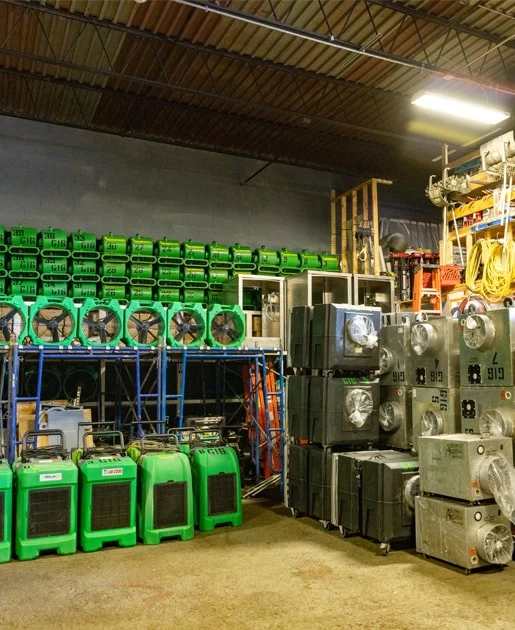
Water extraction comes next, followed by structural drying using industrial dehumidifiers and air movers placed strategically not just pointed at the floor. We use moisture meters and thermal imaging to confirm that the drying is complete inside the wall assemblies, not just at the surface. That step is what separates a job that’s actually done from one that looks done until the mold shows up.
If the damage requires reconstruction new drywall, flooring, framing we handle that too, under the same contract, with the same crew, and with any required Brookhaven Town permits pulled correctly. We also document everything throughout the process for your insurance claim and communicate directly with your adjuster so you’re not stuck playing middleman between us and your carrier.
Flooded Basement Cleaning and Restoration, Brookhaven Town NY
One Contractor, Full Scope No Handoffs, No Gaps
Most water damage companies can extract water and set up fans. What they can’t do legally is handle what’s often hiding in the walls and floors of an older Port Jefferson Station home. We’re licensed for the full picture: water extraction and structural drying, mold remediation under NYS Labor Law Article 32, asbestos abatement, lead-safe work practices under USEPA RRP, sewage backup cleanup classified as Category 3 blackwater, and full structural reconstruction under a Suffolk County General Contractor license.
That matters when your basement floods in a home built in 1977 and you don’t know what’s in the walls. It also matters when the water came from a backed-up sewer line which happens more often than people expect during heavy rain events along the aging infrastructure in this part of Brookhaven Town. Sewage backup isn’t a mop job. It’s a regulated cleanup that requires proper containment, PPE, and licensed disposal. We’re equipped for it.
From the first call through the final inspection, you’re working with one company that holds every license required to complete the job legally and completely. No subcontractors being handed your basement. No gaps in accountability. Just a finished, dry, safe space documented for your insurer and restored to code.
Does homeowners insurance cover a flooded basement in Port Jefferson Station, NY?
It depends on the source of the water and that distinction is everything. Standard homeowners insurance typically covers sudden and accidental water damage, like a burst pipe or an appliance failure. What it generally does not cover is groundwater intrusion or external flooding from a storm event, which requires a separate flood insurance policy through the NFIP or a private carrier.
This is a real problem in Port Jefferson Station. The community sits in northern Suffolk County, an area where flood insurance adoption has historically been low despite documented flooding risk. If your basement flooded during a storm and you don’t have a separate flood policy, your standard homeowners coverage may not apply to the water damage itself though it may still cover resulting mold remediation or structural repairs depending on your specific policy language. The most important thing you can do right now is call your carrier, ask specifically about the source of loss, and get the damage documented professionally before anything is touched. We handle insurance documentation and communicate directly with adjusters, which takes that burden off your plate during an already stressful situation.
How quickly does mold grow after a basement flood on Long Island?
Mold can begin developing within 24 to 48 hours of a flooding event under the right conditions and basements in Port Jefferson Station tend to check most of those boxes. Older construction, limited ventilation, and the kind of persistent humidity that follows a major North Shore storm all create an environment where mold moves fast.
The part most people don’t account for is hidden moisture. Even after the visible water is gone, wall cavities, subfloor assemblies, and insulation can hold moisture for days or weeks. That’s where mold actually starts not on the surface you can see, but inside the materials you can’t. Professional drying equipment and moisture verification are what prevent the mold call that comes six weeks after you thought everything was fine. Under New York State Labor Law Article 32, any mold remediation affecting more than 10 square feet must be performed by a licensed contractor. That threshold gets crossed quickly in a flooded basement, which means this isn’t a job for a handyman or a general cleanup crew it requires a licensed mold remediation contractor, which we are.
What should I do first when my basement floods during a storm?
Safety first, always. Before you go into a flooded basement, make sure the electricity to that area is shut off standing water and live electrical panels are a serious hazard. If the water level is high or you’re unsure about the electrical situation, stay out and call a professional before entering.
Once it’s safe to be in the space, document everything with photos and video before anything is moved or removed. That documentation is critical for your insurance claim, and the more thorough it is, the better your position when you’re talking to your adjuster. Then call a restoration company that can respond the same day ideally within the hour. In Port Jefferson Station, where storms can deliver 10 inches of rain overnight and overwhelm local drainage infrastructure, the window between “wet basement” and “mold problem” is short. The faster extraction and drying equipment is deployed, the better your outcome and the lower your total cost. Do not run a household dehumidifier and assume it’s enough residential equipment isn’t designed for the volume of moisture a flooded basement holds.
My Port Jefferson Station home was built in the 1970s is there an asbestos risk when the basement floods?
Yes, and it’s worth taking seriously. The average home in Port Jefferson Station was built around 1977, which means a meaningful portion of the housing stock in this area was constructed before the federal restrictions on asbestos-containing materials took effect in the late 1970s and early 1980s. Floor tiles, pipe insulation, ceiling materials, and joint compound from that era commonly contained asbestos.
When a basement floods and those materials are disturbed even just by water saturation, let alone by someone tearing out flooring or drywall there is a potential release risk. The problem is that most water damage companies are not licensed to test for or handle asbestos-containing materials. They’ll pull out the floor and hand you a bigger problem than the flood itself. We hold a NYS DOL Asbestos license, which means we can identify the risk before work begins, manage it legally if it’s present, and complete the full scope of your basement restoration without sending you to a second contractor for abatement. If you’re in an older home in Port Jefferson Station and your basement just flooded, don’t let anyone start demolition until you know what’s in those materials.
How long does flooded basement cleanup and restoration typically take?
The honest answer is that it depends on the scope and the scope in a Port Jefferson Station basement can vary significantly based on how long the water sat, what materials were affected, and whether anything hazardous needs to be addressed before structural work begins.
For a straightforward water intrusion event with no contamination and no hazardous materials, the drying phase typically takes three to five days using professional equipment. Moisture readings need to confirm the job is done not just a visual check. If mold is present, remediation adds time. If flooring, drywall, or framing needs to be replaced, reconstruction adds more. A complete restoration from flood event to finished basement can range from one week to several weeks depending on those variables. What we can tell you is that the timeline is almost always shorter when the job starts faster. Every day of delay after a flooding event adds moisture penetration and increases the probability of mold. Calling within the first 24 hours even before you’re sure of the full extent is almost always the right move.
Can I handle flooded basement cleanup myself, or do I need a licensed contractor in New York?
For minor water intrusion a small amount of clean water from a known source, caught quickly some homeowners can manage initial cleanup themselves. But most basement flooding situations in Port Jefferson Station don’t fit that description. Storm-driven flooding, sewer backup, or any event involving significant water volume in an older home introduces variables that require professional equipment and, in many cases, professional licensing.
New York State Labor Law Article 32 requires a licensed mold remediation contractor for any mold work affecting more than 10 square feet a threshold that’s easy to exceed once moisture has been sitting in wall cavities for a day or two. Sewage backup is regulated under OSHA and IICRC standards as Category 3 blackwater, requiring proper containment and licensed disposal. And in a home built before 1980, disturbing floor tiles, pipe insulation, or wall materials without first testing for asbestos is a legal and health risk. The DIY option might look cheaper upfront, but in Port Jefferson Station’s older housing stock, the combination of mold risk, potential hazardous materials, and Brookhaven Town permit requirements for any structural repairs makes professional restoration the more practical and legally sound choice for most homeowners.