When the Pine Barrens Water Table Rises Into Your Home
Ridge basements don’t just flood from storms they flood from below. We respond fast, handle the full cleanup, and deal with your insurance so you don’t have to.
I needed a professional consultation explanation of procedure for safe removal of Asbestos in my apartment complex. Without having an account yet, I was very impressed with the caring, knowledgeable and generous advice offered by Jessica, and will look forward to doing business in the future. Thank you so much! I feel much more informed about a sometimes scary endeavor. Peace. Nancy Silva Mineola, NY.
Mia Munoz
Used this company to clean up some water flood in my house. They were fast and easy to work with.very professional, Would recommend to anyone!
Nini Valle
Great company, had a flood and they responded quickly and efficiently. Billed my insurance company directly. I highly recommend this company!
joe colapietro, jr
I had pipe freeze in my basement right before a snow storm and they made to within an hour to help start the clean up process. They we by our side throughout the entire process and even helped with the insurance company. They did such a great job with the cleanup, repair, remidiation, I contracted them to perform the repairs and finishes in the basement. They came with enough manpower and material to get the job done. Leo and Jessica were nothing but a pleasure to deal with!!
Cristian Arredondo c
I had some water damage in my home and Green Island was able to take care of my issue quickly and effectively. I am very pleased with the work they did. They responded quickly and were very professional.
Michael M
Outstanding service! From the office to the field crew everyone was friendly, helpful and responsive. I highly recommend Green Island Group.
When your basement floods in Ridge, the clock starts immediately. Mold can begin growing within 24 to 48 hours of a water event and in a finished basement, that means walls, flooring, and framing are all at risk the longer the water sits. The goal isn’t just getting the water out. It’s making sure nothing is left behind that turns a one-day problem into a three-month ordeal.
Ridge sits directly above one of Suffolk County’s most active aquifer recharge zones. That means during heavy rain events or sustained wet seasons, the groundwater table rises and it pushes into basements from below, not just through windows or doorways. That’s a different kind of flooding than a burst pipe, and it requires a different approach to drying and remediation. If the source isn’t properly identified, the moisture keeps coming back.
A significant portion of Ridge’s housing stock was built in the 1960s and 1970s, after the Longwood Estate lands were subdivided. Homes from that era commonly contain asbestos in pipe insulation and floor tiles, and lead-based paint on interior surfaces. When a basement floods and materials get disturbed during cleanup, those hazards become real. Most water damage companies aren’t licensed to handle them. We are and that means the job gets done start to finish, without stopping to find a separate contractor when something unexpected turns up.
One Company That Can Handle Whatever Your Ridge Basement Reveals
We’ve been handling water damage restoration and environmental remediation across Long Island and New York State for over 12 years, with more than 5,000 completed projects. That’s not a number for show it means we’ve worked through every variation of what a flooded basement looks like in Suffolk County, from groundwater seepage in Pine Barrens communities like Ridge to flash flood damage following storms that overwhelm the Town of Brookhaven’s drainage infrastructure.
We hold a Suffolk County General Contractor license, NYS DOL Mold and Asbestos licenses, and USEPA Lead and RRP certifications. We’re also an approved emergency response contractor for the NYS Office of General Services the same vetting standard the state uses for public emergency response. That combination matters in Ridge because the hamlet’s older housing stock and high groundwater environment mean a basement flood can involve more than wet drywall.
CEO Jessica Dussan and VP Leo Torres are named on this company and accountable for every job. You’ll know who is responsible for the work being done in your Ridge home and that’s not something a national franchise can offer.
From First Call to Finished Walls Here's What Happens When Your Ridge Basement Floods
When you call, we respond the same day nights and weekends included. Ridge is an active service area for our team, and given the hamlet’s location along the William Floyd Parkway corridor, we can reach most homes quickly. The first thing we do on arrival is assess the source and category of the water. Groundwater intrusion which is common in Ridge given its position above the Central Pine Barrens aquifer is handled differently than a burst pipe or a sewage backup, and getting that assessment right determines everything that follows.
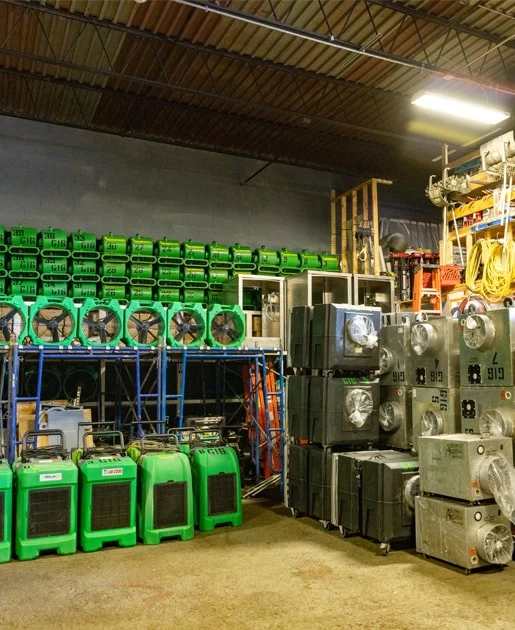
Once the source is identified, we extract standing water and begin structural drying using professional-grade equipment. This isn’t just fans and dehumidifiers it’s a calibrated drying process that targets moisture inside walls, under flooring, and in framing, not just the visible surface. We monitor readings throughout until the structure reaches acceptable dryness levels. If mold is present or at risk of developing, remediation happens as part of the same job.
If your Ridge home was built in the 1960s or 1970s which describes a large portion of the hamlet’s residential stock and materials are disturbed during cleanup, we assess for asbestos and lead on the spot. We’re licensed to handle both. After remediation, we handle structural repairs including drywall and flooring, and we document everything for your insurance carrier. We bill insurance directly and manage the adjuster communication, so you’re not doing paperwork in the middle of a water emergency.
Full Scope Cleanup Built for Ridge's Specific Risk Profile
What’s included in a flooded basement cleanup isn’t the same for every home or every town. In Ridge, the combination of Pine Barrens groundwater dynamics, aging housing stock, and the Town of Brookhaven’s documented history of severe flash flooding events means the scope of work often goes deeper than it would in a newer development with a different water table profile.
Every job starts with water extraction and structural drying. From there, we conduct a full moisture assessment including behind walls and under flooring because surface dryness doesn’t mean the structure is dry. Mold assessment and remediation are included when needed, and we don’t subcontract that out. If the cleanup reveals asbestos-containing materials or lead paint a real possibility in Ridge’s pre-1980s homes we handle it under our NYS DOL Asbestos and USEPA Lead certifications without stopping the job or handing you off to someone else.
Structural repairs, including drywall replacement and flooring restoration, are handled under our Suffolk County General Contractor license. Everything is documented with the level of detail your insurance carrier requires. We work directly with your adjuster and bill insurance directly a step that matters especially for Ridge homeowners in the Leisure Village, Leisure Knoll, and Leisure Glen communities, where fixed incomes make an unexpected five-figure restoration bill a serious concern. One company, one contract, complete job.
Why does my Ridge basement keep flooding even without a major storm?
Ridge sits at the northwestern edge of the Long Island Pine Barrens, directly above one of Suffolk County’s most active groundwater recharge zones. The sandy, highly permeable soils in this area absorb rainfall quickly and push it into the aquifer which means the water table in Ridge can rise significantly during wet seasons, even without a dramatic storm event. When that happens, water doesn’t enter your basement from a window or a pipe. It seeps through the foundation floor and walls from below, driven by hydrostatic pressure.
This is called groundwater intrusion, and it’s a documented pattern in Pine Barrens communities. The fix isn’t just pumping the water out it’s identifying whether the source is groundwater, a drainage issue, or a combination of both, and drying the structure in a way that accounts for ongoing moisture pressure. If a contractor just extracts the standing water and leaves, you’ll likely see the problem again. Proper remediation means addressing the moisture inside the structure, not just the visible surface.
How quickly does mold grow after a basement floods, and how serious is it?
Mold can begin growing within 24 to 48 hours of a flooding event. In a finished basement during Ridge’s warm, humid summers, that timeline can compress further because heat and moisture together accelerate microbial growth. By the 72-hour mark, mold can be actively colonizing behind drywall, under flooring, and inside wall cavities areas you can’t see until the damage is already significant.
The reason this matters so much is cost. A flooded basement that gets professional attention within the first 24 hours typically costs far less to restore than one where mold has had time to spread. Once mold is in the framing and insulation, the scope of remediation expands considerably. Calling quickly isn’t just about peace of mind it’s the single biggest factor in keeping the total cost of the job manageable. That’s why we operate 24 hours a day, seven days a week, including during the storm events that cause most of Ridge’s flooding.
Does homeowners insurance cover basement flooding in Ridge, NY?
It depends on the cause. Standard homeowners insurance typically covers sudden, accidental water damage like a burst pipe or a washing machine overflow. What it usually does not cover is flooding from an external water source, such as stormwater entering through a window well, or groundwater seeping through the foundation. That type of damage generally requires a separate flood insurance policy, often through FEMA’s National Flood Insurance Program.
For Ridge homeowners, this distinction matters because the hamlet’s groundwater-driven flooding pattern doesn’t always fit neatly into either category. Whether your claim is covered often comes down to how the damage is documented and categorized. We handle this process directly we document the damage with the level of detail adjusters require, communicate with your carrier on your behalf, and bill insurance directly where coverage applies. We’ve worked through enough Suffolk County claims to know how to present the documentation in a way that supports your case rather than complicating it.
My Ridge home was built in the 1970s should I be worried about asbestos during cleanup?
It’s a legitimate concern, and you’re right to think about it. Homes built in Ridge during the late 1960s and 1970s the era when much of the hamlet was developed after the Longwood Estate lands were subdivided commonly contain asbestos in pipe insulation, vinyl floor tiles, ceiling tiles, and joint compound. Lead-based paint is also common in homes from this period. These materials are generally stable when left undisturbed, but a basement flood changes that. When flooring gets pulled up, walls get cut open, or pipe insulation gets wet and damaged, those materials can become an active hazard.
Most water damage companies are not licensed to handle asbestos or lead. We hold NYS DOL Asbestos certification and USEPA Lead and RRP authorizations. If we identify a potential hazmat situation during your cleanup, we don’t stop the job and hand you a list of other contractors to call. We assess it, contain it, and remediate it as part of the same scope of work. For a Ridge homeowner with an older home, that capability isn’t a bonus it’s what makes a complete cleanup actually possible.
How much does flooded basement cleanup typically cost in Suffolk County?
The range is wide, and the honest answer is that it depends heavily on how quickly you act and what the water reveals. For a straightforward water extraction and structural drying job with no mold and no hazardous materials, most homeowners in Suffolk County spend somewhere between $2,000 and $5,000. When mold remediation is required which is common if the water sat for more than 48 hours that range climbs to $5,000 to $8,000 or more. If asbestos or lead is discovered and needs to be properly handled, that adds to the scope.
The biggest cost driver isn’t the service itself it’s timing. Every hour the water sits increases the likelihood of mold, structural damage, and a more involved remediation. For Ridge homeowners, particularly those in the Leisure communities on fixed retirement incomes, the insurance billing process matters just as much as the base cost. We bill your insurance carrier directly and manage adjuster communication, which means you’re not fronting a large out-of-pocket expense while waiting for a reimbursement that may or may not come through as expected.
How do I know if a water damage contractor is actually licensed to work in Ridge, NY?
New York State and Suffolk County both have licensing requirements that are specific and verifiable and they matter more than most homeowners realize. For general contracting work, including structural repairs after a flood, a contractor needs an active Suffolk County General Contractor license. For mold remediation, New York State requires a separate NYS DOL Mold Remediation Contractor license. For asbestos and lead work relevant in Ridge’s older housing stock contractors must hold NYS DOL Asbestos and USEPA Lead certifications. These are not optional credentials. Hiring an unlicensed contractor for this work can expose you to liability, especially if the work is later inspected or if a claim is filed.
You can verify contractor licenses through the New York State Department of Labor website and the Suffolk County licensing portal. Before hiring anyone, ask for their specific license numbers and look them up. We hold all of the above Suffolk County GC license, NYS DOL Mold and Asbestos licenses, USEPA Lead and RRP certifications, and NYS OGS emergency contractor approval. We’re also a certified New York State MBE and WBE, independently verified by the state not self-declared. Those credentials are publicly searchable, and we encourage you to check them before you make a decision.