I needed a professional consultation explanation of procedure for safe removal of Asbestos in my apartment complex. Without having an account yet, I was very impressed with the caring, knowledgeable and generous advice offered by Jessica, and will look forward to doing business in the future. Thank you so much! I feel much more informed about a sometimes scary endeavor. Peace. Nancy Silva Mineola, NY.
Mia Munoz
Used this company to clean up some water flood in my house. They were fast and easy to work with.very professional, Would recommend to anyone!
Nini Valle
Great company, had a flood and they responded quickly and efficiently. Billed my insurance company directly. I highly recommend this company!
joe colapietro, jr
I had pipe freeze in my basement right before a snow storm and they made to within an hour to help start the clean up process. They we by our side throughout the entire process and even helped with the insurance company. They did such a great job with the cleanup, repair, remidiation, I contracted them to perform the repairs and finishes in the basement. They came with enough manpower and material to get the job done. Leo and Jessica were nothing but a pleasure to deal with!!
Cristian Arredondo c
I had some water damage in my home and Green Island was able to take care of my issue quickly and effectively. I am very pleased with the work they did. They responded quickly and were very professional.
Michael M
Outstanding service! From the office to the field crew everyone was friendly, helpful and responsive. I highly recommend Green Island Group.
When the water is gone, the real work is just beginning. What you can’t see moisture trapped inside wall cavities, saturated insulation, water wicking up through a slab is exactly what turns a manageable cleanup into a full mold remediation months later. The goal isn’t just a dry floor. It’s confirmation, with real equipment, that your home is actually dry.
A significant portion of South Huntington’s housing stock was built between the 1940s and 1960s. Homes from that era frequently contain asbestos pipe insulation, asbestos floor tiles, and lead-based paint materials that are completely safe until water damage forces you to tear something out. Most water damage companies aren’t licensed to handle that. If they disturb those materials without proper credentials, you’re left with a health hazard and a legal problem on top of the flooding.
We hold both a NYS DOL Asbestos license and USEPA Lead/RRP certification, so we can take the job from water extraction through demolition and reconstruction without handing it off to someone else. One company, one scope, no gaps. For a home worth close to $600,000 in a community like South Huntington, that matters.
Basement Flooding Remediation Experts in Suffolk County
12 Years, 5,000+ Projects, and a License Stack No Competitor Matches
We’ve been doing restoration work across Long Island and New York City for over 12 years. More than 5,000 completed projects. That kind of volume means we’ve worked through every flooding scenario western Suffolk County throws at homeowners from sump pump failures during nor’easters to sewage backups in 1950s ranches with original clay lines running under Route 110 neighborhoods in South Huntington.
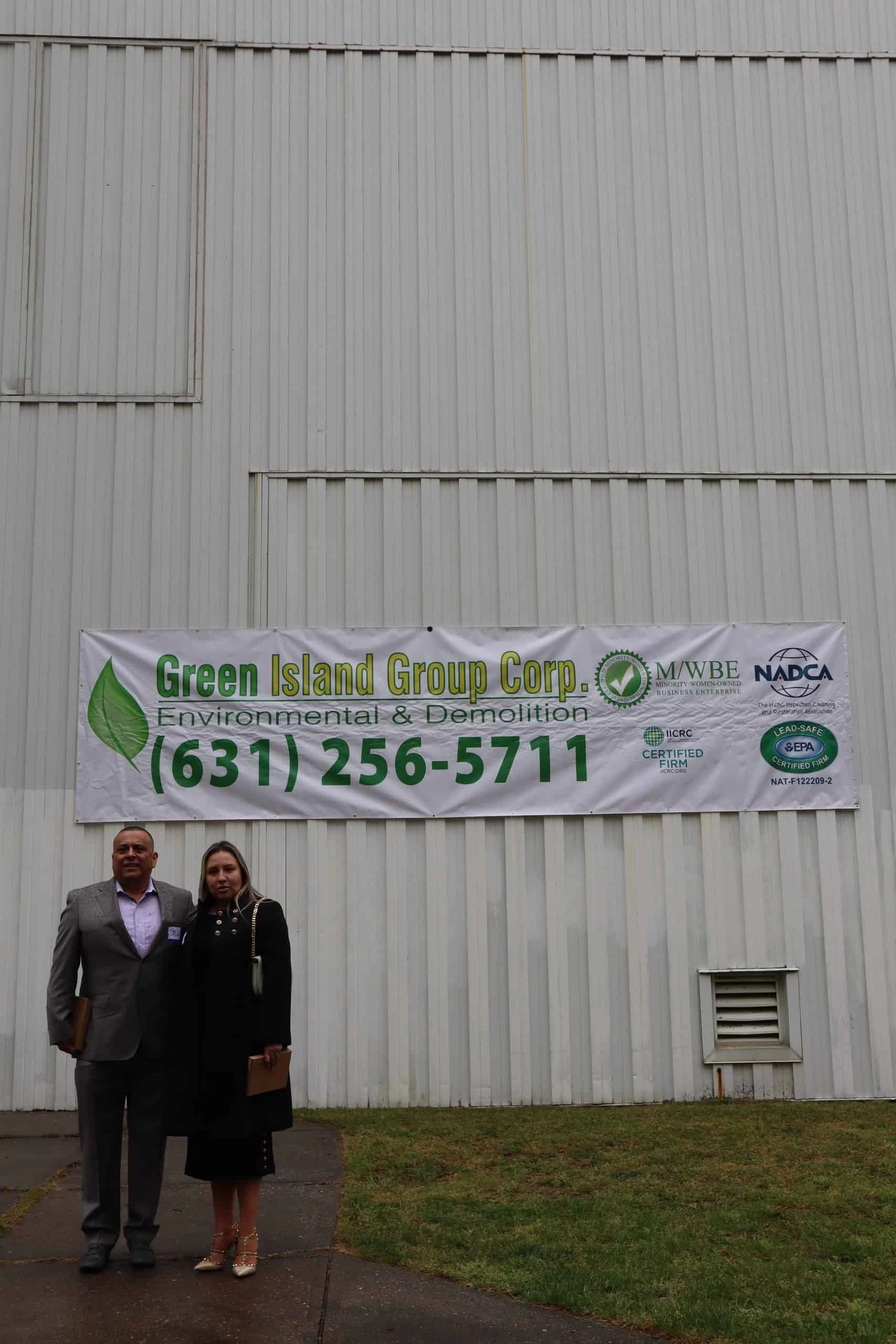
We hold a Suffolk County General Contractor license, NYS DOL Mold and Asbestos certifications, USEPA Lead/RRP credentials, and NYC BIC Trade Waste authorization. We’re also an approved emergency response contractor for the NYS Office of General Services meaning New York State has independently vetted us before you ever pick up the phone. We’re also a NYS-certified Minority and Woman-Owned Business Enterprise.
CEO Jessica Dussan and VP Leo Torres are named by real customers in independent reviews not because it’s a marketing strategy, but because we’re actually reachable. That kind of accountability is rare in this industry, and it shows in how jobs get handled from the first call to the final walkthrough.
Flooded Basement Cleaning Process South Huntington
What Actually Happens From the Moment You Call Us
The first thing we do is get there. We operate 24/7, and our response times documented in real customer reviews, including calls made during active snowstorms run under an hour across western Suffolk County. South Huntington sits right at the Route 110 and Northern State Parkway corridor, which makes it one of the most accessible areas we serve. Fast access matters when every hour of standing water is compounding your damage.
Once on site, we assess the water category before anything else. Category 1 is clean water from a burst pipe. Category 3 is sewage or grossly contaminated floodwater a biological hazard that requires full OSHA-compliant protocols, proper containment, and licensed waste disposal. That distinction shapes everything about how we work. We use thermal imaging cameras and calibrated moisture meters to find water that isn’t visible inside walls, under flooring, behind insulation because in an older South Huntington home, what you can’t see is exactly what causes the mold problem six weeks later.
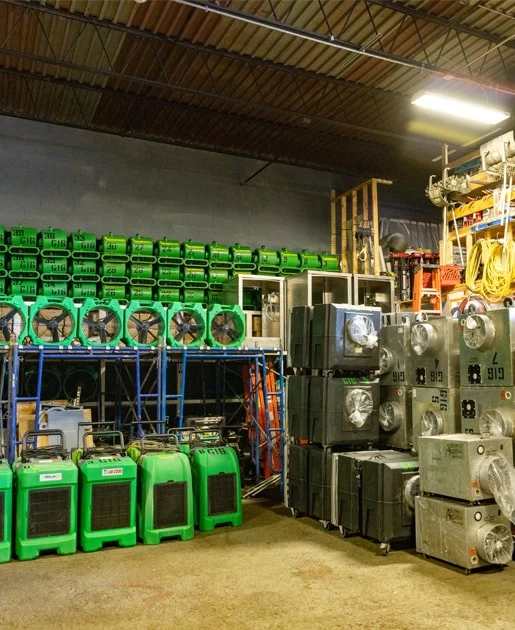
From there, we run industrial extraction, set commercial dehumidifiers and air movers calibrated to the moisture load of your specific space, and monitor drying progress until readings confirm the structure is dry. If demolition is needed, we handle it under our Suffolk County GC license including asbestos-safe removal where the home’s age requires it. We document everything for your insurance carrier and bill them directly, so you’re not managing that process on top of everything else.
Water Damage Restoration Services South Huntington, NY
Full-Scope Restoration Built for South Huntington's Homes
Flooded basement cleanup in South Huntington isn’t one-size-fits-all. The western section of the community denser lots, smaller homes, more of the 1940s and 1950s construction tends to deal with hydrostatic groundwater pressure, aging drainage, and sump pump systems that weren’t designed for today’s storm intensity. The eastern section, closer to the Walt Whitman Road corridor, has larger homes with more finished basement space, which means more materials at risk and higher restoration stakes when water gets in.
Every job we take in this area includes water extraction, structural drying, moisture monitoring, and antimicrobial treatment as a baseline. From there, the scope is determined by what we actually find not by a package tier. If your home was built before 1980, we assess for asbestos and lead before any demolition begins, because that’s what the law requires and what your family’s safety demands. If sewage backup is involved, we treat it as the Category 3 hazard it is, with proper containment and licensed waste disposal under our NYC BIC Trade Waste authorization.
For homes where the damage extends beyond cleanup into reconstruction drywall, framing, flooring, insulation our Suffolk County General Contractor license means we can pull the necessary permits through the Town of Huntington’s Building Division and manage the full rebuild. Unpermitted post-flood reconstruction creates real problems with insurance claims and future property sales. We make sure that doesn’t happen to you.
Does homeowners insurance cover basement flooding in South Huntington, NY?
It depends entirely on the cause, and this is where a lot of South Huntington homeowners get caught off guard. Standard homeowners insurance typically covers sudden, accidental water damage a burst pipe, a washing machine line that fails, a water heater that gives out. What it usually does not cover is groundwater intrusion, which is one of the most common flooding causes in this area. When the water table rises during spring snowmelt or a sustained nor’easter and pushes through your basement slab or foundation walls, that’s generally excluded from a standard policy. Flood insurance through FEMA’s National Flood Insurance Program would cover that but only if you have it.
The most important thing you can do in the first hour after a basement floods is document everything before anything is moved or cleaned. Photos, video, timestamps. We do this as part of our process from the moment we arrive, and we communicate directly with your adjuster throughout the job. If there’s a coverage question about cause of loss, having thorough documentation from a licensed contractor gives your claim the best possible foundation.
How much does flooded basement cleanup typically cost in South Huntington?
The honest range for professional flooded basement cleanup runs from about $2,000 on the low end to $8,000 or more depending on the scope. Most homeowners in western Suffolk County end up somewhere around $4,000 to $6,000 for a mid-sized basement with moderate water intrusion and no major secondary damage. Where that number climbs is when water has been sitting long enough to allow mold growth, when materials need to be demolished and replaced, or when the home’s age means asbestos or lead abatement is required before demolition can proceed.
In South Huntington specifically, the age of the housing stock is a cost factor that doesn’t apply the same way in newer communities. A 1955 ranch on the west side of town with original pipe insulation and floor tiles requires a different and more careful scope than a home built in 1995. We scope every job based on what we actually find, and we give you a clear picture of what’s involved before work begins. There are no surprise line items after the fact.
How quickly does mold start growing after a basement floods?
Mold can begin colonizing within 24 to 48 hours of water intrusion under the right conditions and basements in older Long Island homes tend to create exactly those conditions. Poor ventilation, original insulation that absorbs moisture aggressively, and wall cavities that trap humidity all accelerate the timeline. In South Huntington’s pre-1970 housing stock, where some homes still have original cellulose insulation or fiberboard sheathing, water gets into materials that are almost impossible to dry without removing them.
The 72-hour window is real. Getting professional extraction and drying equipment running within that window dramatically reduces the likelihood of mold colonization and the cost of remediation. Waiting until the next business day or trying to manage it with fans and a shop vac is usually what turns a $3,000 cleanup into a $10,000 mold remediation. If you’re reading this after a flood event, the time to call is now, not tomorrow morning.
What causes basement flooding in South Huntington homes, and can it be prevented?
The most common causes we see in South Huntington fall into a few categories. Sump pump failure during power outages is at the top of the list nor’easters and severe summer thunderstorms frequently knock out power in this area, and a sump pump that loses power during a heavy rain event can allow significant water accumulation in hours. Hydrostatic groundwater pressure is another major factor: the shallow groundwater system underlying western Suffolk County means the water table can rise close enough to the surface during sustained wet periods to push through basement slabs and foundation walls even without any plumbing failure.
Prevention comes down to a backup sump pump with battery power, regular inspection of foundation waterproofing, and making sure your grading directs surface water away from the foundation. For homes in South Huntington’s western section where lots are smaller and drainage infrastructure is older these aren’t optional maintenance items. They’re the difference between a dry basement and a recurring problem. We’re happy to walk through what we observe during a cleanup and flag anything that looks like a contributing factor.
My South Huntington home was built in the 1950s does that affect the cleanup process?
Yes, and it’s one of the most important questions you can ask. Homes built before 1980 and a substantial portion of South Huntington’s housing stock falls into that category frequently contain asbestos in pipe insulation, floor tiles, ceiling tiles, and joint compound, as well as lead-based paint on walls and trim. These materials are safe when they’re intact and undisturbed. The problem is that basement flooding almost always requires some level of demolition: removing wet drywall, pulling up damaged flooring, cutting out insulation that can’t be dried in place.
New York State requires licensed contractors to handle asbestos abatement. Most water damage companies operating in this area do not hold that license. If they disturb asbestos-containing materials without proper credentials, containment, and disposal protocols, you’re looking at a health hazard and a regulatory violation. We hold the NYS DOL Asbestos license and USEPA Lead/RRP certification, so we assess for these materials before any demolition begins and handle them correctly when they’re present. You shouldn’t have to ask your contractor whether they’re licensed for this but in an older South Huntington home, it’s the right question.
Should I call my insurance company or a contractor first after my basement floods?
Call a contractor first specifically one who understands the insurance documentation process. Here’s why: your insurance company will ask for evidence of the damage, and that evidence needs to be captured before cleanup begins. A contractor who shows up and starts extracting water without photographing and documenting the scene first is actually working against your claim. The sequence matters. Documentation comes first, then mitigation begins as quickly as possible to prevent further damage which is also something your policy likely requires you to do.
We handle both. We document from the moment we arrive photos, moisture readings, water category assessment, affected materials and we communicate directly with your adjuster throughout the process. We bill insurance carriers directly, which means you’re not fronting the cost and waiting for reimbursement in most covered-loss situations. For South Huntington homeowners carrying substantial policies on high-value properties, having a contractor who removes the insurance burden entirely is a meaningful part of what we offer not an afterthought.