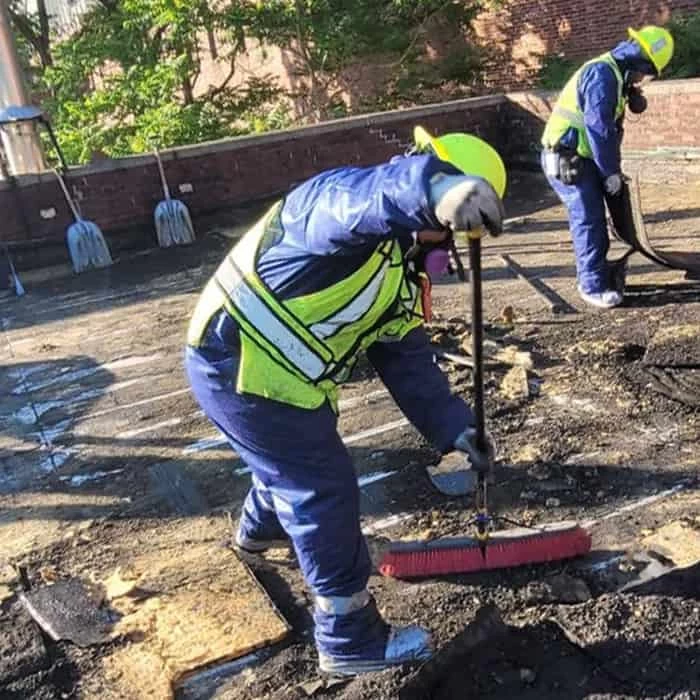
East Meadow's Older Homes Need More Than a Sledgehammer
Most homes in East Meadow were built in the 1950s and ’60s — and what’s behind those walls requires a licensed demolition contractor who can handle it legally, safely, and without stopping mid-project.
I needed a professional consultation explanation of procedure for safe removal of Asbestos in my apartment complex. Without having an account yet, I was very impressed with the caring, knowledgeable and generous advice offered by Jessica, and will look forward to doing business in the future. Thank you so much! I feel much more informed about a sometimes scary endeavor. Peace. Nancy Silva Mineola, NY.
Mia Munoz
Used this company to clean up some water flood in my house. They were fast and easy to work with.very professional, Would recommend to anyone!
Nini Valle
Great company, had a flood and they responded quickly and efficiently. Billed my insurance company directly. I highly recommend this company!
joe colapietro, jr
I had pipe freeze in my basement right before a snow storm and they made to within an hour to help start the clean up process. They we by our side throughout the entire process and even helped with the insurance company. They did such a great job with the cleanup, repair, remidiation, I contracted them to perform the repairs and finishes in the basement. They came with enough manpower and material to get the job done. Leo and Jessica were nothing but a pleasure to deal with!!
Cristian Arredondo c
I had some water damage in my home and Green Island was able to take care of my issue quickly and effectively. I am very pleased with the work they did. They responded quickly and were very professional.
Michael M
Outstanding service! From the office to the field crew everyone was friendly, helpful and responsive. I highly recommend Green Island Group.
What Changes When Your East Meadow Demo Is Done Right
When you hire us for demolition work in East Meadow, you’re not just paying someone to knock things down. You’re paying for a clean, documented, legally compliant result — one that holds up when you go to sell, refinance, or pull your next permit through the Town of Hempstead Building Department. That matters here more than most people realize going in.
East Meadow’s housing stock is almost entirely pre-1980 construction — Cape Cods, ranch homes, and Colonials built during the postwar boom when asbestos was standard in floor tiles, ceiling coatings, pipe insulation, and joint compound. A gut renovation in a home like that isn’t a straightforward demo job. It’s a regulated process. When we handle it correctly, you get a clear scope, no surprise work stoppages, and documentation that protects your investment in a market where median home values are approaching $831,000.
The difference between a project done right and one done fast shows up later — at the title company, at the building inspection, or when a future buyer’s attorney starts asking questions. Getting it right the first time means you’re not paying to fix it twice.
We’re a full-service demolition and environmental contracting firm serving East Meadow, Nassau County, and the broader Long Island area. What sets us apart in a market like East Meadow isn’t just experience — it’s licensing. We hold the NYS Department of Labor Asbestos Handling Contractor License, which is the state-issued credential legally required to disturb or remove asbestos-containing materials in New York. Most general contractors advertising demolition services in Nassau County don’t hold it.
That means when we take on a project in East Meadow — whether it’s a kitchen gut off Hempstead Turnpike or a full interior teardown in a 1958 ranch near Eisenhower Park — the same team handles the abatement and the demolition. No subcontractors. No handoffs. No waiting for a second company to get scheduled before your project can move forward.
Our track record includes residential, commercial, and municipal work across Long Island, with a 4.7-star rating built on reviews that consistently call out responsiveness, transparency, and follow-through — the things that matter most when you’re trusting someone with a major asset.
No Guesswork — Here's How Your East Meadow Project Unfolds
It starts with a site assessment. Before anything is touched, we evaluate the scope of the project and identify whether hazardous materials — asbestos, lead paint, or other regulated substances — are present. In East Meadow, where virtually every home was built before the federal asbestos ban, this step isn’t optional. It’s what determines how the rest of the project is structured and what the Town of Hempstead Building Department will require before issuing a demolition permit.
Once the scope is confirmed, we handle the permitting. That means filing with the Town of Hempstead, coordinating utility disconnections — which the Town requires before a permit is issued — and completing all abatement work before demolition begins. This sequencing is not just our preference; it’s what Hempstead Town code mandates. Having a contractor who already knows this process saves you weeks of back-and-forth and prevents the kind of inspection failures that stall projects indefinitely.
After abatement is complete and documented, demolition proceeds. When the physical work is done, we provide post-project clearance testing and a full documentation package — disposal manifests, clearance certificates, permit records. Everything you need to close the project cleanly and move forward with your renovation, sale, or next phase of construction.
Commercial and Residential Demolition Contractors NY
Built for East Meadow's Housing Stock, Not Just Any Job
We offer demolition services covering the full range of what East Meadow property owners actually need: interior selective demolition, full gut renovations, structural teardowns, basement demolition, and commercial interior demo for properties along the Hempstead Turnpike and Merrick Avenue corridors. Every project includes asbestos and lead abatement capability in-house — not as an add-on, but as a standard part of how we work.
For residential clients in East Meadow, that typically means handling the materials found in the area’s characteristic postwar homes — 9×9 vinyl asbestos floor tiles, popcorn ceiling coatings, pipe and duct insulation, and original joint compound — all of which require licensed removal under NYS DOL regulations and Nassau County’s Environmental Health Review Program rules. We manage the full compliance chain, from initial testing through final disposal manifests, so you’re not left holding the liability if something is found mid-project.
For commercial property owners and managers, we carry the bonding, insurance, and Nassau County contractor licensing that institutional clients require before work begins. Whether you’re clearing a retail space for a new tenant buildout or managing a larger commercial teardown, the documentation and credentials are already in place. You get a licensed demolition contractor who can move quickly, work within your timeline, and deliver a clean, compliant result.
Do I need a permit to demo a room in my East Meadow home?
Yes — and in East Meadow, the permit process has a specific sequence that catches a lot of homeowners off guard. The Town of Hempstead Building Department requires that all asbestos abatement be completed and documented before a demolition permit is issued. That means you can’t just pull a permit and start swinging. If your home was built before 1980 — which describes the vast majority of East Meadow’s housing stock — you need a licensed contractor to assess for asbestos first, complete any required abatement, and then proceed with the demo under a properly issued permit.
The permit itself must be pulled by the licensed contractor of record, not the homeowner. Utility disconnections also need to be verified before the Town will issue the permit — sewer and water services must be cut at the street. We handle all of this as part of the project, so you’re not navigating the Town of Hempstead’s permit portal on your own or trying to coordinate disconnections with the utility companies separately.
What happens if asbestos is found during demolition in my East Meadow house?
In a home built in the 1950s or ’60s in East Meadow, finding asbestos-containing materials isn’t a worst-case scenario — it’s the expected outcome in a significant percentage of jobs. The real question is whether your contractor is licensed to handle it when it shows up. If they’re not, the project stops. They have to bring in a separate abatement firm, which takes time to schedule and adds cost that wasn’t in your original quote.
Because we hold the NYS Department of Labor Asbestos Handling Contractor License, nothing stops when regulated materials are discovered. The same crew that’s doing the demolition is licensed to handle the abatement. We contain the area, remove the materials following NYS DOL and EPA NESHAP protocols, and document the disposal with a chain-of-custody manifest. The project keeps moving, and you end up with paperwork that proves the work was done legally — which matters when you go to sell or refinance a property in East Meadow’s high-value real estate market.
How much does interior demolition cost in East Meadow, NY?
The honest answer is that interior demolition costs in East Meadow vary significantly depending on the size of the space, the scope of the work, and — critically — whether hazardous materials are present. A straightforward interior gut in a space with no regulated materials is a very different project from the same square footage in a 1958 Cape Cod where asbestos floor tiles, popcorn ceiling, and pipe insulation all need to be abated before demo can begin.
What catches most East Meadow homeowners off guard is the abatement phase. Contractors who quote demolition without accounting for the near-certainty of asbestos in pre-1980 homes are either not planning to test, or they’re going to hit you with a change order when something is found. We build the assessment into the process from the start, so the quote you get reflects the actual project — not an optimistic version of it. For a realistic number on your specific job, the best step is a site visit and written estimate, which we provide before any work begins.
How long does a gut renovation demolition take in East Meadow?
Timeline depends heavily on scope and whether abatement is required — which, in East Meadow, it usually is. A standard interior gut demo in a pre-1980 home typically involves an initial assessment, abatement work that can run several days depending on the volume of regulated materials, and then the physical demolition itself. The Town of Hempstead permitting process adds time at the front end, particularly if utility disconnections need to be coordinated before the permit is issued.
For a typical East Meadow kitchen or bathroom gut, you’re generally looking at one to two weeks from permit issuance to a clean, demo-complete space — assuming the abatement phase doesn’t uncover something unexpected. Full structural teardowns take longer and involve additional inspection steps. We’ll give you a realistic timeline during the estimate phase, not a number designed to win the bid. If there’s a hard deadline — a contractor scheduled to start framing, a closing date on a sale — tell us upfront so the project can be sequenced accordingly.
Can a general contractor handle demolition in my East Meadow home, or do I need a specialist?
A general contractor can legally perform demolition work in East Meadow — but only if they hold the appropriate licenses for everything the project involves. The problem is that most general contractors don’t hold the NYS Department of Labor Asbestos Handling Contractor License, which is required by state law to disturb or remove asbestos-containing materials. In East Meadow, where the housing stock is almost entirely pre-1980, that’s a gap that matters on nearly every interior demolition job.
What typically happens is a general contractor starts the demo, hits regulated materials, and either stops the project to bring in a licensed abatement firm or — in the worst case — disturbs the materials without the proper protocol. The first outcome costs you time and money. The second creates a liability that doesn’t go away when the project is done. A licensed demolition specialist who also holds abatement credentials — like us — eliminates that gap entirely. You get one contractor who can legally and competently handle the full scope of what your East Meadow home is likely to require.
Does Green Island Group handle demolition permits for East Meadow projects?
Yes — and for most East Meadow homeowners, this is one of the most practical reasons to work with a contractor who knows the Town of Hempstead Building Department’s process. We pull the demolition permit in our name as the licensed contractor of record. We handle the application through the Town of Hempstead’s permit system, coordinate the utility disconnection verifications the Town requires before issuing the permit, and manage the sequencing so that abatement is completed and documented before demolition proceeds — which is exactly what the Town’s building codes require.
For homeowners who have never navigated a demolition permit before, this matters more than it might seem. The Town of Hempstead has specific documentation requirements, and a permit application that’s missing information or submitted out of sequence gets kicked back, which adds weeks to your project timeline. Our familiarity with this process — including what inspectors look for and when inspections are typically scheduled — keeps the project moving without putting the administrative burden on you.