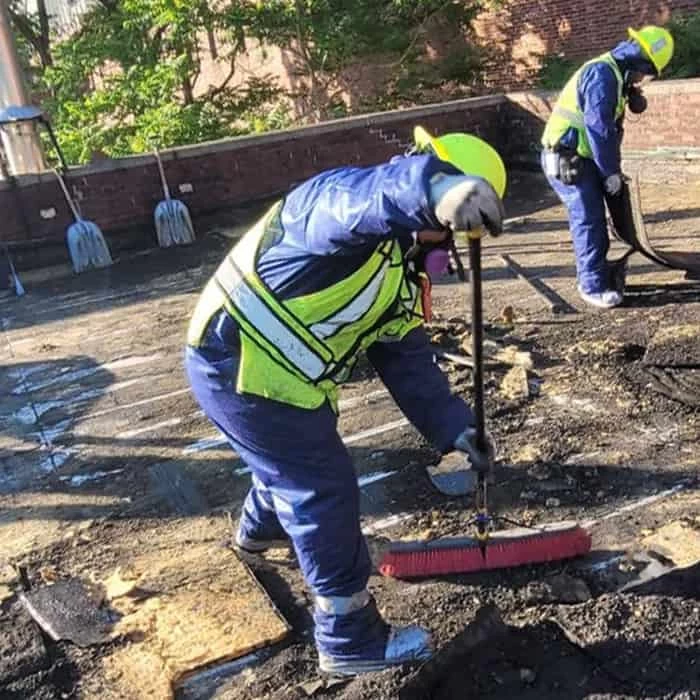
One License Covers Everything Your 1950s Home Is Hiding
Most homes in Great Neck Estates were built before asbestos was banned — and most demolition contractors aren’t licensed to touch what’s inside them. We are.
I needed a professional consultation explanation of procedure for safe removal of Asbestos in my apartment complex. Without having an account yet, I was very impressed with the caring, knowledgeable and generous advice offered by Jessica, and will look forward to doing business in the future. Thank you so much! I feel much more informed about a sometimes scary endeavor. Peace. Nancy Silva Mineola, NY.
Mia Munoz
Used this company to clean up some water flood in my house. They were fast and easy to work with.very professional, Would recommend to anyone!
Nini Valle
Great company, had a flood and they responded quickly and efficiently. Billed my insurance company directly. I highly recommend this company!
joe colapietro, jr
I had pipe freeze in my basement right before a snow storm and they made to within an hour to help start the clean up process. They we by our side throughout the entire process and even helped with the insurance company. They did such a great job with the cleanup, repair, remidiation, I contracted them to perform the repairs and finishes in the basement. They came with enough manpower and material to get the job done. Leo and Jessica were nothing but a pleasure to deal with!!
Cristian Arredondo c
I had some water damage in my home and Green Island was able to take care of my issue quickly and effectively. I am very pleased with the work they did. They responded quickly and were very professional.
Michael M
Outstanding service! From the office to the field crew everyone was friendly, helpful and responsive. I highly recommend Green Island Group.
Residential Demolition Services Great Neck Estates
Your Great Neck Estates Project Stays Legal, Safe, and On Schedule
Here’s the reality of doing demolition work in Great Neck Estates: the village has its own Building Department, its own permit process, and a 45-day expiration clock that starts the moment your permit is issued. If your contractor doesn’t know that — or doesn’t move fast enough — you’re reapplying before the first wall comes down.
Then there’s the housing stock. A significant portion of Great Neck Estates was built on what used to be the Soundview Golf Course, developed heavily in the late 1940s and through the 1960s. Those homes are beautiful. They’re also full of asbestos floor tiles, pipe insulation, textured ceilings, and joint compound that can’t legally be disturbed without a licensed abatement contractor on-site. Most demolition crews don’t hold that license. When they find something, they stop. You wait. The schedule falls apart.
When you work with us, the assessment, the abatement, and the demolition all happen under one contract, with one team. Nothing stops. Nothing gets handed off. You get a clean job site, documented disposal, and the paperwork that protects a $1.65 million property every time someone looks at the title.
The License That Most Contractors in Great Neck Estates Don't Hold
Green Island Group is a full-service environmental contracting and demolition firm based in Bohemia, NY, serving residential, commercial, and municipal clients across Long Island. What sets us apart in a market like Great Neck Estates isn’t a tagline — it’s a license. We hold the NYS Department of Labor Asbestos Handling Contractor License, which is required by state law to disturb, remove, or dispose of asbestos-containing materials. Most general demolition contractors don’t have it.
That matters here more than almost anywhere else in Nassau County. The Great Neck Peninsula has nine incorporated villages, each with its own building code and permit requirements. We know how to navigate that landscape. We’ve worked across these regulatory requirements — village-level permits, county requirements, state licensing, federal EPA notification — and we handle all of it so you don’t have to figure out which layer applies to your property.
Our review record reflects the same consistency: responsive communication, named staff, and projects that finish the way they were described at the start.
What Actually Happens From First Call to Final Clearance
It starts with a site assessment. Before anything gets scheduled, our team evaluates the structure and identifies whether hazardous materials are present — asbestos, lead paint, or anything else that requires handling under state or federal guidelines. In a village where the housing stock runs heavily mid-century, this step almost always turns something up. Better to know before demo day than during it.
From there, we handle the permitting. In Great Neck Estates, that means applying directly through the Village Building Department — not Nassau County, not a general contractor’s blanket permit. The village issues its own demolition permit on its own form, and it expires in 45 days. We move with that clock in mind from the moment the permit is approved.
Once permits are in hand and any abatement is complete, demolition proceeds. Interior selective work, structural teardown, full gut — whatever the scope requires. After the work is done, you receive disposal manifests, permit records, and post-project clearance documentation. That paperwork is what protects you when the next contractor, the next inspector, or the next buyer’s attorney starts asking questions.
Every Scope Handled — Without Stopping to Call Someone Else
We handle the full range of demolition work in Great Neck Estates — interior selective demolition, gut renovations, structural teardowns, and full residential demolition for teardown-and-rebuild projects. If you’re renovating a kitchen or bathroom in a home built before 1978, that’s interior demo with a hazardous materials component. If you’ve purchased an older property on the peninsula and plan to rebuild, that’s a full structural project that requires village permitting, EPA NESHAP notification, and licensed abatement before the first wall comes down.
The difference with us is that none of those steps require you to hire a second company. The abatement license is in-house. The permitting knowledge is in-house. The project management runs from assessment through final clearance without a gap in the middle where the schedule falls apart.
For homeowners in the former Soundview Golf Course area — where many of Great Neck Estates’ mid-century Colonials and Capes sit — this matters most. Those homes almost universally contain materials that require professional handling. And in a village where properties trade at $1.3 million and above, the documentation that comes at the end of a properly executed project isn’t just paperwork. It’s part of what you’re protecting when you invest in doing this right.
Do I need a permit to demolish anything in Great Neck Estates?
Yes — and in Great Neck Estates specifically, that permit comes from the village, not Nassau County. The Village of Great Neck Estates has its own Building Department and its own demolition permit process. Before any structure or portion of a structure is demolished or removed, you need to apply through the Village Building Inspector using a village-specific application form. The fee is set by the Board of Trustees, and the permit expires 45 days after it’s issued.
That 45-day window is something a lot of homeowners in Great Neck Estates don’t know about until it’s already a problem. If the project gets delayed — weather, scheduling, material delivery — and the permit lapses, you’re back at the start of the application process. We factor that clock into every project timeline from day one, so you’re not scrambling for a renewal before the work is even underway.
How do I know if my Great Neck Estates home has asbestos before demo?
The honest answer: if your home was built before 1980, assume it does until a licensed inspector says otherwise. That’s not an overstatement — it’s just the reality of the housing stock in Great Neck Estates. Homes built during the post-WWII development of the Soundview Golf Course area, which now makes up roughly a quarter of the village, were constructed during the peak era of asbestos use. Floor tiles (especially 9×9 vinyl tiles), textured ceiling material, pipe and boiler insulation, and joint compound are the most common places it shows up.
The only way to confirm is through professional sampling and lab testing by a licensed inspector. We can coordinate that assessment as part of the project intake — so by the time demolition is scheduled, you already know what’s there and how it’ll be handled. No surprises mid-project, no work stoppage while you scramble to find a separate abatement contractor.
What's the difference between a demolition contractor and an abatement contractor?
A demolition contractor is licensed to tear down structures. An abatement contractor holds a separate NYS Department of Labor license specifically to handle, remove, and dispose of hazardous materials like asbestos and lead paint. In New York State, these are two different credentials — and a contractor who only holds a general demolition or home improvement license cannot legally disturb asbestos-containing materials.
In Great Neck Estates, this distinction matters on almost every project. The village’s older housing stock means that demolition and abatement aren’t two separate jobs — they’re two parts of the same job. When you hire a contractor who only holds one of those licenses, you’re either hiring someone who will stop work the moment they find something, or someone who will keep going without the proper authorization. We hold both. The whole scope gets handled by one team, under one contract, from start to finish.
How long does a demolition project typically take in Great Neck Estates?
It depends on the scope, but there are a few local factors that affect the timeline in Great Neck Estates specifically. The village permit process adds time upfront — you need to apply through the Village Building Department, wait for approval, and then work within the 45-day permit window. For projects that involve asbestos abatement, federal EPA NESHAP regulations require at least 10 working days advance notice before demolition begins once asbestos above threshold quantities is confirmed. That’s a hard regulatory requirement, not a scheduling preference.
For a standard interior gut renovation in a mid-century home, the active work typically runs one to two weeks once permits and abatement clearance are in place. Full structural demolition for a teardown-and-rebuild can move faster once the regulatory groundwork is done. The more important number is the total project timeline from first call to cleared site — and we’ll give you a realistic picture of that at the assessment stage, not an optimistic number that falls apart when the permit takes longer than expected.
What documentation will I receive after demolition work is completed?
You should receive a complete paper trail — and if a contractor can’t tell you exactly what documentation they provide, that’s worth taking seriously. After a properly executed demolition and abatement project, you should have disposal manifests showing that all hazardous materials were transported to and received by a licensed disposal facility, post-project air clearance testing results confirming the space is safe to reoccupy, and copies of all permits pulled for the work.
In Great Neck Estates, where properties routinely transact at $1.3 million and above, this documentation matters beyond the project itself. When you sell, when you apply for subsequent building permits, or when a buyer’s attorney requests records of prior work, that paper trail is what demonstrates the job was done legally and correctly. We provide all of it as a standard part of every project — not as an add-on, and not something you have to ask for twice.
Can Green Island Group handle emergency demolition after storm damage in Great Neck Estates?
Yes. The Great Neck Peninsula sits between Little Neck Bay and Manhasset Bay, which means nor’easters and coastal storm events are a real and recurring part of life here. When a storm causes structural damage — compromised load-bearing walls, a flooded basement that’s undermined the foundation, fire damage from a weather-related electrical failure — the work can’t wait for a standard scheduling queue.
We respond to emergency demolition calls and, critically, can handle the hazardous materials component that almost always comes with emergency structural work in older homes. A 1950s or 1960s Great Neck Estates home that sustains storm damage and needs walls removed quickly is also a home that likely has asbestos insulation, lead paint, or both behind those walls. A contractor who has to stop and bring in a separate abatement team is not actually an emergency contractor. Our integrated licensing means the emergency response and the compliant hazardous materials handling happen together, without delay.