When Your 1958 Home Needs to Come Down the Right Way
Most homes in North Bellmore were built in the 1950s and 60s — and what’s behind those walls matters. We handle demolition and hazardous material abatement together, so nothing gets missed and nothing stops your project cold.
I needed a professional consultation explanation of procedure for safe removal of Asbestos in my apartment complex. Without having an account yet, I was very impressed with the caring, knowledgeable and generous advice offered by Jessica, and will look forward to doing business in the future. Thank you so much! I feel much more informed about a sometimes scary endeavor. Peace. Nancy Silva Mineola, NY.
Mia Munoz
Used this company to clean up some water flood in my house. They were fast and easy to work with.very professional, Would recommend to anyone!
Nini Valle
Great company, had a flood and they responded quickly and efficiently. Billed my insurance company directly. I highly recommend this company!
joe colapietro, jr
I had pipe freeze in my basement right before a snow storm and they made to within an hour to help start the clean up process. They we by our side throughout the entire process and even helped with the insurance company. They did such a great job with the cleanup, repair, remidiation, I contracted them to perform the repairs and finishes in the basement. They came with enough manpower and material to get the job done. Leo and Jessica were nothing but a pleasure to deal with!!
Cristian Arredondo c
I had some water damage in my home and Green Island was able to take care of my issue quickly and effectively. I am very pleased with the work they did. They responded quickly and were very professional.
Michael M
Outstanding service! From the office to the field crew everyone was friendly, helpful and responsive. I highly recommend Green Island Group.
Here’s what most North Bellmore homeowners don’t find out until it’s too late: their demo contractor opened a wall, found something — floor tiles, pipe wrap, old joint compound — and had to stop the job entirely. Now they’re waiting on a second contractor, negotiating a new contract, and watching their timeline fall apart. That’s not a rare situation in this neighborhood. It’s a common one, because the overwhelming majority of homes here were built during the era when asbestos was standard in construction materials.
When you hire a contractor who handles both demolition and abatement under one license, that scenario doesn’t happen. The same team that tears out your kitchen handles what’s underneath it. No handoffs. No scheduling gaps. No “we’ll have to bring someone else in.”
For a community where homes are selling in under 30 days and renovation timelines actually matter, that kind of continuity isn’t a bonus — it’s the whole point. Whether you’re gutting a split-level on Newbridge Road or prepping a Cape Cod basement for a full renovation, you deserve a contractor who already knows what to expect inside a 60-year-old South Shore home — and is licensed to deal with it.
Residential Demolition Contractor North Bellmore, NY
We Know Nassau County's Rules — and Your Home's History
We’re a full-service demolition and environmental contracting company based in Bohemia, NY, serving homeowners and commercial property owners throughout Nassau County and Long Island. Our work in North Bellmore isn’t new territory for us. We’ve worked through the Town of Hempstead permit process, pulled the Nassau County Health Department rodent-free certifications, and navigated Nassau County’s Environmental Hazard Remediation Program requirements more times than we can count.
We hold a NYS Department of Labor Asbestos Handling Contractor License — which is a legal requirement for any contractor disturbing asbestos-containing materials in New York, not just a credential we list for show. Our reviews consistently mention our communication, our reliability, and our ability to make a stressful process feel manageable. That matters when the project involves your home, your family, and a house that’s been standing since Eisenhower was in office.
How Our Demolition Process Works in North Bellmore
What Actually Happens From First Call to Final Clearance
It starts with an assessment. Before any walls come down, we take a hard look at what you’re working with — the scope of the demolition, the age of the materials, and the realistic likelihood of asbestos or lead paint being present. In North Bellmore, where the median home was built in 1958, that likelihood is high enough that we treat it as a standard part of the conversation, not an afterthought.
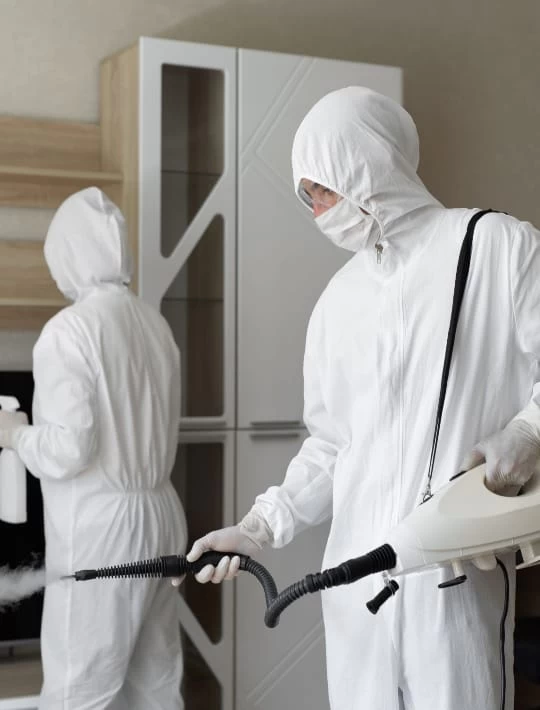
If testing confirms hazardous materials, we handle abatement first — legally, with licensed technicians, and with the proper containment protocols. Once that’s complete, demolition moves forward without interruption. Before we even break ground on a full structural demo, we coordinate the Nassau County Health Department rodent-free certification and file the demolition permit through the Town of Hempstead Building Department. You don’t have to figure that out on your own.
When the job is done, you get disposal manifests — the official chain-of-custody paperwork showing exactly where every removed material went. That documentation protects you at resale and proves the work was done by the book. If the project involved asbestos abatement, we also provide post-project air clearance testing so you know the space is genuinely safe to reoccupy — not just assumed to be.
One Team. Demo, Abatement, and Permits — All Covered.
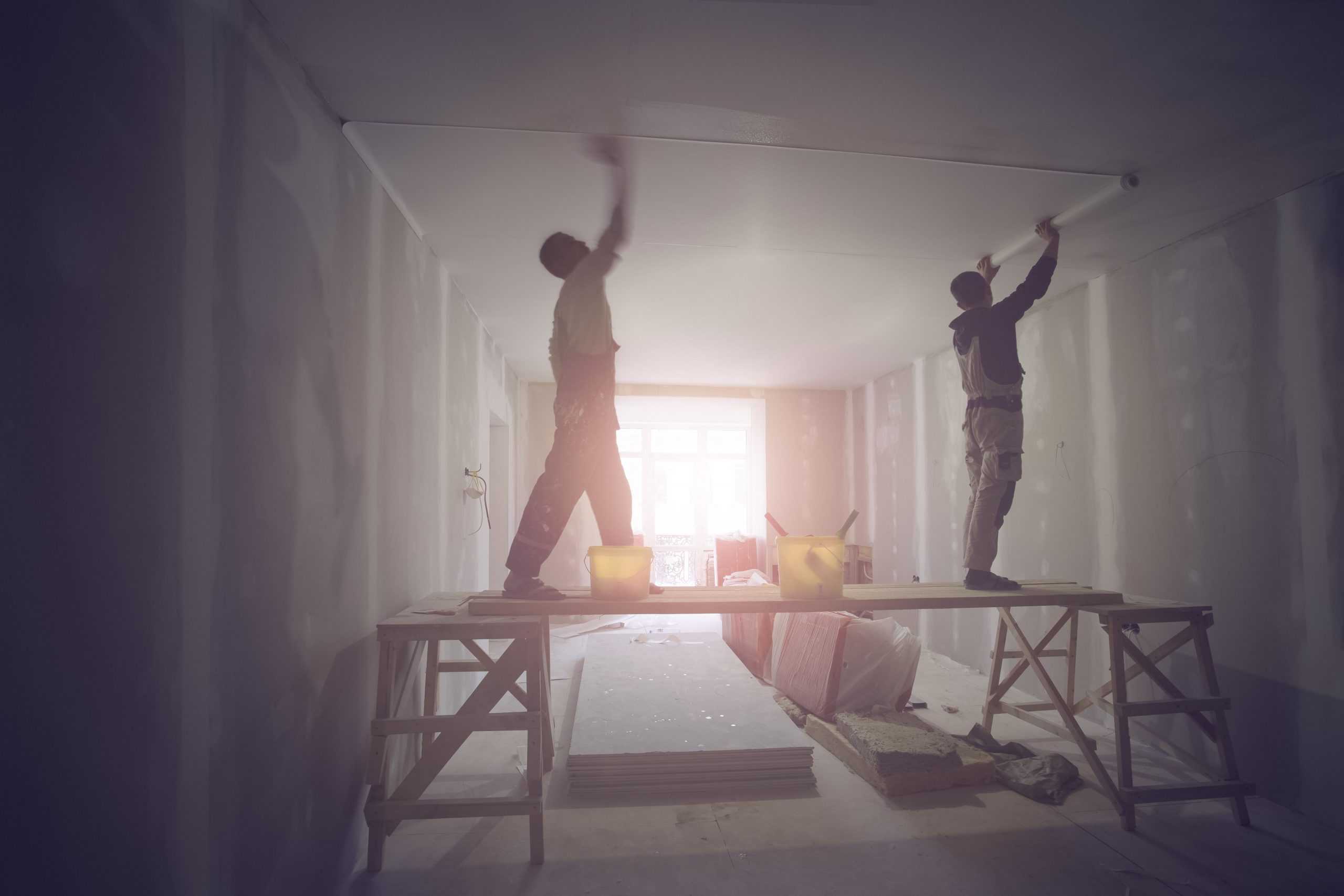
We provide residential and commercial demolition services throughout North Bellmore and the surrounding Nassau County area. On the residential side, that includes interior gut demolitions — kitchens, bathrooms, basements, and full-floor teardowns — as well as structural demolition for additions, accessory structures, and full property clearances. On the commercial side, we work with property owners and landlords along North Bellmore’s Jerusalem Avenue and Newbridge Road corridors on tenant buildout demolitions, interior renovations, and structural modifications that require the bonding and insurance coverage commercial owners actually need.
Every residential project in North Bellmore gets treated as a potential hazardous materials project, because statistically, it is. The 9-by-9 vinyl floor tiles in 1950s and 60s kitchens, the textured ceilings, the joint compound on every taped wall — these are the materials that contain asbestos in homes of this era. We test before we touch, and we abate before we demo. That’s not extra caution. That’s how licensed demolition is supposed to work.
We also respond to emergency demolition situations — storm-damaged structures, flood-compromised materials, and water-damaged framing that needs to come out fast. The South Shore’s exposure to coastal storms and the area’s high water table make this a real and recurring need in North Bellmore, and we’re equipped to respond quickly when it happens.
Do I need a permit for demolition work in North Bellmore, NY?
Yes — and the permit process in North Bellmore has a specific sequence that catches a lot of homeowners off guard. Because North Bellmore is an unincorporated community within the Town of Hempstead, demolition permits are issued by the Town of Hempstead Building Department, not a village building department or Nassau County directly. Before that permit can even be processed, Nassau County requires a rodent-free certification from the Nassau County Department of Health — you can reach them at (516) 227-9715.
That means there are two separate agencies involved before a single wall comes down legally. We handle both steps as part of the project. We file the permit in our name as the licensed contractor of record, coordinate the Health Department certification, and make sure the paperwork is in order before work begins. If a contractor asks you to pull your own permit, that’s a sign they may not be licensed to do it themselves — and that’s worth paying attention to before you sign anything.
Is there asbestos in my North Bellmore home, and do I need testing before demo?
If your home was built before 1980 — and in North Bellmore, the median construction year is 1958 — there’s a real chance asbestos-containing materials are present somewhere in the structure. The most common sources in homes of this era are 9-by-9 vinyl floor tiles in kitchens and bathrooms, joint compound on taped drywall, ceiling texture, pipe insulation in basements and utility rooms, and roofing underlayment. You don’t have to have a hunch about it. The era of construction is enough to warrant testing before any demolition begins.
In New York State, disturbing asbestos-containing materials without proper testing, notification, and licensed abatement is a regulatory violation — and the liability falls on the property owner, not just the contractor. Nassau County’s Environmental Hazard Remediation Program adds an additional layer of county-specific licensing requirements on top of state rules. We hold the credentials required at both the state and county level, and we build testing into our pre-project process so you’re never starting demolition blind.
What's the difference between a general contractor doing demo and a licensed demolition contractor?
A general contractor can legally perform certain types of demolition work — removing non-structural elements, tearing out cabinetry, pulling up flooring — but they are not licensed to disturb, remove, or dispose of asbestos-containing materials unless they hold a separate NYS Department of Labor Asbestos Handling Contractor License. In a community like North Bellmore, where the housing stock is predominantly pre-1980 construction, that distinction matters on almost every project.
What typically happens when a general contractor without abatement licensing hits asbestos mid-project is that the job stops. They’re legally required to halt work, and you’re left finding a licensed abatement company, waiting for their availability, and absorbing the cost of a project that’s now split across two separate contracts. We’re a licensed demolition and abatement contractor — not a general contractor who does demo on the side. That means the project doesn’t stop when something is found. It keeps moving because the same team handles both.
How much does a demolition project typically cost in North Bellmore?
Demolition costs vary significantly depending on the scope — an interior gut of a single room is a very different job than a full structural teardown. For interior demolition in a North Bellmore home, costs generally range from a few thousand dollars for a single-room gut up to $15,000 or more for a full-floor or basement renovation depending on square footage, materials, and what’s found during the process. Full structural demolition of a detached home or outbuilding runs higher and is priced based on site conditions, access, and disposal requirements.
The honest variable in North Bellmore is hazardous materials. If testing confirms asbestos or lead paint — which is statistically likely in homes built in the 1950s and 60s — abatement adds to the project cost. But that cost is fixed and manageable when it’s planned for upfront. What’s not manageable is finding out mid-project when a contractor who wasn’t licensed to handle it already disturbed the materials. Getting a clear, written scope of work before the project starts is the best way to understand your real total cost.
Can demolition work trigger flooding or structural issues in older North Bellmore homes?
It’s a fair concern, especially in North Bellmore’s South Shore location. The area sits in a zone with a documented high water table, and the neighboring Bellmore community experienced severe flooding during Hurricane Sandy in 2012 — flooding that’s been described as chronic along certain corridors. When you’re demolishing a basement or foundation-adjacent structure in a home that’s been sitting on that water table for 60-plus years, you need a contractor who understands what they’re working with structurally before the work begins.
Our pre-project assessment includes a structural review of the demolition scope, and we flag any conditions — water infiltration, compromised framing, signs of prior flood damage — that need to be addressed before or during the demo. If a project involves a structure that’s already been damaged by water or storm events, we can handle the emergency demolition and remediation together. That’s a real service need in this area, not a hypothetical one, and we’re equipped for it.
How long does a typical interior demolition take in a North Bellmore home?
For a standard interior gut — a kitchen, a bathroom, or a finished basement — the demolition itself typically takes one to three days once the project is underway. What affects that timeline more than anything else is what happens before the demo starts: permitting, testing, and abatement if hazardous materials are confirmed. In North Bellmore, where the Town of Hempstead permit process and Nassau County Health Department certification are both required steps, building that lead time into your project schedule from the beginning is the difference between a smooth renovation and a stalled one.
If asbestos abatement is required, that work is completed under containment protocols before demolition begins — and the space is cleared through post-abatement air testing before it’s reoccupied or opened up for the next phase of work. The full timeline from first call to completed demolition on a straightforward interior project in North Bellmore typically runs two to three weeks when you account for permitting and testing. We walk through that timeline with you before the project starts so there are no surprises on the back end.