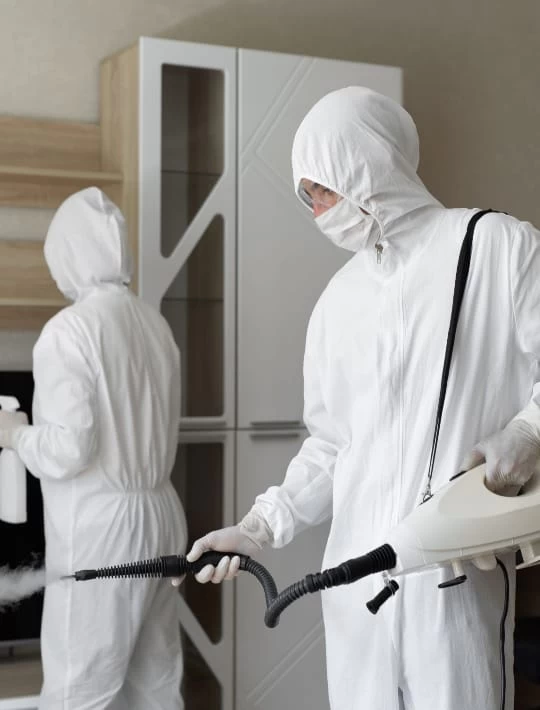
I needed a professional consultation explanation of procedure for safe removal of Asbestos in my apartment complex. Without having an account yet, I was very impressed with the caring, knowledgeable and generous advice offered by Jessica, and will look forward to doing business in the future. Thank you so much! I feel much more informed about a sometimes scary endeavor. Peace. Nancy Silva Mineola, NY.
Mia Munoz
Used this company to clean up some water flood in my house. They were fast and easy to work with.very professional, Would recommend to anyone!
Nini Valle
Great company, had a flood and they responded quickly and efficiently. Billed my insurance company directly. I highly recommend this company!
joe colapietro, jr
I had pipe freeze in my basement right before a snow storm and they made to within an hour to help start the clean up process. They we by our side throughout the entire process and even helped with the insurance company. They did such a great job with the cleanup, repair, remidiation, I contracted them to perform the repairs and finishes in the basement. They came with enough manpower and material to get the job done. Leo and Jessica were nothing but a pleasure to deal with!!
Cristian Arredondo c
I had some water damage in my home and Green Island was able to take care of my issue quickly and effectively. I am very pleased with the work they did. They responded quickly and were very professional.
Michael M
Outstanding service! From the office to the field crew everyone was friendly, helpful and responsive. I highly recommend Green Island Group.
Your Project Moves Forward — No Matter What's Found
When you’re renovating a 1940s home in Old Bethpage, the work rarely stops at demo. Floor tiles, pipe insulation, ceiling texture, joint compound — these materials were standard in Nassau County construction during that era, and a significant number of them contain asbestos. The difference between a project that keeps moving and one that stalls for weeks is whether your contractor is licensed to handle what they find.
We hold a NYS Department of Labor Asbestos Handling Contractor License. That means when something turns up behind your walls in Old Bethpage — and in this area’s housing stock, it often does — the same crew handles it. No stopping. No scrambling for a third-party abatement company. No gaps in accountability between who did the demo and who handled the hazmat.
With median home values in Old Bethpage approaching $940,000, you’re not just renovating a house. You’re protecting a serious financial asset. A properly permitted, properly documented, fully licensed demolition means that when you sell, refinance, or pull your next permit, you have a clean paper trail — not a question mark sitting in the wall.
One Team, One License, One Less Thing to Worry About
We’re a full-service demolition and environmental contracting company serving Long Island, including Old Bethpage and other Nassau County communities. What sets us apart isn’t a tagline — it’s the license structure. Most demolition contractors either subcontract the hazmat work or skip it. We handle abatement, demolition, debris removal, and post-project documentation under one roof.
Old Bethpage sits in the Town of Oyster Bay, and the permit process here has specific requirements — two sets of drawings, safety documentation, and a licensed contractor of record pulling the permit in their name. We manage that process on your behalf. You don’t chase down paperwork or figure out which forms go to which office.
We’ve worked across Long Island’s older housing stock long enough to know what a 1940s Nassau County home looks like from the inside. That experience shapes how we scope the job, how we price it, and how we handle the unexpected.
It starts with a walkthrough and a written scope of work. Before anything is touched, we assess the space, identify potential hazardous materials, and put together a detailed project outline — what will be removed, in what order, what testing or abatement is required, and what permits need to be pulled from the Town of Oyster Bay Building Division. You know exactly what you’re agreeing to before work begins.
If asbestos testing is warranted — and in Old Bethpage’s 1940s homes, it frequently is — that happens before demolition starts, not after something gets disturbed. If ACMs are present, abatement is completed, documented, and cleared before the broader demo proceeds. The sequence matters. Skipping it creates regulatory exposure for you as the property owner, not just the contractor.
Once demolition is complete, we handle debris removal and provide full disposal documentation — manifests, clearance certificates, and permit records. In a community where homes sell for close to a million dollars and buyers do serious due diligence, that paperwork isn’t a formality. It’s protection for your property’s future value.
Every Scope Built Around What Your Home Actually Has
We handle the full range of residential and commercial demolition work in Old Bethpage — kitchen and bathroom guts, basement demolitions, wall removal, structural reconfiguration for additions, and full interior teardowns. For older homes in ZIP code 11804, virtually every one of these projects involves some level of hazardous materials consideration. Lead paint is present in the majority of pre-1960 homes. Asbestos-containing materials are common in 9×9 floor tiles, popcorn ceilings, pipe insulation, and duct wrap from this era.
Beyond the abatement licensing, we’re EPA RRP certified — required by federal law for renovation work that disturbs lead paint in pre-1978 homes above certain thresholds. In Old Bethpage, where nearly every home qualifies, this certification isn’t optional. It’s the law, and a lot of contractors quietly ignore it.
For commercial work and municipal projects, we have the bonding, insurance coverage, and project management infrastructure that institutional clients require. The Old Bethpage area has seen active municipal demolition work in recent years — including at the Solid Waste Disposal Complex on Bethpage-Sweet Hollow Road — and the operational capacity required for that kind of work translates directly into better execution on residential jobs. Every project, regardless of size, gets a written scope, proper permits, and full post-project documentation.
Do I need a permit for demolition work in Old Bethpage, NY?
Yes — and the requirement applies more broadly than most people expect. In Old Bethpage, which falls under Town of Oyster Bay jurisdiction, a demolition permit is required for any structure or portion of a structure above 100 square feet. That threshold covers kitchen guts, bathroom removals, basement teardowns, and structural wall work — not just full building demolitions. The only common exception is a non-commercial portable storage shed under 100 square feet.
Permit applications go through the Town of Oyster Bay Building Division, with offices at 74 Audrey Ave in Oyster Bay and at 977 Hicksville Road in Massapequa. The application requires two sets of drawings detailing the scope of demolition and the safety measures in place. A licensed contractor pulls the permit in their own name as the contractor of record. If a contractor asks you to pull your own permit, that’s usually a sign they’re not licensed to do it themselves — and that’s a problem worth taking seriously before the project starts.
Does my 1940s Old Bethpage home likely have asbestos, and what does that mean for my renovation?
Statistically, yes. Homes built in the 1940s — which make up the dominant housing vintage in Old Bethpage’s ZIP code 11804 — were constructed during a period when asbestos was used extensively as a building material. Floor tiles (particularly 9×9 inch vinyl composite tiles), popcorn ceiling texture, pipe and duct insulation, joint compound, and roofing materials from this era routinely contain asbestos-containing materials (ACMs).
That doesn’t mean your renovation can’t happen — it means it needs to be handled in the right sequence. New York State law requires that only contractors holding a valid NYS DOL Asbestos Handling Contractor License may legally disturb or remove ACMs. Testing should happen before demolition begins, not after something gets accidentally disturbed. If ACMs are found, licensed abatement is completed and cleared before broader demo work proceeds. We hold this license in-house, which means the process flows without the delays and coordination gaps that come with subcontracting the abatement to a separate company.
What's the difference between a demolition contractor and an abatement contractor, and do I need both?
In most cases on Long Island, you need both — but you don’t necessarily need to hire two separate companies. A standard demolition contractor is licensed to tear down structures and remove debris. An abatement contractor holds a separate NYS DOL license specifically authorizing the disturbance, removal, and disposal of hazardous materials like asbestos and lead. These are distinct licenses, and a general contractor license does not cover abatement work.
The problem with hiring them separately is coordination. If your demo contractor discovers ACMs mid-project and has to stop while you find an abatement company, schedule them, wait for clearance testing, and then restart demo — you’ve lost weeks and added significant cost. In Old Bethpage’s older housing stock, where the presence of hazardous materials is the rule rather than the exception, hiring a contractor who holds both licenses under one roof isn’t a luxury. It’s the practical choice that keeps your project on schedule and keeps liability where it belongs — with the licensed contractor, not with you.
How much does interior demolition typically cost for a home in Old Bethpage?
Interior demolition costs in Old Bethpage vary based on scope, square footage, and — critically — what the pre-demo testing reveals. A standard kitchen or bathroom gut in a 1940s Nassau County home typically runs in the range of a few thousand dollars for the demolition labor alone. When asbestos abatement is required, that adds to the cost depending on the type and quantity of ACMs present. Lead paint work under the EPA RRP rule adds another layer of compliance cost.
The honest answer is that any contractor quoting you a firm number before testing is either guessing or cutting corners on the compliance side. A proper scope starts with a walkthrough and, where warranted, materials testing — then pricing follows. In Old Bethpage, where homes are worth $800,000 to $940,000, the difference between a compliant project with full documentation and a cheap job with no paper trail is not a minor detail. It’s the difference between a clean property history and a liability that surfaces at the worst possible time.
Can you handle demolition and asbestos removal together on the same project?
Yes — and that’s specifically what makes the process cleaner for homeowners in Old Bethpage. We hold both a general contractor license and a NYS Department of Labor Asbestos Handling Contractor License, which means the abatement and demolition phases are managed by the same team under a single contract. There’s no handoff between companies, no gap in accountability, and no waiting period while a separate abatement contractor gets scheduled.
For homes in Old Bethpage’s 1940s-era housing stock, this matters practically. When abatement and demolition are handled by separate contractors, the sequencing has to be carefully coordinated — abatement must be completed and cleared before demo can proceed in the affected areas. When it’s one team managing both phases, that coordination happens internally. The project moves faster, the communication is cleaner, and if something unexpected comes up mid-project, there’s one point of contact responsible for resolving it.
What documentation should I expect to receive after a demolition project in Old Bethpage?
At minimum, you should receive the closed demolition permit from the Town of Oyster Bay confirming the work was inspected and approved. If asbestos abatement was performed, you should receive the disposal manifest — a chain-of-custody document that tracks the removed material from your property to a licensed disposal facility. If air clearance testing was conducted post-abatement, you should receive the clearance certificate confirming the space tested clean. For lead paint work, documentation of EPA RRP compliance should also be on file.
This paperwork matters beyond the project itself. In Old Bethpage, where homes regularly sell for close to a million dollars and buyers conduct thorough due diligence, a future buyer’s inspector or attorney may ask about the 1940s floor tiles that are no longer there — or the popcorn ceiling that’s been replaced. Having documented proof that the removal was done by a licensed contractor and disposed of legally protects your property’s value and keeps the sale from getting complicated. We provide this documentation as a standard deliverable on every project, not as an add-on.