Your 1960s Plainedge Home Deserves a Contractor Who Knows What's Inside It
Most homes in Plainedge were built during the height of asbestos use — and demo day has a way of making that everyone’s problem fast. We handle licensed demolition and hazardous material abatement together, so your project doesn’t stop when something turns up behind the walls.
I needed a professional consultation explanation of procedure for safe removal of Asbestos in my apartment complex. Without having an account yet, I was very impressed with the caring, knowledgeable and generous advice offered by Jessica, and will look forward to doing business in the future. Thank you so much! I feel much more informed about a sometimes scary endeavor. Peace. Nancy Silva Mineola, NY.
Mia Munoz
Used this company to clean up some water flood in my house. They were fast and easy to work with.very professional, Would recommend to anyone!
Nini Valle
Great company, had a flood and they responded quickly and efficiently. Billed my insurance company directly. I highly recommend this company!
joe colapietro, jr
I had pipe freeze in my basement right before a snow storm and they made to within an hour to help start the clean up process. They we by our side throughout the entire process and even helped with the insurance company. They did such a great job with the cleanup, repair, remidiation, I contracted them to perform the repairs and finishes in the basement. They came with enough manpower and material to get the job done. Leo and Jessica were nothing but a pleasure to deal with!!
Cristian Arredondo c
I had some water damage in my home and Green Island was able to take care of my issue quickly and effectively. I am very pleased with the work they did. They responded quickly and were very professional.
Michael M
Outstanding service! From the office to the field crew everyone was friendly, helpful and responsive. I highly recommend Green Island Group.
What Changes When You Hire a Contractor Licensed for Both Demolition and Abatement
Here’s what most Plainedge homeowners don’t find out until they’re already mid-project: demolition and asbestos abatement are two separate scopes of work — and most contractors are only licensed for one of them. When the floor tiles come up in your 1958 split-level and something gets flagged, an unlicensed crew has to stop. You’re now coordinating a second contractor, a second timeline, and a second invoice.
When you hire a contractor who holds both the demolition license and the NYS Department of Labor Asbestos Handling Contractor License, that scenario doesn’t happen. The same team that’s demoing your kitchen can legally handle what they find in it. Your renovation keeps moving. Your timeline stays intact.
Plainedge’s housing stock is almost entirely from the 1950s and 1960s — which means asbestos floor tiles, popcorn ceilings with asbestos content, and lead paint aren’t edge cases here. They’re the baseline expectation. And because homes in Plainedge sit on small, close-set lots, you also need a crew that knows how to work carefully in tight spaces without creating problems for the property next door. That’s not something you figure out on the job. It’s experience, and it matters here more than in a lot of other places.
Residential Demolition Contractor, Nassau County NY
Long Island Roots, Not a Landing Page With a Texas Phone Number
We’re based in Bohemia, NY — a 631 number, a Long Island address, and a team that actually knows Nassau County. Two of the contractors that show up in search results for demolition in Plainedge are running location-specific pages from out-of-state operations. That’s worth knowing before you call.
We’ve been serving communities across Nassau and Suffolk counties, including Plainedge and the surrounding Town of Oyster Bay area, as a full-service environmental contracting and demolition firm. Our work spans residential gut renovations, commercial demolition, asbestos abatement, mold remediation, lead paint removal, and emergency restoration — all under one license, one contract, and one team.
Clients consistently mention the same things in reviews: our crew shows up when we say we will, communication is clear throughout, and the people on the other end of the phone — including Jessica in our office — actually treat you like a person. In a community like Plainedge, where families have lived for two and three generations, that matters.
It starts with a site assessment. Before any walls come down, we evaluate the scope of your project and identify whether hazardous materials are present. In a Plainedge home built in the 1950s or 1960s, this step isn’t optional — it’s what keeps you legally protected. If asbestos-containing materials are found above threshold quantities, NYS DOL regulations require licensed abatement before demolition can proceed. We handle that assessment and, if needed, the abatement itself.
From there, permits are pulled through the Town of Oyster Bay Department of Planning and Development. Because Plainedge is unincorporated, there’s no local village hall for this — it goes through the town, and the most practical location for Plainedge residents is the Building Division Annex at 977 Hicksville Road in Massapequa. We manage the permit process as the licensed contractor of record, so you’re not navigating an unfamiliar system on your own.
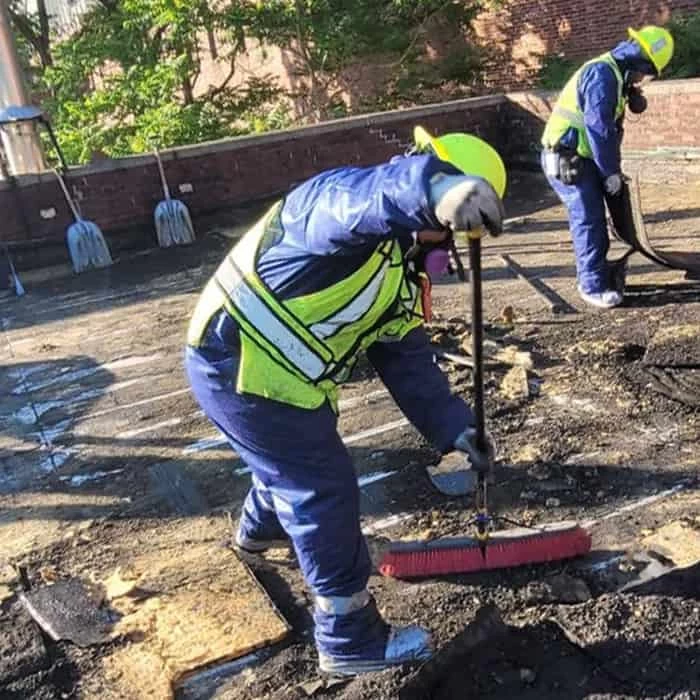
Once permits are in hand and any abatement is complete, demolition proceeds. Our crew works within the constraints of your property — and in Plainedge, that usually means tight lot lines, close neighbors, and limited equipment access. Debris is contained, neighboring structures are protected, and post-project clearance testing confirms the space is clean and safe before any reconstruction begins. You get the documentation. You keep it. It matters when you sell.
Commercial and Residential Demolition Specialists, Plainedge
One Scope Covers What Most Contractors Split Into Three
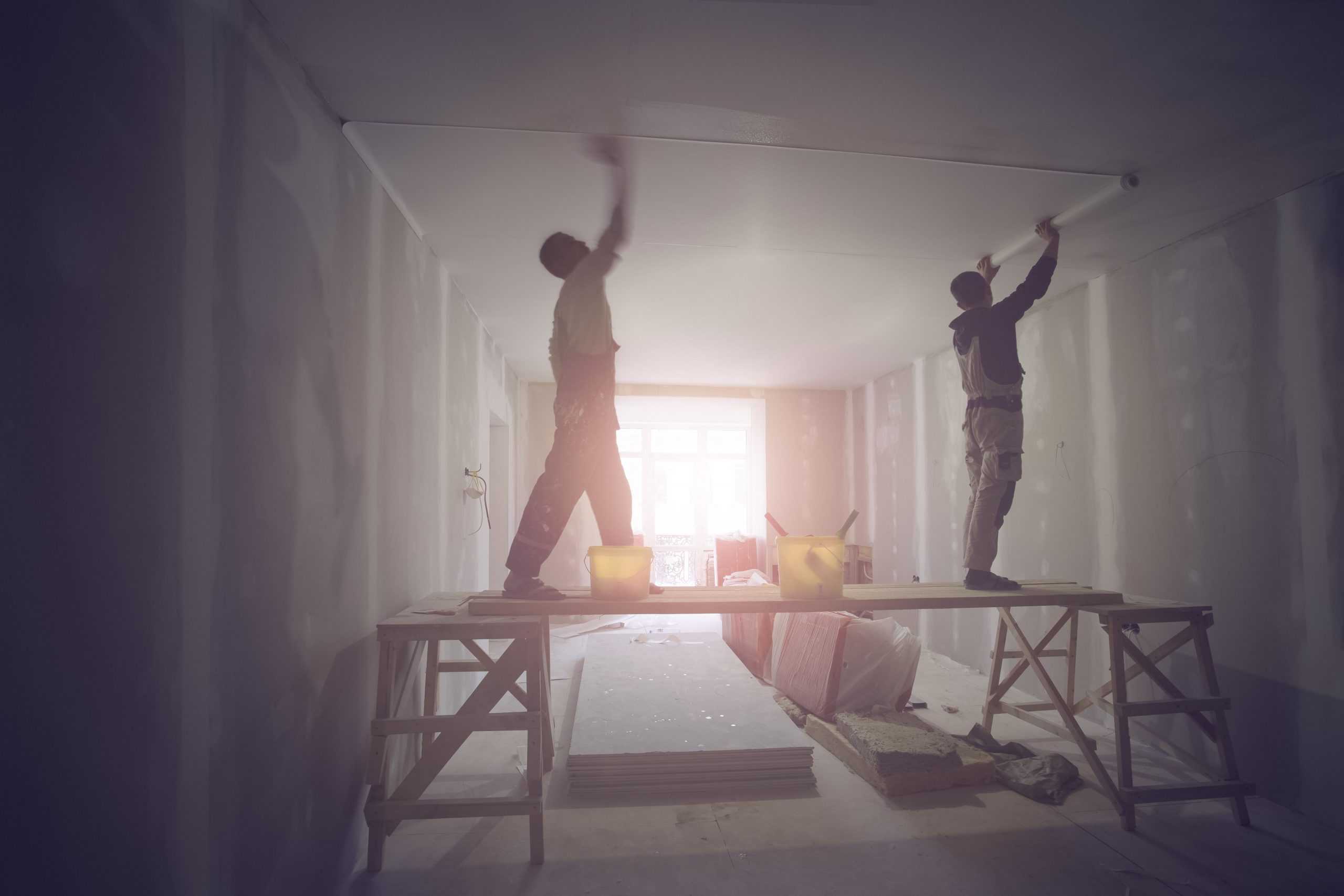
Our demolition services in Plainedge cover the full range of what homeowners and commercial property owners in this area actually need. Interior demolition for kitchen and bathroom gut renovations, basement conversions, and room additions. Structural demolition for full teardowns. Selective demolition when you need specific elements removed without disturbing the rest of the structure. And because virtually every project in Plainedge’s mid-century housing stock involves a hazardous materials component, asbestos abatement, lead paint removal, and mold remediation are part of the same integrated scope — not a separate call to a separate company.
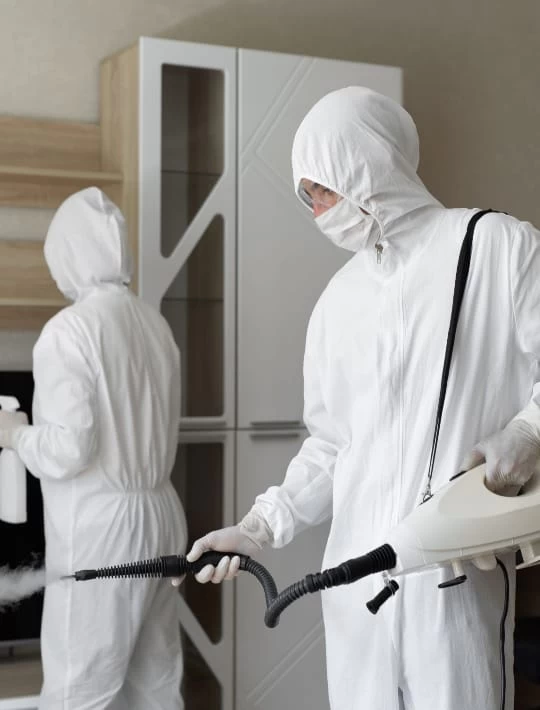
For residential clients, this matters most during renovation projects where the full picture isn’t visible until demo begins. The 9-by-9-inch vinyl floor tiles in a 1962 Plainedge kitchen are among the most common asbestos-containing materials found in Long Island homes from this era. Popcorn ceilings, pipe insulation, and joint compound from the same period are equally common. Our team is trained and licensed to identify, contain, and remove these materials in compliance with EPA NESHAP requirements and NYS DOL standards — and we provide the disposal manifests that document the chain of custody from your property to a licensed hazardous waste facility.
For commercial clients and property managers with projects in the Plainedge area, we bring the bonding capacity, insurance coverage, and project management infrastructure to handle larger-scale demolition scopes. Every project — residential or commercial — ends with post-project air clearance testing and full documentation, so you have the paperwork to back up the work.
Do I need a permit to demo walls or gut a room in Plainedge, NY?
Yes — and because Plainedge is unincorporated, your permit doesn’t come from a local village building department. It comes from the Town of Oyster Bay Department of Planning and Development. For most Plainedge residents, the practical location to handle this is the Building Division Annex at 977 Hicksville Road in Massapequa, which is significantly closer than the main office in Oyster Bay.
Demolition permits require utility disconnection verification and must be pulled before work begins. When you hire us, we pull the permit in our name as the licensed contractor of record. You don’t have to figure out the Town of Oyster Bay’s process on your own — we’ve done it before in this jurisdiction and handle the paperwork as part of the job.
How do I know if my Plainedge home has asbestos before starting a renovation?
You don’t know until it’s tested — and in a Plainedge home built in the 1950s or 1960s, the probability of finding asbestos-containing materials is high enough that testing before demo isn’t optional, it’s standard practice. The most common sources in Plainedge homes from this era are 9-by-9-inch vinyl floor tiles, popcorn ceiling texture, pipe insulation, joint compound, and roofing materials. These aren’t rare findings in Plainedge — they’re the baseline expectation.
A licensed asbestos investigator assesses the structure before demolition begins. If asbestos-containing materials are found above threshold quantities, NYS DOL regulations require licensed abatement before any demolition proceeds. We handle both the assessment and, if needed, the abatement — so you’re not coordinating two separate contractors to get one project started. The assessment gives you a clear picture of what you’re dealing with before a single wall comes down.
What happens if asbestos is found after demolition has already started?
If asbestos is disturbed without proper protocol in place, it becomes a significantly more complicated and expensive problem. Under federal EPA NESHAP regulations, demolition of structures with asbestos above threshold quantities requires advance notice and licensed abatement before work proceeds. If that step was skipped — or if an unlicensed contractor didn’t know what they were looking at — you’re now dealing with potential EPA enforcement exposure and an emergency remediation scope that can cost far more than the original project.
The right way to avoid this is to hire a contractor who is licensed for both demolition and asbestos abatement before the job starts — not after something turns up. In Plainedge’s housing stock, where mid-century construction materials are the norm, this isn’t a precaution for unusual situations. It’s the standard approach for any project in a home built before 1980. Our process begins with assessment specifically to prevent this scenario from happening.
How much does a demolition project typically cost in the Plainedge area?
Cost depends on the scope — interior selective demo for a kitchen or bathroom runs differently than a full structural teardown — and in Plainedge, the hazardous materials component is almost always a factor that affects the final number. Asbestos abatement, lead paint remediation, and proper disposal documentation add to the project cost, but they’re not optional line items you can cut to save money. They’re legally required, and skipping them creates liability that costs far more to resolve after the fact.
For a residential gut renovation in a mid-century Plainedge home, a realistic range for a combined demolition and abatement scope typically falls somewhere between $5,000 and $20,000 depending on square footage, materials found, and the extent of the work. The best way to get an accurate number is a site assessment, which gives us a real picture of what’s there before quoting. Estimates based on square footage alone — without accounting for what’s behind the walls — are rarely accurate in homes of this age.
Does Green Island Group handle both the asbestos removal and the demolition in Plainedge?
Yes — and that’s one of the more important distinctions to understand when you’re comparing contractors. Most demolition contractors are not licensed for asbestos abatement. Most asbestos abatement contractors don’t do demolition. In practice, that means most homeowners in Plainedge end up managing two separate contractors, two separate timelines, and two separate contracts to get one project done.
We hold the NYS Department of Labor Asbestos Handling Contractor License alongside our demolition licensing, which means both phases of the work fall under one contract and one team. When something is found mid-project — and in a 1960s Plainedge home, something usually is — the job doesn’t stop. The same crew handles it. That’s not a common setup, and it’s the reason clients in Nassau County communities like Plainedge specifically seek us out for renovation projects in older homes.
How long does a residential demolition project in Plainedge typically take to complete?
Timeline depends heavily on whether hazardous materials are present and how extensive the abatement scope turns out to be. For a straightforward interior demolition — a kitchen gut or bathroom teardown in a home without significant asbestos findings — the physical demo work itself can often be completed in one to three days. But the full project timeline, from initial assessment through permit approval, abatement if needed, demolition, and post-project clearance testing, is typically one to three weeks depending on the scope.
In Plainedge specifically, the permit process through the Town of Oyster Bay adds a step that residents of incorporated villages don’t always anticipate. Permit approval timelines vary, and we submit early in the process to avoid unnecessary delays. The post-project clearance testing — air quality verification after abatement — also adds time, but it’s not a step that gets skipped. That documentation is what confirms the space is safe for your family and protects you when the property changes hands down the road.