When the Walls Come Down, the Paperwork Has to Hold Up
Port Washington homes are older, the permit process has more layers than most people expect, and finding a licensed demolition contractor who actually knows how to navigate all of it is harder than it should be. We handle the demolition, the hazardous materials, and the permits — without handing anything off.
I needed a professional consultation explanation of procedure for safe removal of Asbestos in my apartment complex. Without having an account yet, I was very impressed with the caring, knowledgeable and generous advice offered by Jessica, and will look forward to doing business in the future. Thank you so much! I feel much more informed about a sometimes scary endeavor. Peace. Nancy Silva Mineola, NY.
Mia Munoz
Used this company to clean up some water flood in my house. They were fast and easy to work with.very professional, Would recommend to anyone!
Nini Valle
Great company, had a flood and they responded quickly and efficiently. Billed my insurance company directly. I highly recommend this company!
joe colapietro, jr
I had pipe freeze in my basement right before a snow storm and they made to within an hour to help start the clean up process. They we by our side throughout the entire process and even helped with the insurance company. They did such a great job with the cleanup, repair, remidiation, I contracted them to perform the repairs and finishes in the basement. They came with enough manpower and material to get the job done. Leo and Jessica were nothing but a pleasure to deal with!!
Cristian Arredondo c
I had some water damage in my home and Green Island was able to take care of my issue quickly and effectively. I am very pleased with the work they did. They responded quickly and were very professional.
Michael M
Outstanding service! From the office to the field crew everyone was friendly, helpful and responsive. I highly recommend Green Island Group.
Most demolition projects in Port Washington don’t stall because of the demo itself. They stall because something gets found behind the walls — asbestos floor tiles, pipe insulation, textured ceiling material — and the contractor on-site isn’t licensed to touch it. So the project stops. A separate abatement company gets called. Scheduling starts over. That gap is where timelines fall apart.
When you work with us, there’s no handoff. We hold the NYS Department of Labor Asbestos Handling Contractor License in-house, which means if ACMs turn up in your 1960s Soundview Village colonial or your Beacon Hill cape, the same team handles it and the project keeps moving. That’s not a small thing when you’re managing a renovation from a midtown office and commuting back on the Port Washington Branch every evening.
The peninsula geography matters too. Homes near Manhasset Bay and Hempstead Harbor deal with salt air, persistent moisture, and the kind of slow structural deterioration that doesn’t always show up until demolition starts. When water-damaged framing or mold-compromised subfloor comes into view, we don’t stop and refer you out — mold remediation and water damage restoration are part of the same operation. You get a complete picture and a clear path forward, not a new contractor to vet.
Demolition Specialists Serving Port Washington, NY
Local Regulatory Knowledge You Can't Fake
We’re a full-service environmental contracting and demolition firm serving Long Island and the greater New York City metro area. We already operate in Port Washington through our water damage restoration and remediation services, which means we know the housing stock, the permit offices, and the specific conditions that come with working on the Cow Neck Peninsula.
Nassau County’s demolition permit process includes requirements that catch a lot of contractors off guard — including the Rodent Free Certificate from the Nassau County Department of Health and a mandatory ten-day window to begin demolition after that inspection. If you miss that window, the clock resets. We know this process, manage it, and pull permits in our name as the licensed contractor of record.
We carry a 4.7-star rating with reviews that name specific staff members — not just “great service,” but actual people who showed up, communicated, and followed through. In a community where a renovation project is a seven-figure investment, that kind of accountability isn’t optional.
How the Demolition Process Works in Port Washington
No Surprises — Here's What Happens from First Call to Final Clearance
It starts with an on-site assessment. Before anything gets touched, our team walks the property to understand the full scope — what’s coming down, what’s staying, and what the structure might be holding that isn’t visible yet. For any Port Washington home built before 1980, that assessment includes evaluating the likelihood of asbestos-containing materials and lead paint, because the housing stock here makes both statistically common.
From there, the permit process begins. That means coordinating with the relevant authority — whether that’s the Town of North Hempstead, or a separate village like Port Washington North or Manorhaven, each of which runs its own building permit process. It also means scheduling the Nassau County Department of Health inspection for the Rodent Free Certificate and building the project timeline around that ten-day commencement requirement. This is the part that most homeowners don’t know about until something goes wrong, and it’s the part we manage without putting it back on you.
Once permits are in hand, demolition proceeds on schedule. If hazardous materials are identified, abatement happens in-house — no subcontractors, no scheduling gaps. After the work is complete, you receive the full documentation package: disposal manifests, clearance certificates, and permit records. That paperwork matters when you eventually sell, and in Port Washington’s market, buyers and their attorneys will ask for it.
Residential and Commercial Demolition in Port Washington, NY
Full-Scope Demo with the Licensing to Back Every Part of It
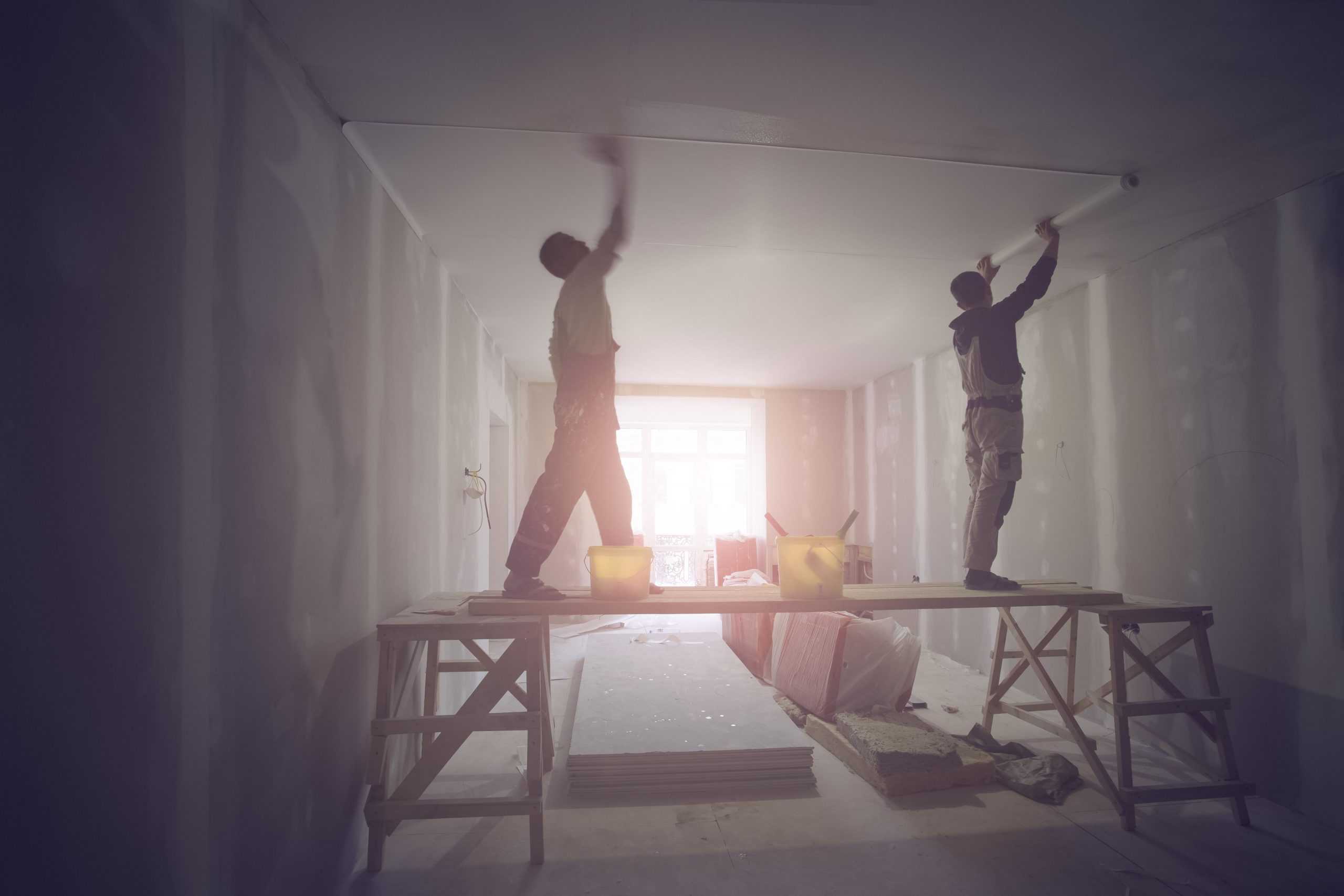
We handle residential demolition, commercial demolition, interior selective demo, and full structural projects across the Port Washington area — including Sands Point, Manorhaven, Baxter Estates, Flower Hill, and Port Washington North. Whether you’re gutting a kitchen in a 1958 Beacon Hill cape or managing a larger structural project on a Sands Point waterfront estate, the scope of work and the licensing behind it stay consistent.
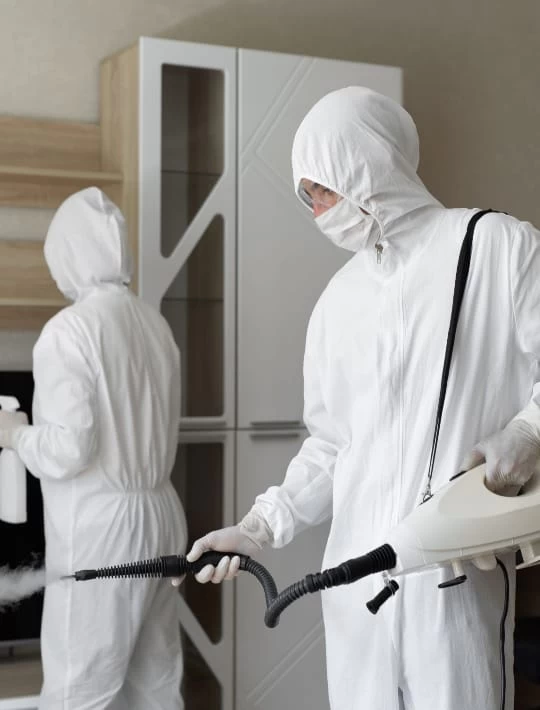
What sets our service apart is what’s included that most demolition contractors can’t offer. Asbestos abatement, lead paint remediation, mold removal, and water damage restoration are all performed by the same licensed team — not referred out. For Port Washington’s pre-1980 housing stock, that integration isn’t a convenience feature. It’s what keeps the project from stopping the moment something unexpected turns up inside the walls, which in homes of this age, happens more often than not.
On the commercial side, we have the bonding, insurance, and documented experience for tenant buildout demolition, selective interior demo in occupied buildings, and commercial gut renovations along the Port Washington Main Street corridor. Every project — residential or commercial — comes with full permit documentation, hazardous waste disposal manifests, and post-project clearance records that protect you at closing and satisfy Nassau County’s regulatory requirements from start to finish.
Do I need a permit to demolish walls or gut a room in Port Washington, NY?
Yes, and the permit process in Port Washington has more layers than most homeowners expect going in. The Town of North Hempstead handles permits for most of the hamlet, but several areas within Port Washington — including Port Washington North, Manorhaven, Baxter Estates, and Sands Point — are incorporated as separate villages, each with their own building permit application process. That means the right office to contact depends on exactly where your property sits.
On top of that, Nassau County requires a Rodent Free Certificate from the Nassau County Department of Health before any demolition permit is issued. Once that inspection is completed, you have a ten-day window to begin demolition — if work doesn’t start within that window, the certification process has to start over. We manage all of this as the licensed contractor of record, so you’re not navigating multiple permit offices on your own or racing to meet a deadline you didn’t know existed.
How do I know if my Port Washington home has asbestos before starting demolition?
You can’t know just by looking. Asbestos-containing materials — floor tiles, pipe insulation, textured ceiling coatings, joint compound, roofing materials — don’t announce themselves visually. The only way to confirm their presence is through laboratory testing of collected samples, which has to be done by a licensed professional before demolition begins.
In Port Washington, the majority of the single-family housing stock was built between the 1940s and 1970s — exactly the window when asbestos was standard in residential construction. Homes in Soundview Village, Beacon Hill, and the older sections of Baxter Estates are especially likely to contain ACMs, but even homes from the early 1970s fall within the at-risk range. Federal EPA regulations require advance notification before demolishing a structure with asbestos above certain threshold quantities, and New York State requires a separate NYS DOL license to legally remove it. We hold that license and perform the testing, abatement, and demolition without splitting the work between contractors.
What happens if mold or water damage is found during a demolition project?
For a lot of contractors, finding mold or water damage mid-demo means the project stops while they figure out who to call next. That handoff costs time, and in a pre-1980 home on the Cow Neck Peninsula — where coastal humidity, salt air, and proximity to Manhasset Bay or Hempstead Harbor accelerate moisture damage in ways inland Nassau communities simply don’t see — it’s not an uncommon discovery.
We perform mold remediation and water damage restoration in-house, under the same operation as the demolition work. So when demo uncovers water-compromised framing, mold-damaged subfloor, or deteriorated structural elements — which happens regularly in Port Washington’s older homes, especially in basements and crawl spaces near the waterfront — it becomes part of the existing scope rather than a reason to pause everything. Our team assesses what’s there, addresses it under the appropriate licensing, and keeps the project moving on a timeline that makes sense.
What does a licensed demolition contractor in Nassau County actually need to have?
At minimum, a legitimate demolition contractor in Nassau County needs to be properly licensed, bonded, and insured — but for most projects in Port Washington, that baseline isn’t enough. If the structure being demolished contains asbestos-containing materials, the contractor also needs a separate NYS Department of Labor Asbestos Handling Contractor License. That’s a distinct credential from a general contractor license, and it requires documented training, insurance specific to asbestos work, and compliance history with state regulations. A GC license alone does not authorize asbestos removal.
Beyond licensing, a compliant contractor in Nassau County needs to understand the local permit structure — including the Rodent Free Certificate requirement, the ten-day commencement window, and how to navigate the layered permit process that applies when a property sits within one of Port Washington’s incorporated villages rather than the unincorporated hamlet. Contractors who primarily work in other counties or regions often run into these requirements for the first time mid-project, which is exactly when it becomes your problem.
How long does a typical residential demolition project take in Port Washington?
The timeline depends on the scope, but the permit and inspection process is often what drives the schedule more than the physical work itself. In Nassau County, the Rodent Free Certificate inspection needs to happen before the demolition permit is issued, and once that certificate is in hand, work has to begin within ten days. Coordinating that sequence — especially across Port Washington’s layered permit jurisdictions — takes someone who already knows how the process runs.
For a standard interior gut renovation or kitchen and bathroom demolition in a Port Washington home, the physical work itself typically takes one to three days depending on the size of the space. If hazardous materials are identified, abatement adds time — but with an integrated contractor, it adds far less time than it would if a separate abatement company had to be scheduled independently. Full structural demolitions or larger estate-scale projects in areas like Sands Point require more planning, more lead time for permits, and more coordination with Nassau County and local village offices. The honest answer is that the timeline is set at the start, not improvised along the way.
Why does documentation matter so much after a demolition project in Port Washington?
Port Washington’s real estate market is active, competitive, and expensive — median home sale prices have climbed well past $1 million, and buyers at that price point conduct thorough due diligence. When you eventually sell, your buyer’s attorney will ask about any renovation work done on the property, and if demolition was involved, they’ll want to see that it was permitted, that any hazardous materials were handled by a licensed contractor, and that disposal was documented through proper manifests.
Missing paperwork — an unpermitted demolition, an undocumented asbestos removal, a clearance certificate that was never issued — can delay a closing, reduce a sale price, or kill a deal entirely. We provide every client with the complete post-project documentation package: hazardous waste disposal manifests, post-remediation clearance certificates, and permit records filed in our name. That documentation sits in your file and protects you years down the road, long after the project is finished and the walls are back up.