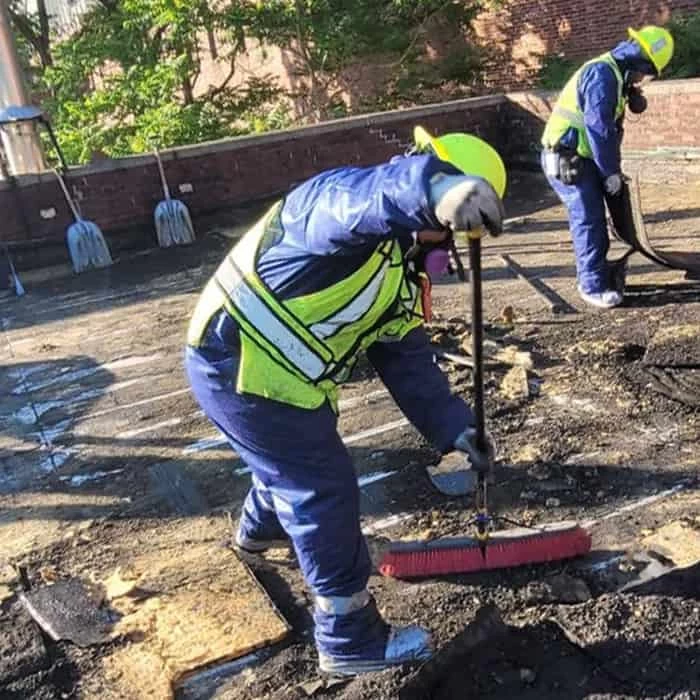
Seaford's Older Homes Deserve More Than a Wrecking Bar
Most demolition contractors in Nassau County can swing a hammer. Not all of them can legally handle what’s behind the walls of a 1950s Seaford Cape Cod — and that difference matters more than most homeowners realize.
I needed a professional consultation explanation of procedure for safe removal of Asbestos in my apartment complex. Without having an account yet, I was very impressed with the caring, knowledgeable and generous advice offered by Jessica, and will look forward to doing business in the future. Thank you so much! I feel much more informed about a sometimes scary endeavor. Peace. Nancy Silva Mineola, NY.
Mia Munoz
Used this company to clean up some water flood in my house. They were fast and easy to work with.very professional, Would recommend to anyone!
Nini Valle
Great company, had a flood and they responded quickly and efficiently. Billed my insurance company directly. I highly recommend this company!
joe colapietro, jr
I had pipe freeze in my basement right before a snow storm and they made to within an hour to help start the clean up process. They we by our side throughout the entire process and even helped with the insurance company. They did such a great job with the cleanup, repair, remidiation, I contracted them to perform the repairs and finishes in the basement. They came with enough manpower and material to get the job done. Leo and Jessica were nothing but a pleasure to deal with!!
Cristian Arredondo c
I had some water damage in my home and Green Island was able to take care of my issue quickly and effectively. I am very pleased with the work they did. They responded quickly and were very professional.
Michael M
Outstanding service! From the office to the field crew everyone was friendly, helpful and responsive. I highly recommend Green Island Group.
Your Seaford Project Moves Forward — No Surprises, No Stops
When you’re renovating a home in Seaford, the biggest risk isn’t the demo itself. It’s what gets discovered mid-project — asbestos floor tile under the kitchen subfloor, mold behind a bathroom wall, lead paint on the trim — and whether your contractor is equipped to handle it without grinding your timeline to a halt. With the majority of Seaford’s housing stock built between the 1940s and 1960s, that kind of discovery isn’t rare. It’s the expected scenario.
We hold a NYS Department of Labor Asbestos Handling Contractor License alongside our demolition credentials. That means when something is found, the same team handles it — no waiting on a separate abatement company, no gap in the schedule, no scrambling to coordinate two contractors who’ve never worked together. The project keeps moving.
For homeowners in the canal neighborhoods of Seaford Harbor, there’s another layer to consider. Homes near South Oyster Bay carry real flood history — and water-damaged structures often have compounding issues that go beyond what’s visible. If your home took on water during a storm event, the demo work frequently uncovers mold, compromised insulation, and saturated framing that needs remediation before anything else moves forward. Having one contractor who handles all of it isn’t a convenience — it’s the only way the job gets done right.
We’re based in Bohemia, NY and have been serving homeowners and commercial clients across Long Island — including Seaford and other Nassau County communities — for years. We hold active licensing for demolition, asbestos abatement, mold remediation, lead paint removal, and water damage restoration. That’s not a marketing list. It’s the actual scope of what most pre-1980 homes on Long Island’s South Shore require when serious renovation work begins.
Working in Seaford specifically means understanding the Town of Hempstead Building Department’s permit process, knowing how Nassau County’s contractor licensing requirements differ from Suffolk County’s, and being familiar with the kind of housing stock that lines the streets between Sunrise Highway and the bay. Our 4.7-star rating reflects a team that communicates clearly, shows up on schedule, and doesn’t leave homeowners guessing. Reviewers consistently name staff members by name — that’s not an accident, it’s how we operate.
What Actually Happens From First Call to Final Clearance
It starts with a site assessment. Before any work begins, we evaluate the structure — what’s being removed, what materials are present, and whether any hazardous materials require testing or abatement before demolition can legally proceed. In Seaford, where homes built in the 1940s through 1960s are the norm rather than the exception, this step isn’t optional. NYS DOL regulations require a licensed asbestos survey before demolition on pre-1980 structures, and skipping it creates liability that lands on the property owner — not the contractor.
Once the scope is confirmed, we handle the permit process with the Town of Hempstead Building Department directly. Permits are pulled in our name, not yours. If asbestos or lead paint is present above threshold levels, abatement is completed first, with disposal manifests documenting the full chain of custody from your property to a licensed facility. Then demolition proceeds on a clear schedule.
After the work is done, you receive post-project documentation — air clearance testing results, disposal records, and the paperwork that holds up at permit inspection and, when the time comes, at closing. In a market where Seaford homes are selling close to $780,000, that paper trail is worth protecting.
We handle interior demolition, selective structural demo, full gut renovations, and emergency demolition for flood or storm-damaged structures. For Seaford homeowners, that last category matters more than it might in other communities. The low-lying areas south of Sunrise Highway — including the canal neighborhoods of Seaford Harbor — sit at roughly 10 feet above sea level and have a documented history of storm surge and coastal flooding. When a structure has been compromised by water, demo and remediation aren’t separate jobs. They happen together, and they need to be managed by someone who understands both.
On the residential side, the work most commonly requested in Seaford involves kitchen and bathroom gut renovations, basement conversions, and full interior teardowns ahead of major remodels. These are exactly the project types where asbestos and lead paint exposure is most likely — disturbing original flooring, opening walls in pre-1960s construction, removing ceilings with original texture coatings. Our combined licensing means all of that is handled under one contract.
For commercial clients along Seaford’s Merrick Road corridor, we bring the same compliance infrastructure — proper bonding, insurance, and permit management — to tenant buildouts, interior renovations, and structural modifications. The regulatory requirements don’t change because the building is commercial. If anything, they get more complex.
Do I need a permit for demolition work in Seaford, NY?
Yes — any structural demolition in Seaford requires a permit through the Town of Hempstead Building Department. Seaford is a census-designated place within the Town of Hempstead, so the town’s building department is the relevant permit authority, not Nassau County directly. The permit must be pulled by the licensed contractor of record, not the homeowner. If a contractor asks you to pull the permit yourself, that’s worth pausing on — it may mean they’re not licensed to pull it in their own name, which raises real questions about the rest of their compliance.
We handle the permit application as a standard part of every project, so you’re not navigating the Town of Hempstead’s process on your own or finding out mid-project that something wasn’t filed correctly.
How do I know if my Seaford home has asbestos before starting demolition?
The honest answer is: if your home was built before 1980, you should assume asbestos-containing materials are present until a licensed inspector confirms otherwise. Seaford’s housing stock is heavily concentrated in the 1940s through 1960s construction era, and homes from that period routinely contain asbestos in floor tiles, ceiling texture, pipe insulation, joint compound, and roofing materials. These materials aren’t always visible or obvious — they can be layered under newer finishes or hidden inside walls.
New York State law requires a licensed asbestos survey before demolition on pre-1980 structures. We can coordinate that inspection as part of the pre-project process. If asbestos is found above threshold quantities, abatement must be completed before demolition proceeds — and we hold the NYS DOL Asbestos Handling Contractor License to do that work legally and without bringing in a third party.
What happens if mold or asbestos is found after demolition has already started?
This is one of the most common situations homeowners in Seaford’s older neighborhoods face — and it’s exactly where having a contractor with combined licensing makes a real difference. If a general demolition contractor without abatement credentials opens a wall and finds asbestos or significant mold, they’re legally required to stop work. Then you’re waiting on a separate abatement company’s availability, paying for the schedule gap, and trying to coordinate two teams who may have never worked together.
Because we hold licensing for both demolition and abatement, a mid-project discovery doesn’t stop the job. We pivot to handle the hazmat issue, complete the required remediation, and continue with the demolition once clearance is confirmed. For homeowners doing gut renovations in Seaford’s post-war housing stock — where surprises behind walls are common, not rare — this continuity is the difference between a project that takes three weeks and one that drags on for two months.
My Seaford home had flood damage — can you handle demo and remediation together?
Yes, and for flood-affected homes in Seaford, that combined capability is particularly important. The canal neighborhoods of Seaford Harbor and the low-lying areas south of Sunrise Highway sit at roughly 10 feet above sea level — a coastal exposure profile that means storm surge, nor’easters, and heavy rainfall events are recurring risks, not one-time events. When water gets into a structure, the damage is rarely limited to what’s visible. Mold grows behind walls and under flooring within 24 to 48 hours of water intrusion. Insulation retains moisture and becomes a long-term mold source. Structural framing can be compromised in ways that aren’t obvious until demo begins.
We handle water damage restoration, mold remediation, and demolition under the same contract. That means the assessment covers all of it — not just what needs to come down, but what’s been contaminated and needs to be properly removed and documented before reconstruction begins. For Seaford homeowners who’ve dealt with storm damage, this single-source approach eliminates the coordination problem entirely.
How much does a demolition project typically cost in Nassau County?
Demolition costs vary based on the scope of work, the size of the space, and — critically in Seaford — whether hazardous materials are present. A straightforward interior demolition for a kitchen or bathroom gut renovation might run a few thousand dollars. A full structural teardown or a project involving asbestos abatement and lead paint removal will cost more, because those materials require licensed handling, proper containment, and documented disposal through a certified facility. That disposal process has real costs attached to it — costs that unlicensed contractors skip, and that can create serious liability for the property owner down the line.
In a market where Seaford homes are selling near $780,000, the calculus is worth thinking through clearly. Cutting corners on hazmat disposal to save a few hundred dollars on a demo job is a risk that shows up at permit inspection, at sale, or — worst case — in a health issue for your family. The better question isn’t “what’s the cheapest quote” but “does this contractor’s quote include everything that’s legally required?” We provide itemized scopes of work so you know exactly what you’re paying for and why.
Does Green Island Group handle commercial demolition in Seaford, not just residential?
Yes. While most of the demolition work in Seaford is residential — given that over 93% of the community’s housing units are single-family homes — there’s a commercial corridor along Merrick Road that has its own renovation and demolition needs. Local businesses, retail spaces, and service establishments in buildings that are often just as old as the surrounding residential stock require the same regulatory compliance as any pre-1980 structure. Commercial demolition also adds layers of complexity: neighboring occupied spaces, commercial permit requirements through the Town of Hempstead, and liability management in a business environment where downtime has real costs.
We have a track record with commercial and municipal clients that goes beyond residential work. The bonding capacity, insurance coverage, and project management systems are in place for commercial scope. If you’re a business owner or property manager on the Merrick Road corridor — or anywhere else in Seaford — the same licensing and compliance infrastructure that protects residential clients applies to your project too.