When Your 1950s Home Needs to Come Down the Right Way
Most South Farmingdale homes were built in an era when asbestos was standard — and demo without the right credentials creates real legal and financial risk. We handle it all, from the first inspection to the final clearance.
I needed a professional consultation explanation of procedure for safe removal of Asbestos in my apartment complex. Without having an account yet, I was very impressed with the caring, knowledgeable and generous advice offered by Jessica, and will look forward to doing business in the future. Thank you so much! I feel much more informed about a sometimes scary endeavor. Peace. Nancy Silva Mineola, NY.
Mia Munoz
Used this company to clean up some water flood in my house. They were fast and easy to work with.very professional, Would recommend to anyone!
Nini Valle
Great company, had a flood and they responded quickly and efficiently. Billed my insurance company directly. I highly recommend this company!
joe colapietro, jr
I had pipe freeze in my basement right before a snow storm and they made to within an hour to help start the clean up process. They we by our side throughout the entire process and even helped with the insurance company. They did such a great job with the cleanup, repair, remidiation, I contracted them to perform the repairs and finishes in the basement. They came with enough manpower and material to get the job done. Leo and Jessica were nothing but a pleasure to deal with!!
Cristian Arredondo c
I had some water damage in my home and Green Island was able to take care of my issue quickly and effectively. I am very pleased with the work they did. They responded quickly and were very professional.
Michael M
Outstanding service! From the office to the field crew everyone was friendly, helpful and responsive. I highly recommend Green Island Group.
What Changes When You Hire a Fully Licensed Demolition Team
When you’re renovating a Cape Cod or ranch home off Woodward Parkway in South Farmingdale, you’re not just swinging a sledgehammer — you’re dealing with decades of materials that require testing, documentation, and licensed removal before any real demo can begin. The difference between a smooth project and a stalled one usually comes down to whether your contractor can legally handle what they find behind the walls.
South Farmingdale’s housing stock is almost entirely post-war construction, with most homes built in the 1940s through the 1960s. That means asbestos floor tiles, popcorn ceilings, pipe insulation, and lead paint are genuinely common — not worst-case scenarios. When those materials are present, a contractor without abatement licensing has to stop work and call someone else. That delay can cost you weeks and real money on a project where your renovation crew is already scheduled.
What you get when everything is handled by one licensed team is simple: the project keeps moving. No waiting on a third-party abatement company. No gaps in accountability between who found the problem and who fixed it. Just a clear scope, a legal process, and a finished demo that’s ready for your renovation to begin.
Demolition Specialists Serving South Farmingdale, NY
One Team Accountable From Start to Finish
We’re a Long Island-based environmental contracting and demolition firm that holds licensing for asbestos abatement, lead paint removal, mold remediation, and demolition — all under one operation. That’s not common. Most contractors do one or two of those things. We do all of them, which matters a great deal when you’re working in South Farmingdale, where the median home is over 70 years old.
We serve South Farmingdale and the surrounding Nassau County communities, and we understand the specific permit requirements that come with being in an unincorporated hamlet under Town of Oyster Bay jurisdiction — not the Village of Farmingdale, which has its own separate building department despite sharing the same ZIP code. That distinction alone has tripped up plenty of homeowners and contractors who assumed the two were the same.
Our 4.7-star rating reflects a team that communicates, shows up, and doesn’t leave clients guessing. Reviewers consistently name specific staff members, which tells you something about how we actually operate day to day.
No Surprises — Here's Exactly What the Process Looks Like
It starts with an assessment. Before any demolition work can legally begin on a pre-1980 structure in New York, a certified asbestos inspector must survey the property — that’s required under NYS Industrial Code Rule 56. In South Farmingdale, where the overwhelming majority of homes were built before 1970, this step isn’t optional and it isn’t a formality. We coordinate the inspection, review the findings, and walk you through what it means before anything else happens.
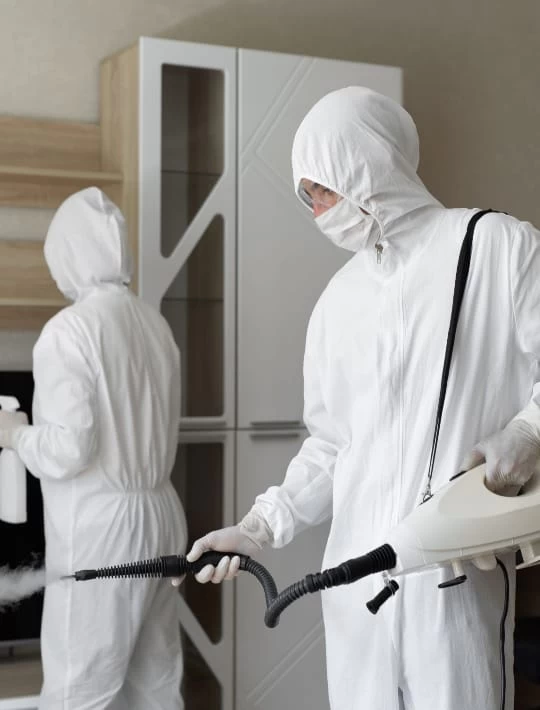
If hazardous materials are identified — asbestos, lead paint, or mold — the abatement phase begins next. Because we hold both the New York State DOL Asbestos Handling Contractor License and the Nassau County Environmental Hazard Remediation Program (EHRP) credential required for county-level abatement work, there’s no pause in the project while you hunt for a separate contractor. We handle removal, containment, and disposal, with full documentation at every step.
Once abatement is complete and clearance testing confirms the space is clean, demolition proceeds. We pull the permit through the Town of Oyster Bay Building Department — including the rodent-free certification that Nassau County requires before any demo permit is issued, a step that catches a lot of homeowners off guard. When the work is done, you receive disposal manifests, clearance test results, and permit records — the paper trail that protects your property when it’s time to sell.
Residential and Commercial Demolition in South Farmingdale
What's Actually Included When You Hire Us
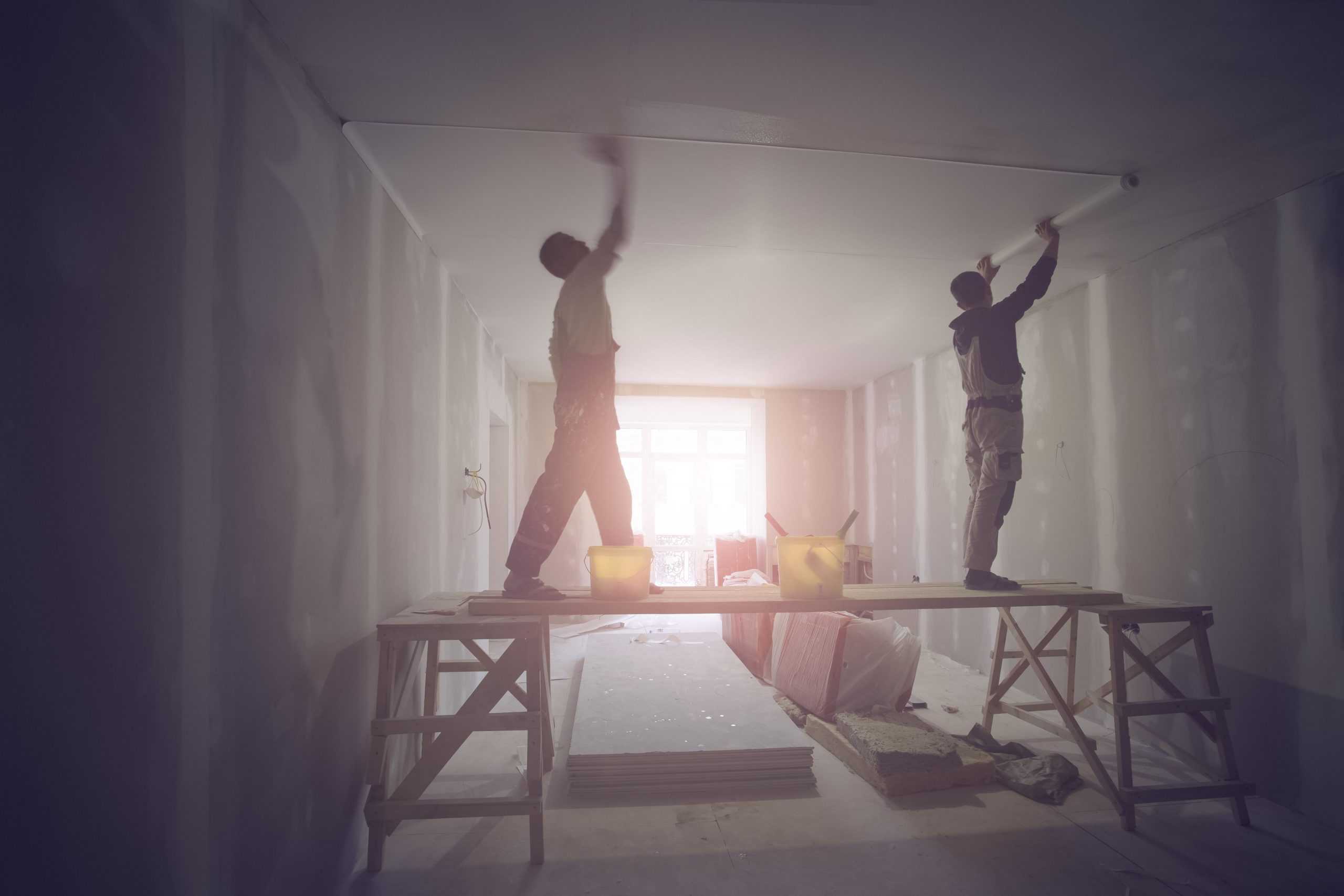
For residential demolition in South Farmingdale, our scope typically covers interior gut work — kitchens, bathrooms, basements, full-floor demo — as well as structural demolition for full teardowns. Given the community’s 1940s–1960s housing stock, almost every project begins with an environmental assessment. Our integrated licensing means that whether the job is a single bathroom remodel or a complete gut renovation on a hi-ranch near the Bethpage State Parkway, the same credentialed team handles every phase.
For commercial work, we have the bonding, insurance, and operational infrastructure to handle tenant buildouts, office demolitions, and light industrial facility work — relevant for property owners along the Route 110 corridor or in the commercial areas adjacent to Republic Airport. Commercial demolition in Nassau County carries the same EHRP and permit requirements as residential work, and our familiarity with those county-level obligations means your project doesn’t stall over a compliance gap.
Every project includes full hazardous material disposal documentation, post-abatement air clearance testing where applicable, and permit management through the Town of Oyster Bay. You’re not handed a binder of paperwork to figure out — we handle the regulatory process and give you the records you need. For a South Farmingdale homeowner sitting on a property worth $700,000 or more, that documentation isn’t a nice-to-have. It’s what protects your investment when the next buyer’s attorney starts asking questions.
Do I need an asbestos inspection before demolition in South Farmingdale, NY?
Yes — and it’s not optional. Under New York State Industrial Code Rule 56, any renovation or demolition that could disturb potential asbestos-containing materials in a pre-1980 structure requires a certified asbestos inspector to survey the property first. In South Farmingdale, where the majority of homes were built in the 1940s through the 1960s, this applies to virtually every demolition project — whether you’re gutting a kitchen, finishing a basement, or tearing down an entire structure.
The inspection needs to happen before your demolition permit application is complete, so it’s one of the first steps in the process, not an afterthought. If the inspector finds asbestos-containing materials — which is common in floor tiles, ceiling texture, pipe insulation, and joint compound in homes from this era — a licensed abatement contractor must remove them before demolition can proceed. We handle both the abatement and the demolition, so you’re not left coordinating between two separate companies after the inspection comes back positive.
Who issues demolition permits for properties in South Farmingdale?
South Farmingdale is an unincorporated hamlet within the Town of Oyster Bay, so demolition permits are issued by the Town of Oyster Bay Building Department — not the Village of Farmingdale. This is a genuinely common source of confusion because South Farmingdale and the Village of Farmingdale share a ZIP code (11735) and a name, but they’re governed by completely separate jurisdictions. If you call the wrong permit office, you’ll be redirected and lose time.
Before the Town of Oyster Bay will issue a demolition permit, Nassau County also requires a rodent-free certification for all residential, commercial, and industrial demolition projects. That certification has to be obtained first, and it’s a step that surprises a lot of first-time demolition clients. We’re familiar with this sequencing — we pull permits under our contractor’s license, coordinate the required certifications, and handle the process so you’re not navigating multiple county and town offices on your own.
What is the Nassau County EHRP license and why does it matter for my project?
Nassau County’s Environmental Hazard Remediation Program (EHRP) is a county-level licensing requirement for asbestos abatement contractors working in Nassau County — and it’s layered on top of the New York State DOL Asbestos Handling Contractor License. A contractor can hold a valid state license and still not be fully authorized to perform asbestos abatement work in Nassau County if they haven’t met the EHRP requirements. That’s a compliance gap that creates real risk for the property owner, not just the contractor.
For South Farmingdale homeowners, this matters because hiring a contractor who holds only the state credential — and not the county EHRP authorization — means your abatement work may not be legally compliant. That can affect your permit, your clearance testing, and your ability to document clean disposal if the project is ever scrutinized during a future sale. We hold both credentials, which means the work done on your property is compliant at every level — state and county — with no gaps.
How much does demolition typically cost for a home in South Farmingdale?
Demolition costs in South Farmingdale vary based on the scope of work, but for a residential interior gut — a full kitchen, bathroom, or basement — you’re generally looking at a range that reflects both the labor and the environmental compliance components. In a community where most homes were built before 1970, the cost almost always includes an asbestos inspection and, in many cases, abatement. Those aren’t add-ons — they’re legally required steps that any legitimate contractor will include in the scope.
What you want to be cautious of is a quote that seems unusually low and doesn’t reference testing, abatement, or permit costs. In South Farmingdale, where median home values are approaching $800,000, the risk of cutting corners on a demolition project isn’t abstract — improper disposal or unpermitted work can create title complications and disclosure obligations that cost far more than the savings at bid time. We provide detailed written scopes so you know exactly what’s included and why, before any work begins.
Can Green Island Group handle both the asbestos removal and the demolition on the same project?
Yes — and that’s the core reason many South Farmingdale homeowners choose us over contractors who only do one or the other. The typical sequence for a demolition project in an older home involves an asbestos inspection, potential abatement, structural or interior demolition, and post-project clearance testing. When those phases are handled by separate companies, you’re managing multiple schedules, multiple contracts, and multiple points where something can fall through the gap.
We hold licensing for asbestos abatement, lead paint removal, mold remediation, and demolition — all under one operation. That means when the inspection finds asbestos-wrapped pipes or lead-painted plaster behind the walls of a 1955 Cape Cod in South Farmingdale, the project doesn’t stop. We assess it, contain it, remove it, and continue with demolition. One contract, one timeline, one team accountable for the outcome from the first day of assessment to the final clearance test.
What documentation will I receive after demolition is completed in South Farmingdale?
After a demolition project in South Farmingdale, we provide a complete documentation package that includes hazardous material disposal manifests, post-abatement air clearance testing results where applicable, and permit records from the Town of Oyster Bay. This isn’t just paperwork — it’s the evidence trail that proves the work was done legally, that all hazardous materials were removed and disposed of properly, and that the property is clean and compliant.
In a market where South Farmingdale homes are regularly selling in the $700,000 to $900,000 range, this documentation has real financial value. When a buyer’s attorney or home inspector asks whether the 1958 ranch was properly abated before the kitchen renovation, you need records that answer that question definitively. Without them, you’re relying on verbal assurances that don’t hold up in a real estate transaction. Our documentation gives you a clear, verifiable record that protects your property’s value long after the demo crew has left.