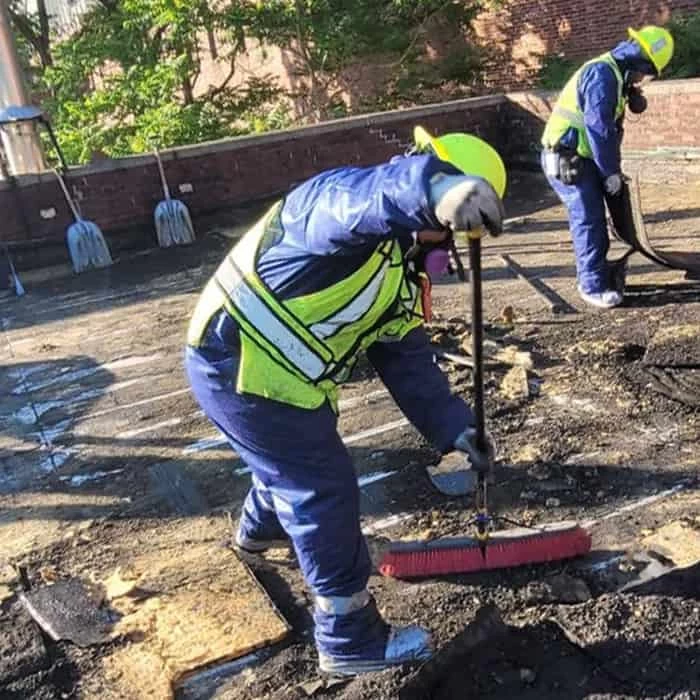
Uniondale's Aging Homes Deserve More Than a Wrecking Crew
Most 1950s Cape Cods in Uniondale are hiding asbestos, lead paint, or mold behind those walls — we handle the hazmat and the demolition, so you don’t have to manage two contractors.
I needed a professional consultation explanation of procedure for safe removal of Asbestos in my apartment complex. Without having an account yet, I was very impressed with the caring, knowledgeable and generous advice offered by Jessica, and will look forward to doing business in the future. Thank you so much! I feel much more informed about a sometimes scary endeavor. Peace. Nancy Silva Mineola, NY.
Mia Munoz
Used this company to clean up some water flood in my house. They were fast and easy to work with.very professional, Would recommend to anyone!
Nini Valle
Great company, had a flood and they responded quickly and efficiently. Billed my insurance company directly. I highly recommend this company!
joe colapietro, jr
I had pipe freeze in my basement right before a snow storm and they made to within an hour to help start the clean up process. They we by our side throughout the entire process and even helped with the insurance company. They did such a great job with the cleanup, repair, remidiation, I contracted them to perform the repairs and finishes in the basement. They came with enough manpower and material to get the job done. Leo and Jessica were nothing but a pleasure to deal with!!
Cristian Arredondo c
I had some water damage in my home and Green Island was able to take care of my issue quickly and effectively. I am very pleased with the work they did. They responded quickly and were very professional.
Michael M
Outstanding service! From the office to the field crew everyone was friendly, helpful and responsive. I highly recommend Green Island Group.
When you hire a contractor who only does demolition, you’re already halfway through a problem you didn’t sign up for. The moment asbestos turns up in a floor tile or pipe wrap — which happens constantly in Uniondale’s post-war housing stock — work stops. You’re now hunting for a separate abatement company, waiting on their schedule, and watching your project timeline fall apart. That’s not a rare edge case here. It’s the norm.
The Cape Cod and ranch homes that fill Uniondale’s residential streets were built in the late 1940s and 1950s, right at the peak of asbestos use in American construction. Floor tiles, ceiling texture, joint compound, pipe insulation — all of it was standard. When we come in, we assess what’s there before anything gets touched. If hazardous materials are present, we handle the abatement under our NYS Department of Labor Asbestos Handling Contractor License, then move straight into demolition. One team, one timeline, no gaps.
What that means for you practically is a project that doesn’t stall in the middle, a paper trail that protects you when you eventually sell, and a contractor who already knows what they’re walking into on a 1952 home in Uniondale — because we’ve walked into dozens of them.
We’re a full-service environmental contracting and demolition firm serving Nassau County and Long Island. We’re not a junk removal company that added demo to a service menu. We hold a NYS DOL Asbestos Handling Contractor License, EPA RRP certification for lead paint work, and the commercial bonding and insurance that municipal and institutional clients in Nassau County require.
We’ve worked extensively in Uniondale. We know the Town of Hempstead Building Department is where your permit comes from — not Nassau County, not some generic municipal office. We know the 90-day commencement rule after permit issuance, and we schedule around it. We know what’s inside a 1950s Cape Cod on the south side of Hempstead Turnpike and what’s likely waiting in the basement of a home near Nostrand Gardens that’s had three owners since it was built.
Our reviews reflect what clients actually care about: someone picked up the phone, someone explained the process clearly, and the project finished the way it was supposed to. That’s the standard we hold ourselves to on every job.
It starts with a site assessment. Before any permit is pulled or any wall comes down, we walk the property and document what we’re dealing with. In Uniondale’s housing stock — most of it built between 1945 and 1965 — that means checking for asbestos-containing materials, lead paint in pre-1978 surfaces, and any structural conditions that affect how the demolition needs to be sequenced. This isn’t a formality. It’s what keeps the project from stopping cold halfway through.
Once the assessment is complete, we handle the permitting through the Town of Hempstead Building Department. We pull the permit in our name as the licensed contractor of record, manage any required notifications — including federal EPA NESHAP advance notice if asbestos is above threshold quantities — and coordinate with Nassau County DPW if the project involves work near a County-maintained road or requires a dumpster placement. You don’t have to call multiple offices or figure out which agency handles what.
From there, the work proceeds in the right order: abatement first if hazardous materials are present, demolition next, and proper disposal documentation throughout. When the job is done, you receive the disposal manifests and any clearance certificates that become part of your property’s permanent record. That paperwork matters when you’re ready to sell or pull a future permit — and in Uniondale, where home values have climbed significantly, protecting that record is worth doing right.
Commercial and Residential Demolition Uniondale NY
One Crew Covers Everything Your Uniondale Project Needs
We handle the full range of demolition work in Uniondale — interior selective demolition, gut renovations, structural teardowns, and commercial interior demo. Whether you’re gutting a kitchen in a ranch home off Uniondale Avenue, clearing out a finished basement that took on water, or working on a commercial space near the Nassau Hub corridor along Meadowbrook Parkway, the scope of what we can legally do under one contract sets us apart from the general contractors and junk removal companies that populate most local search results.
For residential projects, that typically means a pre-demolition hazmat survey, asbestos and lead abatement where required, selective or full interior demolition, and safe disposal with documented manifests. Uniondale’s basement-heavy housing stock is a specific focus — when flooding or long-term moisture has reached the framing and wall cavities, the remediation path almost always involves demolition of affected structural components, and we handle that entire sequence.
For commercial clients — including property owners and managers near the Nassau Coliseum and the Hub’s office corridor — we bring the bonding, insurance, and compliance documentation that institutional projects require. Buildings constructed before 1987 in the New York metro regulatory zone require asbestos assessment before any significant interior demolition, and we’re equipped to handle that assessment and the work that follows it. One call, one contract, one team from start to finish.
Do I need a permit for demolition work in Uniondale, NY?
Yes — and the permit comes from the Town of Hempstead Building Department, not Nassau County. Uniondale is an unincorporated hamlet within the Town of Hempstead, so all building and demolition permits run through the Town’s building department. This applies to full structural demolition as well as selective interior work — removing walls, floors, or ceilings all require a permit.
One thing worth knowing: the Town of Hempstead requires that demolition work begin within 90 days of permit issuance. That deadline affects how you schedule the project, and we account for it when we coordinate the permit timing with the actual start of work. If you’re also placing a dumpster on a County-maintained road or the project touches a sewer connection, Nassau County DPW needs to be notified separately. We handle all of this as part of the project — you don’t need to track down which agency handles what.
How do I know if my Uniondale home has asbestos before starting a renovation?
You can’t tell by looking. Asbestos-containing materials don’t have a visible marker — the only way to confirm their presence is laboratory testing of samples taken from the materials in question. In Uniondale, where the majority of the single-family housing stock was built between the late 1940s and mid-1960s, the likelihood of finding asbestos is high. The most common locations are 9-inch vinyl floor tiles, textured ceiling coatings, pipe and boiler insulation, joint compound, and roofing felt.
A pre-demolition asbestos survey is the starting point on any project in a home of this era. We conduct that assessment before any demolition work begins. If asbestos-containing materials are found above regulatory thresholds, abatement is required before demolition can legally proceed — and under federal EPA NESHAP regulations, there’s a mandatory 10-working-day advance notice period before demolition of structures where asbestos is present above those thresholds. We manage that notification as part of the project timeline.
What's the difference between selective demolition and a full gut renovation?
Selective demolition means removing specific components — a wall, a ceiling, a floor, a bathroom — while leaving the rest of the structure intact. A full gut renovation means stripping the interior down to the framing and subfloor, removing everything: drywall or plaster, flooring, mechanical rough-ins, insulation. Both are common in Uniondale’s housing stock, and both require permits from the Town of Hempstead Building Department.
The practical difference for a homeowner is scope, cost, and timeline. Selective demo on a single room in a Cape Cod might take a day or two. A full interior gut of a 1,200-square-foot home — especially one where hazardous materials are present — is a multi-week project once you account for the assessment, abatement, demolition, and disposal phases. What drives the timeline most in Uniondale homes isn’t the demolition itself — it’s the hazmat work that almost always precedes it in a home built before 1970. Knowing that upfront is what lets you plan the project realistically.
My Uniondale basement flooded and there's visible mold — does that require demolition?
It depends on how far the damage has spread, but in most cases involving significant flooding in a mid-century Uniondale home, the answer is yes — at least partial demolition of affected materials. When water reaches the framing, subfloor, or wall cavities and sits long enough for mold to colonize, you can’t remediate the mold without removing the affected structural components. Cleaning the surface isn’t enough when the growth is inside the material itself.
Uniondale’s flat topography and the drainage challenges that come with dense suburban development on a former agricultural plain make basement flooding a recurring issue, not a one-time event. Homes built in the 1950s with aging foundation walls and original drainage systems are particularly vulnerable during heavy rain events and the freeze-thaw cycles that come with Long Island winters. We handle the full sequence — water damage assessment, mold remediation, selective demolition of affected components, and proper disposal — so you’re not managing three separate contractors to get one problem resolved.
How much does interior demolition typically cost in Uniondale, NY?
For a single-room interior demolition — removing drywall, flooring, and ceiling in a standard bedroom or bathroom — costs in Uniondale typically run somewhere in the range of $500 to $2,500 depending on the size of the space and what materials are present. A full interior gut renovation of a 1,000 to 1,800 square foot Cape Cod or ranch home runs significantly higher, often $10,000 to $30,000 or more when hazardous materials are involved, because the abatement work — which is licensed, regulated, and requires documented disposal — adds real cost.
The single biggest variable in Uniondale is hazmat. If asbestos or lead paint is present, the abatement phase adds time, labor, and disposal costs that a contractor who isn’t licensed for that work simply cannot include in their quote. That’s why quotes from different contractors can vary dramatically — one of them may not be quoting the full scope of work the law requires. When you get an estimate from us, it reflects what the job actually takes to do legally and completely, not a number that gets revised once the walls come down.
Does Green Island Group handle commercial demolition near the Nassau Hub area in Uniondale?
Yes. The commercial corridor around the Nassau Veterans Memorial Coliseum and the office buildings along the Meadowbrook Parkway corridor represents a distinct category of work — larger square footage, more complex mechanical systems, and stricter compliance requirements than a typical residential project. We carry the commercial bonding and insurance coverage that property managers, institutional clients, and Nassau County-area commercial projects require.
Any commercial building constructed before 1987 in the New York metro regulatory zone requires an asbestos assessment before significant interior demolition work can begin. That’s a large portion of the office and commercial stock in the Nassau Hub area, including buildings that have been in continuous use since the 1970s and 1980s and are now being repositioned or renovated. We conduct the assessment, handle abatement if required, and carry the project through demolition and disposal under one contract. If you’re managing a commercial renovation or tenant buildout in the Uniondale area and need a contractor who can handle the full scope without subcontracting the regulated work, that’s exactly what we do.