Five Boroughs. One Contractor. No Subcontractor Surprises.
Most NYC demolition projects hit a wall the moment asbestos shows up and in this city’s pre-war building stock, it almost always does. We handle demolition and abatement in-house, so your project keeps moving.
I needed a professional consultation explanation of procedure for safe removal of Asbestos in my apartment complex. Without having an account yet, I was very impressed with the caring, knowledgeable and generous advice offered by Jessica, and will look forward to doing business in the future. Thank you so much! I feel much more informed about a sometimes scary endeavor. Peace. Nancy Silva Mineola, NY.
Mia Munoz
Used this company to clean up some water flood in my house. They were fast and easy to work with.very professional, Would recommend to anyone!
Nini Valle
Great company, had a flood and they responded quickly and efficiently. Billed my insurance company directly. I highly recommend this company!
joe colapietro, jr
I had pipe freeze in my basement right before a snow storm and they made to within an hour to help start the clean up process. They we by our side throughout the entire process and even helped with the insurance company. They did such a great job with the cleanup, repair, remidiation, I contracted them to perform the repairs and finishes in the basement. They came with enough manpower and material to get the job done. Leo and Jessica were nothing but a pleasure to deal with!!
Cristian Arredondo c
I had some water damage in my home and Green Island was able to take care of my issue quickly and effectively. I am very pleased with the work they did. They responded quickly and were very professional.
Michael M
Outstanding service! From the office to the field crew everyone was friendly, helpful and responsive. I highly recommend Green Island Group.
What Changes When Abatement and Demo Are the Same Team
In New York City, the gap between a project that finishes on time and one that stalls for six weeks usually comes down to one thing: who handles the asbestos. The NYC Department of Buildings requires an asbestos investigation report before issuing any demolition permit. If your contractor can’t handle that abatement in-house, you’re waiting on a subcontractor at emergency rates, on their schedule, not yours.
The city’s building stock makes this unavoidable. Most of what’s standing in Manhattan, Brooklyn, Queens, and the Bronx was built before 1987 the DOB’s own threshold for mandatory asbestos investigation. Pre-war buildings especially carry asbestos in pipe insulation, floor tiles, and joint compound. Lead paint is standard in anything pre-1978. When a contractor who can’t handle these materials in-house opens a wall and finds them, the project stops. When we open that same wall, the work continues.
Beyond hazmat, there’s the co-op and condo board reality that most suburban contractors aren’t equipped for. Work hours are restricted. Elevator usage has to be scheduled. Insurance certificates need to name the building corporation as an additional insured. These aren’t surprises to us they’re standard operating procedure across every borough we work in.
340 NYC Projects. Every Borough. Every Complication.
We’ve been doing this work for over 12 years, with more than 5,000 completed projects across New York State and 340-plus demolition projects specifically within NYC’s five boroughs. That’s not a general service area claim that’s Manhattan high-rises, Brooklyn brownstones, Queens multi-families, Bronx residential buildings, and Staten Island site clearances, all completed under NYC DOB oversight.
We’re based in Bohemia, Long Island, with direct access to the five boroughs via the Long Island Expressway a route our crews travel regularly because NYC is a core part of what we do, not an occasional add-on. We’re also a Certified MWBE and an approved contractor for New York State agencies, which matters when public-sector projects or agency-funded work enters the picture.
Our team holds active EPA and OSHA certifications for hazardous material work, carries a current NYC DOB license you can verify independently through the DOB’s BIS portal, and operates 24 hours a day, seven days a week including emergency response.
It starts before anyone touches a wall. In New York City, a demolition permit requires an asbestos investigation report the ACP-5 along with a site safety plan, dust control plan, utility disconnection documentation, and in the case of full demolitions, engineering drawings. All of this gets filed through DOB NOW, the city’s online permit portal. Full permits typically take four to eight weeks to process, so the earlier this starts, the better. We manage the entire filing process you don’t get handed a checklist and told to figure it out.
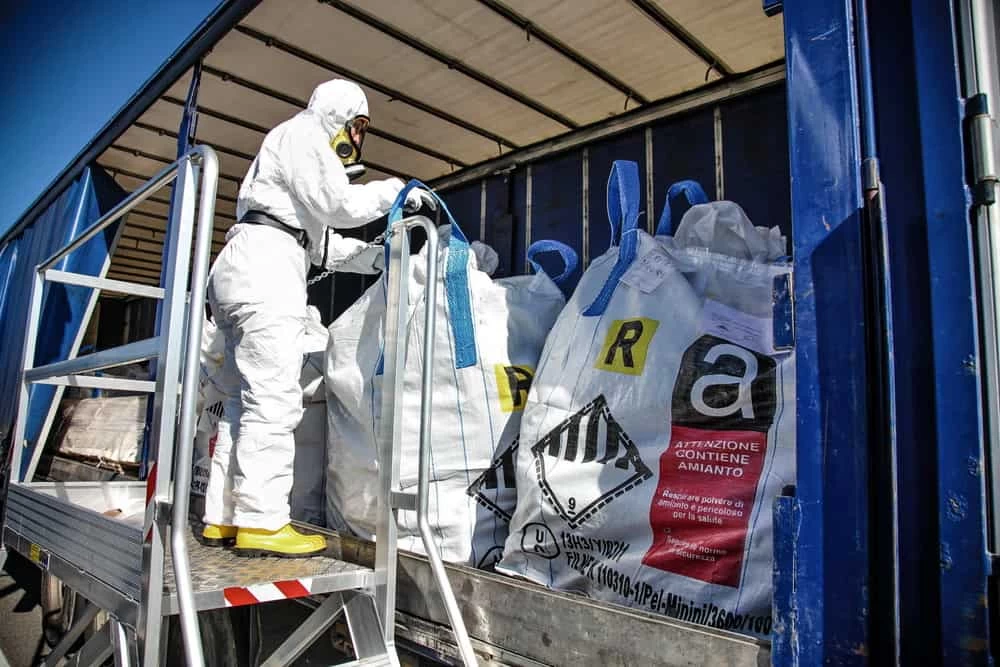
Once permits are in place, the physical work follows a clear sequence. Hazardous materials are identified, abated, and documented first. The NYC Department of Environmental Protection requires at least seven days’ notice before abatement begins, and completion forms the ACP-20 and ACP-21 have to be submitted to DOB before the demolition permit process can advance. All of this happens in-house, with the same team that will do the demolition itself.
The demolition phase is executed in compliance with Local Law 196, which requires every worker on an NYC job site with a site safety plan to hold a valid SST card 40 hours of training for workers, 62 for supervisors. If your project is in an occupied building, near subway infrastructure, or subject to co-op board restrictions on work hours, those constraints are built into the schedule from day one. After the work is done, the site is cleaned, documentation is completed, and if your project involves an insurance claim, our team works directly with your carrier to make sure everything is captured correctly.
Commercial and Residential Demolition Specialists NYC
Every NYC Project Type, Handled Without Referrals
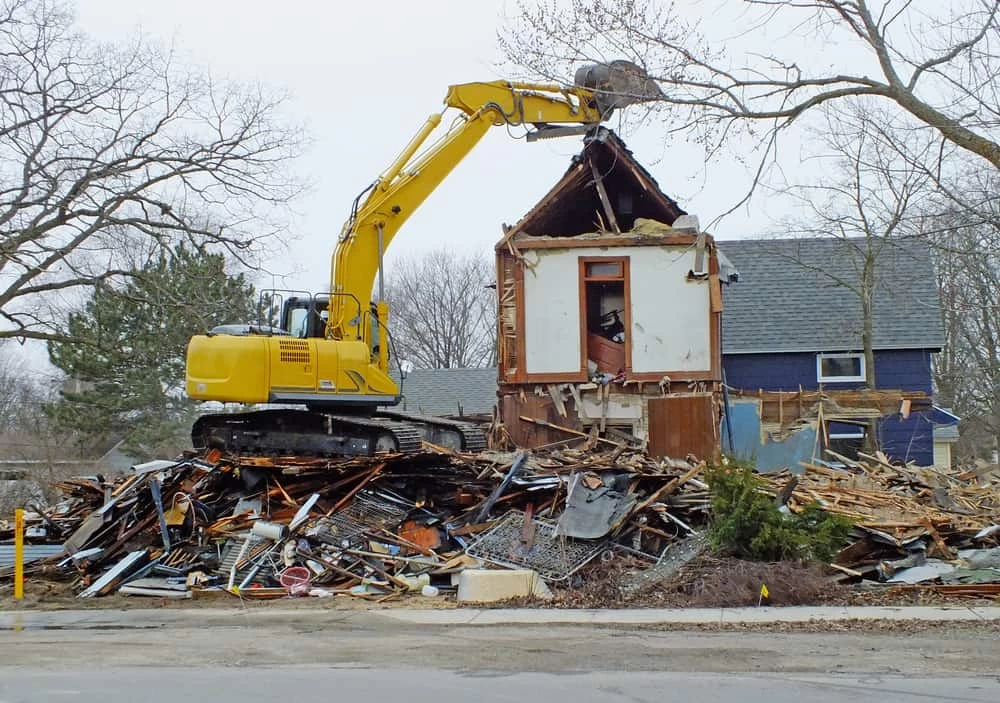
Our scope covers the full range of what NYC property owners actually deal with. Interior demolitions of co-op and condo apartments kitchen gut-outs, bathroom teardowns, basement clearances are handled with full awareness of board approval requirements, restricted work hours, and the elevator scheduling that building supers in Manhattan and Brooklyn expect as a baseline. Selective demolition of specific building components, full residential teardowns, brownstone gut renovations in neighborhoods like Park Slope or Crown Heights, commercial office and retail demolitions in Midtown or Long Island City all of it falls within standard scope.
What sets us apart from most demolition contractors in the five boroughs is the in-house integration of services that NYC projects almost always require alongside the physical demo. Asbestos abatement, lead paint removal, mold remediation, water damage restoration, and fire damage restoration are all handled by the same team under one contract. For a property owner dealing with a flood-damaged pre-war apartment in the Upper West Side or a fire-damaged commercial space in Williamsburg, that means one point of contact, one contract, and no gaps between the demo crew and the remediation crew.
Emergency demolition is available around the clock. When a burst steam pipe, a nor’easter, or a fire creates a structural situation that can’t wait until Monday, we respond with documented arrival times within an hour for emergency calls across the five boroughs.
Do I need a permit to demolish walls in my NYC apartment?
It depends on what you’re taking down and where. In New York City, non-load-bearing interior walls can sometimes be removed under an Alt-3 permit, which covers minor alterations that don’t affect use, egress, or occupancy. But if your project involves load-bearing walls, changes to plumbing or electrical, or anything that affects the building’s structural integrity, you’re looking at an Alt-2 permit at minimum and possibly a full demolition permit depending on the scope.
On top of the permit question, any building constructed before 1987 requires an asbestos investigation before the DOB will issue a permit. That means an ACP-5 report has to be filed first. In NYC, where most of the residential building stock especially in neighborhoods like the Upper East Side, Harlem, or Flatbush predates that threshold by decades, this step is rarely optional. Skipping it isn’t just a code violation; it puts you, your contractor, and your neighbors at risk.
What does an asbestos investigation actually involve before demolition in NYC?
Before the NYC Department of Buildings will issue a demolition permit for any building constructed before 1987, you need an ACP-5 form a completed asbestos investigation report. This involves a licensed asbestos investigator physically inspecting the areas to be disturbed and collecting samples from suspect materials: pipe insulation, floor tiles, ceiling tiles, joint compound, roofing materials, and more. The results determine whether asbestos-containing materials are present and, if so, what type of abatement is required before demolition can proceed.
If asbestos is found, the NYC Department of Environmental Protection requires at least seven days’ written notice before abatement work begins. When the abatement is complete, we submit ACP-20 and ACP-21 completion forms to the DOB. Only after that documentation is accepted can the demolition permit process move forward. In pre-war buildings which make up a significant portion of the housing stock in Manhattan, Brooklyn, and the Bronx this process is almost always triggered. Having a contractor who handles the investigation, abatement, and permit filing in-house means this doesn’t become a six-week delay.
How long does it take to get a demolition permit approved in New York City?
For a full demolition permit in NYC, you should budget four to eight weeks for processing through DOB NOW, the city’s online permit portal. That timeline assumes your application is complete meaning the asbestos investigation report is filed, the site safety plan is in order, utility disconnection is documented, engineering drawings are included if required, and neighbor notification has been completed. Missing any of these items triggers a rejection or a deficiency notice, which restarts the clock.
Professional certification where a licensed engineer or architect self-certifies the application to speed up review used to be a common way to shorten this timeline. However, as of July 2025, NYC DOB Buildings Bulletin BB 2025-005 restricts professional certification for applications involving mechanical demolition equipment or residential buildings with demolition scope. If your project falls into either category, plan for the standard review timeline and start the permit process as early as possible. The more lead time you give yourself, the less the permit timeline affects your overall schedule.
What is Local Law 196 and does it apply to my NYC demolition project?
Local Law 196 of 2017 requires that all workers on New York City construction and demolition sites that need a Site Safety Plan complete a minimum of 40 hours of Site Safety Training and carry a valid SST Worker Card. Supervisors must complete 62 hours of SST Supervisor training. Beyond the crew-level requirements, the law also mandates specific oversight roles based on project scale: a Construction Superintendent for projects nine stories and below, a Site Safety Manager for ten to fourteen stories, and a Site Safety Coordinator for fifteen stories and above or any project exceeding 100,000 square feet.
If your contractor’s workers don’t hold the required SST credentials, you as the property owner can face stop-work orders, DOB fines, and project delays that compound quickly in a city where every idle day has a cost. This is especially relevant for larger gut renovation projects in Manhattan high-rises or multi-story commercial buildings in Queens and Brooklyn. Our crews are fully LL196-compliant, and every worker on every NYC project holds the credentials required for their specific role on that site.
How does demolition work in a NYC co-op or condo building?
Co-op and condo demolition in New York City adds a layer of process that most contractors outside the five boroughs aren’t familiar with. Before any physical work begins, your building’s board of directors typically requires a renovation application sometimes called an alteration agreement that outlines the scope of work, the contractor’s credentials, proof of insurance naming the building corporation as an additional insured, and a proposed work schedule. Boards in buildings across the Upper West Side, Park Slope, and similar neighborhoods commonly restrict work hours to weekdays between 9:00 a.m. and 4:00 p.m. and require advance scheduling for freight elevator use.
Dust containment is also a standard board requirement, not just a courtesy. Demolition in a co-op apartment affects neighbors on multiple sides, above and below and boards take complaints seriously. Contractors who don’t understand these dynamics create board rejections and delays that can push a project back by months. Working with a contractor who has completed demolition projects across NYC’s co-op and condo stock means the board’s requirements are addressed before the application is submitted, not after it gets kicked back.
What happens if water or fire damage triggered the need for demolition in my NYC building?
Damage-driven demolition in New York City comes with two simultaneous processes running at once: the physical work of tearing out what’s damaged, and the insurance claim that’s supposed to pay for it. Most property owners find that managing both at the same time especially in a city where carriers aren’t always quick to respond is where things get complicated. The documentation requirements for an insurance claim are specific: damage has to be recorded in a format the adjuster will accept, and scope has to be clearly defined before restoration begins.
We work directly with insurance carriers on behalf of NYC property owners, documenting damage appropriately for claim purposes and communicating with adjusters throughout the process. This is particularly relevant for the kinds of emergencies that happen regularly in older NYC buildings burst steam pipes in pre-war Manhattan apartments, flooding from aging water mains in Queens, fire damage in Brooklyn multi-family buildings. We handle emergency demolition, hazardous material abatement if disturbed materials are present, mold remediation, and restoration all under one contract. For property owners already dealing with the stress of a damage event, not having to coordinate multiple contractors while simultaneously managing a claim makes a real difference.