Your 1940s Tudor Deserves More Than a Wrecking Crew
Most homes in Bellerose Manor were built before 1960. That means asbestos, lead paint, and a permit process that trips up contractors who don’t know NYC DOB rules we handle all of it, start to finish.
I needed a professional consultation explanation of procedure for safe removal of Asbestos in my apartment complex. Without having an account yet, I was very impressed with the caring, knowledgeable and generous advice offered by Jessica, and will look forward to doing business in the future. Thank you so much! I feel much more informed about a sometimes scary endeavor. Peace. Nancy Silva Mineola, NY.
Mia Munoz
Used this company to clean up some water flood in my house. They were fast and easy to work with.very professional, Would recommend to anyone!
Nini Valle
Great company, had a flood and they responded quickly and efficiently. Billed my insurance company directly. I highly recommend this company!
joe colapietro, jr
I had pipe freeze in my basement right before a snow storm and they made to within an hour to help start the clean up process. They we by our side throughout the entire process and even helped with the insurance company. They did such a great job with the cleanup, repair, remidiation, I contracted them to perform the repairs and finishes in the basement. They came with enough manpower and material to get the job done. Leo and Jessica were nothing but a pleasure to deal with!!
Cristian Arredondo c
I had some water damage in my home and Green Island was able to take care of my issue quickly and effectively. I am very pleased with the work they did. They responded quickly and were very professional.
Michael M
Outstanding service! From the office to the field crew everyone was friendly, helpful and responsive. I highly recommend Green Island Group.
What Changes When You Work With the Right Crew in Bellerose Manor
When you’re dealing with a home built in the 1940s or 1950s which describes most of Bellerose Manor demolition isn’t just a physical job. It’s a regulatory one. Virtually every structure in this neighborhood was built before asbestos and lead paint were regulated, which means those materials are almost certainly present before a single wall comes down. Hiring a contractor who doesn’t hold both NYC DOB demolition credentials and NYS DOL asbestos abatement certification doesn’t just slow the job down it can stop it entirely and put you on the wrong side of a city inspection.
What you actually get when everything is handled correctly: a project that moves on a clear timeline, with no mid-job halt because someone discovered something they weren’t licensed to touch. The permit is filed before work starts. The hazardous materials are surveyed, documented, and removed legally. The demolition follows. There’s no scramble, no gap between vendors, and no surprise costs showing up after the fact.
Bellerose Manor’s position right on the Queens-Nassau line creates a specific problem for homeowners here. The neighborhood looks and feels like Nassau County the setbacks, the tree lines, the detached single-family homes but it’s under NYC jurisdiction, and the rules are different. Contractors who primarily work Nassau County aren’t automatically licensed to pull permits in Queens. That distinction matters more in this neighborhood than almost anywhere else in eastern Queens, and it’s one of the first things worth confirming before anyone starts work.
We’re a full-service demolition and environmental remediation contractor based in Bohemia, NY, with more than 12 years of active project work across Long Island and all five NYC boroughs. That includes Queens and specifically the eastern Queens communities like Bellerose Manor, Glen Oaks, and Queens Village where the city and suburban worlds meet at a complicated regulatory boundary.
What makes the difference here isn’t just volume. It’s that demolition and asbestos abatement live under the same roof. You’re not managing two contractors, two timelines, or two sets of paperwork. We carry the NYC DOB license, the NYS DOL abatement certification, and the USEPA compliance credentials and we handle everything from the pre-demolition hazardous materials survey through final site cleanup.
With 340-plus completed projects, a 4.7-star rating, and a team that answers the phone when you call, the experience on the other end of this process is straightforward. No runaround. No vague timelines. Just a clear plan for what needs to happen and who’s responsible for making it happen.
No Surprises Here's Exactly What to Expect in Bellerose Manor
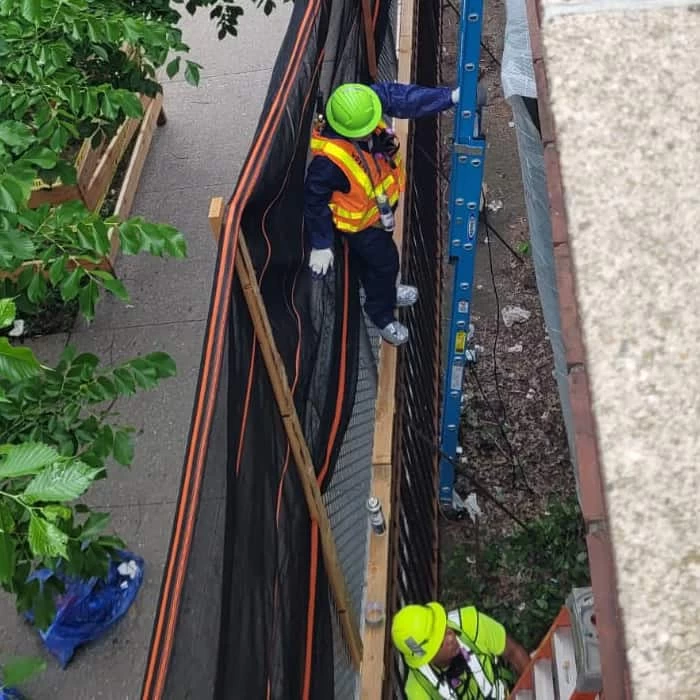
The first thing that happens before any demolition work begins in Bellerose Manor is a certified pre-demolition hazardous materials survey. Under NYC Local Law 76 and NYS DOL Industrial Code Rule 56, this isn’t optional it’s required by law before a permit is even issued. Given that nearly every home in this neighborhood was built before 1960, the survey almost always identifies asbestos-containing materials: floor tiles, ceiling tiles, pipe insulation, joint compound, or roofing materials. That survey drives everything that follows.
Once the survey is complete, we manage the NYC DOB permit application. For a full demolition, that process includes a safety plan, dust control plan, and neighbor notification and it typically takes four to eight weeks to clear. For interior selective demolition, an Alt2 permit is required instead. Either way, you’re not navigating the DOB’s Queens office on your own. That’s handled for you.
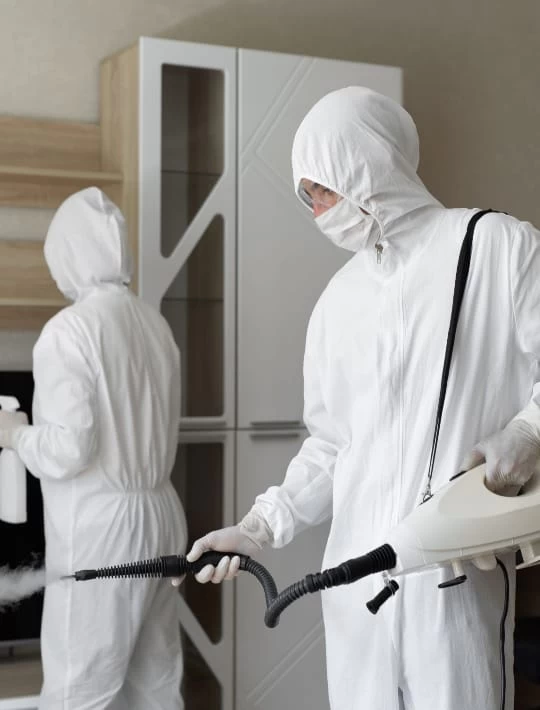
After permits are in place, abatement comes first legally required before demolition can proceed. Once abatement is cleared and air monitoring confirms the space is safe, demolition begins. The scope, whether that’s a full teardown, a gut renovation, or targeted structural removal, is executed according to the permitted plan. Site cleanup, debris removal, and final documentation close the project out. From survey to clean site, the entire process runs under one contract and one point of contact.
Residential and Commercial Demolition, Bellerose Manor
One License Covers the Whole Job Abatement Included
We handle the full range of demolition work that comes up in Bellerose Manor: full residential teardowns for the teardown-and-rebuild projects that have become increasingly common as the neighborhood’s older housing stock turns over, interior gut demolitions for homeowners updating kitchens and bathrooms that haven’t been touched since the Eisenhower administration, and selective structural demolition for storm-damaged or flood-compromised areas of the home. The September 2023 flash floods that hit this neighborhood hard are a reminder that water-related demolition removing damaged framing, waterlogged basement finishes, and compromised structural elements is a real and recurring need here, not a rare event.
Every project includes the pre-demolition asbestos survey, permit management, licensed hazardous material abatement where required, independent air monitoring (mandated by New York State law after abatement), debris removal, and site cleanup. For disaster-related demolition tied to a homeowner’s insurance claim, we bill the carrier directly which matters when you’re already dealing with the stress of a damaged property and don’t need the added burden of managing reimbursement paperwork.
The architectural character of Bellerose Manor the Tudor Revival detailing, the slate roofs, the decorative brickwork also means selective demolition here requires precision. When the goal is to renovate rather than replace, protecting the structural and aesthetic elements that give these homes their value is part of the job. That’s not something every demolition crew is equipped to do carefully.
Do I need a NYC DOB permit for demolition work in Bellerose Manor, NY?
Yes and this is where Bellerose Manor’s location creates real confusion for homeowners. Because the neighborhood sits right on the Queens-Nassau County line and has the feel of a suburban Nassau community, some residents assume Nassau County rules apply to their property. They don’t. Bellerose Manor is within New York City limits, which means all demolition work falls under NYC Department of Buildings jurisdiction.
For a full structural demolition, the DOB requires a formal demolition permit that includes a certified asbestos survey, a safety plan, a dust control plan, and neighbor notification all before the permit is issued. The process typically takes four to eight weeks. For interior demolition or gut renovations that don’t affect the building’s egress or occupancy classification, an Alt2 permit is required instead. Either way, unpermitted demolition in Queens carries real consequences: stop-work orders, fines, and complications when you go to sell. We manage the permit process from start to finish so you’re not navigating the DOB’s Queens office on your own.
Does my Bellerose Manor home likely have asbestos, and what does that mean for demolition?
If your home was built before 1980 which covers virtually every property in Bellerose Manor the honest answer is: probably yes, somewhere. Asbestos-containing materials were used extensively in residential construction through the late 1970s, and in a neighborhood where the housing stock runs predominantly from the 1930s through the 1950s, it shows up regularly in floor tiles, ceiling tiles, pipe and boiler insulation, joint compound, and roofing materials.
Under NYC Local Law 76 and NYS DOL Industrial Code Rule 56, a certified asbestos survey is legally required before any demolition or renovation work begins no exceptions. If asbestos is found above regulated thresholds, it must be abated by a licensed contractor before demolition can proceed. That abatement is then followed by mandatory independent air monitoring to confirm the space is safe before reoccupancy or continued work. We’re licensed for both the abatement and the demolition, so the survey, removal, air clearance, and demolition all happen under one project plan no stopping work to find a second contractor.
How much does demolition cost for a home in Queens, NY?
National pricing averages you’ll find online often quoted in the $1,100 to $2,900 range don’t apply in New York, and they especially don’t apply in Queens. The regulatory stack here adds real cost to every project: a certified pre-demolition asbestos survey, NYC DOB permit fees, required independent air monitoring (typically $600 to $1,200 per day, mandated by state law), licensed hazardous waste disposal, and the abatement work itself if asbestos or lead is present. In a neighborhood like Bellerose Manor, where pre-1960 construction is the norm, abatement is rarely avoidable.
Full residential demolition in Queens, properly permitted and compliant, typically runs significantly higher than national averages once the full regulatory compliance stack is factored in. Interior gut demolitions vary based on scope and what’s discovered during the survey. The most important thing to understand is that a quote that excludes the survey, abatement, air monitoring, and permit fees isn’t a lower price it’s an incomplete one that will cost more when those legally required steps show up later. We provide quotes that cover the full job.
What happens if my basement flooded do I need demolition before restoration can start?
Often, yes. After significant water intrusion the kind Bellerose Manor saw during the September 2023 flash floods water-damaged framing, drywall, insulation, and flooring typically need to come out before any restoration work can begin. Leaving compromised materials in place traps moisture, accelerates mold growth, and creates structural problems that compound over time. Demolition in this context isn’t about tearing the house down it’s about removing what can’t be saved so the restoration has a clean foundation to work from.
The high water table in eastern Queens makes basements in this neighborhood particularly vulnerable, and the 1930s through 1950s basement construction common in Bellerose Manor wasn’t designed for the intensity of today’s storm events. We handle water-damage-related demolition as part of our full-service offering, and for work tied to an insurance claim, we bill the carrier directly. That means you’re not fronting the cost and waiting for reimbursement while also managing a damaged property.
Can a contractor licensed in Nassau County do demolition work in Bellerose Manor?
Not without also holding NYC DOB credentials. This is one of the most common and costly assumptions homeowners in Bellerose Manor make. The neighborhood borders Nassau County directly Floral Park Village is just across the line and many contractors who serve the Nassau market are well-established and legitimate operators. But Nassau County licensing does not carry over into New York City. Queens falls under NYC Department of Buildings jurisdiction, and the DOB has its own licensing requirements for demolition contractors that are separate from anything Nassau County issues.
A contractor who primarily works in Nassau and doesn’t hold NYC DOB authorization may not be able to legally pull a demolition permit for your property, even if they’ve done similar work a few blocks away in Floral Park. Before you sign anything, confirm that your contractor holds active NYC DOB demolition licensing not just a general contractor’s license or Nassau County credentials. We hold NYC DOB authorization, NYS DOL abatement certification, and USEPA compliance credentials, all of which apply specifically to work in Queens.
How long does a full demolition project in Bellerose Manor typically take from start to finish?
The honest answer is that the permitting process sets the timeline more than the physical work does. For a full residential demolition in Bellerose Manor, the NYC DOB permit which requires a certified asbestos survey, safety plan, dust control plan, and neighbor notification before it’s issued typically takes four to eight weeks to clear. That clock starts after the asbestos survey is complete, so the earlier the survey happens, the earlier the permit process begins.
Once permits are in hand, asbestos abatement (if required, which it usually is in pre-1960 homes) runs its course, followed by mandatory independent air monitoring to confirm clearance. The physical demolition itself, depending on the scope, can move quickly relative to the front-end process. Interior gut demolitions on a single floor might take a few days. A full teardown of a detached single-family home in a neighborhood like Bellerose Manor typically runs a week or more for the physical work, with site cleanup and debris removal adding additional time. We walk you through a realistic project timeline before work begins so your renovation schedule, GC, or real estate closing isn’t built around a guess.