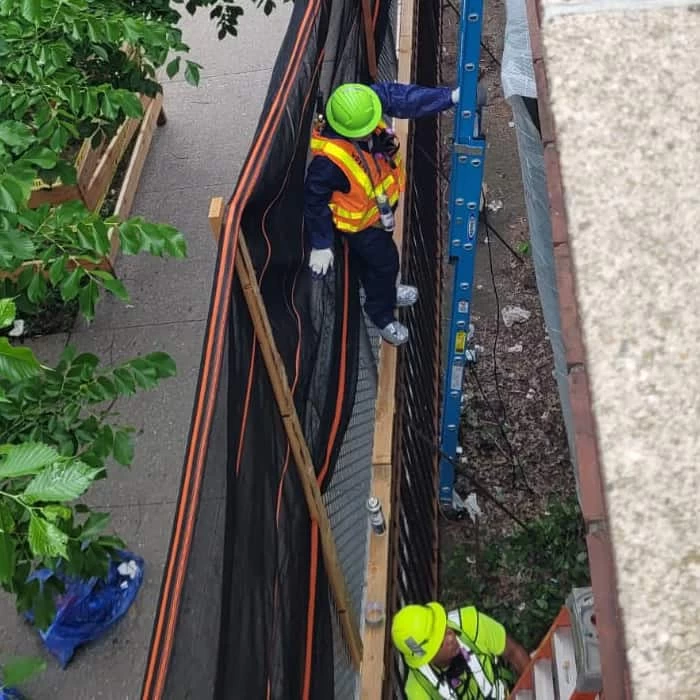
Pre-War Buildings in Fresh Pond Demand More Than a Wrecking Crew
When your building was built before 1939 and in Fresh Pond, most were demolition isn’t just demolition. It’s asbestos testing, DEP permits, and licensed abatement before a single wall comes down. We handle all of it.
I needed a professional consultation explanation of procedure for safe removal of Asbestos in my apartment complex. Without having an account yet, I was very impressed with the caring, knowledgeable and generous advice offered by Jessica, and will look forward to doing business in the future. Thank you so much! I feel much more informed about a sometimes scary endeavor. Peace. Nancy Silva Mineola, NY.
Mia Munoz
Used this company to clean up some water flood in my house. They were fast and easy to work with.very professional, Would recommend to anyone!
Nini Valle
Great company, had a flood and they responded quickly and efficiently. Billed my insurance company directly. I highly recommend this company!
joe colapietro, jr
I had pipe freeze in my basement right before a snow storm and they made to within an hour to help start the clean up process. They we by our side throughout the entire process and even helped with the insurance company. They did such a great job with the cleanup, repair, remidiation, I contracted them to perform the repairs and finishes in the basement. They came with enough manpower and material to get the job done. Leo and Jessica were nothing but a pleasure to deal with!!
Cristian Arredondo c
I had some water damage in my home and Green Island was able to take care of my issue quickly and effectively. I am very pleased with the work they did. They responded quickly and were very professional.
Michael M
Outstanding service! From the office to the field crew everyone was friendly, helpful and responsive. I highly recommend Green Island Group.
The most expensive thing that can happen on a demolition job in Fresh Pond isn’t the demo itself it’s finding asbestos behind a wall when your contractor isn’t licensed to touch it. Work stops. The site gets flagged. Your timeline and budget are gone. That’s the reality of working in a neighborhood where almost every building predates 1940, and it’s the exact situation we’re built to prevent.
Before anything gets torn out, we identify what’s there. Asbestos in floor tiles, pipe insulation, ceiling materials it’s common in buildings along the Fresh Pond Road corridor, and it’s not a problem if you know it’s coming. We handle the assessment, the abatement, and the demolition under one contract. No handoffs, no waiting on a second crew, no gaps in the chain of custody.
For landlords managing multi-unit buildings near Metropolitan Avenue or property owners prepping a mixed-use space for renovation, that continuity matters. You get a single point of contact, a real timeline, and a site that’s cleared and ready for the next phase not a half-finished job waiting on a subcontractor who’s three weeks out.
We’ve been doing this work across New York City and Long Island for over 12 years. That includes plenty of jobs in Fresh Pond and the surrounding western Queens neighborhoods Ridgewood, Glendale, and Maspeth. We know what these pre-war buildings hold. We know what the NYC Department of Buildings requires before a permit gets issued. And we know how to move a project through the DEP certification process without it becoming a months-long headache for you.
We’re fully licensed through the NYC DOB, certified by the NYC DEP for asbestos abatement, and compliant with NYS DOL Industrial Code Rule 56. Those aren’t just credentials on a wall they’re what make it legal for us to complete every phase of your project without stopping to bring in someone else. More than 340 completed projects and a 4.7-star rating back that up.
What Actually Happens From First Call to Cleared Site
It starts with a walkthrough. We come to the property, assess what you’re working with, and give you a clear picture of what the job involves including whether hazardous materials are likely based on the building’s age and construction type. In Fresh Pond, where most buildings went up before World War II, that assessment almost always turns up something. Better to know upfront than mid-demo.
From there, we handle the ACP-5 asbestos investigation that NYC requires before the Department of Buildings will issue any demolition or renovation permit. If abatement is needed and in pre-1939 construction, it usually is we complete that work first, with proper containment, licensed disposal, and air clearance testing before demo begins. We pull all the permits. You don’t file anything, track approvals, or deal with DOB inspectors directly.
Once the site is cleared for demolition, we execute the scope whether that’s a full structural teardown, an interior gut, or selective demo on specific areas. In tight Fresh Pond blocks where your building shares walls with neighbors, we use the right equipment and containment systems to protect adjacent structures throughout. When the job is done, debris is sorted, hazardous waste goes to a licensed facility, and the site is left ready for whatever comes next.
Every Phase Covered From Asbestos Assessment to Final Clearance
We offer full-service residential and commercial demolition throughout Fresh Pond and the surrounding Queens County corridor including interior gut demolition, selective structural demo, full building teardowns, and emergency demolition for fire or water-damaged properties. Every project includes pre-demolition hazardous material testing as a standard step, not an add-on you have to ask for.
For residential work whether you’re gutting a pre-war apartment on a side street off Fresh Pond Road or tearing out a damaged basement in a building near the Metropolitan Avenue corridor the process is built around NYC’s regulatory requirements from day one. That means the ACP-5 investigation, DEP abatement permitting if needed, licensed asbestos and lead disposal, and full DOB compliance are already baked into the scope. Nothing gets discovered mid-project that wasn’t accounted for.
On the commercial side, we work with property owners and investors renovating mixed-use buildings, storefronts, and light industrial spaces throughout Fresh Pond, Ridgewood, Glendale, and Maspeth. For emergency situations a burst pipe in a 1920s building, fire damage in an attached row house we’re available around the clock, and we bill insurance carriers directly so you’re not managing that process on top of everything else.
Do I need an asbestos test before demolition in Fresh Pond, NY?
Yes and it’s not optional. New York City requires an asbestos investigation (documented on an ACP-5 form completed by a NYC DEP-certified investigator) before the Department of Buildings will issue a permit for any demolition or major renovation project in a building that may contain asbestos-containing material. In Fresh Pond, where the overwhelming majority of buildings were constructed before 1939, that requirement applies to virtually every project a full gut renovation, a single-room teardown, even significant structural alterations.
If the investigation finds asbestos-containing material that will be disturbed by the work, a separate DEP abatement permit is required before demolition can begin. The abatement must be completed by a DEP-certified contractor, with air clearance testing performed afterward to confirm the space is safe. We handle the investigation, the abatement permit, the abatement work itself, and the clearance testing so the permit process doesn’t become a separate project you have to manage before the actual demo can start.
How much does interior demolition typically cost in Fresh Pond, NY?
Interior demolition costs in Fresh Pond vary depending on the size of the space, the scope of work, and critically what the building contains. The age of the housing stock here means most projects will include some level of hazardous material handling, which adds cost that a basic demolition quote may not reflect. Asbestos abatement, licensed disposal of ACM waste, lead paint assessment, and DEP permitting are all legally required line items in pre-war Fresh Pond buildings, and they need to be in your budget from the start.
A straightforward interior gut of a single-unit apartment in a pre-war Fresh Pond building might run anywhere from a few thousand dollars for a small space to significantly more for larger units or multi-room scopes especially once abatement is factored in. The most reliable way to get an accurate number is a walkthrough with us so we can assess the hazardous material risk upfront and give you a quote that reflects the full legal scope of the job, not just the demolition labor.
What permits are required for demolition work in New York City?
Demolition in New York City runs through two separate agencies, and both need to be addressed before work can legally begin. The NYC Department of Buildings issues the demolition permit itself, which requires the contractor to be DOB-licensed and the project to meet NYC Building Code requirements. Before that permit is issued, the NYC Department of Environmental Protection requires an asbestos investigation for any building constructed before April 1, 1987 which covers essentially every structure in Fresh Pond.
If asbestos is found and will be disturbed, a separate DEP abatement permit is required, and the abatement must be completed before demolition proceeds. For residential properties built before 1978, NYC Local Law 31 also requires a certified lead paint inspection before work disturbing painted surfaces begins. On top of that, the EPA’s NESHAP regulations require advance notification for projects involving asbestos above certain threshold quantities. It’s a layered process, but when you work with a contractor who holds all the relevant licenses, it runs in sequence rather than becoming a series of stops and starts.
Can a demolition contractor in Fresh Pond also handle asbestos removal?
Most can’t at least not legally under one license. Asbestos abatement in New York City requires NYC DEP certification, which is separate from a standard demolition contractor’s NYC DOB license. Many demolition contractors operating in Queens hold one but not both, which means they either subcontract the abatement work (adding time and coordination complexity to your project) or they proceed without it, which creates serious regulatory and liability exposure for the property owner.
We hold both credentials. We’re licensed by the NYC DOB for demolition and certified by the NYC DEP for asbestos abatement, along with full compliance under NYS DOL Industrial Code Rule 56. In a neighborhood like Fresh Pond where pre-1939 construction is the rule, not the exception having one contractor handle both phases isn’t a convenience, it’s the practical difference between a project that moves forward on schedule and one that stalls when asbestos turns up and the demo crew has to step back.
How long does a demolition project take in a pre-war Fresh Pond building?
Timeline depends on scope, but in Fresh Pond’s pre-war building stock, the regulatory process is often what determines the schedule more than the physical demolition itself. The asbestos investigation, DEP permit application (if abatement is required), abatement work, and air clearance testing all happen before demolition begins and each step has its own timeline. Rushing any of them creates compliance problems that slow the project down further.
For a typical interior gut in a pre-war apartment, you’re generally looking at one to two weeks for the investigation and permitting phase, followed by the abatement work (which varies based on the quantity and type of ACM found), and then the demolition itself, which for a single unit can often be completed in a few days once the site is cleared. Larger projects full building teardowns, multi-unit gut renovations, commercial spaces run longer. The best thing you can do for your timeline is start the process early and work with us so we can move through the regulatory steps without delays caused by licensing gaps.
Does homeowners or landlord insurance cover demolition costs in Fresh Pond, NY?
It depends on the cause. If demolition is needed because of a covered event fire damage, water damage from a burst pipe, storm-related structural damage most homeowner and landlord insurance policies will cover the cost of demolition and debris removal as part of the broader claim. In Fresh Pond, where aging pre-war plumbing infrastructure makes pipe failures a real and recurring risk, this comes up more often than property owners expect.
What insurance typically won’t cover is elective demolition tearing out a kitchen for a renovation, gutting a unit to update it, or structural demolition tied to a planned redevelopment. In those cases, the cost comes out of pocket, and it’s worth getting a complete quote upfront that includes all the regulatory requirements specific to NYC. We bill insurance carriers directly for covered events, which means you’re not fronting costs and waiting for reimbursement while also managing a claim. For landlords with multiple units in a building, that matters.