Little Neck's Older Homes Deserve More Than a Sledgehammer
Most homes in Little Neck were built before 1980 and that changes everything about how demolition needs to be handled. We manage the asbestos, the permits, and the work itself, so nothing falls through the cracks.
I needed a professional consultation explanation of procedure for safe removal of Asbestos in my apartment complex. Without having an account yet, I was very impressed with the caring, knowledgeable and generous advice offered by Jessica, and will look forward to doing business in the future. Thank you so much! I feel much more informed about a sometimes scary endeavor. Peace. Nancy Silva Mineola, NY.
Mia Munoz
Used this company to clean up some water flood in my house. They were fast and easy to work with.very professional, Would recommend to anyone!
Nini Valle
Great company, had a flood and they responded quickly and efficiently. Billed my insurance company directly. I highly recommend this company!
joe colapietro, jr
I had pipe freeze in my basement right before a snow storm and they made to within an hour to help start the clean up process. They we by our side throughout the entire process and even helped with the insurance company. They did such a great job with the cleanup, repair, remidiation, I contracted them to perform the repairs and finishes in the basement. They came with enough manpower and material to get the job done. Leo and Jessica were nothing but a pleasure to deal with!!
Cristian Arredondo c
I had some water damage in my home and Green Island was able to take care of my issue quickly and effectively. I am very pleased with the work they did. They responded quickly and were very professional.
Michael M
Outstanding service! From the office to the field crew everyone was friendly, helpful and responsive. I highly recommend Green Island Group.
When your home in Little Neck was built in the 1950s or earlier which describes most of the neighborhood opening up walls, gutting a kitchen, or tearing down a structure isn’t as simple as hiring someone with a dumpster. There’s a real chance asbestos is sitting in the floor tiles, ceiling materials, or pipe insulation. NYC Local Law 76 requires a licensed asbestos investigation before any demolition or renovation project in Queens, no exceptions. Skipping that step doesn’t save money it creates liability.
What you actually get when the process is handled correctly is a project that moves forward without stop-work orders, surprise abatement discoveries mid-job, or competing contractors pointing fingers at each other. One team handles the survey, the abatement, and the demolition under one contract. That means one timeline, one point of contact, and no gaps in accountability.
For homeowners near the bay or along the older blocks off Little Neck Parkway, there’s also the flood and storm damage side of this. Water-damaged framing and mold-compromised drywall don’t wait for a convenient Monday morning and neither do we. We’re available 24/7 because that’s how this business actually operates.
12 Years, 340 Projects, and We Know What's Inside Little Neck's Walls
We’ve been operating across Long Island and all five boroughs for over 12 years, with more than 340 completed demolition projects. That volume matters because it builds pattern recognition the kind you can’t fake. We know what shows up inside a 1952 Cape Cod off Northern Boulevard in Little Neck. We know what a 1938 Colonial in northeastern Queens is likely hiding behind the drywall.
We’re based in Bohemia, NY, and we work regularly throughout Queens and into Nassau County. Little Neck’s position right at that county line suburban in feel but fully under NYC DOB jurisdiction is a combination we understand well. Not every contractor who works in Great Neck or Bayside is licensed to pull demolition permits in New York City. We are.
We also bill insurance carriers directly, which matters when the work stems from fire, flooding, or storm damage. You’ve got enough to manage chasing paperwork between your contractor and your insurer shouldn’t be part of it.
No Guesswork Here's Exactly What the Process Looks Like
It starts with a site assessment. Before any work is scoped or priced, we need to understand what we’re dealing with the age of the structure, what materials are present, and what the project requires from a permitting standpoint. For most Little Neck homes, that includes an asbestos investigation as a baseline requirement under NYC Local Law 76. That’s not optional, and any contractor who skips it is putting you at risk.
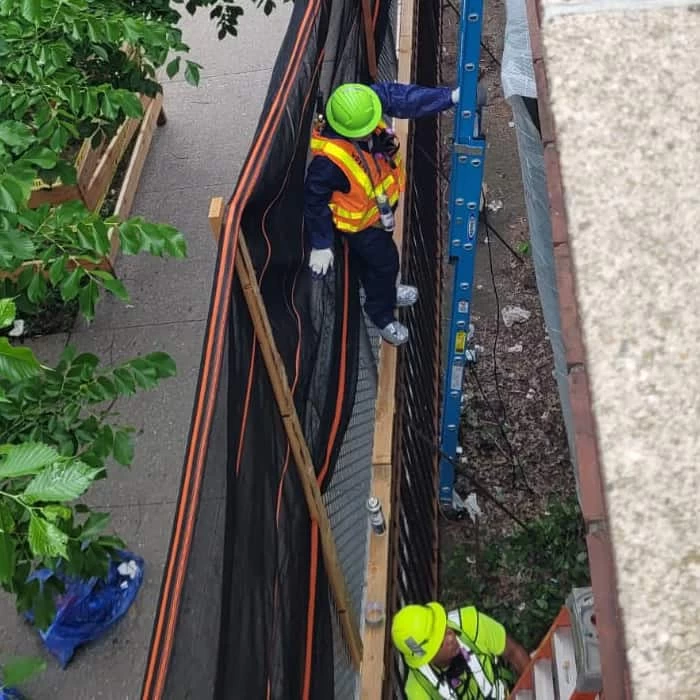
Once the scope is clear, we handle the permits. That means filing with the NYC Department of Buildings, submitting USEPA NESHAP advance notification where required, and confirming utility disconnections before a single wall comes down. If asbestos or lead is present and in a neighborhood where the median home was built in 1956, it usually is abatement happens first, with proper containment and air monitoring in place.
Then comes the actual demolition. Whether it’s a full teardown, a gut renovation, or selective interior work, our crew follows a clean, sequenced process. Debris is removed, the site is left clear, and you’re not left managing the aftermath. If you’re commuting into the city via the LIRR and can’t be on-site during the day, we communicate the progress directly no need to take time off to babysit the job.
Demolition Specialists for Little Neck, NY Properties
What's Actually Included When You Hire Us
Demolition in Little Neck isn’t a single-trade job. The homes here Colonials, Tudors, mid-century splits were built with materials that require licensed handling before the structural work can even begin. What we offer is a fully integrated scope: asbestos abatement, lead abatement, mold remediation, and demolition handled by one team, under one license, on one timeline. You don’t get handed off to a subcontractor when something unexpected turns up inside the wall.
For residential projects, that includes everything from full structural teardowns and gut renovations to selective interior demolition removing exactly what needs to go while protecting what stays. For commercial work along Northern Boulevard or in multi-family buildings like the co-ops built in the early 1960s throughout the neighborhood, we coordinate with building management, follow NYC multi-dwelling requirements, and keep disruption to adjacent units and neighboring properties to a minimum.
Every project includes proper permit filing with the NYC DOB, licensed hazardous material handling where applicable, debris removal, and site cleanup. If your project is insurance-related storm damage, fire, flooding near the bay we handle the billing directly with your carrier. The goal is a clean site, a closed permit, and no loose ends when the job is done.
Does demolition in Little Neck require an asbestos test first?
Yes and this isn’t optional. NYC Local Law 76 requires a licensed asbestos investigation before any demolition or renovation project within the five boroughs, which includes all of Little Neck. It doesn’t matter if the project is a full teardown or a single-room gut renovation. If you’re disturbing materials in a building that may contain asbestos, the investigation has to happen first.
In Little Neck specifically, this requirement applies to the vast majority of projects because most of the neighborhood’s housing stock was built before 1980 the threshold year for likely asbestos-containing materials. Floor tiles, ceiling tiles, pipe insulation, joint compound, and roofing materials from that era routinely contain asbestos. The investigation is conducted by a licensed inspector, and if asbestos is confirmed, abatement has to be completed before demolition proceeds. We handle both steps, so there’s no delay waiting for a second contractor to come in after the survey.
What permits are required for demolition work in Queens, NY?
For any structural demolition in Queens which includes Little Neck you need a demolition permit filed through the NYC Department of Buildings. Full demolitions require a standalone demo permit. Interior alterations, depending on scope, may fall under an Alt2 permit. Either way, the application goes through DOB NOW, and work cannot legally begin until the permit is issued and utilities are formally disconnected.
On top of the DOB permit, if asbestos is present above certain thresholds, USEPA NESHAP regulations require advance written notification to regulators before demolition starts. NYC DEP certification is also required separately from the state license for asbestos abatement work within the five boroughs. That’s three separate regulatory layers DOB, DEP, and EPA that all need to be in order before the first wall comes down. We manage all of it as part of the project scope, so you’re not tracking down permit statuses while trying to run your life.
How much does demolition typically cost for a Little Neck home?
It depends heavily on the scope, the size of the structure, and what hazardous materials are present and in Little Neck, that last factor is almost always part of the equation. Asbestos abatement alone in New York typically runs $20 to $65 per square foot, with full residential abatement projects commonly ranging from $3,000 to $15,000 or more depending on what’s found. New York’s licensing, certification, and disposal requirements make this market materially more expensive than most of the country.
For a full residential teardown in Little Neck, total project costs can range significantly based on lot access, structure size, material conditions, and permitting complexity. The most important thing is getting a comprehensive, itemized quote upfront one that accounts for the asbestos survey, abatement if needed, permit fees, utility disconnection, demolition labor, debris removal, and site cleanup. A low number that grows through change orders is far more expensive in the end than a transparent quote that covers the full scope from the start.
Can I do a partial or selective demolition, or is it all-or-nothing?
Selective demolition is very common, and it’s often exactly the right approach for the homes in Little Neck. If you’re renovating a kitchen, gutting a basement, or removing interior walls to open up a floor plan, you don’t need to touch the rest of the structure. Selective interior demolition removes what needs to go specific walls, flooring, ceilings, fixtures while leaving everything else intact and undisturbed.
The key with selective work in older homes is precision. A 1950s Colonial off Douglas Road has structural elements, original materials, and load-bearing walls that need to be identified and respected before any removal begins. That’s not something to leave to a crew that’s guessing. We assess the structure first, map out what’s structural versus what’s cosmetic, and execute the removal in a way that doesn’t create new problems for the renovation work that follows. If hazardous materials are present in the specific areas being demolished, those get addressed first before the structural work proceeds.
What happens if mold or water damage is found during demolition?
It’s more common than most people expect especially in Little Neck, where homes near the bay or in low-lying areas off Northern Boulevard have real exposure to basement flooding, storm surge, and water intrusion over decades. When a crew opens up a wall or pulls up flooring in a 1950s or 1960s home and finds mold or water-damaged framing, the right response is to stop, assess, and remediate before continuing.
Mold begins growing within 24 to 48 hours of water intrusion, and in older structures it can spread behind walls for years without being visible. If it’s found mid-project and the demolition contractor isn’t equipped to handle it, you’re looking at a work stoppage while you source a separate remediation company. We handle mold remediation as part of our integrated services, which means the project doesn’t stall. The affected materials are removed and treated properly, the area is cleared for continued work, and the timeline stays intact. If it’s an insurance-covered loss, we handle the billing directly with your carrier.
Do you handle demolition for co-ops and multi-family buildings in Little Neck?
Yes, and multi-family demolition work comes with a different set of requirements than a standalone residential teardown. Buildings like the co-ops constructed throughout Little Neck in the early 1960s some with several hundred units require coordination with building management, compliance with NYC multi-dwelling law, and a work plan that minimizes impact on occupied units and neighboring residents.
That means careful containment of dust and debris, scheduling that accounts for building access rules and co-op board requirements, and communication with management throughout the project. Interior demolition in an occupied building is not the same job as a teardown on an empty lot, and it shouldn’t be treated that way. We’ve worked in multi-family environments throughout Queens and understand the protocols involved including the asbestos and lead paint requirements that apply to buildings of this age, which in Little Neck almost universally predate the 1980 threshold.