LIC's Buildings Are Complex. Your Demolition Contractor Should Be Too.
Green Island Group handles demolition and asbestos abatement together so your Long Island City project doesn’t stall the moment hazardous materials show up.
I needed a professional consultation explanation of procedure for safe removal of Asbestos in my apartment complex. Without having an account yet, I was very impressed with the caring, knowledgeable and generous advice offered by Jessica, and will look forward to doing business in the future. Thank you so much! I feel much more informed about a sometimes scary endeavor. Peace. Nancy Silva Mineola, NY.
Mia Munoz
Used this company to clean up some water flood in my house. They were fast and easy to work with.very professional, Would recommend to anyone!
Nini Valle
Great company, had a flood and they responded quickly and efficiently. Billed my insurance company directly. I highly recommend this company!
joe colapietro, jr
I had pipe freeze in my basement right before a snow storm and they made to within an hour to help start the clean up process. They we by our side throughout the entire process and even helped with the insurance company. They did such a great job with the cleanup, repair, remidiation, I contracted them to perform the repairs and finishes in the basement. They came with enough manpower and material to get the job done. Leo and Jessica were nothing but a pleasure to deal with!!
Cristian Arredondo c
I had some water damage in my home and Green Island was able to take care of my issue quickly and effectively. I am very pleased with the work they did. They responded quickly and were very professional.
Michael M
Outstanding service! From the office to the field crew everyone was friendly, helpful and responsive. I highly recommend Green Island Group.
Long Island City is not a simple demolition market. You’ve got century-old factory buildings sitting next to occupied residential towers, pre-war walk-ups loaded with asbestos and lead paint, and one of the most active development pipelines in all of Queens. The NYC Department of Buildings won’t issue a full demolition permit without a completed ACP-5 form signed by a DEP-certified asbestos investigator. Most contractors don’t tell you that upfront and when asbestos turns up mid-project, they stop work and leave you to find someone else.
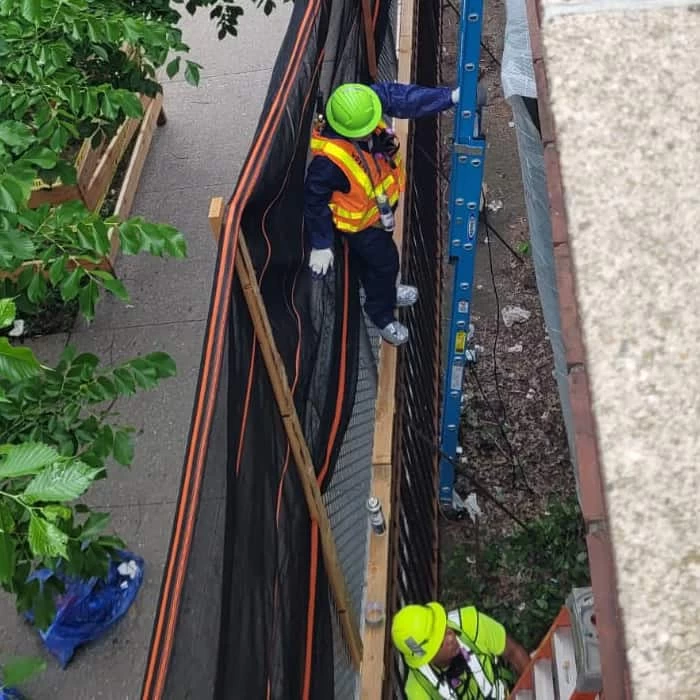
That’s where the integrated model matters. We handle the asbestos survey, the abatement, and the demolition under one contract. That means one timeline, one point of contact, and no gap between the abatement crew leaving and the demolition crew arriving. For a neighborhood like Long Island City where the building stock almost guarantees you’ll encounter hazardous materials in anything built before 1987 that’s not a convenience. It’s the only approach that actually keeps your project moving.
Whether you’re a developer navigating the new OneLIC rezoning, a property manager dealing with an aging industrial conversion in Dutch Kills, or a homeowner gutting a Hunters Point walk-up, the regulatory requirements are the same. The cost of hiring a contractor who isn’t equipped to handle all of them shows up fast in stop-work orders, in change orders, and in weeks of lost time.
340 Projects In. We Know What Long Island City Throws at You.
We’ve been doing environmental remediation and demolition work across New York for over 12 years. That includes all five boroughs, Long Island, and the broader metro area with more than 340 completed demolition projects behind us. We’re not a general contractor who added demolition to the service list. This is the work, and we built the company around doing it right inside one of the most regulated environments in the country.
Long Island City specifically requires contractors who understand NYC DOB permit processes, DEP certification requirements, and what it actually means to work in occupied buildings on tight urban blocks. We’ve done interior gut-outs in active commercial buildings near Court Square, abatement work in pre-war residential buildings in Hunters Point, and industrial teardowns where Newtown Creek proximity added another layer of environmental review. That experience is what makes the difference between a project that closes out clean and one that drags on for months.
Our 4.7-star rating reflects what we hear most from customers: we pick up the phone, we explain the process clearly, and we don’t disappear once the job starts.
From First Call to Final Clearance Here's What to Expect
The first step is an assessment. Before any demolition work can begin in Long Island City, we need to understand what we’re working with the building’s age, its prior use, and whether hazardous materials like asbestos or lead are present. For most pre-1987 buildings in Long Island City, that answer is almost certainly yes. We bring in a DEP-certified asbestos investigator to complete the required survey and produce the ACP-5 documentation the NYC DOB needs before they’ll issue your permit.
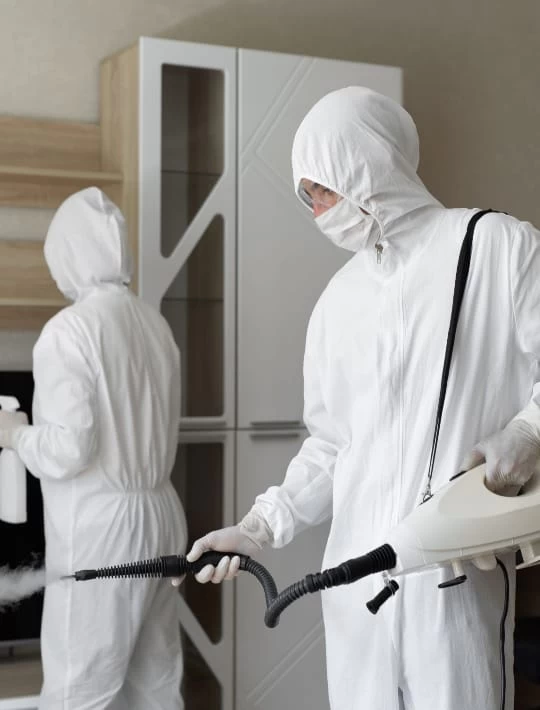
If abatement is required and in Long Island City’s older industrial and residential building stock, it usually is we handle that next. Our team is licensed under NYS Department of Labor Industrial Code Rule 56 and follows all NYC DEP and USEPA NESHAP protocols. Abatement is completed, air clearance is confirmed, and the ACP-21 project completion documentation is filed. Only then does demolition begin. That sequencing isn’t bureaucratic red tape it’s the legal framework that protects you as the property owner.
Once we’re cleared to demo, we work with your timeline and your site constraints. In Long Island City’s dense urban environment, that means managing dust containment, coordinating with building management in occupied structures, and respecting NYC’s construction work-hour regulations. When the work is done, debris is removed and disposed of through licensed channels. You get a project that closes out with the right paperwork not one that leaves you holding unresolved permit issues.
Commercial and Residential Demolition in Long Island City
What's Actually Included When You Hire Us
Demolition through Green Island Group isn’t just the physical teardown. It’s the full scope of what a compliant demolition project in New York City actually requires. That starts with the pre-demolition asbestos survey and ACP-5 documentation, runs through licensed abatement if hazardous materials are present, and carries through to final debris removal and disposal. For properties near Newtown Creek a federal EPA Superfund site that borders Long Island City’s southern edge we’re also experienced in navigating the additional environmental review requirements that can come with below-grade disturbance in that corridor.
On the residential side, we work in occupied buildings, gut renovations, apartment combinations, and pre-war walk-ups throughout Hunters Point and the surrounding blocks. On the commercial and industrial side, we handle interior demolitions, selective structural work, and full teardowns in the kind of large-format buildings that define Long Island City’s landscape former factories, warehouse conversions, and the aging commercial stock that the OneLIC rezoning is now opening up for redevelopment.
Every project gets a comprehensive quote that accounts for all regulatory prerequisites upfront. No lowball number that balloons when the ACP-5 comes back positive. If you’re dealing with a fire, flood, or storm-damaged structure, we also bill insurance directly which matters in Long Island City’s East River waterfront areas where storm exposure is a real and recurring risk. One call covers the assessment, the abatement, and the demolition. That’s the whole job.
Do I need an asbestos survey before demolition in Long Island City?
Yes and it’s not optional. The NYC Department of Buildings requires a completed ACP-5 form, signed by a DEP-certified asbestos investigator, before it will issue a full demolition permit for any building in New York City. The only exception involves a specific ATRU-approved simultaneous abatement and demolition process, which has its own set of requirements. For the vast majority of projects in Long Island City, you’ll need that survey completed and the form filed before work can legally begin.
This matters especially in Long Island City because of the neighborhood’s building stock. If your building was constructed before 1987 and a significant portion of Long Island City’s residential, commercial, and industrial buildings were the NYC regulatory framework presumes the potential presence of asbestos-containing materials. That presumption triggers the mandatory survey requirement regardless of how the building looks or how recently it was renovated. Skipping this step doesn’t save time. It results in stop-work orders and, in some cases, personal liability for the property owner. We handle the survey, the abatement if needed, and the documentation so you’re not managing that process across multiple vendors.
How much does demolition typically cost in Long Island City, NY?
Demolition costs in Long Island City run higher than national averages, and there are real reasons for that. NYC DOB permit fees, DEP-certified asbestos investigator costs, air monitoring during abatement, licensed hazardous waste disposal, and the logistical complexity of working in a dense urban environment all add to the baseline cost of the physical teardown. A contractor quoting you a number that doesn’t account for those line items is giving you an incomplete picture and you’ll see the rest of it in change orders later.
For interior or selective demolition in a residential unit, costs can range from a few thousand dollars for a targeted scope to significantly more for a full gut renovation with abatement included. Commercial and industrial projects scale with square footage, structural complexity, and the extent of hazardous material remediation required. The best thing you can do is get a comprehensive quote that spells out every phase survey, abatement if applicable, demolition, debris removal, and permit fees so you know the real number before the project starts. We build quotes that way by default, because surprises mid-project are worse for everyone.
Can the same contractor handle both asbestos abatement and demolition in NYC?
Yes and in Long Island City, finding a contractor who can do both is genuinely important. The NYC DOB’s permit process requires asbestos clearance before demolition can proceed, which means if your demolition contractor isn’t also licensed for abatement, you’re managing a handoff between two separate companies. That handoff creates scheduling gaps, coordination problems, and timeline risk that falls entirely on you as the property owner.
We’re licensed for both. Our team holds NYS Department of Labor credentials for asbestos abatement under Industrial Code Rule 56, and we work with DEP-certified asbestos investigators to complete the ACP-5 documentation your permit requires. When abatement is finished and air clearance is confirmed, our demolition crew is ready to move no waiting for a second contractor to get scheduled, no gap in the project timeline. For Long Island City’s older building stock, where abatement is more the rule than the exception, that integrated capability is what keeps projects on track.
What happens if asbestos is found during demolition in a Long Island City building?
If asbestos is discovered during a demolition project, work in the affected area stops immediately. That’s not a contractor decision it’s a legal requirement under both NYC DEP regulations and NYS Department of Labor Industrial Code Rule 56. The area is contained, and a DEP-certified asbestos investigator assesses the scope of the material before any further work proceeds.
In Long Island City, this scenario is common enough that it shouldn’t catch anyone off guard. Buildings constructed before 1980 and many built through the mid-1980s routinely contain asbestos in pipe insulation, floor tiles, ceiling tiles, roofing materials, and joint compound. Long Island City’s industrial building stock, in particular, carries a high probability of asbestos given the materials used in factory and warehouse construction throughout the 20th century. The right approach is to assume it’s there and have a contractor in place who can handle abatement without stopping the project entirely. When we’re managing both phases, a positive asbestos finding triggers abatement not a project shutdown. The timeline adjusts, but the work continues under one team.
How does the OneLIC rezoning affect demolition projects in the neighborhood?
The NYC Council approved the OneLIC Neighborhood Plan in November 2025, rezoning approximately 54 blocks in Long Island City to allow mid- and high-rise development. The plan is designed to facilitate nearly 15,000 new homes and 3.8 million square feet of commercial space. What that means practically is that a significant number of existing low-rise industrial and commercial structures many of them pre-1987 buildings with embedded asbestos and lead will need to come down to make way for new development over the coming years.
For property owners and developers operating in the rezoned areas, that creates both opportunity and urgency around the demolition process. NYC DOB permit timelines, asbestos survey requirements, and abatement sequencing don’t change because of a rezoning if anything, increased project volume in the neighborhood can affect scheduling availability for licensed contractors and inspectors. If you’re planning a demolition project in connection with Long Island City’s redevelopment activity, getting the regulatory process started early is the practical move. We’re experienced in commercial-scale demolition projects in active urban environments and positioned to handle the scope of work the OneLIC plan is generating.
Does Green Island Group handle emergency demolition after storm or flood damage in Long Island City?
Yes. Long Island City’s East River waterfront position particularly in low-lying areas around Hunters Point South and the Gantry Plaza corridor creates genuine exposure to tidal flooding and storm surge. Hurricane Sandy demonstrated what that looks like in this neighborhood, and flood-related structural damage requiring emergency demolition is a recurring reality here in ways that don’t apply to inland Queens neighborhoods.
When a structure is flood-damaged, the clock starts immediately. Mold growth begins within 24 to 48 hours of water intrusion, and damaged structural elements that aren’t addressed quickly compound the problem and the cost. We’re available around the clock for emergency response, and we bill insurance carriers directly which removes a significant administrative burden from property owners who are already managing tenant relationships, building management, and insurance adjusters simultaneously. We assess the structural damage, determine what needs to come out, and get the work done with the documentation your insurance claim requires. If hazardous materials are present in the damaged area, we handle abatement as part of the same response not as a separate engagement that delays the emergency work.