Maspeth's Old Homes Deserve a Demolition Crew That Knows What's Inside Them
Most of the homes on these blocks were built before 1930. That means asbestos, lead paint, and a permit process that stops jobs cold unless your contractor handles all of it.
I needed a professional consultation explanation of procedure for safe removal of Asbestos in my apartment complex. Without having an account yet, I was very impressed with the caring, knowledgeable and generous advice offered by Jessica, and will look forward to doing business in the future. Thank you so much! I feel much more informed about a sometimes scary endeavor. Peace. Nancy Silva Mineola, NY.
Mia Munoz
Used this company to clean up some water flood in my house. They were fast and easy to work with.very professional, Would recommend to anyone!
Nini Valle
Great company, had a flood and they responded quickly and efficiently. Billed my insurance company directly. I highly recommend this company!
joe colapietro, jr
I had pipe freeze in my basement right before a snow storm and they made to within an hour to help start the clean up process. They we by our side throughout the entire process and even helped with the insurance company. They did such a great job with the cleanup, repair, remidiation, I contracted them to perform the repairs and finishes in the basement. They came with enough manpower and material to get the job done. Leo and Jessica were nothing but a pleasure to deal with!!
Cristian Arredondo c
I had some water damage in my home and Green Island was able to take care of my issue quickly and effectively. I am very pleased with the work they did. They responded quickly and were very professional.
Michael M
Outstanding service! From the office to the field crew everyone was friendly, helpful and responsive. I highly recommend Green Island Group.
No Stop-Work Orders, No Surprise Costs, No Second Crew
When you’re tearing into a 100-year-old brick rowhouse on 58th Avenue or 69th Street, the walls almost always have something in them. Asbestos floor tile. Pipe insulation. Old joint compound. The homeowners who get blindsided mid-project are the ones who hired a demolition crew that couldn’t handle what they found. That’s just the reality of Maspeth’s housing stock.
When your demo crew also handles abatement, the project doesn’t stop. There’s no scramble to find a certified abatement contractor, no two-week delay waiting for another company’s schedule to open up, and no inflated emergency pricing because you’re now in a bind. Everything moves forward under one timeline, one contract, and one crew that already knows what they’re walking into.
That matters even more in a neighborhood like Maspeth, where attached rowhouses share party walls with your neighbor’s home. Demolition here isn’t just about taking something down it’s about doing it in a way that doesn’t crack the adjacent foundation or send dust through the unit next door. The people on your block have lived there for decades. That’s worth protecting.
340 Projects In. We've Seen What Maspeth and Queens Hide in Their Walls.
We’ve been handling demolition and environmental remediation across New York for over 12 years. That includes Maspeth and the broader Queens area the dense, permit-heavy, asbestos-prevalent version of Queens that most out-of-area contractors aren’t prepared for. More than 340 completed projects. A 4.7-star rating built on reviews that consistently say the same thing: we pick up the phone, we explain the process, and we don’t disappear after the contract is signed.
Maspeth is a specific kind of neighborhood. It’s not a suburb. It’s not a blank slate. It’s a community where families have owned the same homes for two and three generations, where the IBZ sits a few blocks from residential streets, and where Newtown Creek’s industrial history is still very much part of the local conversation. We know this area, and we know what demolition work actually looks like here not in theory, but in practice.
Here's What Happens Before a Single Wall Comes Down in Maspeth
The first step is a site assessment. Before any work is scoped or priced, we need to understand what we’re dealing with the structure, the materials, and the regulatory requirements that apply. In Maspeth, that almost always means a pre-demolition hazardous material survey. Under NYC Local Law 76, an asbestos investigation is required before any renovation or demolition project, no exceptions. We handle that survey in-house, which means you’re not waiting on a third party to clear the project before work can begin.
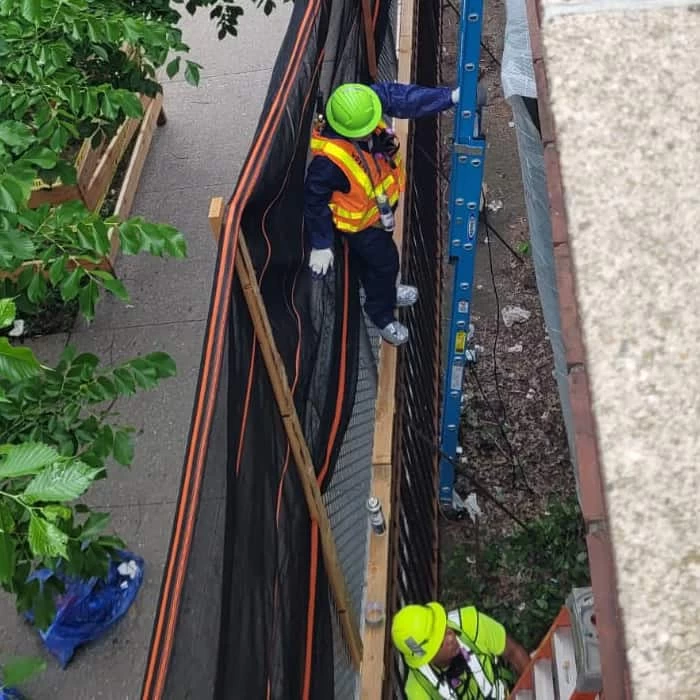
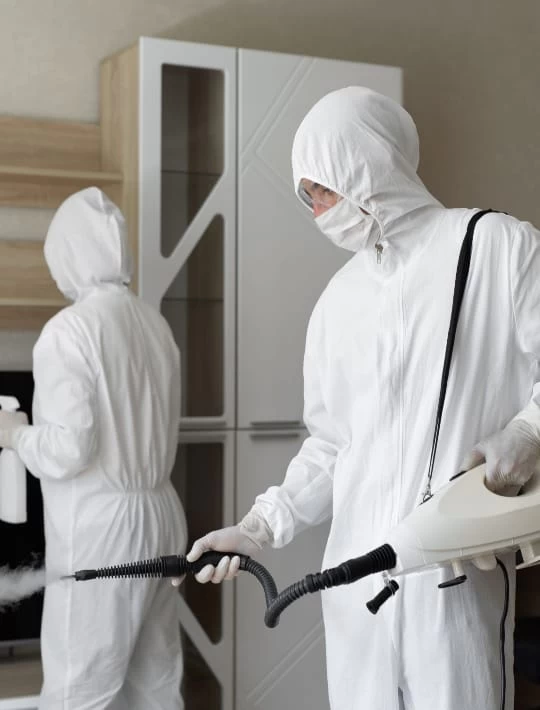
Once the survey is complete, we know exactly what’s there asbestos, lead paint, mold, or a combination. That information drives the accurate project scope and the accurate price. No open-ended estimates. No “we’ll figure it out as we go.” If abatement is required, we handle it under the same contract before demolition begins, and we manage the NYC DEP notification, the A-TRU permit, and the post-abatement air clearance testing that the DOB requires before issuing final sign-off.
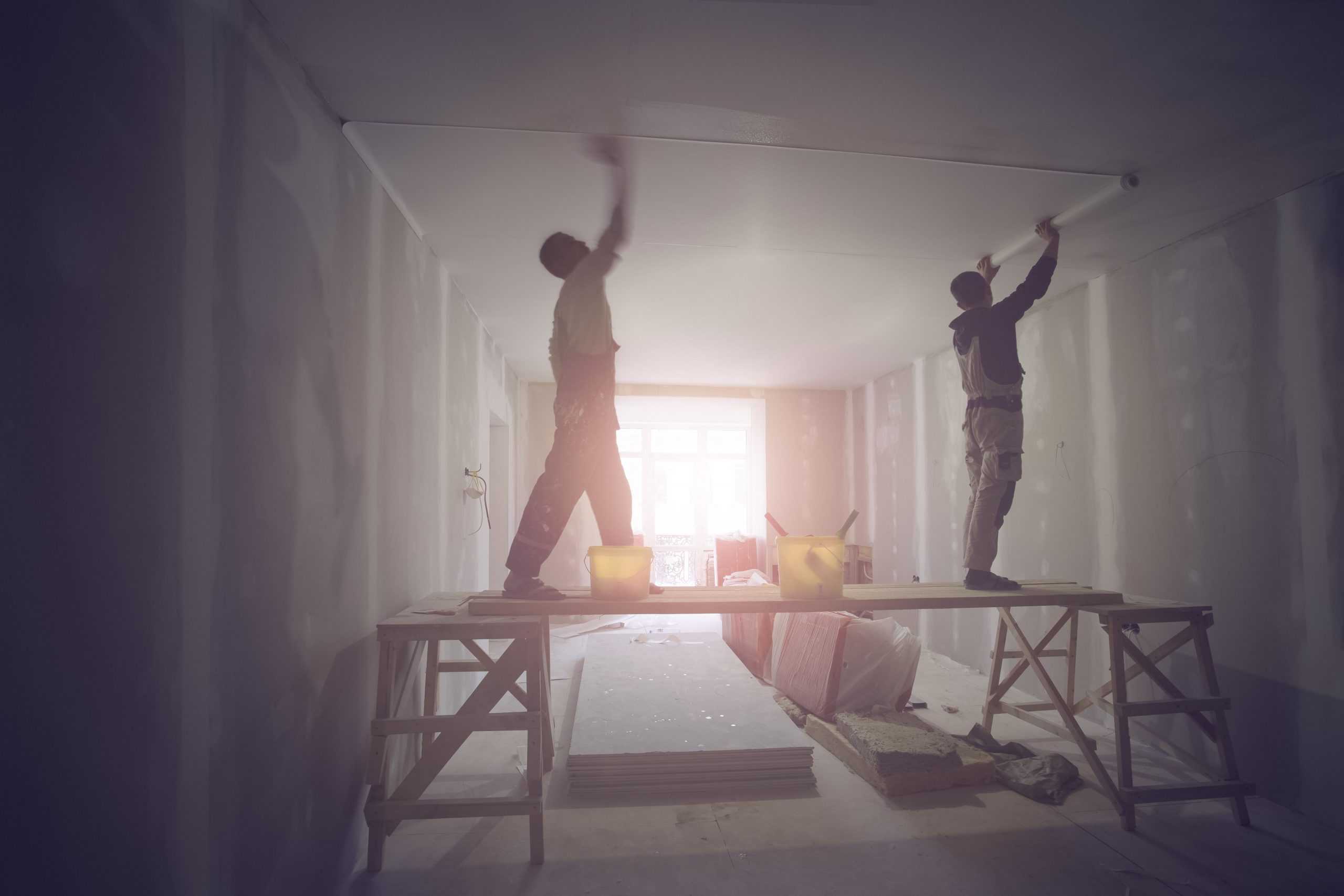
Demolition itself is planned around Maspeth’s attached rowhouse realities. Party wall bracing is installed where required, adjacent structures are protected, and debris removal is coordinated around the LIE and BQE access constraints that anyone who’s tried to move equipment through this neighborhood already knows about. When the job is done, the site is clean, the permits are closed, and you have documentation of everything which matters when you’re ready to build or sell.
Commercial and Residential Demolition Specialists, Maspeth
Full-Scope Demolition, Built for What Maspeth Actually Throws at You
We handle residential demolition, commercial demolition, interior gut-outs, selective structural demo, and full teardowns. For homeowners on the residential blocks east of Grand Avenue in Maspeth, that typically means gut renovations of pre-war brick two-families or full teardowns in preparation for a rebuild. For property owners and operators in or near the Maspeth Industrial Business Zone, it means commercial and industrial demolition warehouse gut-outs, equipment removal, and site preparation for the logistics and distribution redevelopment that’s actively reshaping that part of the neighborhood.
Every project includes pre-demolition hazardous material testing, full NYC DOB permit management, asbestos and lead abatement where required, and post-abatement clearance coordination. You don’t have to call the DEP, file the ACP-5 form, or track down an air monitoring company. That’s all part of the job.
For properties near the Newtown Creek corridor on the western edge of Maspeth where flood risk is real and storm damage can move fast we offer emergency demolition response around the clock. If a structure is compromised after a weather event, you shouldn’t be leaving a voicemail. We operate 24/7 and bill insurance carriers directly, which means the claim process doesn’t fall on you at the worst possible time.
Do I need an asbestos test before demolition on my Maspeth home?
Yes and it’s not optional. Under NYC Local Law 76, an asbestos investigation is required before any renovation or demolition project in New York City, regardless of building age. For Maspeth specifically, this requirement is especially relevant because the vast majority of the neighborhood’s residential housing stock was built between 1910 and 1930 well within the era when asbestos was standard in floor tiles, pipe insulation, ceiling materials, and joint compound.
The investigation must be conducted by an NYC-certified asbestos inspector who physically collects material samples. If asbestos-containing materials are found, they have to be fully abated before the NYC Department of Buildings will process your demolition permit. Skipping this step doesn’t just put you at risk for a stop-work order it can expose you personally to fines and liability, even if it was your contractor who skipped it. We handle the survey, the abatement if needed, and all the associated permitting so that none of that lands on you.
What permits are required for demolition in New York City?
Demolition in NYC involves multiple agencies, and the permit chain is more involved than most homeowners expect. The NYC Department of Buildings issues the actual demolition permit, but before they’ll process a full demolition application, you need an ACP-5 form an asbestos certification confirming that the building is either free of asbestos-containing materials or that all ACMs have been properly abated. That abatement process also requires a separate notification to the NYC Department of Environmental Protection at least seven days before work begins, plus an A-TRU permit before abatement starts, and DEP clearance air testing after abatement is complete.
On top of that, USEPA NESHAP regulations apply to projects above certain asbestos quantity thresholds, and OSHA 30-hour certification is required for supervisors on NYC demolition sites. It’s a multi-agency process that most property owners have never navigated before. We manage the entire permitting chain from the initial survey through final DOB sign-off you don’t have to figure out which agency to call or in what order.
How much does demolition cost in Maspeth, NY?
Demolition pricing in Maspeth and across Queens runs significantly higher than national averages, and it’s worth understanding why before you compare quotes. The regulatory overhead alone is substantial: asbestos removal in New York City typically runs $20 to $65 per square foot, independent air monitoring required after abatement costs $600 to $1,200 per day, and pre-demolition asbestos surveys range from $650 to $2,200 depending on the scope. These aren’t add-ons they’re legally required steps that any licensed contractor has to include.
For Maspeth homeowners specifically, the pre-war brick rowhouse typology adds complexity that affects cost. Attached structures require party wall assessment and bracing. Older foundations and masonry need careful handling to avoid damage to adjacent properties. A quote that doesn’t account for these factors isn’t a deal it’s an incomplete scope that will likely expand once work starts. The most reliable way to get an accurate number is to start with a full hazardous material survey so the entire scope is known before any pricing is finalized.
Can the same contractor handle asbestos removal and demolition in Maspeth?
Yes, and honestly, using a contractor who handles both is the smarter move in a neighborhood like Maspeth. When abatement and demolition are handled by two separate companies, you’re managing two schedules, two contracts, and two sets of communication and if there’s any gap between when abatement ends and when the demo crew is available, your project sits idle. In a neighborhood where most homes were built before 1930 and asbestos is a near-certainty in any gut renovation or teardown, that coordination gap is a real cost.
We’re licensed for both asbestos abatement and structural demolition. The same team that identifies and removes the hazardous materials is the team that completes the demolition under one contract, one timeline, and one point of contact. This is the model that eliminates the mid-project surprises that Maspeth homeowners hear about from neighbors who’ve been through a renovation gone sideways.
How do I protect my neighbor's home during demolition of an attached rowhouse?
This is one of the most important questions you can ask if you’re demolishing or gutting a unit in Maspeth’s attached brick rowhouse stock. When two homes share a party wall, removing one side of it without proper structural support can cause cracking, settling, or worse in the adjacent property. In a neighborhood where families have lived next to each other for decades, that’s not just a construction problem it’s a relationship problem.
Before demolition begins on an attached structure, a structural assessment of the party wall is required. If the wall needs to remain intact to support the adjacent property, temporary bracing is installed prior to any demo work. The demolition sequence itself is planned around the shared wall you don’t just start swinging from the outside in. Our crews have specific experience with the attached urban rowhouse typology that defines Maspeth’s residential streets, and party wall protection is built into the project plan from day one, not treated as an afterthought.
What happens if flood or storm damage requires emergency demolition near Newtown Creek?
Properties on the western edge of Maspeth particularly those close to the Newtown Creek corridor carry real flood exposure. After a significant storm event, a water-damaged structure can deteriorate quickly. Mold begins developing within 24 to 48 hours of water intrusion. A structurally compromised building that isn’t assessed and addressed promptly becomes a safety issue, and in some cases a liability issue if it’s adjacent to a neighboring property or a public right-of-way.
What makes the Newtown Creek area specifically more complicated is the creek’s history as a federally designated EPA Superfund Site. Flood events in that corridor can involve more than just water contaminated sediment and legacy industrial residue from the area’s long manufacturing history are documented concerns. That means emergency demolition near the creek isn’t just a structural job it may involve environmental assessment as well. We operate 24 hours a day, handle both demolition and environmental remediation, and bill insurance carriers directly. If your property takes damage and you need a licensed, compliant response fast, you shouldn’t have to wait until Monday morning.