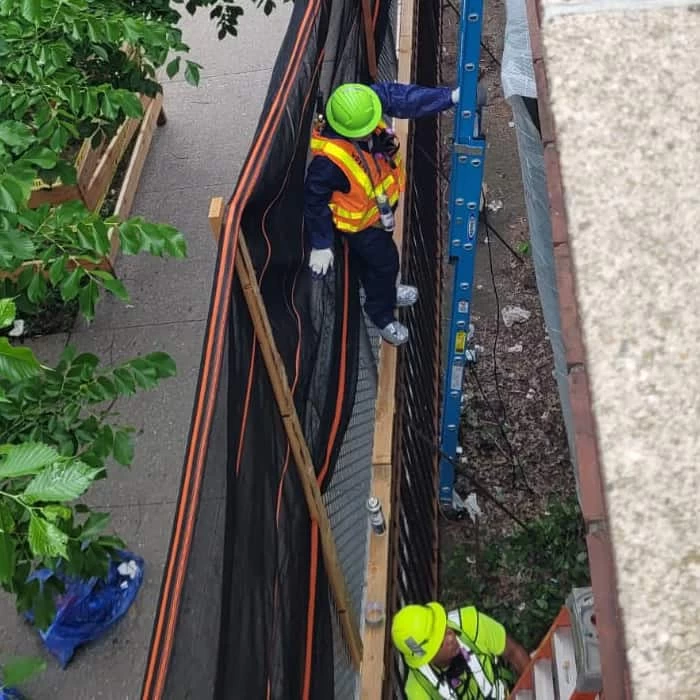
I needed a professional consultation explanation of procedure for safe removal of Asbestos in my apartment complex. Without having an account yet, I was very impressed with the caring, knowledgeable and generous advice offered by Jessica, and will look forward to doing business in the future. Thank you so much! I feel much more informed about a sometimes scary endeavor. Peace. Nancy Silva Mineola, NY.
Mia Munoz
Used this company to clean up some water flood in my house. They were fast and easy to work with.very professional, Would recommend to anyone!
Nini Valle
Great company, had a flood and they responded quickly and efficiently. Billed my insurance company directly. I highly recommend this company!
joe colapietro, jr
I had pipe freeze in my basement right before a snow storm and they made to within an hour to help start the clean up process. They we by our side throughout the entire process and even helped with the insurance company. They did such a great job with the cleanup, repair, remidiation, I contracted them to perform the repairs and finishes in the basement. They came with enough manpower and material to get the job done. Leo and Jessica were nothing but a pleasure to deal with!!
Cristian Arredondo c
I had some water damage in my home and Green Island was able to take care of my issue quickly and effectively. I am very pleased with the work they did. They responded quickly and were very professional.
Michael M
Outstanding service! From the office to the field crew everyone was friendly, helpful and responsive. I highly recommend Green Island Group.
When demolition is handled correctly in Rego Park, you don’t just get a cleared space you get a project that didn’t get shut down, didn’t uncover a surprise mid-demo, and didn’t create friction with your co-op board. That’s not a small thing in a neighborhood where most buildings were constructed in the 1940s and 1950s and virtually every renovation triggers NYC’s mandatory asbestos investigation requirement under Local Law 76.
The difference between a smooth job and a costly one usually comes down to what was identified before the first wall came down. In Rego Park’s older building stock the prewar co-ops along Queens Boulevard, the brick mid-rises off 63rd Drive, the Tudor homes on quieter side streets asbestos-containing materials show up in floor tiles, pipe insulation, ceiling materials, and joint compound. A contractor who finds that on day three of demo is a contractor who just handed you a change order and a delay.
When abatement and demolition are handled by the same licensed team from the start, the scope is accurate, the timeline holds, and the permit process moves without interruption. That’s the outcome worth paying for.
We’ve been doing this work across Queens and Long Island for over 12 years, with more than 340 completed projects behind us. We’re not a general contractor who added demo to a service list environmental remediation and demolition are what we do, and we hold the NYC DOB licensing and NYS DOL asbestos certifications to do it legally and completely.
Rego Park isn’t a market we’re figuring out as we go. We know the building stock along the Queens Boulevard corridor, we know what the co-op boards in this neighborhood expect from contractors, and we know what flooding does to 1930s construction on streets like 63rd Avenue. That familiarity isn’t something you can fake, and it’s the reason our projects in this area don’t stall mid-job.
With a 4.7-star rating across verified reviews and the ability to bill insurance carriers directly, we’re built for exactly the kind of project Rego Park residents actually face.
Residential Demolition Contractor Process in Queens
From First Call to Final Clearance No Gaps
The first thing we do is assess the scope honestly. That means understanding what the building is, when it was built, and what’s likely inside the walls before we price anything. In Rego Park, where the median construction year is 1955, that assessment almost always includes a pre-demolition hazardous materials evaluation. We identify asbestos, lead, and mold upfront not mid-project so the quote you get on day one is the number that holds.
From there, we handle the NYC DOB permit process. That includes coordinating the ACP-5 asbestos form with a DEP-certified investigator, filing the required documentation, and managing the four-to-eight-week permit timeline so your project doesn’t sit idle waiting on paperwork. If your building requires an after-hours work variance common in occupied co-op buildings where daytime demo disrupts neighbors we handle that too.
Once permits are cleared, abatement comes first, then demolition. The two phases run under one licensed crew, one contract, and one timeline. When the work is done, you get a clean space and documentation that satisfies your co-op board, your insurance carrier, and the DOB not just a cleared room.
Commercial Demolition Contractors in Rego Park, NY
One License Covers What Two Contractors Can't
We’re a full-service demolition and environmental remediation contractor, which means asbestos abatement, lead abatement, mold remediation, interior demolition, and structural demolition are all under one roof. For Rego Park property owners, that integration matters more than it does almost anywhere else in Queens. When your building was constructed in 1948 and your co-op board needs to approve the contractor before work begins, having one licensed entity responsible for the entire scope not two companies passing the baton makes the approval process cleaner and the project timeline tighter.
We handle both residential and commercial demolition throughout Rego Park. On the residential side, that includes co-op gut renovations, single-family teardowns, basement demolition, and post-flood material removal which has been an ongoing need in this neighborhood given the recurring drainage issues on streets between Woodhaven Boulevard and Alderton Street. On the commercial side, we work on tenant buildouts, interior gut-outs, and site-clearing demolition along the active Queens Boulevard development corridor, where projects like the new Queens Public Library at 63rd Drive and the planned two-tower residential development reflect just how much construction activity is moving through this neighborhood right now.
We also bill insurance carriers directly for disaster-related demolition and restoration work, removing one more thing from your plate when the situation is already stressful.
Do I need a permit for interior demolition in a Rego Park co-op?
Yes and the permit process in New York City is more involved than most people expect. Any renovation or demolition in a building constructed before April 1, 1987, requires a mandatory asbestos investigation under NYC Local Law 76 before the DOB will issue a permit. In Rego Park, where the vast majority of co-op buildings were constructed between the 1930s and 1960s, that investigation is essentially a given on every project.
The investigation produces an ACP-5 form signed by a DEP-certified asbestos investigator. If the building is clear of asbestos-containing materials, that form goes to the DOB with your permit application. If ACMs are present which is common in prewar floor tiles, pipe insulation, and ceiling materials an abatement permit is required before demolition can proceed. From start to finish, the permit process typically takes four to eight weeks. A contractor who tells you permits aren’t necessary or offers to skip the asbestos step is putting you at legal risk, not saving you time.
What happens if asbestos is found during demolition in my Rego Park apartment?
If asbestos-containing materials are discovered after demolition has already started, work has to stop until the material is properly assessed and abated by a licensed contractor. That’s not a suggestion it’s a legal requirement under NYC DEP regulations and NYS Industrial Code Rule 56. Depending on the scope of the find, you may need to notify the DEP and obtain an abatement permit before anything else happens, which adds time and cost to a project that’s already mid-stream.
This is exactly why pre-demolition hazardous materials testing matters so much in Rego Park. Buildings from the 1940s and 1950s routinely contain asbestos in places that aren’t visible until walls open up joint compound, pipe elbow wraps, adhesive under vinyl tile. Finding it before demo starts means the abatement is planned, budgeted, and permitted. Finding it after means a work stoppage, a change order, and a delay that your co-op board will have questions about. The difference between those two outcomes is almost entirely about what was done before the first swing.
How long does a demolition project typically take in Rego Park, NY?
The physical demolition itself whether it’s a kitchen gut, a full interior, or a structural teardown can often be completed in a matter of days once work begins. The longer part of the timeline is almost always the permitting phase, which runs four to eight weeks in New York City when you account for the asbestos investigation, ACP-5 form, DOB permit application, safety plan, and any required neighbor notification.
For occupied co-op buildings in Rego Park, there’s an additional layer: many buildings restrict renovation work to specific hours, require freight elevator reservations, and mandate dust containment protocols that affect how quickly a crew can move. Some buildings also limit renovation activity to certain months. If your project requires an after-hours variance from the DOB which is common when daytime work would disrupt neighboring shareholders that adds another step before work can begin. The honest answer is that the permit and approval process takes longer than the demo itself, and planning for that reality upfront is what keeps projects on schedule.
Can a demolition contractor work inside a co-op building in Queens, NY?
Yes, but the contractor needs to come prepared with the right documentation before the building’s management office or co-op board will approve the work. That typically means proof of NYC DOB licensing, a current certificate of insurance naming the co-op corporation as an additional insured, and documentation of any required asbestos or lead abatement certifications. Some buildings in Rego Park also require a pre-construction survey to document the condition of adjacent units before work begins this protects both the shareholder doing the renovation and the neighbors.
Beyond paperwork, working inside a co-op requires a level of operational awareness that not every contractor brings. Noise ordinances, freight elevator scheduling, dust containment in shared hallways, and disposal logistics in a dense urban building are all real constraints that affect how a job gets done. A contractor who creates complaints from neighboring shareholders or leaves the freight elevator lobby a mess isn’t getting called back and in Rego Park’s co-op community, word travels fast.
Does flooding damage in Rego Park require demolition before repairs can begin?
In most cases, yes and the scope of that demolition is often larger than it looks on the surface. Rego Park has a well-documented flooding problem. Even moderate rainfall overwhelms the aging storm drains on streets between Woodhaven Boulevard and Alderton Street, and sewage backups through basement fixtures are a recurring issue in older buildings. When water enters a 1930s or 1940s structure, it doesn’t stay where you can see it. It travels through original plaster walls, under hardwood floors, and into structural cavities that weren’t designed to handle moisture.
Mold begins growing within 24 to 48 hours of water intrusion, which means the demolition clock starts the moment the flooding stops. Wet drywall, insulation, flooring, and baseboards typically need to come out completely before any restoration work begins leaving saturated materials in place creates a mold problem that’s far more expensive than the original water damage. If your basement or lower level flooded, a proper assessment of what needs to be removed and what can stay is the first step before any contractor starts swinging.
How does Green Island Group handle asbestos abatement and demolition together in Rego Park?
The short answer is that both happen under one contract, one licensed crew, and one project timeline which is not the standard in this market. Most demolition contractors in Rego Park are not licensed to perform asbestos abatement, which means they either skip the abatement step (illegal and risky) or hand the project off to a separate environmental contractor. That handoff creates scheduling gaps, coordination problems, and a second set of approvals your co-op board has to review.
We hold both the NYC DOB demolition license and the NYS DOL asbestos abatement certifications required under Industrial Code Rule 56. When abatement is required which, given Rego Park’s prewar building stock, it frequently is our team performs it first, documents it properly for the DEP, and then moves directly into demolition without a break in the project. You’re not managing two companies, two timelines, or two invoices. The entire scope runs through us, which keeps the project cleaner, faster, and easier to document for whoever needs to sign off at the end.