Utopia's Older Homes Deserve More Than a Wrecking Ball
When your home was built in the 1940s or 1950s, demolition isn’t just about knocking things down it’s about knowing what’s behind those walls before anyone swings a tool. We bring licensed demolition and hazardous material expertise to Utopia homeowners who can’t afford to find out mid-project that asbestos or lead paint requires a complete halt to work.
I needed a professional consultation explanation of procedure for safe removal of Asbestos in my apartment complex. Without having an account yet, I was very impressed with the caring, knowledgeable and generous advice offered by Jessica, and will look forward to doing business in the future. Thank you so much! I feel much more informed about a sometimes scary endeavor. Peace. Nancy Silva Mineola, NY.
Mia Munoz
Used this company to clean up some water flood in my house. They were fast and easy to work with.very professional, Would recommend to anyone!
Nini Valle
Great company, had a flood and they responded quickly and efficiently. Billed my insurance company directly. I highly recommend this company!
joe colapietro, jr
I had pipe freeze in my basement right before a snow storm and they made to within an hour to help start the clean up process. They we by our side throughout the entire process and even helped with the insurance company. They did such a great job with the cleanup, repair, remidiation, I contracted them to perform the repairs and finishes in the basement. They came with enough manpower and material to get the job done. Leo and Jessica were nothing but a pleasure to deal with!!
Cristian Arredondo c
I had some water damage in my home and Green Island was able to take care of my issue quickly and effectively. I am very pleased with the work they did. They responded quickly and were very professional.
Michael M
Outstanding service! From the office to the field crew everyone was friendly, helpful and responsive. I highly recommend Green Island Group.
No Surprise Stops. No Mid-Project Chaos. Just a Clean Site.
Most demolition problems in Utopia don’t start with the demolition. They start with what nobody told the homeowner before the crew showed up. A wall comes down, someone finds pipe insulation that looks suspicious, and suddenly the whole job is on hold while a separate abatement contractor gets called in. That delay costs money, kills timelines, and leaves you coordinating between two companies that have never worked together.
When you’re dealing with a home built in the 1940s or 1950s which describes nearly every house in Utopia asbestos-containing materials aren’t a possibility, they’re a probability. Floor tiles, ceiling tiles, pipe wrap, joint compound: all of it was standard in that era. NYC law requires a DEP-certified asbestos investigation and a filed ACP-5 form before the Department of Buildings will even issue a full demolition permit. If your contractor can’t handle that step, your project doesn’t move.
We handle the investigation, the abatement, and the demolition under one roof. By the time the crew arrives on your lot, the permits are filed, the hazardous material is gone, and the work can actually begin. For homeowners on Union Turnpike’s edge or tucked into the quiet residential grid between Utopia Parkway and 188th Street, that kind of seamless process isn’t a luxury it’s the only way to protect a property worth close to a million dollars.
Licensed Demolition Contractors Serving Utopia, NY
340 Projects In. Zero Surprises Left to Encounter.
We’ve been operating across Queens, Long Island, and all five NYC boroughs for over 12 years. More than 340 completed demolition projects means we’ve seen the full range of what pre-war and post-war Queens homes contain and nothing about Utopia’s housing stock catches us off guard.
The homes in Utopia were built in an era when asbestos was code-compliant and lead paint was the industry standard. That’s not a problem unique to Utopia, but it is a problem that requires a contractor who holds NYC DEP certification, NYS DOL compliance under Industrial Code Rule 56, and a full NYC DOB demolition license not just a general contractor’s card. We carry all of it.
Utopia is a neighborhood where the Civic Association of Utopia Estates has been holding contractors accountable for decades. Residents notice the work being done next door, and they talk about it. Our 4.7-star rating isn’t just a number it reflects the kind of clean, orderly, neighbor-respecting work that holds up in a community like this one.
From First Call to Clear Site Here's What Actually Happens
It starts with a free consultation. You describe what you’re working with a gut renovation, a full teardown, interior selective demolition and we walk you through exactly what the project will require under NYC’s regulatory framework. For most Utopia homes, that conversation will include the asbestos investigation process, because skipping it isn’t an option under NYC Local Law 76.
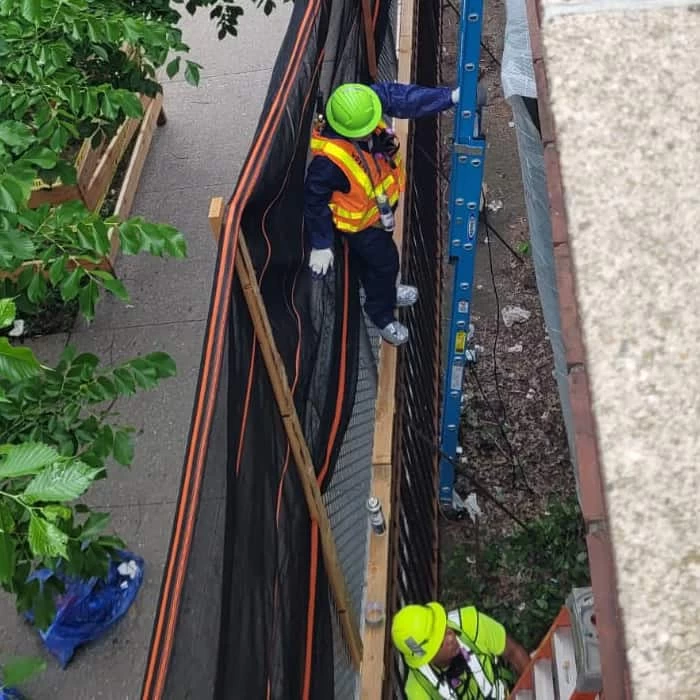
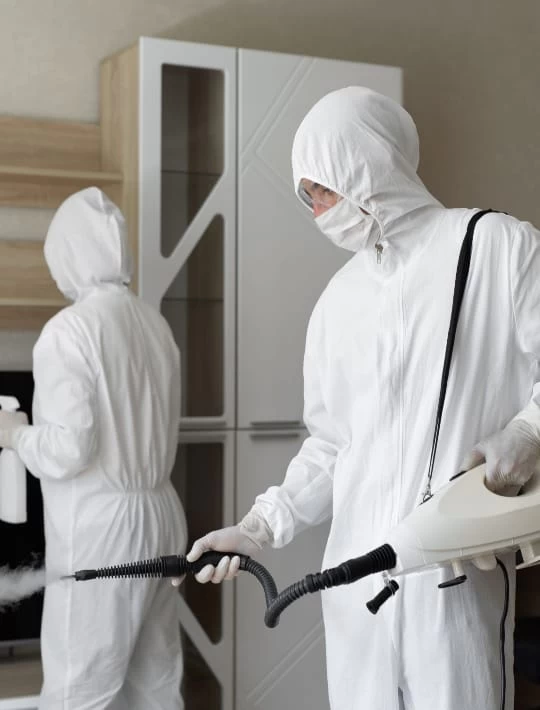
Once the scope is confirmed, a DEP-certified investigator inspects the property and files the appropriate paperwork with the NYC Department of Buildings and NYC DEP. If asbestos-containing materials are found and in a home built before 1960, they usually are abatement is completed and documented before demolition begins. The ACP-7 notice is filed with NYC DEP at least seven days in advance, the abatement crew handles the material under full containment, and the site is cleared and verified before a demolition tool touches the structure.
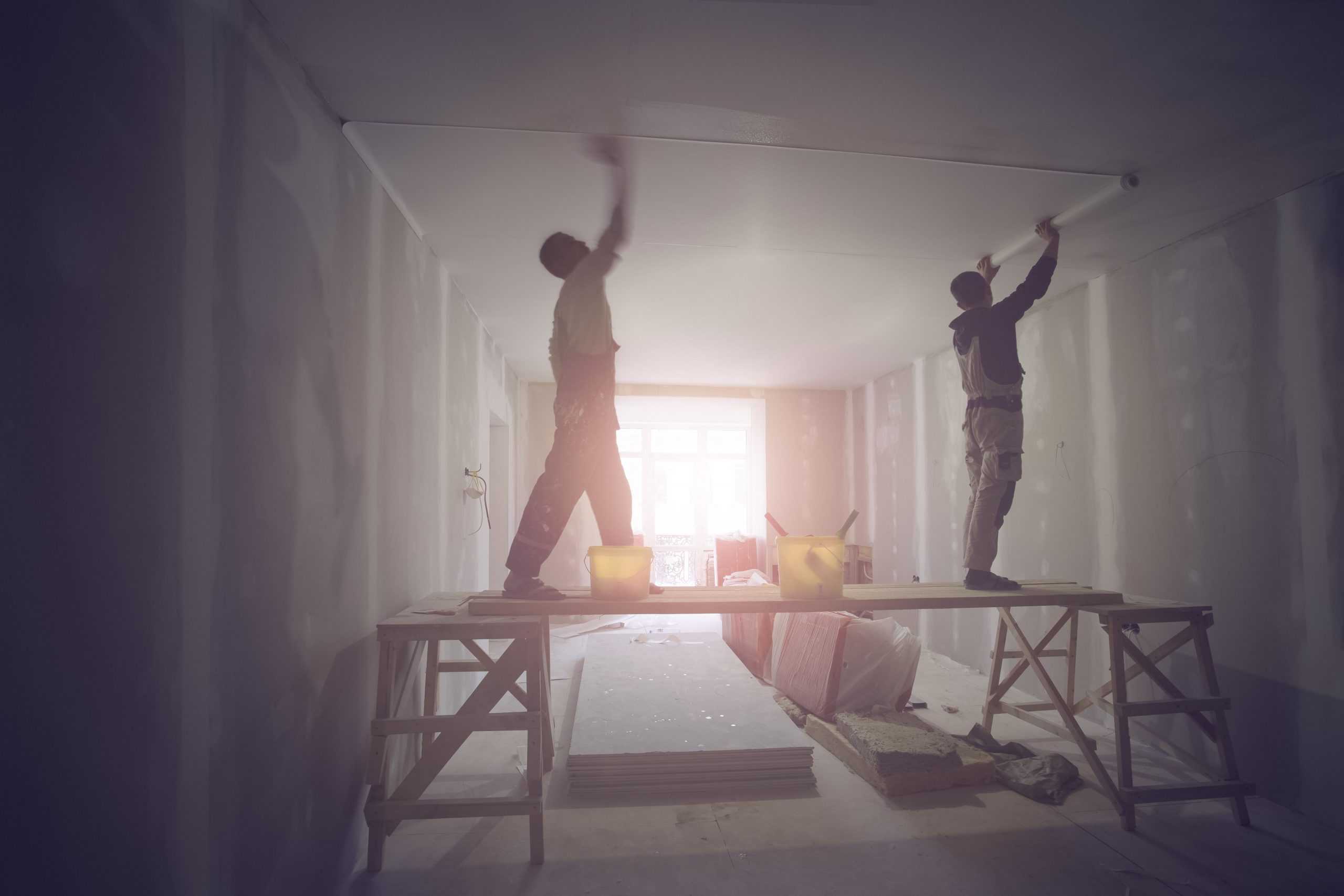
Then the demolition itself begins. On Utopia’s narrow residential lots typically 18 feet wide with neighbors a few feet away dust containment and vibration management aren’t afterthoughts. They’re built into how we run the job from day one. When the work is done, debris is fully removed and the site is left clean and ready for your contractor, your architect, or your next phase. If your project involves an insurance claim storm damage, water intrusion, fire we handle the billing directly so you’re not stuck in the middle.
What's Actually Included When You Hire Green Island Group
Demolition in Utopia isn’t a standalone trade it’s the end result of a process that starts with environmental assessment and ends with a fully cleared, permit-compliant site. Our service covers the entire sequence: pre-demolition asbestos investigation, asbestos and lead abatement where required, structural or selective interior demolition, debris hauling, and site cleanup. Everything under one contract, one timeline, and one team that’s already familiar with how Queens Community Board 8 projects move through the system.
For residential work which is the dominant project type in Utopia’s single-family grid that typically means gut renovation demolition, kitchen and bathroom teardowns, basement demolition, or full structural teardowns on properties being rebuilt or sold. For the occasional commercial or institutional project along the Union Turnpike corridor or near St. John’s University, we have the equipment and licensing to handle larger-scale work as well.
Lead paint is also a standard consideration in this neighborhood. Homes built before 1978 are presumed under federal law to contain lead-based paint, and virtually every home in Utopia qualifies. Our crews are trained and certified to handle lead-containing materials as part of the demolition scope so that’s not a separate conversation you need to have with a separate contractor. One call covers it all, and the consultation is free.
Do I need an asbestos inspection before demolition in Utopia, NY?
Yes and it’s not optional. Under NYC Local Law 76, any renovation or demolition project in New York City requires an asbestos investigation before work begins, regardless of project size. Before the NYC Department of Buildings will issue a full demolition permit, a DEP-certified asbestos investigator must inspect the property and file an ACP-5 form confirming the building is free of asbestos-containing material. If asbestos is found, an ACP-7 Notice of Asbestos Abatement must be filed with NYC DEP at least seven days before abatement work starts.
For Utopia specifically, this step is almost always relevant. The neighborhood’s housing stock was built predominantly in the 1940s and 1950s a period when asbestos was used routinely in floor tiles, ceiling tiles, pipe insulation, and joint compound. Discovering it mid-project, after a contractor who isn’t certified to handle it has already started work, is one of the most common and costly mistakes homeowners make. We handle the investigation and abatement in-house, so the permit process moves forward without a gap.
How much does residential demolition cost in Utopia, NY?
Demolition pricing in NYC doesn’t follow national averages, so any estimate you find based on national data will likely be off. In Utopia and across Queens, the total cost of a residential demolition project depends on several factors: the scope of work (selective interior demo versus full structural teardown), the size of the property, what hazardous materials are present, and how many permits and inspections the project requires.
Asbestos abatement alone in New York runs approximately $20 to $65 per square foot, depending on the type and extent of the material. That cost is separate from the demolition itself and from debris hauling and disposal. For a typical Utopia home a two-story single-family structure on a narrow lot with pre-1960 construction a realistic full project budget should account for investigation, abatement, demolition, and cleanup as a combined scope. The best way to get an accurate number is a free on-site consultation, where we can assess what’s actually involved before giving you a figure you can plan around.
What permits are required for interior demolition in New York City?
For interior selective demolition removing walls, ceilings, flooring, or other structural elements without touching the building’s exterior you’ll typically need a permit from the NYC Department of Buildings filed under an Alteration Type 2 or Type 3 application, depending on scope. The permit must be filed by a licensed contractor, and the application must address whether asbestos or other hazardous materials are present.
Even for interior work, NYC Local Law 76 requires an asbestos investigation if the building was constructed before 1987 which covers every home in Utopia. If the investigation finds asbestos-containing material in the areas to be disturbed, abatement must be completed and documented before any demolition proceeds. Many homeowners are surprised to learn that a seemingly straightforward bathroom gut renovation triggers the same asbestos compliance requirements as a full teardown. Understanding that process upfront is what keeps your project on schedule and your property free of stop-work orders.
Does homeowners insurance cover demolition costs in Utopia after storm or flood damage?
It depends on the cause of the damage and the terms of your specific policy, but in many cases, yes demolition costs tied to a covered loss are reimbursable under a standard homeowners insurance policy. Queens took significant hits from Hurricane Ida in 2021, and Utopia’s older basement structures and aging drainage systems make water intrusion a recurring risk during heavy storms. When water damage, fire damage, or storm-related structural failure leads to a demolition need, the cost of removing damaged materials is often part of the covered scope.
We bill insurance carriers directly, which means you’re not fronting the cost and waiting for reimbursement, and you’re not left navigating the claim on your own while also managing a damaged property. We document the damage, scope the demolition, and coordinate with your carrier as part of the process. If you’re unsure whether your situation qualifies, the free consultation is a good place to start we can help you understand what’s likely covered before any work begins.
How long does a demolition project typically take for a Queens home?
The physical demolition itself the actual removal of walls, structures, or interior elements is usually one of the faster parts of the process. A full interior gut on a single-family Utopia home might take a few days of active work. What takes longer is the regulatory sequence that has to happen first: the asbestos investigation, the permit filing, the DEP notification period for abatement (a minimum of seven days before work begins), and the abatement work itself if hazardous materials are found.
From the time you make the first call to the time the site is cleared and ready for your next phase, a realistic timeline for a full demolition project in Utopia including all required inspections and abatement is typically several weeks, depending on scope and permit processing times. Projects tied to a specific deadline, like a summer renovation before the school year or a pre-sale timeline, benefit from starting the process as early as possible. The consultation is free and gives you a clear picture of the timeline before you commit to anything.
How do I know if a demolition contractor is actually licensed to work in Utopia, NY?
In New York City, demolition contractors must hold a license issued by the NYC Department of Buildings this is separate from a general contractor license and specifically authorizes structural demolition work within the five boroughs, including Queens. You can verify a contractor’s DOB license status directly through the NYC DOB’s online license search tool. If a contractor can’t provide a license number or gets vague when you ask, that’s a clear signal to keep looking.
Beyond the DOB license, any contractor performing asbestos abatement in connection with a demolition project must also hold certification under NYS Department of Labor Industrial Code Rule 56 and comply with NYC DEP requirements for asbestos work. These are separate credentials from the demolition license itself, and not every demolition contractor holds all three. In a neighborhood like Utopia where homes are close together, the civic association is active, and the regulatory environment is genuinely demanding hiring a contractor who is only partially credentialed creates real exposure for you as the property owner. We hold DOB licensure, NYS DOL certification, and NYC DEP compliance, and can provide documentation for all of it before any work begins.