Bay Wood's Older Homes Deserve More Than a Sledgehammer
Most homes in Bay Wood were built in the 1950s and 60s and what’s inside those walls matters before anything comes down. We handle the full scope: hazmat assessment, permits, demolition, and cleanup, without handing you off to anyone else.
I needed a professional consultation explanation of procedure for safe removal of Asbestos in my apartment complex. Without having an account yet, I was very impressed with the caring, knowledgeable and generous advice offered by Jessica, and will look forward to doing business in the future. Thank you so much! I feel much more informed about a sometimes scary endeavor. Peace. Nancy Silva Mineola, NY.
Mia Munoz
Used this company to clean up some water flood in my house. They were fast and easy to work with.very professional, Would recommend to anyone!
Nini Valle
Great company, had a flood and they responded quickly and efficiently. Billed my insurance company directly. I highly recommend this company!
joe colapietro, jr
I had pipe freeze in my basement right before a snow storm and they made to within an hour to help start the clean up process. They we by our side throughout the entire process and even helped with the insurance company. They did such a great job with the cleanup, repair, remidiation, I contracted them to perform the repairs and finishes in the basement. They came with enough manpower and material to get the job done. Leo and Jessica were nothing but a pleasure to deal with!!
Cristian Arredondo c
I had some water damage in my home and Green Island was able to take care of my issue quickly and effectively. I am very pleased with the work they did. They responded quickly and were very professional.
Michael M
Outstanding service! From the office to the field crew everyone was friendly, helpful and responsive. I highly recommend Green Island Group.
No Surprise Stops, No Hidden Costs, No Second Contractor
Here’s what usually happens when a Bay Wood homeowner hires a demolition contractor who isn’t equipped for the full job. Work starts, something gets flagged asbestos in the floor tiles, lead paint behind the drywall and suddenly the project is on hold while they scramble to bring in a separate abatement company. Your timeline doubles. Your budget takes a hit. And you’re the one managing the chaos.
That’s not how this works with us. Because the majority of homes in Bay Wood were built before 1980, hazardous materials aren’t a surprise they’re the baseline expectation. We hold active NYS Department of Labor asbestos contractor certifications and handle abatement in-house, so when something turns up, the job keeps moving.
Bay Wood’s south shore location adds another layer. This area has seen serious flooding from nor’easters and storm surge events, and water-damaged walls, insulation, and flooring need to come out fast within hours, not days before mold takes hold. We operate 24/7 and have the emergency response track record to back that up. Whether it’s a planned kitchen gut or a basement that took on water last night, you get one team, one timeline, and a scope that was built around what your home actually needs.
Licensed Demolition Contractors Serving Bay Wood, NY
Suffolk County Roots, Not a Distant Contractor Claiming Your Area
We’re headquartered in Bohemia, NY about 10 to 12 miles from Bay Wood. As a Suffolk County company that works in Suffolk County every day, we know the Town of Islip Building Division’s permit process, we know what’s typically inside a south shore ranch-style home from 1962, and we’re not learning any of that on your project.
Over 5,000 completed projects and 12-plus years in business gives us a track record that’s hard to fake. We carry $2 million in general liability coverage, hold NYS DOL asbestos certifications, and maintain MWBE certification not just for marketing, but because the work requires it.
When you’re dealing with a home in Bay Wood whether it’s a renovation, storm damage, or a structure that’s simply reached the end of its life you want a contractor who has been here before, knows the permit requirements, and can handle whatever comes up without stopping the job.
What Actually Happens From Your First Call to Final Cleanup
It starts with a site assessment. Before any work is scoped or priced, we walk the property to understand what you’re working with. In Bay Wood’s pre-1980 housing stock, that means looking at materials that commonly contain asbestos floor tiles, ceiling tiles, pipe insulation, joint compound and identifying lead paint exposure before any demolition plan is finalized. This isn’t optional. It’s required by the Town of Islip’s Building Division, and it protects you from cost surprises later.
From there, we manage the permit process end to end. That includes the demolition permit application with the Town of Islip, the required asbestos survey documentation, NY 811 utility notification before any digging, and a flood zone determination if your property sits in a risk area which is a real consideration given Bay Wood’s position in the Great South Bay corridor. You don’t chase paperwork. We handle it.
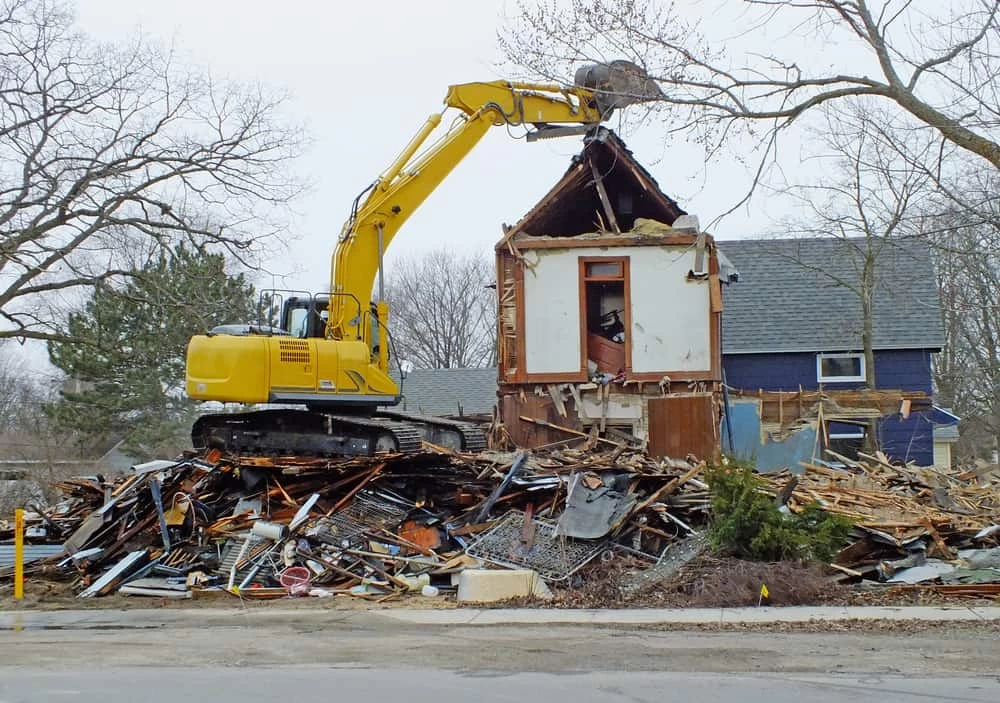
Once permits are in place, the physical work begins. Selective interior demolition, full structural teardown, emergency demo after water or fire damage whatever the scope, we manage debris removal and site cleanup as part of the job, not as an add-on. When the work is done, you’re not left with a pile of material and a half-finished space. The site is cleared, the job is documented, and if insurance is involved, we’ve been working alongside that process the whole time.
Every Job Here Includes What the Other Quotes Leave Out
Most demolition quotes in the Bay Shore and Islip area look reasonable until you read the fine print. Permits aren’t included. Hazmat testing is extra. Debris removal is a separate line item. By the time the job is done, you’ve paid significantly more than the number you agreed to. We build the full scope into the quote from the start asbestos survey, permit fees, debris hauling, and cleanup because in Bay Wood’s older housing stock, these aren’t optional extras. They’re part of every job.
The services cover the full range of what Bay Wood homeowners actually need. Selective interior demolition for kitchen gut-renovations, bathroom strip-outs, and basement overhauls. Partial structural demolition for additions or reconfiguration work. Full residential demolition and site preparation when a structure is beyond repair. And emergency demolition for water-damaged or fire-damaged properties a service that matters in a south shore community that’s seen repeated flooding along the Great South Bay corridor.
For homeowners dealing with insurance-triggered demolition after a storm or flood event, we don’t just do the physical work. We help document the damage, communicate the scope to your insurer, and make sure the claim is properly supported. That’s a real differentiator in a community like Bay Wood, where the combination of aging housing stock and coastal exposure means insurance situations come up more than they should.
Do I need a permit for demolition work in Bay Wood, NY?
Yes and it’s more involved than a single form. Bay Wood falls under the Town of Islip’s jurisdiction, which means all demolition permits go through the Town of Islip Building Division. The application requires an asbestos survey before work can begin, an NY 811 utility notification prior to any digging or excavating, and a flood zone determination if any part of your property sits in a risk area. Given Bay Wood’s south shore location in the Great South Bay corridor, that last requirement applies more often than homeowners expect.
The permit is filed electronically through the Town’s building permit portal, and inspections are scheduled through the Records Office. If the application is incomplete missing the asbestos documentation, for example it gets held up, and your project timeline goes with it. Most homeowners who try to manage this process themselves run into delays for exactly that reason. A contractor who handles the full permit process, including all the required documentation, saves you weeks of back-and-forth with the Building Division.
How do I know if my Bay Wood home has asbestos before demolition starts?
The honest answer is: if your home was built before 1980, you should assume asbestos is present somewhere until a licensed survey says otherwise. In Bay Wood, where the majority of homes were built in the 1940s, 1950s, and 1960s, that covers most of the housing stock. Asbestos was commonly used in floor tiles, ceiling tiles, pipe insulation, roofing shingles, exterior siding, and joint compound during that era materials that are still in place in a lot of south shore homes that haven’t been fully renovated.
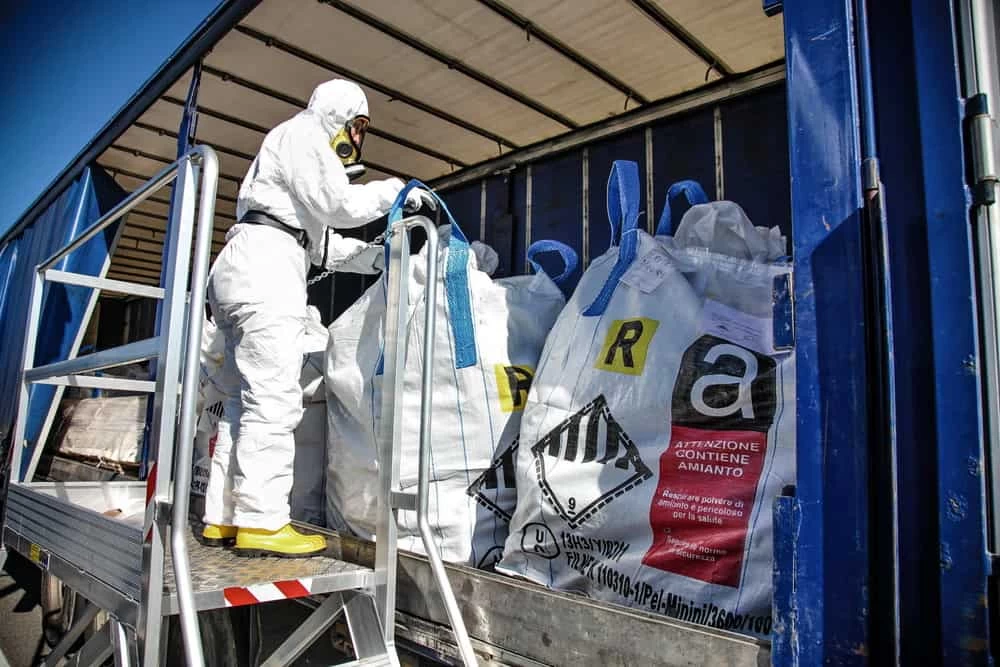
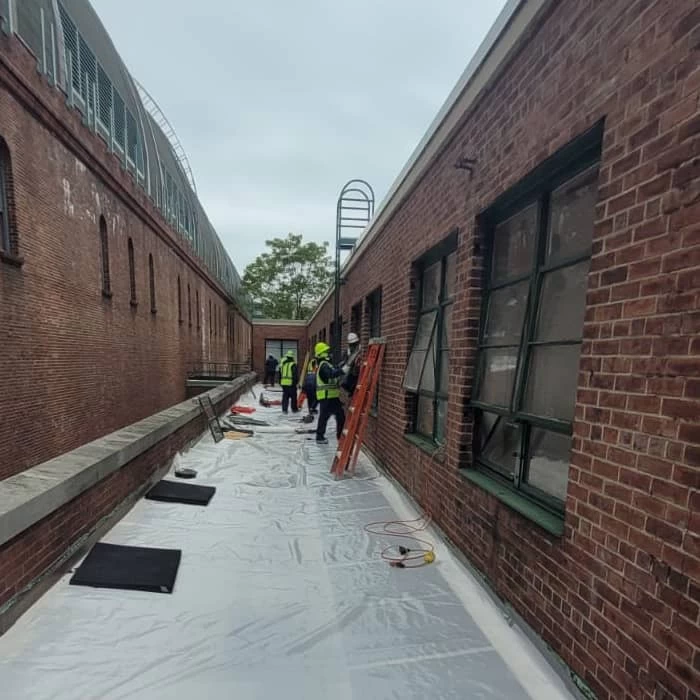
A licensed asbestos survey involves sampling suspect materials and sending them to a certified lab for analysis. The Town of Islip’s Building Division requires this survey as part of the demolition permit process, so it’s not something you can skip even if you wanted to. If asbestos is found, it has to be abated by a licensed contractor before demolition proceeds. We hold the NYS Department of Labor asbestos contractor certifications to handle both the survey and the abatement so you’re not waiting on a separate company to clear the site before work can continue.
What does interior demolition typically cost for a home in Bay Wood?
It varies depending on scope, but for a selective interior demolition project in Bay Wood a kitchen gut, bathroom strip-out, or basement overhaul you’re generally looking at a range that accounts for labor, debris removal, and the hazmat assessment that’s required given the age of the housing stock here. Full residential demolition runs higher, typically from a few thousand dollars for a small structure up to $15,000–$25,000 or more for a full teardown, depending on size, materials, and site conditions.
What matters more than any single number is what’s included in the quote. In Bay Wood’s pre-1980 homes, asbestos testing and potential abatement are near-certain requirements not contingencies. A quote that doesn’t factor those in will look lower up front and cost more by the end. Permit fees, debris hauling, and site cleanup are the other common add-ons that inflate final invoices when they’re not included from the start. When you get a quote from us, those items are part of the scope not surprises that show up on the final bill.
Can a demolition contractor help with my insurance claim after flood damage in Bay Wood?
Yes and if you’re dealing with water damage on the south shore, having a contractor who understands the insurance process alongside the physical work is genuinely valuable. Bay Wood’s location in the Great South Bay corridor means flooding from nor’easters and storm surge events is a recurring reality, not a once-in-a-decade situation. When water gets into a basement or ground-floor space, the clock starts immediately. Mold begins to develop within 24 to 48 hours, and insurers want documentation of the damage before materials are removed.
We have a documented track record of helping homeowners navigate the claims process not just doing the demolition, but helping document the damage scope, communicating with insurance adjusters, and making sure the work is properly supported for the claim. Our 24/7 availability means we can respond within hours of an emergency call, which protects both your property and your claim. If you’re waiting days for a contractor to show up after a flooding event, you’re likely looking at a mold remediation job on top of the demolition and a more complicated insurance situation as a result.
How long does a demolition project take from permit to completion in Islip?
For a selective interior demolition project a kitchen, bathroom, or basement the physical work itself is often completed in one to three days once permits are in place. The permit process through the Town of Islip Building Division is where the timeline variability lives. A complete application with all required documentation asbestos survey, NY 811 notification, flood zone determination if applicable moves through the process more predictably than an incomplete one. Applications that are missing required documentation get held, and that delay can push your project start back by weeks.
The asbestos survey adds a step before permits can even be filed, since the results need to be included in the application. If abatement is required based on survey findings, that adds additional time before demolition can begin typically a few days to a week depending on the scope of materials involved. For emergency demolition after water or fire damage, we can mobilize quickly and work with the Town’s processes in parallel where possible. The clearest way to get an accurate timeline for your specific project is to get a site assessment done early, before you’ve committed to a renovation start date.
What's the difference between a demolition contractor and a junk removal company in Bay Wood?
It’s a fair question, and the distinction matters more in Bay Wood than it might in other areas. Junk removal companies haul away material that’s already been removed furniture, appliances, loose debris. A licensed demolition contractor does the actual structural work: taking down walls, removing flooring systems, stripping out kitchens and bathrooms, demolishing structures, and managing the hazardous materials that come with that work. In a community where most homes were built before 1980, the hazmat piece is what separates a demolition contractor from someone with a truck and a dumpster.
Asbestos-containing materials and lead paint can’t legally be handled by an unlicensed crew. If a junk removal company or unlicensed contractor disturbs asbestos-containing floor tiles or lead paint during a demo job in your Bay Wood home, that’s an EPA and NYS DOL violation and the liability lands on the property owner, not just the contractor. Licensed demolition contractors like us hold the certifications required to handle those materials legally, document the process for permit compliance, and dispose of hazardous waste through approved channels. For a home in Bay Wood’s housing stock, that’s not a premium add-on it’s the baseline requirement for doing the job right and keeping you protected.