Most Dix Hills Homes Were Built Before 1980 Demo Them Right
Most homes in Dix Hills were built before 1980. That means asbestos, lead paint, and a permit process that catches unprepared contractors off guard. We handle all of it in-house, start to finish.
I needed a professional consultation explanation of procedure for safe removal of Asbestos in my apartment complex. Without having an account yet, I was very impressed with the caring, knowledgeable and generous advice offered by Jessica, and will look forward to doing business in the future. Thank you so much! I feel much more informed about a sometimes scary endeavor. Peace. Nancy Silva Mineola, NY.
Mia Munoz
Used this company to clean up some water flood in my house. They were fast and easy to work with.very professional, Would recommend to anyone!
Nini Valle
Great company, had a flood and they responded quickly and efficiently. Billed my insurance company directly. I highly recommend this company!
joe colapietro, jr
I had pipe freeze in my basement right before a snow storm and they made to within an hour to help start the clean up process. They we by our side throughout the entire process and even helped with the insurance company. They did such a great job with the cleanup, repair, remidiation, I contracted them to perform the repairs and finishes in the basement. They came with enough manpower and material to get the job done. Leo and Jessica were nothing but a pleasure to deal with!!
Cristian Arredondo c
I had some water damage in my home and Green Island was able to take care of my issue quickly and effectively. I am very pleased with the work they did. They responded quickly and were very professional.
Michael M
Outstanding service! From the office to the field crew everyone was friendly, helpful and responsive. I highly recommend Green Island Group.
What Changes When You Hire a Contractor Who Knows Dix Hills
When you hire a demolition contractor in Dix Hills, the biggest risk isn’t the wrecking it’s what gets discovered before the first wall comes down. The overwhelming majority of homes here were built during the era when asbestos was standard in floor tiles, pipe insulation, ceiling materials, and joint compounds. New York State law requires a licensed asbestos survey and abatement before demolition begins on any pre-1980 structure. If your contractor can’t handle that in-house, your project stops cold while you scramble to find someone who can.
With us, that problem doesn’t exist. We handle asbestos abatement, lead paint removal, and full demolition under one roof which means your timeline stays intact and you’re not coordinating between two separate companies while your project sits idle.
There’s also the permit side. Dix Hills falls under the Town of Huntington’s Department of Engineering Services, which requires notarized applications, licensed land surveyor documentation, and a separate pre-demolition certificate from the Suffolk County Health Department. That’s two approval tracks running simultaneously. When you have a contractor who knows this process cold, approvals move. When you don’t, they stall sometimes for weeks.
12 Years In, 5,000 Projects Deep We Know Dix Hills Inside Out
We’re a Suffolk County-based environmental and demolition company headquartered in Bohemia, NY about 15 miles east of Dix Hills along the Long Island Expressway. That’s not a detail thrown in for show. It means when you call, someone familiar with the Town of Huntington’s building department, the Dix Hills Water District’s disconnection process, and Suffolk County’s pre-demo certificate requirements is the one picking up.
Over 12 years and 5,000+ completed projects across Long Island and New York City, our work has ranged from full residential teardowns to selective interior demolition for major renovations and everything in between. We hold active NYS Department of Labor asbestos certifications, carry $2 million in general liability coverage, and are MWBE-certified. These aren’t credentials listed for appearance they’re the ones that actually matter when a project hits a regulatory snag and you need someone who can navigate it without stopping your job.
How a Dix Hills Demo Actually Gets Done No Guesswork
It starts with a site assessment. Before any work is scoped or priced, we evaluate the property for what’s actually there structural conditions, suspected hazardous materials, utility connections, and access considerations. In Dix Hills, where lots are wooded and many homes sit on sloped terrain with mature trees close to the structure, that site walk matters more than people expect. Debris access, tree protection, and slope stability all factor into how we plan the job.
From there, if the home was built before 1980 which most in this zip code were a licensed asbestos inspector conducts a pre-demolition survey. If regulated material is found, we handle abatement entirely in-house. Simultaneously, permit applications go to the Town of Huntington’s Department of Engineering Services and the Suffolk County Health Department. Both tracks run at the same time so nothing is waiting on the other.
Once permits are issued and hazmat clearance is confirmed, we coordinate utility disconnections electric through PSEG Long Island, gas through National Grid, water through the Dix Hills Water District. Then demolition begins. Debris is hauled, the site is cleared, and you get documentation of everything we did abatement records, permit sign-offs, disposal receipts because you’ll need them when you build or sell.
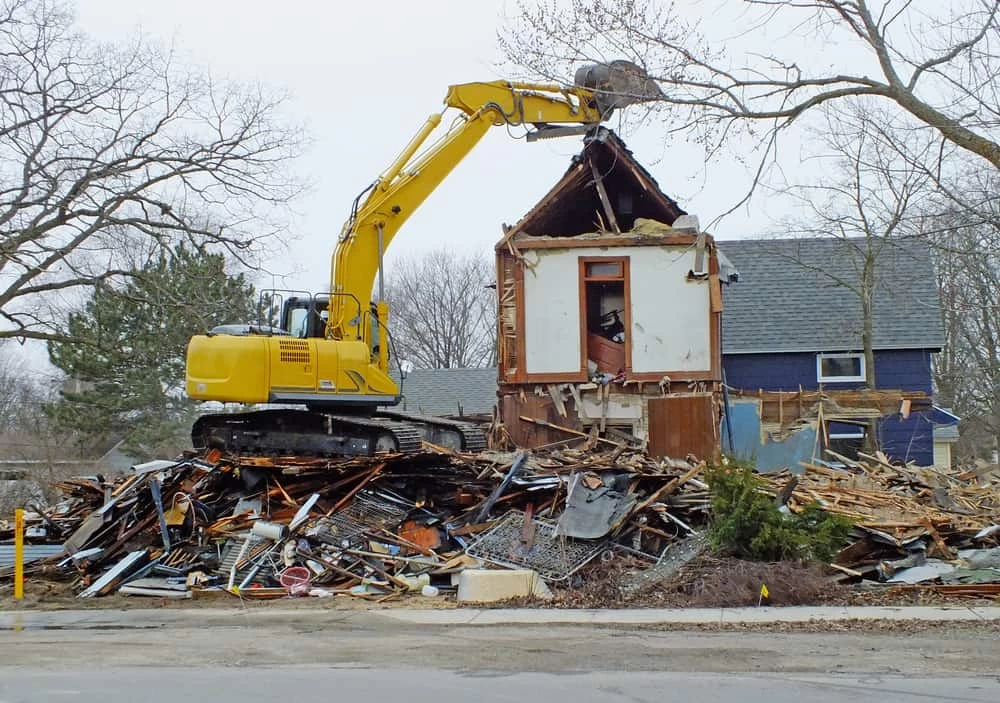
We handle the full range of demolition work that Dix Hills properties actually require. Full structural teardowns for homeowners rebuilding on high-value lots. Selective interior demolition for gut renovations kitchens, basements, full-floor remodels where precision matters because you’re keeping the structure around it. Emergency demolition after water damage, fire damage, or storm events, with 24/7 response and documented sub-one-hour arrival times for urgent calls.
Because Dix Hills sits in one of Long Island’s most wooded residential corridors, storm-related damage is a real part of the demand here. Mature oaks and maples on residential lots don’t always survive a nor’easter, and when a tree comes through a roof or a pipe freezes and floods a finished basement, the demo work has to happen fast before mold sets in and before the insurance window closes. Our emergency response capability is built for exactly that situation.
For every project type, our scope includes pre-demolition hazmat assessment, permit management through the Town of Huntington and Suffolk County, utility disconnection coordination, and full site cleanup with documented disposal. We don’t hand off to a subcontractor for the hard parts. The work that requires licensing asbestos abatement, lead paint removal is performed by our own certified crews, not a third party you’ve never met.
Do I need a permit for demolition in Dix Hills, NY?
Yes and it’s not a simple one-step process. Because Dix Hills is an unincorporated hamlet, all demolition permits go through the Town of Huntington’s Department of Engineering Services, not a village building official. You’ll need to submit two completed, notarized copies of Form 87-04 (the Town’s demolition permit application), along with recent surveys by a licensed land surveyor showing your plot and all existing structures, plus a copy of a current tax bill.
On top of that, full demolition projects in Suffolk County require a separate pre-demolition hazardous materials certificate from the Suffolk County Department of Health Services before the Town permit can be finalized. These two approval tracks run in parallel, and if you’re not familiar with both, it’s easy to lose weeks waiting on one while the other is already ready. A contractor who knows this dual-track process and handles both sides of it for you is the difference between a project that starts on time and one that doesn’t start at all.
Is asbestos testing required before demolition on older Dix Hills homes?
Yes, and this is one of the most important things to understand before you hire anyone. Under New York State Industrial Code Rule 56, any demolition or renovation project on a building constructed before 1980 requires a pre-demolition asbestos survey conducted by a licensed NYS asbestos inspector. If the survey finds regulated asbestos-containing material which is common in Dix Hills given that the median construction year for homes here is approximately 1970 licensed abatement must be completed before demolition begins.
This isn’t optional, and it’s not something you can skip to save time. The NYS Department of Labor’s Asbestos Control Bureau actively enforces these requirements. If your contractor starts demo without completing this step, you’re looking at a stop-work order, potential fines, and the cost of bringing in an abatement crew mid-project. The smarter move is working with a contractor who handles the survey and abatement in-house, so the process flows without interruption and you’re never left holding the liability.
How much does house demolition typically cost in Dix Hills?
Demolition costs in Dix Hills vary based on the size of the structure, the scope of the work, and critically what the pre-demolition survey finds. A straightforward interior gut demolition on a mid-size home might run a few thousand dollars. A full structural teardown on a larger property, factoring in asbestos abatement, permit fees, utility disconnections, and debris removal, can reach $20,000–$50,000 or more depending on the conditions.
The honest answer is that any quote you get before a site assessment and hazmat survey is just a rough estimate. In Dix Hills specifically, where most homes predate 1980 and asbestos is a near-certainty in older construction, the abatement scope is a major cost variable that can’t be determined without an actual inspection. What you want from any contractor is a transparent, itemized quote that accounts for hazmat, permits, utility coordination, and cleanup not a low number that gets revised upward once work is underway.
What happens if asbestos is found during a demolition project in Dix Hills?
If asbestos-containing material is identified during the pre-demolition survey, work on that portion of the project must stop until licensed abatement is completed. This is a legal requirement under NYS Industrial Code Rule 56, and it applies regardless of how small the affected area is, as long as the material qualifies as regulated under state and federal thresholds.
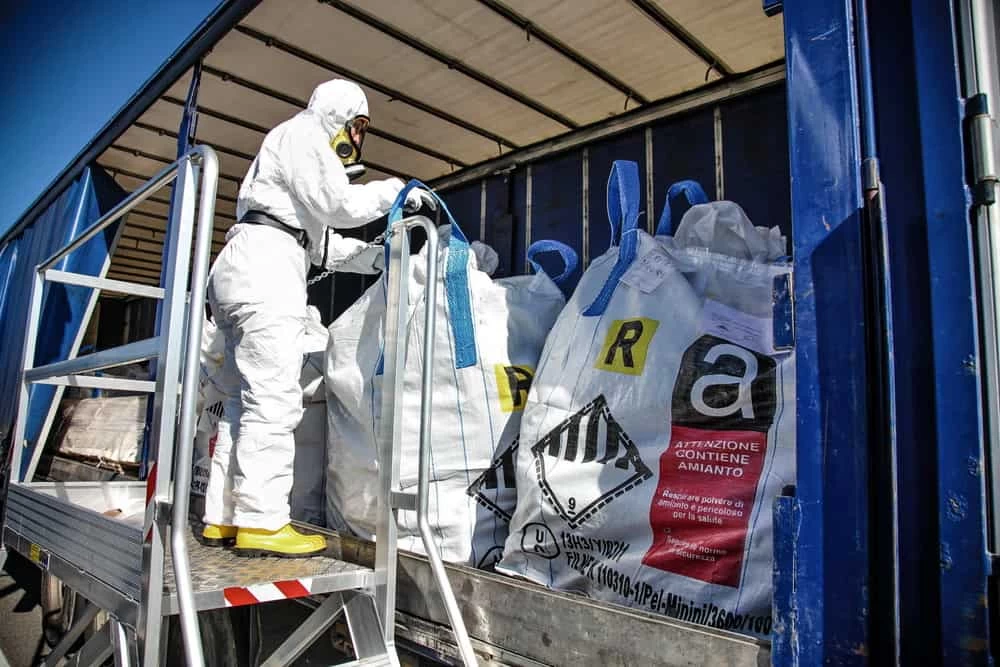
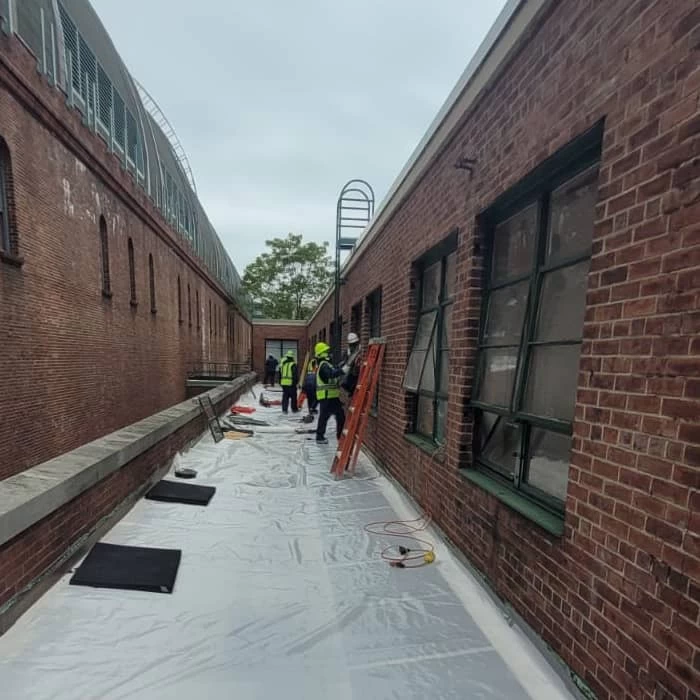
The abatement process involves containment of the affected area, removal of the regulated material by licensed crews using proper protective equipment, air monitoring during and after the work, and disposal at an approved facility with documented chain of custody. Once abatement is complete and clearance air testing passes, demolition can resume. For homeowners in Dix Hills, the most practical way to avoid a costly mid-project stoppage is to have the asbestos survey completed before demolition is permitted and to work with a contractor who can move directly from abatement into demolition without bringing in a separate company. That’s the sequence we follow on every pre-1980 project.
Can a demolition contractor in Dix Hills help with insurance claims after storm or water damage?
Yes and this comes up more than most people expect in Dix Hills. The community’s wooded lots mean tree-fall damage during nor’easters and high-wind events is a recurring issue. Older homes with original plumbing face real freeze-thaw risk every winter. When a pipe bursts or a tree compromises a structure, the demolition work often needs to happen fast both to prevent further damage and to meet insurance documentation requirements before the claim can move forward.
We work alongside homeowners through the insurance process not just doing the physical demo, but helping with the documentation, scope reporting, and coordination that insurers require. The key is acting quickly. Mold can establish itself within 24–48 hours of a water event, and insurers will scrutinize delays. Having a contractor who responds within the hour, documents the damage properly, and understands what the claims process needs on the demolition side is genuinely useful.
How do I know if a demolition contractor is actually licensed for asbestos work in New York?
This is the right question to ask, and most homeowners don’t ask it clearly enough. In New York State, asbestos contractor licensing is issued by the NYS Department of Labor’s Asbestos Control Bureau, and there are multiple license types covering different scopes of work contractor, handler, supervisor, inspector, and others. A company that says it’s “licensed” isn’t necessarily licensed for the specific asbestos work your project requires.
The NYS DOL maintains a public Asbestos Contractors Listing where you can verify any company’s active certifications by name. Before you sign anything, ask the contractor to identify which license types they hold and confirm those licenses are current. For a Dix Hills home built before 1980 which is the majority of the housing stock here you need a contractor with active asbestos abatement contractor and supervisor certifications at minimum. Our certifications are active and verifiable through that public listing. If a contractor can’t point you to their license record directly, that’s a problem worth taking seriously before any work begins.