Post-War Homes in East Farmingdale Need More Than a Wrecking Crew
When your East Farmingdale home was built in the 1950s or ’60s, demolition isn’t just swinging a hammer it’s asbestos checks, Town of Babylon permits, and a contractor who doesn’t disappear after the deposit. We handle all of it.
I needed a professional consultation explanation of procedure for safe removal of Asbestos in my apartment complex. Without having an account yet, I was very impressed with the caring, knowledgeable and generous advice offered by Jessica, and will look forward to doing business in the future. Thank you so much! I feel much more informed about a sometimes scary endeavor. Peace. Nancy Silva Mineola, NY.
Mia Munoz
Used this company to clean up some water flood in my house. They were fast and easy to work with.very professional, Would recommend to anyone!
Nini Valle
Great company, had a flood and they responded quickly and efficiently. Billed my insurance company directly. I highly recommend this company!
joe colapietro, jr
I had pipe freeze in my basement right before a snow storm and they made to within an hour to help start the clean up process. They we by our side throughout the entire process and even helped with the insurance company. They did such a great job with the cleanup, repair, remidiation, I contracted them to perform the repairs and finishes in the basement. They came with enough manpower and material to get the job done. Leo and Jessica were nothing but a pleasure to deal with!!
Cristian Arredondo c
I had some water damage in my home and Green Island was able to take care of my issue quickly and effectively. I am very pleased with the work they did. They responded quickly and were very professional.
Michael M
Outstanding service! From the office to the field crew everyone was friendly, helpful and responsive. I highly recommend Green Island Group.
No Stopped Projects, No Surprise Bills, No Second Contractor
Most demolition problems in East Farmingdale don’t start with the demo they start with what’s hiding inside the walls. The residential neighborhoods here were built during the post-war suburban boom, which means floor tiles, pipe wrap, ceiling materials, and siding that are 60 to 70 years old. It’s just the reality of working in housing stock from that era, and it’s why who you hire matters more than most people realize before they’re already mid-project.
When asbestos turns up and your contractor isn’t certified to handle it, work stops. You’re now coordinating a second company, waiting on scheduling, and watching your timeline fall apart. We carry active NYS Department of Labor asbestos certifications, which means if it’s found during your project, we handle it in sequence no stoppage, no handoff, no scrambling.
The same goes for permits. Demolition in East Farmingdale runs through the Town of Babylon Building Department, and since February 2026, all applications go through their new OpenGov online system. We manage that process from start to finish, so you’re not chasing paperwork while your project sits idle. What you’re left with at the end is a clean site, a closed permit, and no loose ends.
Demolition Specialists Serving East Farmingdale, NY
Based in Suffolk County, We Know East Farmingdale's Building Stock
We’re headquartered in Bohemia, NY Suffolk County, not Nassau, not the city. That matters because the Town of Babylon’s permit process, the Route 110 corridor’s redevelopment landscape, and the specific environmental history of East Farmingdale aren’t things you learn from a distance. We work here. We know the building department, we understand the local timelines, and we’ve seen what decades of industrial and residential use looks like when it’s time to take something down.
With over 12 years of operation, more than 5,000 completed projects across Long Island and New York City, and 340-plus demolition projects in the metro area, we’re not learning on your job. We’re MWBE-certified, carry $2 million in general liability insurance, and hold every license the state requires for demolition and asbestos abatement work. When something unexpected comes up and in East Farmingdale’s older housing stock, it often does you want a team that’s handled it before.
It starts with a site assessment. Before anything is touched, we walk the property and identify what we’re dealing with structure type, age, materials, access, and whether a pre-demolition hazmat inspection is needed. In East Farmingdale, where the bulk of the residential housing stock dates to the 1950s through 1970s, that inspection isn’t optional it’s the step that determines whether asbestos or lead paint is present and how the project gets scoped. Skipping it creates liability for you, not us.
Once the assessment is done, we pull the necessary permits through the Town of Babylon Building Department. That means preparing the application, gathering the required insurance documentation and Letters of Compliance, and submitting everything through the Town’s OpenGov platform. We handle the back-and-forth with the building department so you don’t have to track down inspectors or decipher permit language on your own.
Then the work begins. Depending on the scope full teardown, partial demo, interior gut, or commercial structure removal we sequence the abatement and demolition so the site moves forward without interruption. Debris is removed, the site is left clean, and we don’t consider the job done until the permit is closed and the property is ready for whatever comes next. If you’re dealing with insurance water damage, fire, storm we document everything as we go to support your claim, not just complete the physical work.
Commercial and Residential Demolition Contractor East Farmingdale
One Contractor for Demo, Abatement, and Everything Between
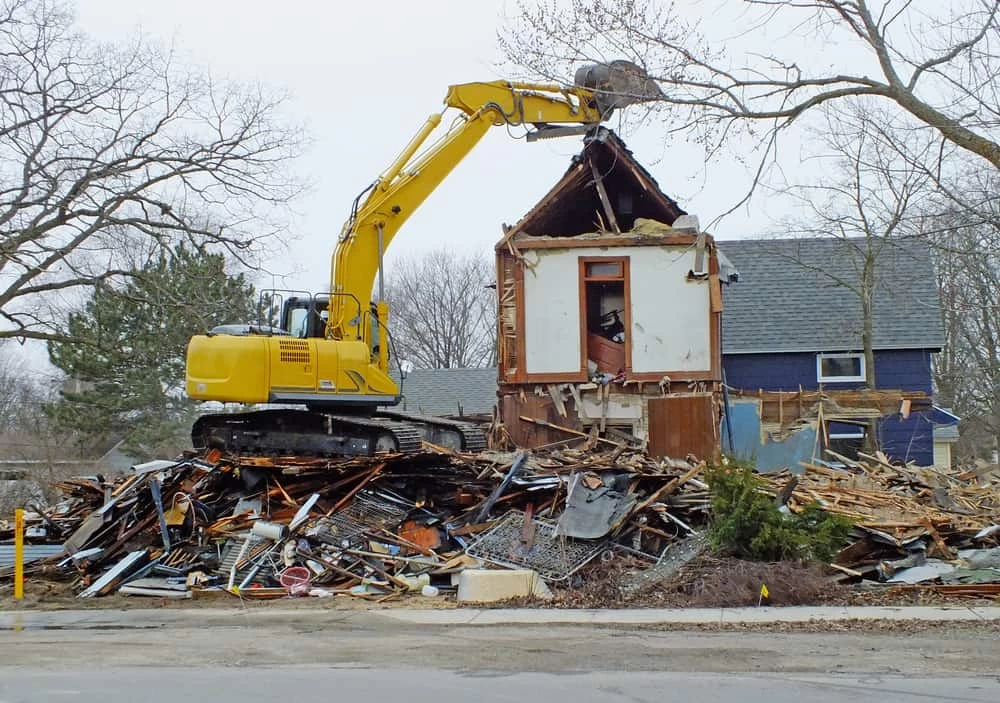
We handle the full range of demolition work in East Farmingdale residential teardowns, interior gut jobs, commercial structure removal, and industrial site clearing. For homeowners in East Farmingdale’s older neighborhoods, that usually means a pre-demolition asbestos assessment followed by abatement if needed, then the structural demo itself, then debris removal and site cleanup. All of that happens under one contract, one timeline, and one point of contact.
For commercial and industrial work along the Route 110 corridor, the scope gets more complex. The Conklin Street redevelopment area where former airplane manufacturing structures have sat vacant since the 1990s and are now explicitly slated for demolition ahead of a 495-unit housing development represents the kind of project that requires environmental remediation experience, multi-agency permit coordination, and MWBE certification. We’re certified, and we have the capacity to work at that scale. The 30% MWBE participation requirement built into state-backed projects in East Farmingdale isn’t a hurdle for us it’s already met.
Whether you’re a homeowner dealing with a 1960s ranch that needs to come down, a property manager with a commercial structure on Broadhollow Road, or a developer working through the Route 110 redevelopment process, the approach is the same: assess the full scope, handle the compliance, do the work, and leave the site clean. No handoffs, no subcontracted surprises, no gaps in accountability.
Do I need a demolition permit in East Farmingdale, NY before starting work?
Yes any structure being demolished in East Farmingdale requires a permit through the Town of Babylon Building Department. This isn’t optional, and it’s not something you can handle after the fact. The permit process requires a notarized Building Permit Application signed by the property owner, proof of contractor insurance (workers’ comp, disability, and general liability), and Letters of Compliance from applicable agencies. Fees are calculated by the Town’s Plans Examiner based on the scope of the demolition.
As of February 2026, the Town of Babylon transitioned to an online application system through OpenGov, so all submissions now go through that platform digitally. If your contractor isn’t current on that process, you’ll feel it in delays. We manage the entire permit process on your behalf from preparing the application to tracking approval so your project doesn’t sit idle waiting on paperwork.
How do I know if my East Farmingdale home has asbestos before demolition?
The honest answer is: you don’t know until it’s tested. If your East Farmingdale home was built before 1980 which covers the vast majority of the neighborhood’s residential housing stock, given that East Farmingdale developed primarily during the 1950s and 1960s there’s a real probability that asbestos-containing materials are present somewhere. That could be floor tiles, ceiling tiles, pipe insulation, roofing shingles, siding, or joint compound. It doesn’t mean every home has it, but it means every home in that age range should be assessed before demolition begins.
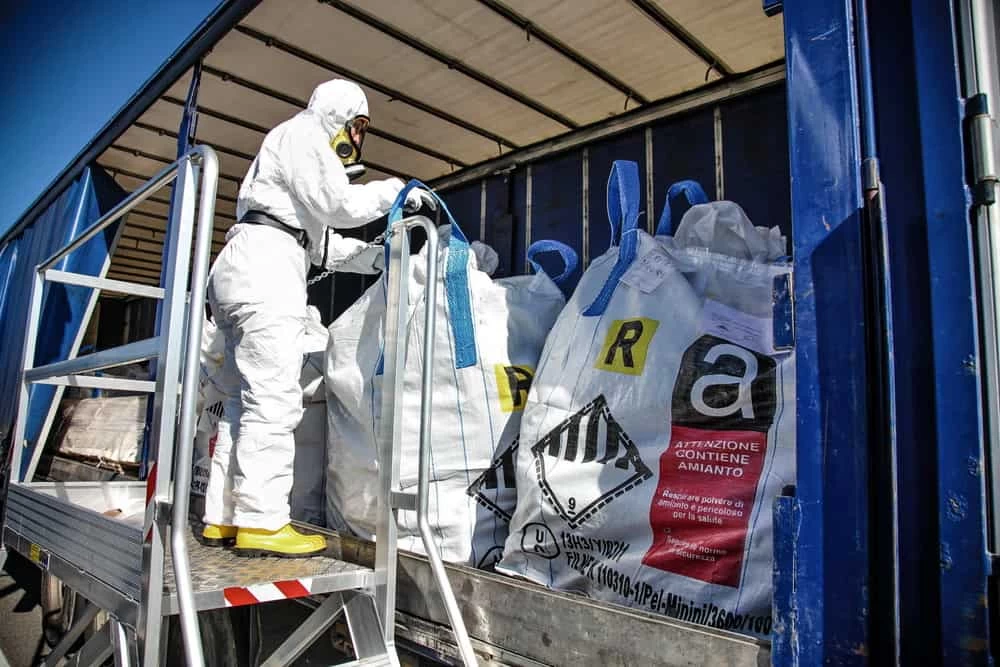
A licensed asbestos inspector collects samples from suspect materials and sends them to an accredited lab. If asbestos is confirmed above regulated thresholds, abatement is required before demolition can proceed and that work must be done by a contractor holding active NYS Department of Labor asbestos certifications. We hold those certifications and handle both the assessment coordination and the abatement in-house, so your project doesn’t stop and restart with a second company when something is found.
What does a full residential demolition typically cost in East Farmingdale?
Residential demolition costs in East Farmingdale generally range from $8,000 to $25,000 or more depending on the size of the structure, what materials are involved, and whether asbestos or lead paint abatement is required before the demo can begin. A straightforward teardown of a modest post-war ranch with no hazmat complications sits at the lower end of that range. A larger structure with confirmed asbestos in multiple material types will cost more because abatement adds labor, containment, and disposal costs that can’t be avoided under New York State law.
What you should be cautious of is a quote that doesn’t include permit fees, hazmat assessment, and debris removal as line items. Those costs are real, and a low headline number that excludes them will become a higher final bill. When we scope a project, we build the full picture into the quote from the start permits, abatement if applicable, demolition, debris hauling, and site cleanup so what you agree to at the beginning is what you pay at the end.
Can a demolition contractor work near Republic Airport in East Farmingdale?
Yes, but there are regulatory considerations that don’t apply in most other parts of Long Island. Republic Airport which sits directly in East Farmingdale and is owned by the New York State Department of Transportation creates FAA height restrictions and runway protection zone requirements that affect what can be built, and by extension, what must be demolished and cleared in certain areas adjacent to the airfield. Any contractor working on properties near the airport along the Route 110 corridor needs to be aware of those constraints and factor them into the project plan.
We have experience navigating complex, multi-agency regulatory environments including NYC DOB requirements, USEPA NESHAP compliance for asbestos in demolition, and Suffolk County and Town of Babylon permitting. Working near an active general aviation airport adds a layer, but it’s a layer we’re familiar with. If your property is in the Route 110 corridor near the airfield, bring that up when you call it’s relevant to how the project gets scoped and permitted.
What happens if asbestos is discovered after demolition has already started?
If asbestos is discovered mid-demolition and your contractor isn’t certified to handle it, work stops immediately. You’re then responsible for finding a licensed abatement contractor, waiting on their availability, and restarting your project from a partially demolished structure which creates both safety and liability exposure. This is one of the most common and most avoidable problems in demolition projects involving older homes, and it’s exactly why pre-demolition assessment matters.
Under New York State law and USEPA NESHAP regulations, regulated asbestos-containing material above certain threshold quantities must be abated by a licensed contractor before demolition continues. There’s no workaround. If you’re working with a contractor who handles abatement in-house as we do the discovery doesn’t stop the project. It changes the sequence, but the same team handles both the abatement and the demolition, and the timeline adjusts without requiring you to start coordinating with a second company in the middle of an open job site.
Does Green Island Group handle demolition connected to water or storm damage insurance claims?
Yes, and it’s an area where having the right contractor makes a significant difference. East Farmingdale’s South Shore location and aging housing stock make it particularly vulnerable to the kind of water intrusion, flooding, and storm damage that creates urgent demolition needs and those situations almost always involve an insurance claim running parallel to the physical work. If the documentation isn’t done correctly from the start, claims get delayed or disputed.
We work directly alongside the insurance process photographing and documenting damage before and during demolition, providing detailed scope reports that support your claim, and communicating with your carrier as needed. We’re available 24/7 for emergency response, and our track record with insurance-triggered projects is something customers specifically call out in reviews. The physical demolition and the claim documentation aren’t two separate problems you manage independently when you work with us, they run together from the first call.