Northport's Older Homes Demand More Than a Wrecking Crew
When your home was built before 1980 and most in Northport were demolition isn’t just about what comes down. It’s about what’s hiding inside the walls. We handle the full scope, from asbestos abatement to permits, so nothing stops your project mid-track.
I needed a professional consultation explanation of procedure for safe removal of Asbestos in my apartment complex. Without having an account yet, I was very impressed with the caring, knowledgeable and generous advice offered by Jessica, and will look forward to doing business in the future. Thank you so much! I feel much more informed about a sometimes scary endeavor. Peace. Nancy Silva Mineola, NY.
Mia Munoz
Used this company to clean up some water flood in my house. They were fast and easy to work with.very professional, Would recommend to anyone!
Nini Valle
Great company, had a flood and they responded quickly and efficiently. Billed my insurance company directly. I highly recommend this company!
joe colapietro, jr
I had pipe freeze in my basement right before a snow storm and they made to within an hour to help start the clean up process. They we by our side throughout the entire process and even helped with the insurance company. They did such a great job with the cleanup, repair, remidiation, I contracted them to perform the repairs and finishes in the basement. They came with enough manpower and material to get the job done. Leo and Jessica were nothing but a pleasure to deal with!!
Cristian Arredondo c
I had some water damage in my home and Green Island was able to take care of my issue quickly and effectively. I am very pleased with the work they did. They responded quickly and were very professional.
Michael M
Outstanding service! From the office to the field crew everyone was friendly, helpful and responsive. I highly recommend Green Island Group.
Most homeowners in Northport aren’t thinking about demolition until something forces the issue a storm rolls in off the harbor, a pipe bursts in a 1950s Cape Cod, or a gut renovation finally gets the green light. When that moment comes, the last thing you want is a contractor who shows up, finds asbestos in the floor tiles, and tells you they can’t go any further until you hire someone else.
That’s a real scenario. It happens constantly on Long Island, especially in Northport where Victorian-era homes, post-war ranches, and mid-century split-levels make up the bulk of the housing stock. Virtually every home built before 1980 has some form of asbestos-containing material pipe insulation, joint compound, floor tiles, ceiling texture. Finding it mid-project doesn’t have to mean stopping the project. Not when your contractor handles abatement in-house.
When you work with a licensed demolition contractor who also holds active NYS DOL asbestos certification, the job keeps moving. You’re not coordinating two separate crews, two separate schedules, or two separate invoices. You get one point of contact, a clear scope from day one, and a finished site that’s ready for whatever comes next whether that’s a full rebuild, a renovation, or a sale on a market where Northport homes are moving at $1.2 million and climbing.
We’ve been doing this work across Suffolk County for over 12 years. That means we’ve pulled permits through the Village of Northport’s own building department not the Town of Huntington, which is a distinction a lot of contractors get wrong and homeowners pay for in delays. We know the difference, and we handle it.
We’re based in Bohemia, NY, which puts us squarely in Suffolk County and close enough to Northport to respond fast including emergencies. Our crew has handled everything from selective interior demo in historic village homes to full teardowns in East Northport and Fort Salonga. We carry $2,000,000 in general liability coverage, hold active NYS certifications, and have completed over 5,000 projects across Long Island and New York City.
What actually sets us apart isn’t a list of credentials it’s that we handle asbestos abatement, lead paint removal, mold remediation, and demolition all under one roof. For a community like Northport, where the housing stock is old and the property values are high, that matters more than almost anything else.
No Surprises Here's Exactly How the Work Gets Done
It starts with a site assessment. Before anything is touched, we walk the property and identify what we’re dealing with structural layout, potential hazardous materials, utility lines, and scope of work. For homes in Northport, that assessment almost always includes an asbestos evaluation. New York State law requires it for properties built before 1980, and most of Northport qualifies. We handle the inspection and testing in-house, so you’re not waiting on a third party to clear the job before we can begin.
Once the assessment is complete, we pull the permits. In Northport specifically, that means filing with the Village of Northport Building Department at Village Hall on Main Street not the Town of Huntington’s engineering office. It’s a detail that trips up contractors who aren’t familiar with how incorporated villages handle their own permitting. We file with the right office, submit the right documentation, and keep your timeline moving.
From there, the physical work begins demo, abatement if needed, debris removal, and site prep. If you’re dealing with an insurance claim from storm damage or flooding, we work alongside that process too, handling the documentation your adjuster needs while the crew handles the site. By the time we’re done, you have a clean, cleared property and a paper trail that holds up.
Commercial and Residential Demolition Northport NY
Every Scope of Work Reflects What Northville Properties Actually Need
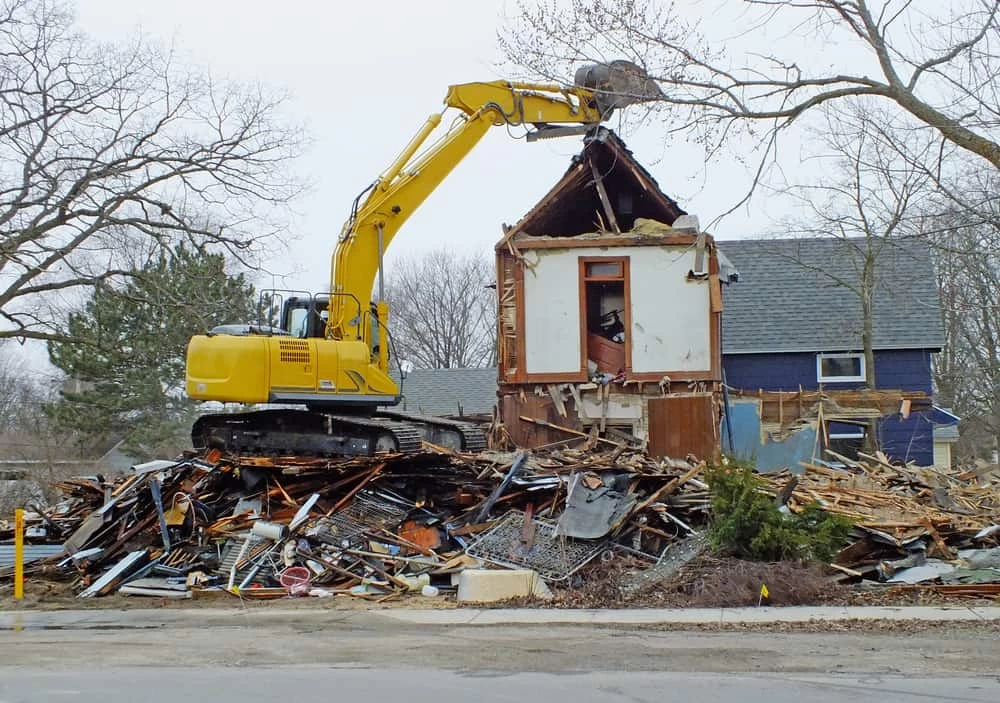
We handle both residential and commercial demolition throughout Northport and the surrounding areas East Northport, Fort Salonga, Centerport, Eatons Neck, and the broader Town of Huntington. The work ranges from selective interior demolition (taking out a kitchen, a bathroom, or a finished basement) to full structural teardowns on properties being rebuilt from the ground up.
For Northport’s residential market specifically, interior demolition is the most common starting point. Homeowners renovating older homes along the harbor or in the historic village center often discover that what looks like a straightforward gut job involves layers of hazardous materials asbestos floor tiles under the laminate, lead paint under three coats of latex, mold behind walls that absorbed water from a nor’easter. We scope all of that upfront, so the number you’re quoted is the number you can plan around.
On the commercial side, we work with property owners, developers, and municipalities on larger-scale projects. Our MWBE certification makes us eligible for public and municipal contracts in the area. Whether it’s a retail space on Main Street, a commercial building in East Northport, or a waterfront property with environmental complexity, we bring the same licensed, fully insured crew and the same integrated approach demo and hazmat under one contract, one schedule, and one team.
Do I need a permit for demolition work in the Village of Northport?
Yes and here’s something worth knowing before you hire anyone: Northport is an incorporated village, which means demolition permits are issued by the Village of Northport Building Department at Village Hall on Main Street, not by the Town of Huntington. This is a distinction that catches a lot of contractors off guard. If your contractor files with the Town instead of the Village, you’re looking at delays while the paperwork gets sorted out.
The permit requirements depend on the scope of work. A full structural demolition requires a formal permit application, documentation of utility disconnection, and in most cases, proof that hazardous materials have been assessed. Selective interior demolition may have different thresholds, but it’s always worth confirming with the Village building officials before work begins. We handle the entire permit process for our clients filing with the correct office, submitting the right forms, and following up so your project doesn’t sit in a queue longer than it needs to.
Is asbestos testing required before demolition in Northport, NY?
Under New York State law, any property built before 1980 requires an asbestos inspection before demolition or significant renovation work begins. Given that Northport’s housing stock spans from the 1700s through the 1970s Victorian homes, Craftsman bungalows, post-war Capes, and mid-century ranches the vast majority of residential properties in the village fall into that category.
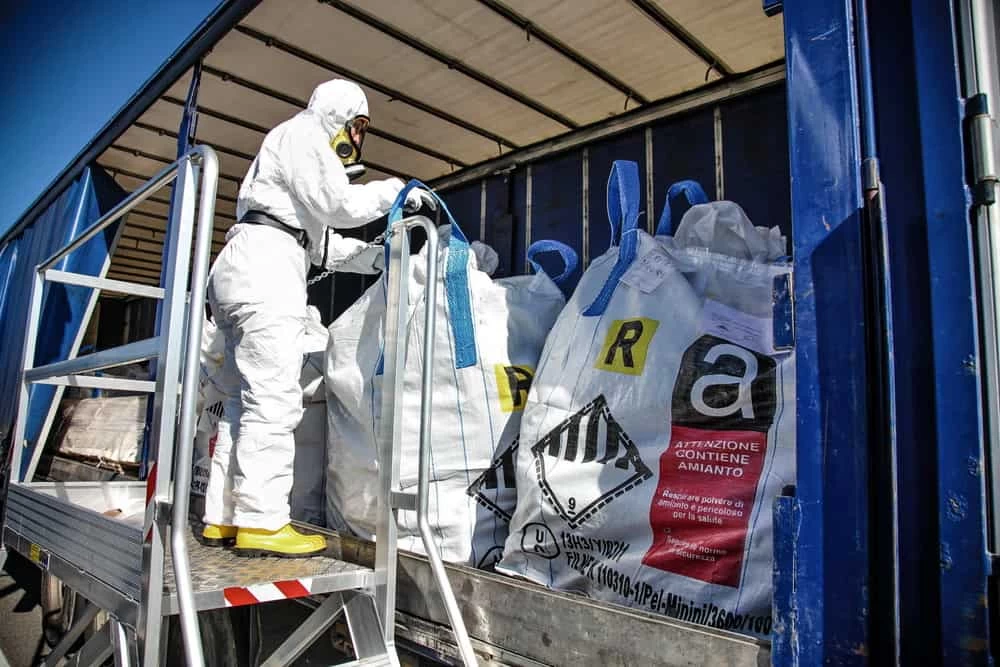
Asbestos-containing materials were used extensively in pre-1980 construction: pipe insulation, floor tiles, ceiling texture, joint compound, roof underlayment, and boiler wrap are all common sources. Finding asbestos during a project doesn’t mean the project stops it means the abatement needs to happen before demo continues. We hold active NYS Department of Labor asbestos contractor certification, so we handle testing and abatement in-house. You don’t need to bring in a separate licensed abatement firm, which saves time, money, and the coordination headache of managing two contractors on the same job.
What does interior demolition typically cost for a Northport home?
Interior demolition costs in Northport vary based on the size of the space, the scope of the work, and what’s found once the walls come open. A single-room gut (kitchen or bathroom) in a standard-sized home might run anywhere from $2,000 to $6,000 depending on materials and disposal. A full-floor or whole-house interior demo on a larger North Shore property can run significantly higher, especially when hazardous materials are involved.
What affects the number most in Northport specifically is the age and condition of the home. Older homes particularly those from the Victorian era or the post-war building boom tend to have more layers of materials, more complex structural systems, and a higher likelihood of asbestos or lead paint. Those materials require licensed abatement, which adds to the overall cost but is non-negotiable under state law. The best thing you can do before budgeting is get a proper site assessment so the scope is clearly defined. We don’t give ballpark numbers over the phone for older homes there’s too much that needs to be seen first.
How does storm damage or flooding affect the demolition process in Northport?
Northport’s location on the harbor, with direct exposure to Long Island Sound, makes storm-driven damage a recurring reality for homeowners here. Severe nor’easters, coastal flooding, and summer thunderstorms have all caused documented damage to properties in and around the village flooded basements, water-saturated walls, downed trees through rooflines, and structural compromise from prolonged moisture exposure.
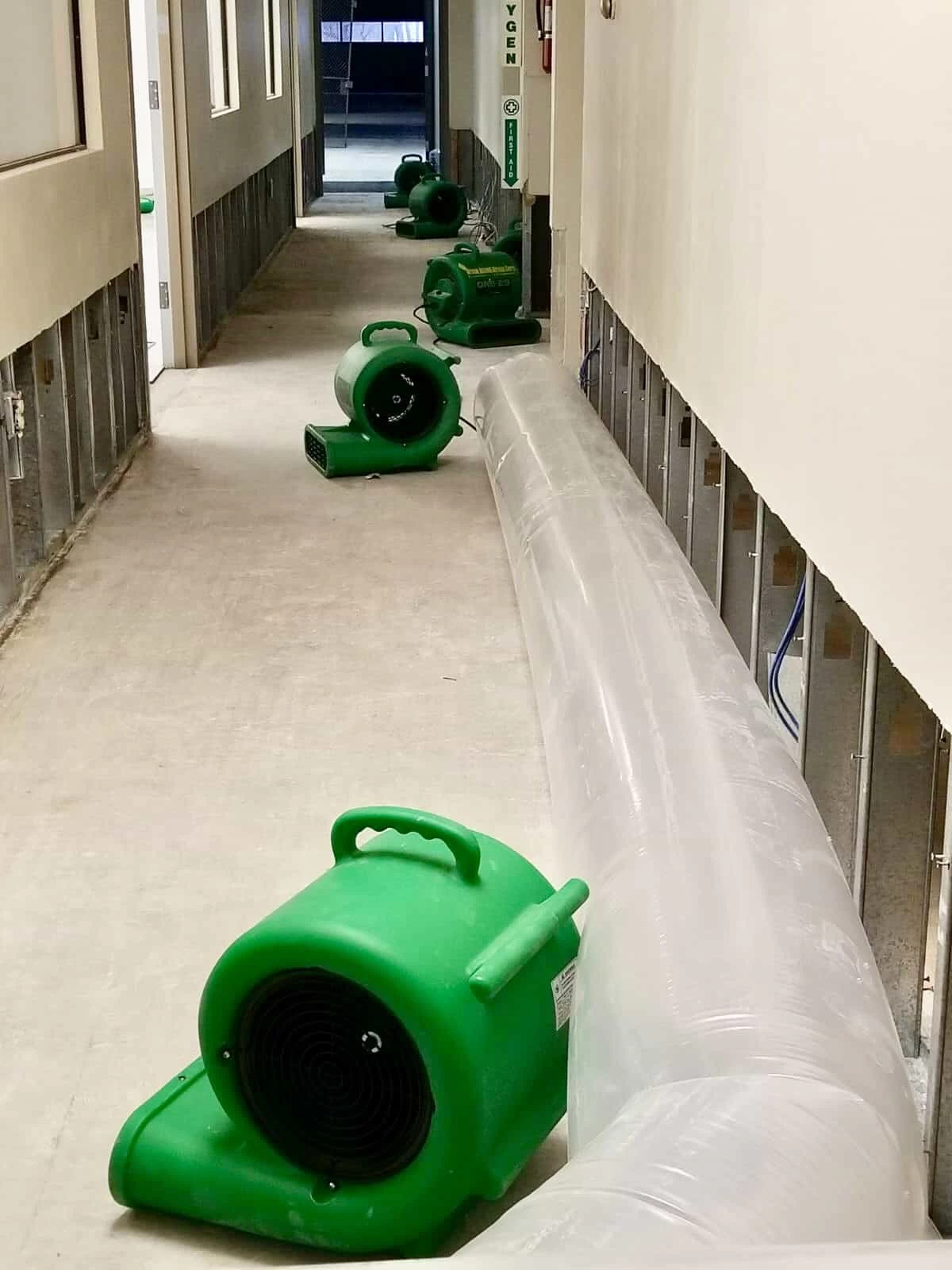
When demolition is triggered by storm or flood damage, the process moves differently than a planned renovation. The priority is stabilizing the structure, removing saturated materials quickly to prevent mold growth, and documenting everything for the insurance claim. We operate 24/7 and have handled emergency response in Northport and across Suffolk County we’ve had crews on-site within an hour of emergency calls. We also work directly with insurance adjusters, handling the scope documentation and communication so you’re not managing the claim and the cleanup at the same time. If your property has taken on water, don’t wait on the demo mold can establish itself in as little as 24 to 48 hours in wet drywall and insulation.
Can one contractor handle both demolition and asbestos abatement in Northport?
Yes and for most projects in Northport, that’s exactly what you want. The alternative is hiring a demolition contractor who stops work when asbestos is found, then waiting for a separately licensed abatement firm to schedule, mobilize, complete the abatement, and clear the site before demo can resume. On a high-value renovation in a community like Northport, that kind of delay costs real money and real time.
We hold active NYS DOL asbestos contractor certification alongside our demolition licensing. That means when asbestos turns up in the floor tiles, the pipe wrap, the ceiling texture we don’t stop the job. We pivot to abatement, clear the material properly, document it for compliance, and continue the demolition. One crew, one schedule, one contract. For homeowners in Northport dealing with pre-1980 homes on properties worth $800,000 or more, that integrated approach isn’t a convenience it’s the difference between a project that stays on track and one that drags for months.
Does Northport's historical preservation law affect demolition projects in the village?
It can, depending on the property and the scope of work. Northport passed a formal historical preservation ordinance in 2009, largely in response to concerns about the potential loss of historically significant structures including the Skidmore House on Main Street, built in 1761. The law creates a framework for reviewing demolition or significant alteration of properties that carry historical designation or are located within areas of historical significance.
If your property is in or near the historic village center, it’s worth confirming with the Village Building Department whether any preservation review applies before you begin the permitting process. This doesn’t necessarily mean demolition is off the table it means the review process is part of the path. We’ve worked in municipalities across Suffolk County with their own local regulations layered on top of state requirements, and Northport’s incorporated village structure is something we navigate regularly. We’ll tell you upfront if a preservation consideration is likely to affect your project timeline, and we’ll work through the process with you rather than leaving you to figure it out alone.