Yaphank's Older Homes Deserve a Demolition Crew That's Ready for What's Inside
Most demolition jobs in Yaphank don’t go sideways because of the demo itself they go sideways when asbestos shows up mid-project and nobody’s prepared. We handle the full scope: hazmat assessment, abatement, and demolition, all under one roof.
I needed a professional consultation explanation of procedure for safe removal of Asbestos in my apartment complex. Without having an account yet, I was very impressed with the caring, knowledgeable and generous advice offered by Jessica, and will look forward to doing business in the future. Thank you so much! I feel much more informed about a sometimes scary endeavor. Peace. Nancy Silva Mineola, NY.
Mia Munoz
Used this company to clean up some water flood in my house. They were fast and easy to work with.very professional, Would recommend to anyone!
Nini Valle
Great company, had a flood and they responded quickly and efficiently. Billed my insurance company directly. I highly recommend this company!
joe colapietro, jr
I had pipe freeze in my basement right before a snow storm and they made to within an hour to help start the clean up process. They we by our side throughout the entire process and even helped with the insurance company. They did such a great job with the cleanup, repair, remidiation, I contracted them to perform the repairs and finishes in the basement. They came with enough manpower and material to get the job done. Leo and Jessica were nothing but a pleasure to deal with!!
Cristian Arredondo c
I had some water damage in my home and Green Island was able to take care of my issue quickly and effectively. I am very pleased with the work they did. They responded quickly and were very professional.
Michael M
Outstanding service! From the office to the field crew everyone was friendly, helpful and responsive. I highly recommend Green Island Group.
No Surprise Stops, No Second Contractor, No Blown Timeline
Here’s what most Yaphank homeowners don’t find out until it’s too late: the ranch home or Cape Cod they’re tearing into was built in the 1960s, and the floor tiles, pipe wrap, or ceiling texture contains asbestos. Work stops. A separate abatement company gets called in. The permit clock is still running and in the Town of Brookhaven, that clock only gives you 90 days from the date of issuance. What started as a straightforward gut job is now a coordination nightmare.
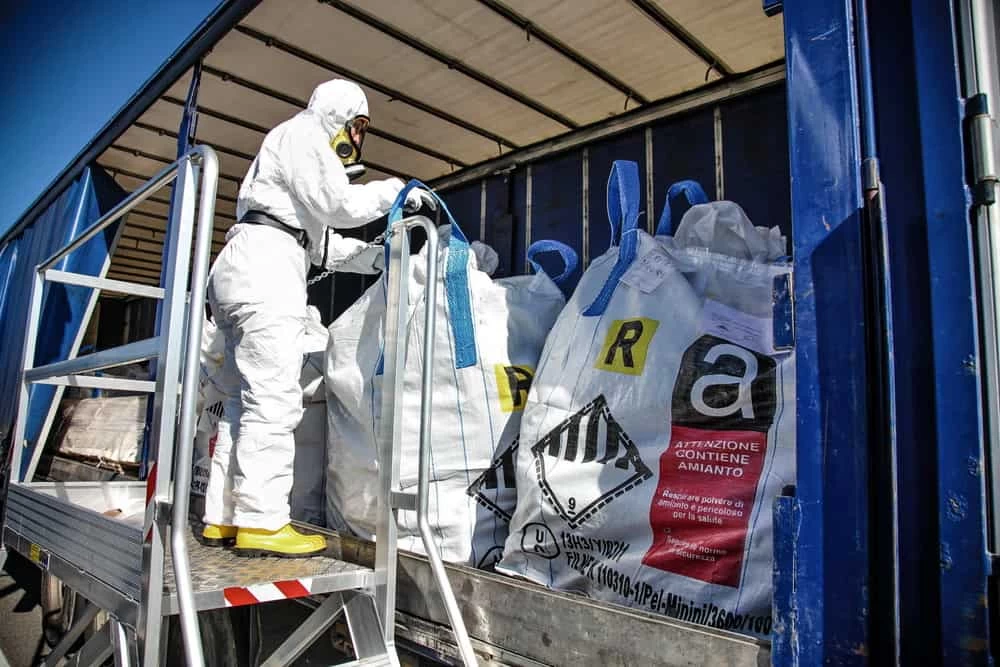
When you work with us, that scenario doesn’t happen. We hold active NYS Department of Labor asbestos certifications and handle abatement in-house, as part of the same project. No handoffs, no gaps, no waiting on a second crew to show up before we can move forward. You get one point of contact from the first site assessment to the final debris removal.
For properties near the Carmans River corridor or the edges of the Long Island Pine Barrens both of which run through or directly alongside Yaphank there are real environmental sensitivities around soil disturbance and hazardous material disposal. We bring the remediation background to handle that responsibly, not just the demo crew to knock things down.
Licensed Demolition Contractors Serving Yaphank, NY
12 Years In, 5,000 Projects Deep We Know What Yaphank Homes Are Hiding
We’re based in Bohemia, NY about 10 to 12 miles from central Yaphank along the Long Island Expressway. That’s not a coincidence. We work in central Suffolk County every day, under the same Town of Brookhaven Building Division rules that govern every demolition permit in Yaphank, and in the same housing stock postwar ranches, Cape Cods, and Colonials that were standard construction from the 1950s through the 1970s.
Over 12 years and more than 5,000 completed projects, we’ve built a reputation that shows up in the reviews: fast response, direct insurance claim assistance, and crews that actually communicate. We’re a certified MWBE contractor, carry $2 million or more in general liability coverage, and operate 24 hours a day, seven days a week including genuine emergency response when something can’t wait until Monday.
If you’re in Yaphank Estates, near the Carmans River, or anywhere in the Town of Brookhaven, you’re working with a team that already knows the permit process, the environmental context, and the building stock in your neighborhood.
From First Call to Clean Site Here's What to Expect
It starts with a site assessment. Before anything gets touched, we walk the property and identify what we’re actually dealing with structural conditions, potential hazardous materials, and anything that affects how the job gets scoped and priced. For homes built before 1980, which describes a large portion of Yaphank’s residential stock, this step includes evaluating materials that commonly contain asbestos: floor tiles, ceiling texture, pipe insulation, roofing, and joint compound. If testing confirms regulated materials are present, we handle abatement before demolition begins no outside contractor, no project pause.
From there, we manage the permit process with the Town of Brookhaven Building Division. That includes the demolition permit application, pre-demolition asbestos notification to the NYS Department of Labor as required by state and federal law, and coordination with any other required approvals. Once permits are in hand, we move. The 90-day validity window on Brookhaven demolition permits is real, and we’re set up to execute within it not scramble against it.
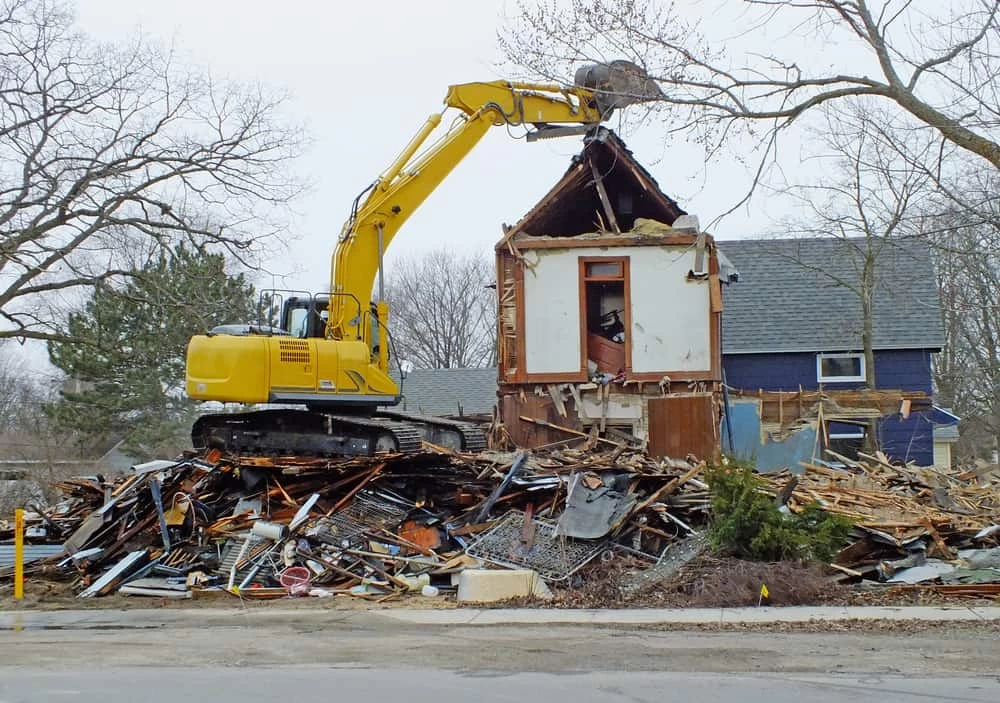
The actual demolition work is organized around your project scope: full structural teardown, selective interior demo, or something in between. We handle debris removal and site cleanup as part of the job. If there’s an underground oil tank involved common in older Yaphank homes that ran on heating oil before natural gas became standard we handle that removal and any required soil assessment as well. When we leave, the site is ready for whatever comes next.
Commercial and Residential Demolition in Yaphank, NY
Full-Scope Demo, Hazmat Included Built for How Yaphank Properties Actually Work
The range of demolition work we handle in Yaphank covers both ends of the spectrum. On the residential side, that means interior selective demolition for gut renovations, partial structural teardowns for additions or damaged sections, and complete teardown-and-site-prep for new construction. On the commercial side, we work with property managers, developers, and institutional clients including those connected to the growing Boulevard at Yaphank corridor near Exit 68 and William Floyd Parkway on tenant improvements, site preparation, and commercial build-out demolition.
Every residential project in Yaphank’s older neighborhoods starts with a pre-demolition hazmat assessment. That’s not optional it’s required by state and federal regulation for structures that may contain regulated asbestos-containing material above threshold quantities, and it’s the right way to approach a pre-1980 home regardless. Lead paint evaluation under EPA Renovation, Repair & Painting rules applies to pre-1978 structures as well, which again covers most of Yaphank’s mid-century housing stock. We’re certified and equipped to handle both.
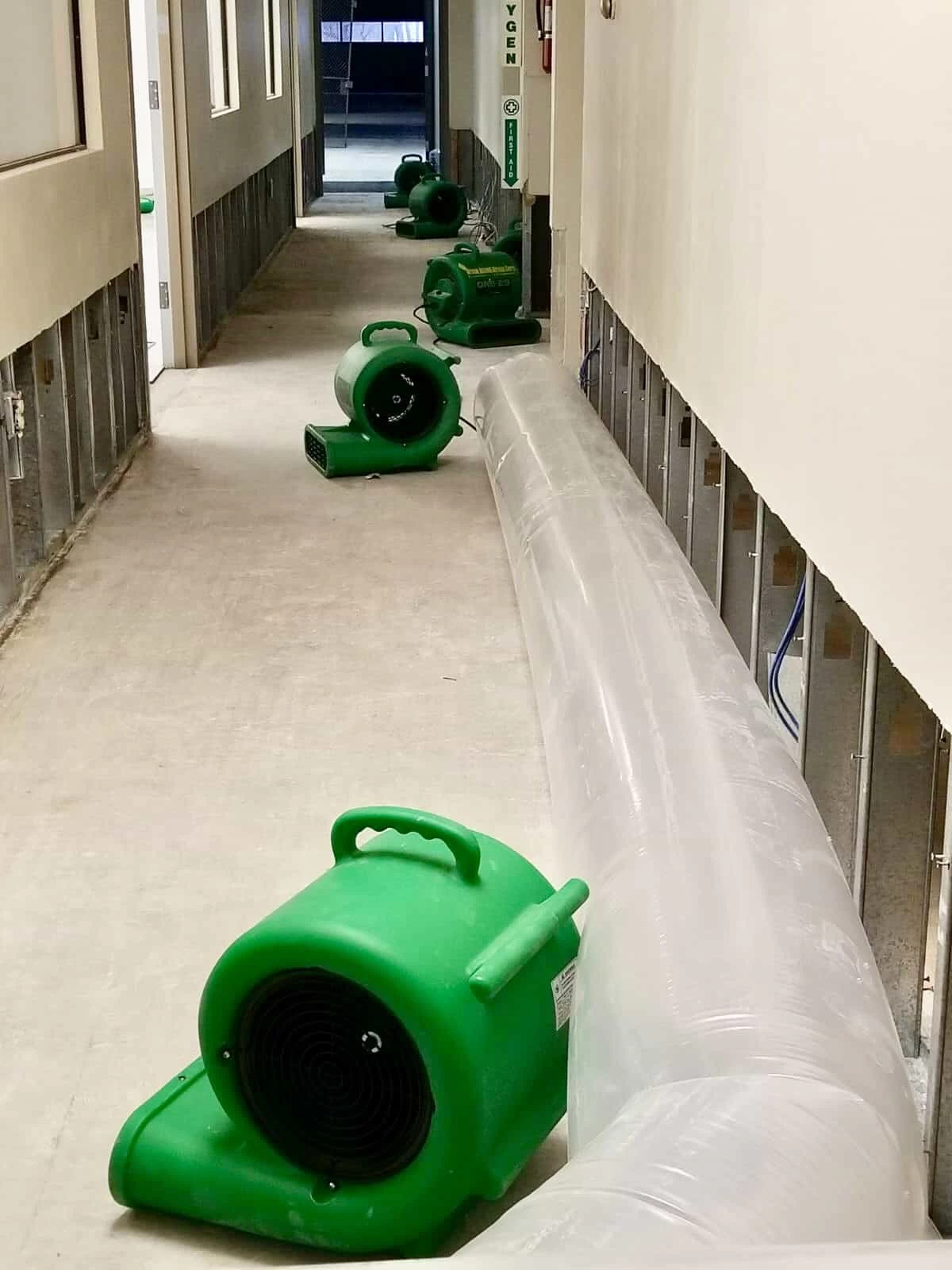
Beyond the core demolition scope, we also provide mold remediation, oil tank removal, and water damage demolition for insurance-triggered projects. If you’ve had a pipe burst, storm damage, or flooding all real weather risks in central Suffolk County and you need partial interior demolition as part of the insurance claim process, we work directly with your carrier and can respond the same day.
Do I need a permit for demolition work in Yaphank, NY?
Yes any demolition work in Yaphank requires a permit through the Town of Brookhaven Building Division, which administers the New York State Uniform Fire Prevention and Building Code for all properties in the town. The permit application process includes submitting project details, and for structures that may contain asbestos, a pre-demolition notification to the NYS Department of Labor is also required under state law and federal NESHAP regulations before work can begin.
One detail worth knowing: Brookhaven demolition permits are valid for only 90 days from the date they’re issued. That’s a relatively tight window, and if your contractor isn’t organized and ready to move the moment permits are in hand, you can end up with an expired permit, a re-application fee, and a delayed project. We manage the full permit process and are set up to execute within that 90-day window not treat it as a loose guideline.
What happens if asbestos is found during demolition in Yaphank?
If asbestos-containing materials are identified during a pre-demolition assessment or discovered mid-project work on the affected area must stop until the material is properly abated by a licensed contractor. Under New York State Department of Labor regulations, asbestos abatement requires a certified contractor, written notification to the state prior to work, and specific disposal procedures. This is not negotiable, and violations carry serious penalties.
The practical problem for most Yaphank homeowners is that many demolition contractors are not certified to perform abatement. When they hit asbestos, they stop, and you’re left coordinating a separate abatement company while your permit clock is running. We hold active NYS DOL asbestos certifications and handle abatement in-house. When asbestos is confirmed, we handle it as part of the same project no work stoppage, no second contractor, no gap in your timeline. For a hamlet where most of the housing stock was built between the 1950s and 1970s, this matters on nearly every older home project.
How much does house demolition typically cost in Yaphank, NY?
Demolition costs in Yaphank vary based on the size of the structure, what’s inside it, and what the site requires after demo is complete. For a full residential teardown, costs typically range from $8,000 to $25,000 or more depending on square footage, accessibility, and whether hazardous materials like asbestos or underground oil tanks are involved. Interior selective demolition for a gut renovation runs considerably less often $3,000 to $10,000 depending on scope.
The biggest cost variable in Yaphank’s older housing stock is hazardous materials. A pre-1980 home that tests positive for asbestos in multiple material types floor tiles, pipe insulation, ceiling texture, and roofing, for example adds abatement costs that can range from a few thousand dollars to significantly more depending on the quantity and type of regulated material. Getting a thorough pre-demolition assessment upfront is the best way to avoid cost surprises mid-project. We provide clear, itemized estimates before any work begins so you know what you’re looking at before committing.
Does Green Island Group handle emergency demolition in Yaphank after storm damage?
Yes and this is one of the more common calls we get from central Suffolk County homeowners, including Yaphank. Nor’easters, heavy snowfall, ice storms, and the burst pipes that follow a hard freeze are real seasonal hazards in this area. When a structural section is compromised, water damage has made interior materials unsafe, or a fallen tree has damaged part of a home, the demolition need is often immediate not something you can schedule for next week.
We operate 24 hours a day, seven days a week, and our documented response times in emergency situations are under one hour. We also work directly with insurance companies on behalf of homeowners helping document the damage, providing the scope of work insurers need, and reducing the back-and-forth that slows down claims. If you’re dealing with a storm-damaged structure and an open insurance claim at the same time, having one contractor who handles both the emergency demo and the insurance coordination makes a significant difference in how quickly you can move forward.
Is an oil tank removal required before demolition on older Yaphank properties?
It depends on the project scope, but for most full demolitions and many gut renovations involving excavation, yes an abandoned underground or aboveground oil tank needs to be properly removed and the surrounding soil assessed before or during the demolition process. Many homes in Yaphank that were built before natural gas heating became standard in the area were originally heated by oil, and a significant number of those tanks were simply abandoned in place when the heating system was converted. They don’t disappear on their own.
An abandoned tank that’s left in place and then disturbed during demolition can create a soil contamination situation that requires remediation which is more expensive and time-consuming than a planned removal. The New York State Department of Environmental Conservation has specific requirements for petroleum bulk storage and tank removal, and the Town of Brookhaven may require documentation of tank removal as part of the demolition and subsequent building permit process. We handle oil tank removal and soil assessment as part of our service scope, so this doesn’t become a separate project you need to coordinate before demo can begin.
What should I look for when hiring a demolition contractor in Yaphank, NY?
The most important thing to verify is whether the contractor is licensed and certified to handle what’s actually inside your home not just the structure itself. In Yaphank, where most of the residential housing stock predates 1980, that means confirming the contractor holds active NYS Department of Labor asbestos contractor certification. If they don’t, and asbestos is found during the project, they legally cannot continue until a separate certified contractor is brought in. That’s a timeline and cost problem that’s entirely avoidable by hiring a certified contractor from the start.
Beyond certifications, look for a contractor who carries at least $2 million in general liability insurance, has documented experience working under Town of Brookhaven permit requirements, and can give you a clear written estimate that accounts for hazardous materials, permit fees, and debris disposal not a low number that grows once the job starts. Local familiarity matters too. A contractor based in central Suffolk County who works in Brookhaven Town regularly will move through the permit process faster and with fewer surprises than one who’s learning the local rules on your project.