Bellmore's Aging Homes Deserve More Than a Wrecking Ball
When over 90% of homes in Bellmore were built before 1980, house demolition isn’t simple — it’s a process. We manage every step so nothing gets missed.
I needed a professional consultation explanation of procedure for safe removal of Asbestos in my apartment complex. Without having an account yet, I was very impressed with the caring, knowledgeable and generous advice offered by Jessica, and will look forward to doing business in the future. Thank you so much! I feel much more informed about a sometimes scary endeavor. Peace. Nancy Silva Mineola, NY.
Mia Munoz
Used this company to clean up some water flood in my house. They were fast and easy to work with.very professional, Would recommend to anyone!
Nini Valle
Great company, had a flood and they responded quickly and efficiently. Billed my insurance company directly. I highly recommend this company!
joe colapietro, jr
I had pipe freeze in my basement right before a snow storm and they made to within an hour to help start the clean up process. They we by our side throughout the entire process and even helped with the insurance company. They did such a great job with the cleanup, repair, remidiation, I contracted them to perform the repairs and finishes in the basement. They came with enough manpower and material to get the job done. Leo and Jessica were nothing but a pleasure to deal with!!
Cristian Arredondo c
I had some water damage in my home and Green Island was able to take care of my issue quickly and effectively. I am very pleased with the work they did. They responded quickly and were very professional.
Michael M
Outstanding service! From the office to the field crew everyone was friendly, helpful and responsive. I highly recommend Green Island Group.
What Changes When the Whole Process Is Handled For You
Most homeowners in Bellmore don’t realize how many moving parts are involved until they’re already in the middle of it. There’s asbestos testing, a Rodent Free Certificate from Nassau County, a demolition permit through the Town of Hempstead, utility disconnections, and proper debris disposal — and that’s before a single wall comes down. When one contractor handles all of it, you don’t spend your evenings chasing down county offices or figuring out which form goes where.
For homes in South Bellmore especially, the stakes are higher. Properties near Bellmore Creek and the South Bay sit in FEMA flood zones, and a lot of what’s standing down there has been patched together since Sandy hit in 2012. If your home has taken on water more than once, or if a renovation uncovered something that changed the scope entirely, demolition is often the cleaner path forward — financially and structurally. Getting it done right the first time protects the land value you’ve built up, keeps your neighbors from dealing with a drawn-out mess, and sets you up for a rebuild that actually meets today’s flood codes.
That’s the difference between a demolition contractor and a full-cycle team. One shows up with equipment. We show up with a plan.
We’ve been handling demolition and environmental work across Long Island and the New York metro area for over 12 years. More than 340 completed projects. EPA certified, OSHA certified, and licensed by the NYS Department of Health for asbestos-related work — which matters a great deal in Bellmore, where nearly every home you’d demolish was built before asbestos was regulated out of residential construction.
Our team has active service history in both Bellmore and North Bellmore, and we know Nassau County’s permit process the way it actually works — not the way it looks on paper. That includes the Rodent Free Certificate requirement that catches a lot of out-of-area contractors off guard, and the Town of Hempstead’s building department, which processes a high volume of applications and rewards contractors who submit complete, correct documentation the first time.
When you call, you’re talking to people who’ve worked these streets, pulled these permits, and handled these exact situations before.
No Surprises — Here's Exactly What the Process Looks Like
It starts with a site assessment. Before anything else, we evaluate the structure, identify hazardous materials, and scope the full project. In Bellmore, where more than 30% of homes were built before 1940, that assessment almost always turns up asbestos — in floor tiles, pipe wrap, roofing materials, or insulation. Finding it early means the project stays on schedule. Missing it means stop-work orders and costs you didn’t plan for.
From there, the hazardous material work comes first. Asbestos testing, abatement, and clearance documentation are completed by licensed professionals before any demolition permit is issued. Simultaneously, we coordinate utility disconnections and file for the Nassau County Rodent Free Certificate — a required step that has to happen before the Town of Hempstead will issue a demolition permit. Most homeowners have never heard of it. We handle it as a matter of routine.
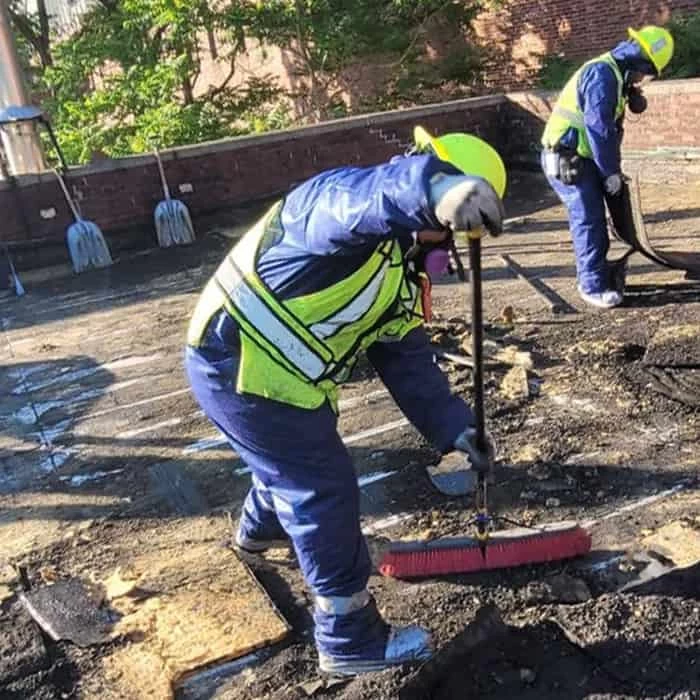
Once permits are in hand, demolition proceeds. Our crew works clean, manages debris hauling and disposal in full compliance with New York regulations, and leaves the site ready for whatever comes next — whether that’s new construction, a foundation pour, or a clean sale. If you’re in a FEMA flood zone, we can also advise on what compliant rebuilding looks like before you break ground on anything new.
Everything a Bellmore Demolition Job Actually Requires — Included
A demolition quote that doesn’t include asbestos abatement, permit fees, the Rodent Free Certificate process, and debris disposal isn’t a real quote for a Bellmore home — it’s a starting number that grows. We build the full scope into the estimate upfront, so you know what you’re working with before anything is signed.
The services we cover include pre-demolition environmental assessment and asbestos testing, certified asbestos and hazardous material abatement, full structural demolition, foundation removal when needed, Nassau County permit coordination including the Rodent Free Certificate through the Nassau County Department of Health, Town of Hempstead demolition permit filing, utility disconnection coordination, and complete debris removal and compliant disposal. For storm-damaged or flood-affected properties — particularly in South Bellmore’s waterfront zone along Bellmore Creek — we also provide emergency demolition response and can help navigate the insurance claim process from the start.
Whether you’re tearing down a 1950s Cape Cod that’s run its course, dealing with the aftermath of a flood, or starting a planned teardown-and-rebuild on a property that’s been in the family for decades, the process is the same: thorough, documented, and compliant. In a town where the land underneath the house is worth as much as it is in Bellmore, that level of care isn’t optional.
Do I need asbestos testing before demolishing a house in Bellmore, NY?
Yes — and in Bellmore, this applies to the overwhelming majority of homes. Approximately 90.8% of housing units in Bellmore were built before 1980, which is the threshold year after which asbestos use in residential construction was effectively phased out. New York State law requires a licensed asbestos inspector to assess the property before demolition begins, and if asbestos-containing materials are found, a certified abatement contractor must remove and dispose of them properly before any demolition permit will be issued.
Skipping this step doesn’t just create a health risk — it creates legal exposure. If asbestos is disturbed during demolition without proper abatement, you’re looking at stop-work orders, fines, and remediation costs that can far exceed what the abatement would have cost upfront. We handle the full sequence: inspection, abatement, clearance documentation, and demolition, all under one roof, so there’s no gap between the environmental work and the structural work.
What permits are required for house demolition in Nassau County?
For a home in Bellmore, you’re dealing with a multi-step permit process that involves more than one agency. The first requirement most homeowners don’t know about is the Rodent Free Certificate, issued by the Nassau County Department of Health. This certificate is required before any demolition permit will be issued in Nassau County, and it involves an inspection of the property to confirm there’s no active rodent infestation that could be displaced into neighboring properties during demolition. The contact number for that office is (516) 227-9715.
Once the Rodent Free Certificate is in hand, the demolition permit itself is filed through the Town of Hempstead’s building department. The Town of Hempstead is the largest town by population in the country, and its building department processes a significant volume of applications — so submitting complete, accurate documentation the first time matters. Depending on the scope of the project, Nassau County DPW coordination may also be required if the work involves road access, dumpster placement on a county road, or sewer connection work. We manage all of this as part of the project.
How much does it cost to demolish a house in Bellmore, NY?
Full house demolition in the New York metro area typically runs between $15,000 and $35,000 or more for a standard residential structure, depending on size, access, and what’s found during the pre-demolition assessment. Nassau County carries a 20–30% premium over less regulated markets due to stricter compliance requirements, higher labor costs, and the mandatory steps — asbestos abatement, the Rodent Free Certificate, Town of Hempstead permitting — that are non-negotiable here in Bellmore.
Foundation removal, if needed, adds another $2,000–$10,000 to the total. For homes in South Bellmore’s flood zone or properties with significant hazardous material findings, costs can increase further. The most important thing to understand is what’s included in any quote you receive. A number that excludes asbestos testing, permit fees, and debris disposal isn’t a complete picture of what your project will actually cost. Ask for an itemized scope before you agree to anything.
Can a flood-damaged home in South Bellmore be demolished and rebuilt?
Yes, and for many South Bellmore homeowners, it’s the most practical path forward. Properties in FEMA-designated flood zones along Bellmore Creek and the South Bay have specific requirements for both demolition and new construction. If a structure has sustained damage that exceeds 50% of its pre-damage market value — a threshold known as “substantial damage” under FEMA guidelines — the property typically must be brought into full compliance with current flood zone construction standards before it can be rebuilt. That often means elevating the new structure above the base flood elevation.
The demolition side of that process follows the same sequence as any other project: asbestos assessment, hazardous material abatement, permits, and structural demolition. If you’re also navigating an insurance claim, having a single contractor who can document the damage, manage the demolition, and communicate with your adjuster makes the process significantly less overwhelming. We’ve handled exactly this kind of situation in Bellmore, and we can walk you through what the insurance process looks like alongside the physical work.
How long does house demolition take from start to finish in Bellmore?
The physical demolition of a standard residential structure typically takes one to three days once work begins. The longer part of the timeline is everything that happens before the crew shows up with equipment. Asbestos inspection and abatement, depending on the extent of the materials found, can take one to several weeks. The Nassau County Rodent Free Certificate process requires a Department of Health inspection, which adds time. And the Town of Hempstead permit review can take several weeks depending on application volume and whether the submission is complete and correct.
Realistically, from the point of first contact to the day demolition is complete, you should plan for a timeline of four to eight weeks for a straightforward project — longer if significant asbestos abatement is required or if permit timelines extend. Spring tends to be the busiest season for planned demolitions on Long Island, so if you’re targeting a specific construction start date, it’s worth beginning the process earlier than you think you need to.
What happens to the lot after the house is demolished in Bellmore?
After demolition and debris removal are complete, what you’re left with depends on what was agreed to in the project scope. A standard demolition leaves the lot cleared of the structure and surface debris, with the foundation either removed or left in place depending on your plans. If you’re building new, most general contractors will want the foundation removed and the lot graded before they begin — and that work can be included in the demolition scope if it’s discussed upfront.
For properties in Bellmore’s flood zones, there’s an additional layer to think about. If you’re planning to rebuild, the new structure will need to meet current FEMA flood zone construction standards, which may require soil assessment, fill work, and elevation planning before a building permit for new construction will be issued. Getting a demolition contractor who understands those downstream requirements — not just the teardown itself — means you’re not starting the rebuild phase with unresolved site conditions. We can walk you through what the lot will need to look like before your builder breaks ground.