Old Lawrence Homes Don't Tear Down Like Anywhere Else
When your home has decades of history — and possibly decades of hidden problems — you need a demolition contractor who already knows what’s inside the walls before the first tool comes out.
I needed a professional consultation explanation of procedure for safe removal of Asbestos in my apartment complex. Without having an account yet, I was very impressed with the caring, knowledgeable and generous advice offered by Jessica, and will look forward to doing business in the future. Thank you so much! I feel much more informed about a sometimes scary endeavor. Peace. Nancy Silva Mineola, NY.
Mia Munoz
Used this company to clean up some water flood in my house. They were fast and easy to work with.very professional, Would recommend to anyone!
Nini Valle
Great company, had a flood and they responded quickly and efficiently. Billed my insurance company directly. I highly recommend this company!
joe colapietro, jr
I had pipe freeze in my basement right before a snow storm and they made to within an hour to help start the clean up process. They we by our side throughout the entire process and even helped with the insurance company. They did such a great job with the cleanup, repair, remidiation, I contracted them to perform the repairs and finishes in the basement. They came with enough manpower and material to get the job done. Leo and Jessica were nothing but a pleasure to deal with!!
Cristian Arredondo c
I had some water damage in my home and Green Island was able to take care of my issue quickly and effectively. I am very pleased with the work they did. They responded quickly and were very professional.
Michael M
Outstanding service! From the office to the field crew everyone was friendly, helpful and responsive. I highly recommend Green Island Group.
Most Lawrence homeowners who call us aren’t just tearing down a house. They’re clearing the way for something better — a new build on a lot that’s finally worth what the land says it is. What you get on the other side of a properly handled demolition is a site that’s clean, compliant, and ready for whatever comes next. No debris piles. No permit holds. No asbestos issues that surface later and blow up your timeline.
Here’s what makes Lawrence different from most of the towns we work in: the housing stock is old. The median construction year in this village is 1965, and a significant portion of homes were built well before 1950. That means the overwhelming majority of properties here were built when asbestos was a standard construction material — in floor tiles, insulation, roofing, joint compound, and more. Before any demolition can legally begin in New York, a pre-1980 home requires certified asbestos testing and abatement. That’s not optional, and it’s not something you can hand off to a general contractor who isn’t licensed for it.
Lawrence also sits north of Reynolds Channel, and if you’re anywhere near the southern sections of the village, flood exposure is real. Nassau County has seen 11 hurricane declarations and 7 federal flood declarations. Storm-compromised structures in this area don’t wait for a convenient schedule — and neither do we.
We’ve been doing environmental and demolition work across Long Island and New York City for over 12 years. More than 340 completed demolition projects. That number matters because experience in this market isn’t just about swinging equipment — it’s about knowing how to move through New York’s regulatory layers without stalling your project or putting you at legal risk.
We’re based in Bohemia and work throughout all of Nassau County, including Lawrence and the Five Towns. We know the Village of Lawrence has its own Building Department at 196 Central Avenue with its own permit requirements — separate from Nassau County’s process. We know what pre-war construction in Back Lawrence looks like from the inside. And we know that when a home near Reynolds Channel takes on water, the window to act is short.
Our credentials cover every layer this market requires: EPA certified, OSHA certified, NYS Department of Health licensed for asbestos abatement, and Nassau County Home Improvement Licensed. We also carry NYS and NYC M/WBE certification — a government-reviewed credential that means something beyond a self-issued claim.
From First Call to Clear Site — Here's What to Expect
It starts with a site assessment. Before anything else, we look at the structure, identify what materials are present, and determine what the project actually requires. For any home built before 1980 — which covers the vast majority of Lawrence’s housing stock — that means asbestos testing comes first. If asbestos-containing materials are found, we handle the certified abatement ourselves. You don’t need to find a separate abatement company, wait for clearance, and then call a demolition crew. That entire sequence happens under one contract.
Once abatement is cleared, we move into permitting. In Lawrence, that means coordinating with both the Village Building Department and Nassau County — two separate permit processes that need to be sequenced correctly. We handle that. When permits are in hand, demolition typically takes one to five days depending on the size and condition of the structure. We use proper containment, certified disposal for any hazardous materials, and HEPA-filtered equipment where required.
After the structure is down, we clear the site of debris and leave it in a condition that’s ready for your next phase — whether that’s new construction, a foundation pour, or a clean handoff to your general contractor. If there’s mold, structural drying, or restoration work involved, we can handle that too. The whole project stays with one team from start to finish.
Every Lawrence Demolition Comes With the Full Picture
House demolition in Lawrence isn’t a single-step job, and any contractor who treats it like one is setting you up for problems. What’s included when you work with us goes well beyond the structural teardown. It starts with environmental assessment — testing for asbestos, lead paint, and mold, which are common findings in the pre-1965 homes that make up most of Lawrence’s residential inventory. If abatement is required, we handle it with our own NYS DOH-licensed team before demolition begins.
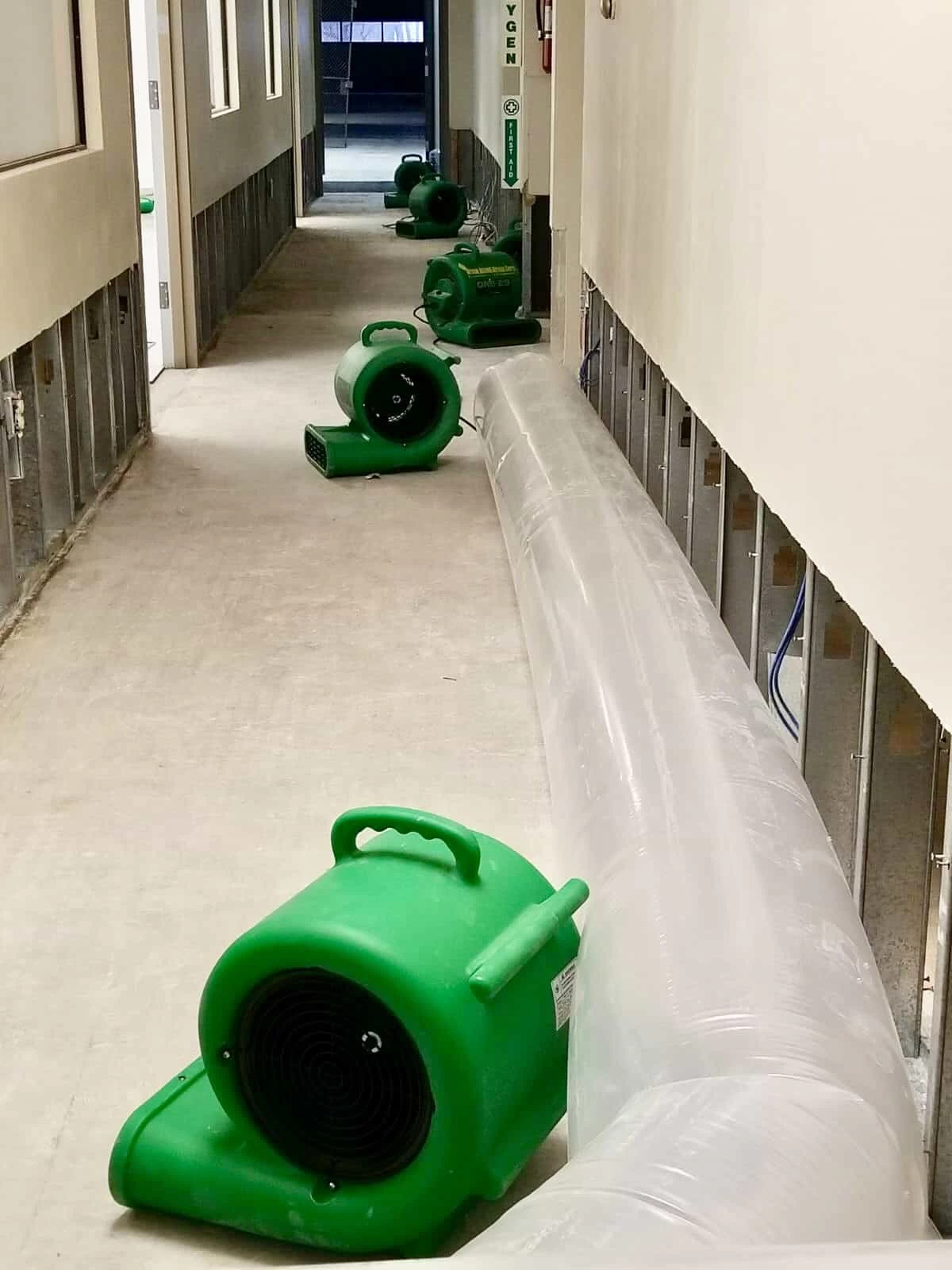
From there, we manage the full permit process through both the Village of Lawrence and Nassau County. We coordinate utility disconnections, execute the structural demolition, and handle all debris removal and disposal in compliance with state and federal environmental regulations. For properties in flood-affected areas — particularly those in the southern sections of Lawrence near Reynolds Channel — we also offer structural drying, mold remediation, and full property restoration services. If your project starts as a demolition and evolves into something more, you’re not starting over with a new contractor.
For homeowners dealing with storm damage and an active insurance claim, we’ve helped clients navigate that process directly. Multiple customers have specifically mentioned this in their reviews — it’s not a side service, it’s something we’ve done enough times to do it well. Whether you’re clearing a lot in Old Lawrence for a new build or dealing with a flood-compromised structure near the Channel, the scope of what we handle is built around what Lawrence properties actually need.
Do I need a permit to demolish a house in Lawrence, NY?
Yes — and in Lawrence, that actually means two separate permits. The Village of Lawrence has its own Building Department at 196 Central Avenue, and they require a permit for all demolition work within village limits. Nassau County also has its own demolition permit process, administered separately. Both need to be in place before work can legally begin, and the sequencing matters — you can’t just pull one and assume the other is covered.
On top of the structural permits, any home built before 1980 requires asbestos testing and certified abatement clearance before demolition can proceed under New York State law. Given that the median construction year in Lawrence is 1965 and a significant share of homes predate 1950, this applies to the majority of properties in the village. Skipping this step doesn’t just create a legal problem — it creates personal liability for the homeowner if asbestos is disturbed without proper containment and disposal. We handle all of this, including both permit processes and any required abatement, as part of a single coordinated project.
How much does house demolition cost in Lawrence, NY?
Nationally, house demolition runs roughly $6,000 to $25,000, with most homeowners paying in the range of $15,000 to $16,000 for a standard 2,000 square foot home. In the New York metro area — and Nassau County specifically — expect to add 20 to 30 percent on top of that due to higher labor costs, stricter regulations, and the permitting overhead that comes with working in a village like Lawrence that has its own building department separate from the county.
The bigger variable in Lawrence is the age of the housing stock. If asbestos-containing materials are found during pre-demolition testing — which is common in pre-1965 homes — abatement adds to the total cost. The same goes for lead paint and mold, both of which show up regularly in older South Shore properties. That said, in a market where the average Five Towns home sells for around $731,000 and land values are among the highest in New York State, the cost of demolition represents a small fraction of the overall investment. Most Lawrence homeowners we work with are more focused on getting it done correctly and on schedule than on finding the lowest number.
Does my Lawrence home need asbestos testing before demolition?
If your home was built before 1980, yes — New York State law requires asbestos testing and certified abatement before any demolition can legally begin. This isn’t a recommendation; it’s a regulatory requirement enforced at both the state and federal level. Given that the median construction year for homes in Lawrence is 1965, and roughly one in four homes in the village was built before 1950, this applies to the overwhelming majority of residential properties here.
Asbestos-containing materials in older Long Island homes show up in a lot of places people don’t expect — floor tiles, pipe insulation, joint compound, roofing materials, and textured ceiling finishes are all common sources. The testing process involves sampling suspect materials and sending them to a certified lab. If asbestos is confirmed, abatement has to be completed and cleared by a licensed inspector before demolition equipment can touch the structure. We handle the testing, the abatement, and the clearance inspection ourselves — so there’s no gap between the environmental phase and the demolition phase, and no risk of one contractor’s timeline conflicting with another’s.
How long does house demolition take in Lawrence, NY?
The physical demolition of a standard residential structure typically takes one to five days, depending on the size of the home, its construction type, and site access conditions. In Lawrence, where you have a mix of mid-century colonials, larger estate-style homes in Back Lawrence, and some pre-war structures with more complex construction, that range can vary. Tight lot lines and proximity to neighboring properties — common in the denser sections of the village — also affect how equipment is staged and how carefully the work has to be sequenced.
What takes longer is everything that happens before demolition begins. Permit processing through the Village of Lawrence and Nassau County can take two to six weeks depending on the project scope and current department workload. If asbestos testing confirms the presence of regulated materials, abatement adds time before demolition can start. Planning your total project timeline around the permit and abatement phases — not just the demolition itself — is the most important thing you can do to avoid delays, especially if you’re coordinating with an architect or general contractor on a new build.
What happens if my Lawrence home was damaged by flooding or a storm?
Lawrence’s position north of Reynolds Channel puts parts of the village in documented flood risk territory, and the area’s history backs that up — Nassau County has had 11 federal hurricane declarations and 7 flood declarations, and FEMA’s post-Sandy inundation maps moved flood lines farther inland than previous assessments had shown. If your home sustained structural damage from a storm surge, flooding, or a coastal weather event, the process moves faster but the regulatory requirements don’t go away.
Even in an emergency situation, asbestos testing is still required before demolition on a pre-1980 structure — and most of Lawrence’s housing stock qualifies. What changes is the urgency of the response. We’re available 24 hours a day, seven days a week, and we’ve documented response times of under an hour for emergency situations. If you’re also navigating a homeowners’ insurance claim — which is common after storm damage in this area — we’ve helped clients work through that process directly. We can assist with damage documentation and adjuster coordination so the demolition and the claim move forward on the same timeline rather than working against each other.
Is it better to demolish and rebuild or renovate an older Lawrence home?
It depends on the condition of the structure and the math behind the land value — and in Lawrence, that math often tilts toward demolition more than it would in most other Long Island towns. When land values are among the highest in New York State and the existing structure has systemic issues — aging foundation, asbestos throughout, significant moisture damage, outdated systems — the cost of a full renovation can approach or exceed the cost of building new, without the benefit of a home that’s actually new. A teardown-rebuild gives you a structure built to current code, with modern systems, no hidden environmental liabilities, and a design that fits how you actually want to live.
That said, the calculation is different for every property. Homes in Back Lawrence with historical character and solid bones may be worth preserving with a targeted renovation. The key question is whether the renovation scope requires disturbing materials that trigger mandatory abatement anyway — because at that point, you’re paying for abatement regardless, and the cost difference between a deep renovation and a new build narrows considerably. We can walk you through what we find during the initial assessment and give you an honest read on what the structure actually requires, so you’re making the decision with real information rather than assumptions.