Manhasset Teardowns Done Right — From Permit to Final Clearance
If you’re tearing down a home in Manhasset, the process is more involved than most contractors will tell you upfront. We handle house demolition in Manhasset, NY from the first asbestos test to the last load of debris — so nothing falls through the cracks.
I needed a professional consultation explanation of procedure for safe removal of Asbestos in my apartment complex. Without having an account yet, I was very impressed with the caring, knowledgeable and generous advice offered by Jessica, and will look forward to doing business in the future. Thank you so much! I feel much more informed about a sometimes scary endeavor. Peace. Nancy Silva Mineola, NY.
Mia Munoz
Used this company to clean up some water flood in my house. They were fast and easy to work with.very professional, Would recommend to anyone!
Nini Valle
Great company, had a flood and they responded quickly and efficiently. Billed my insurance company directly. I highly recommend this company!
joe colapietro, jr
I had pipe freeze in my basement right before a snow storm and they made to within an hour to help start the clean up process. They we by our side throughout the entire process and even helped with the insurance company. They did such a great job with the cleanup, repair, remidiation, I contracted them to perform the repairs and finishes in the basement. They came with enough manpower and material to get the job done. Leo and Jessica were nothing but a pleasure to deal with!!
Cristian Arredondo c
I had some water damage in my home and Green Island was able to take care of my issue quickly and effectively. I am very pleased with the work they did. They responded quickly and were very professional.
Michael M
Outstanding service! From the office to the field crew everyone was friendly, helpful and responsive. I highly recommend Green Island Group.
What You Get When Manhasset Demolition Is Done Right
A completed demolition in Manhasset isn’t just a cleared lot. It’s a clean title, a passed inspection, and a site that’s ready for whatever comes next — whether that’s new construction, a sale, or a rebuild you’ve been planning for years.
Manhasset’s housing stock is predominantly mid-century. Homes built in the 1940s, 50s, and 60s — throughout the Strathmore neighborhoods, Munsey Park, and Plandome — almost always contain asbestos in the pipe insulation, floor tiles, ceiling materials, or roofing. That’s not a worst-case scenario here. It’s the norm. When that’s handled properly, before demolition begins, you avoid stop-work orders, fines, and the kind of liability that follows a property for years.
The Town of North Hempstead processes demolition permits right here on Plandome Road. That office has specific requirements — asbestos attestation, utility disconnection confirmation, and for some properties in designated historic areas like Munsey Park, a Certificate of Appropriateness before any permit is issued. When your contractor knows that process cold, your project moves. When they don’t, it stalls — and in this market, delays cost real money.
340+ Demolition Projects Across Long Island — Including Manhasset's Toughest Sites
We are a dedicated environmental and demolition contractor based on Long Island, serving Nassau County and the North Shore communities — including Manhasset — for over 12 years. This isn’t a general contracting company that takes demolition jobs on the side. It’s what we do, full time, with the certifications and crew to back it up.
We hold EPA and OSHA certifications, NYS DOH asbestos abatement licensing, and Nassau County contractor licensing. We’re also a certified NYS and NYC Minority/Women-Owned Business Enterprise — one of the few demolition contractors in this area that can say that. It matters because it reflects a level of accountability that most local operators simply aren’t held to.
With more than 340 completed projects across Nassau and Suffolk Counties, we’ve worked extensively in Manhasset and communities that share its regulatory environment, older housing stock, and high standards. We know what the North Hempstead building department expects, and we know how to get your project through it without surprises.
No Handoffs, No Gaps — Here's How We Handle Your Manhasset Demolition
It starts with a site assessment. Before anything else, we look at the structure, identify what materials are present, and determine what environmental testing is needed. For most homes in Manhasset — especially anything built before 1980 — that means asbestos testing comes first. The Town of North Hempstead requires the property owner to confirm on the permit application that asbestos will be handled by a certified removal company. We take that off your plate entirely.
Once testing is complete and any hazardous materials are cleared by our NYS-certified abatement team, we move into permitting. We handle the documentation, coordinate utility disconnection with the appropriate providers, and file with the building department at 210 Plandome Road. If your property is in a designated historic area — Munsey Park, for example — we flag the Certificate of Appropriateness requirement early so it doesn’t become a surprise delay later.
Demolition itself is straightforward once the groundwork is done. Structural teardown, debris removal, and site clearance are handled by our own crew — not subcontracted out. When the job is finished, you have a clean, compliant site and documentation that holds up to any future inspection or title review.
Everything Your Manhasset Demolition Requires — Handled Under One Roof
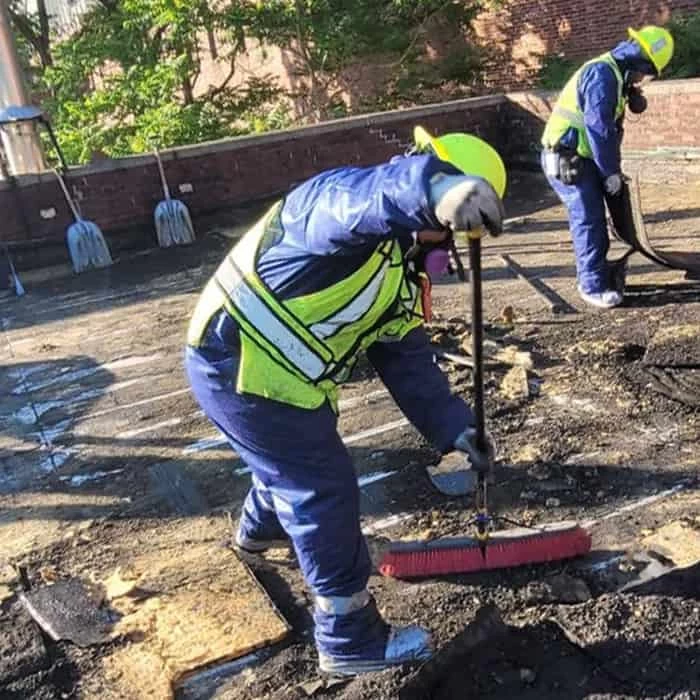
House demolition in Manhasset typically involves more than just the teardown itself. Because the vast majority of homes here predate 1980, asbestos abatement is almost always part of the scope. Pipe insulation, floor and ceiling tiles, roofing shingles, and exterior transite board siding were all standard materials in the homes built across Strathmore, Plandome, and North Hills during that era — and all were commonly manufactured with asbestos. We handle testing and certified abatement in-house, so there’s no waiting for a separate environmental company to finish before demolition can begin.
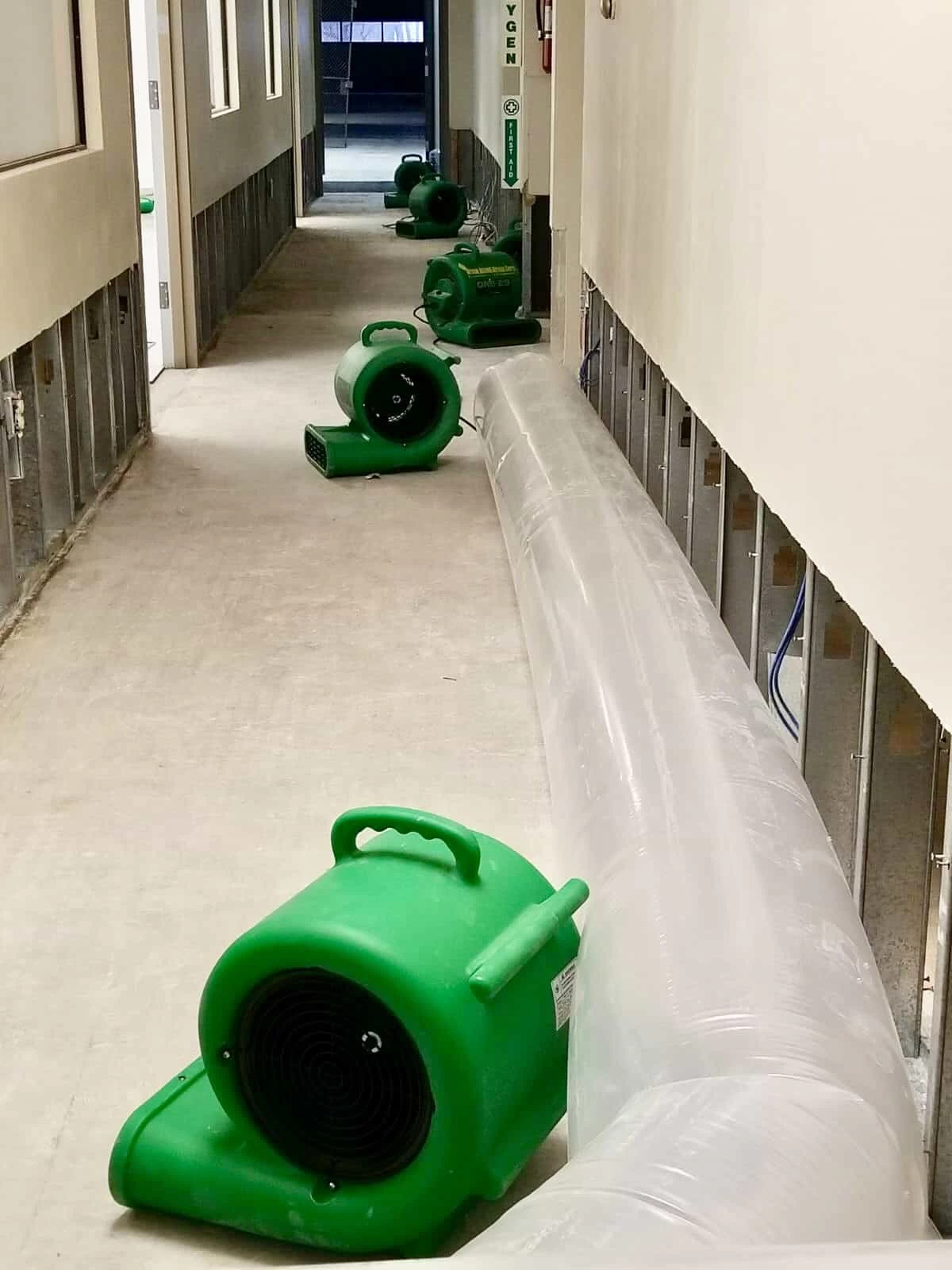
Beyond asbestos, our full demolition service includes structural teardown, foundation removal if needed, debris hauling, and complete site clearance. We also handle mold remediation and structural drying for properties that have sustained water damage — which is relevant for homes in lower-lying areas near Manhasset Bay or the Plandome waterfront that have experienced flooding or long-term moisture intrusion.
For homeowners dealing with damage-driven demolition — storm, fire, or water — we’re familiar with the insurance documentation process and can work directly with your adjuster. That’s not a common capability among demolition contractors, and in a community where properties carry significant insurance policies, it makes a real difference in how smoothly the claim moves.
Do I need a permit to demolish a house in Manhasset, NY?
Yes, a demolition permit is required for all structural demolitions in Manhasset. The permit is issued by the Town of North Hempstead Department of Building Safety, Inspection and Enforcement, located at 210 Plandome Road — right in the center of Manhasset. The application requires a plot plan, building plans, and confirmation that utilities have been disconnected. It also includes a mandatory asbestos attestation: you must either confirm that no asbestos is present in the structure, or confirm that a certified asbestos removal company will handle any materials encountered in compliance with all applicable regulations.
For properties in designated historic areas — particularly in Munsey Park, which was developed as a planned community of American colonial reproductions starting in 1928 — there’s an additional layer. The Town’s Historic Landmarks Preservation chapter requires a Certificate of Appropriateness before a demolition permit can be issued for a designated landmark or in a designated landmark district. Most homeowners in Manhasset don’t know this requirement exists until it causes a delay. Getting ahead of it early is the difference between a project that moves on schedule and one that sits in review for weeks.
How much does house demolition cost in Manhasset, NY?
Demolition costs in the New York metro area run 20 to 30 percent above national averages due to higher labor costs, permit fees, stricter regulations, and the logistics of working in denser suburban neighborhoods. For a full house demolition in Manhasset, a realistic budget range is approximately $8,000 to $32,000 for the structural teardown itself, depending on the size of the home, site access, and whether foundation removal is included.
That range doesn’t account for asbestos abatement, which is a separate line item and varies based on how much material is present and where it’s located. For a typical mid-century Manhasset home, abatement costs can add several thousand dollars to the total. Permit fees, utility disconnection, and debris disposal are additional considerations. For a full teardown-and-rebuild project — which is increasingly common in Manhasset’s luxury redevelopment market — total costs from demolition through new construction can range significantly higher depending on the rebuild scope. The best way to get an accurate number is a site assessment, which gives you a real quote based on your specific property rather than a ballpark that shifts once work begins.
Does my Manhasset home need asbestos testing before demolition can start?
For almost every home in Manhasset, the answer is yes. The Town of North Hempstead’s demolition permit application requires the property owner to attest that asbestos will be handled by a certified removal company if it’s present — and in a community where the vast majority of homes were built between the 1920s and the 1960s, the question isn’t really whether asbestos is present. It’s where.
The most common locations in Manhasset’s mid-century homes are pipe insulation, floor tiles, ceiling tiles, roofing shingles, and exterior transite board siding. These were standard building materials before asbestos was phased out, and they show up consistently in homes throughout the Strathmore neighborhoods, Plandome, and Munsey Park. Under New York State Industrial Code Rule 56, all asbestos abatement work must be performed by a NYS DOH-certified contractor. We carry that certification and handle testing and abatement as part of the same project — so you’re not coordinating between two separate companies or waiting for one to finish before the other can start.
Can I tear down and rebuild my house in Manhasset, and what does that involve?
Teardown and rebuild is a well-established path in Manhasset, particularly in neighborhoods like North Hills, Plandome, and the Strathmore areas where land values are high enough to make it economically rational to demolish an older home and build a custom structure on the lot. Toll Brothers’ active Manhasset Crest development in North Hills is a direct example of the new-construction demand that drives this market.
The process involves several distinct phases: environmental testing and asbestos abatement, demolition permit acquisition from the Town of North Hempstead, structural teardown, site clearance, and then the rebuild permitting and construction process. We handle everything through the clearance phase — environmental testing, abatement, permitting, demolition, and site prep — so the lot is clean, compliant, and ready for your builder when we’re done. If your property is in a historic area like Munsey Park, the demolition phase also requires a Certificate of Appropriateness from the Town before permits are issued, which we identify and address early in the process.
What happens if my home has mold or water damage in addition to needing demolition?
It’s more common than most people expect, especially in Manhasset’s older homes. Properties in lower-lying areas near Manhasset Bay or along the Plandome waterfront are exposed to harbor flooding and coastal moisture, and many mid-century homes have basements or crawl spaces that have accumulated water damage over decades. When a structure has both demolition needs and active mold or moisture issues, the order of operations matters.
We handle mold remediation and structural drying as part of the same service scope as demolition — so if your home has water-damaged materials, compromised structural members, or visible mold growth, that’s assessed and addressed before teardown begins. This is relevant both for planned demolitions and for emergency situations where a storm or flooding event has left a structure unsafe. We’re available 24/7 for emergency response, and we’re familiar with the insurance documentation process for damage-driven projects, which means we can help move your claim forward rather than leaving you to manage that separately.
How do I find a licensed demolition contractor in Manhasset who handles everything?
The short answer is that most contractors serving Manhasset handle demolition as a secondary service — they’re primarily landscapers, junk removal companies, or general contractors who take teardown jobs when they come up. That’s a meaningful distinction when you’re dealing with a pre-1980 home in the Town of North Hempstead, where the permit process requires asbestos attestation, Nassau County contractor licensing is required for certain scopes of work, and historic landmark overlay may apply depending on your neighborhood.
What you want is a contractor whose primary business is demolition and environmental services — someone who knows the North Hempstead building department’s requirements, carries NYS DOH asbestos certification, and has the project history to move through the process without learning on your property. We have completed over 340 demolition projects across Nassau and Suffolk Counties, hold the full stack of required certifications, and operate as a dedicated demolition and environmental firm — not a generalist that handles teardowns on the side. If you’re in Manhasset and trying to figure out what your specific project involves, a site assessment is the right first step. It gives you a clear picture of scope, timeline, and cost before you commit to anything.