Albertson's Older Homes Deserve More Than a Generic Crew
Most homes in Albertson were built during the peak asbestos era — and if yours is one of them, asbestos abatement isn’t something to hand off to just anyone. We know Nassau County’s rules, Albertson’s neighborhood housing stock, and exactly what certified removal looks like from start to finish.
I needed a professional consultation explanation of procedure for safe removal of Asbestos in my apartment complex. Without having an account yet, I was very impressed with the caring, knowledgeable and generous advice offered by Jessica, and will look forward to doing business in the future. Thank you so much! I feel much more informed about a sometimes scary endeavor. Peace. Nancy Silva Mineola, NY.
Mia Munoz
Used this company to clean up some water flood in my house. They were fast and easy to work with.very professional, Would recommend to anyone!
Nini Valle
Great company, had a flood and they responded quickly and efficiently. Billed my insurance company directly. I highly recommend this company!
joe colapietro, jr
I had pipe freeze in my basement right before a snow storm and they made to within an hour to help start the clean up process. They we by our side throughout the entire process and even helped with the insurance company. They did such a great job with the cleanup, repair, remidiation, I contracted them to perform the repairs and finishes in the basement. They came with enough manpower and material to get the job done. Leo and Jessica were nothing but a pleasure to deal with!!
Cristian Arredondo c
I had some water damage in my home and Green Island was able to take care of my issue quickly and effectively. I am very pleased with the work they did. They responded quickly and were very professional.
Michael M
Outstanding service! From the office to the field crew everyone was friendly, helpful and responsive. I highly recommend Green Island Group.
What Certified Abatement Actually Protects in Albertson
When you find out your home may have asbestos, the first thing you want is clarity — not a sales pitch. What you actually need to know is whether the material is a risk, what removing it involves, and whether the company you hire is going to handle it the right way under New York State law. That’s where a lot of homeowners in Albertson get tripped up, because not every contractor marketing in this area has genuine local credentials or real familiarity with the Town of North Hempstead’s permitting process.
Albertson’s housing stock tells the story clearly. The Hillside Terrace-at-Albertson development — built in 1950 across 55 acres of what used to be farmland — produced hundreds of homes during the exact window when asbestos was standard in floor tiles, pipe insulation, textured ceilings, and duct materials. If your home sits anywhere near Willis Avenue or I.U. Willets Road and was built before 1980, there’s a real possibility ACMs are present somewhere inside it. That’s not meant to alarm you — it’s just the reality of this neighborhood’s construction history.
Proper asbestos abatement protects two things at once: your family’s health and your property’s value. With median home values in Albertson pushing well past $1 million, undisclosed or improperly handled asbestos can complicate a sale, trigger legal exposure, or create disclosure obligations that follow you long after closing. Documented, certified removal by a licensed Nassau County contractor eliminates that risk and gives you the paperwork that buyers, inspectors, and attorneys actually require.
We Work in Albertson and the Towns Around It — Not Just Market There
We’re a Nassau County-based asbestos abatement company. Not a national lead-generation platform. Not a Rochester-area service routing calls to whoever bids lowest. We operate locally in Albertson and throughout western Nassau County, carry all required New York State Department of Labor certifications, and work in full compliance with Industrial Code Rule 56 — the state regulation that governs every licensed asbestos project in New York.
We’ve worked throughout the communities that surround Albertson: Searingtown, Herricks, Roslyn Heights, East Williston, and Williston Park. That means we know the housing types, we know the typical ACM locations in Levitt-era construction, and we know how to navigate the Town of North Hempstead’s building department without slowing your project down.
When you hire us, you get a crew that treats your home with the care it deserves — clean containment, proper disposal at licensed facilities, and full written documentation when the job is done.
Asbestos Abatement Process for Albertson Homeowners
No Guesswork — Here's Exactly How the Job Gets Done
It starts with an assessment. Before anything is touched, a certified inspector evaluates the materials in question — floor tiles, pipe insulation, ceiling texture, joint compound, or whatever triggered the concern. In Albertson’s older homes, the most common finds are 9″x9″ vinyl floor tiles (and the mastic adhesive beneath them), pipe wrap in basements and utility spaces, and popcorn ceilings in living areas and bedrooms. We look in the places that matter, not just the obvious ones.
Once the scope is confirmed, we handle the required notifications to the New York State Department of Labor’s Asbestos Control Bureau and coordinate any permits needed through the Town of North Hempstead. This step is non-negotiable under ICR 56, and it’s something a lot of homeowners don’t realize falls on the contractor — not them. We take care of it so your renovation timeline or closing date doesn’t slip.
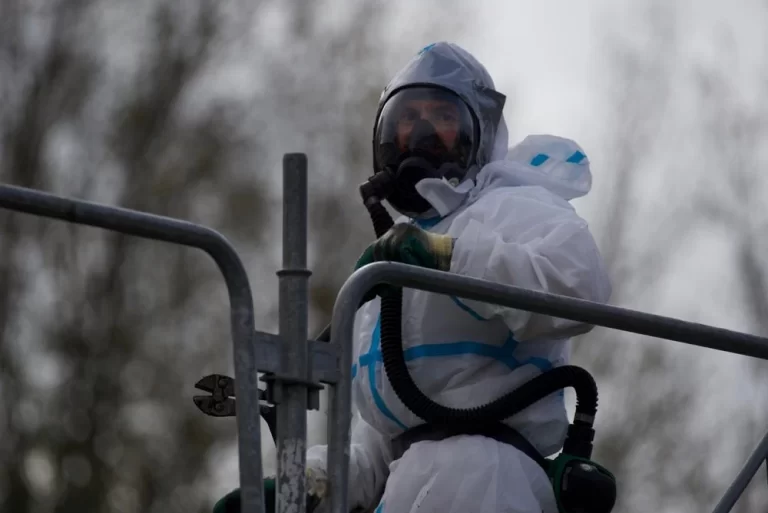
The removal itself is done under full containment with negative air pressure, meaning asbestos fibers stay where they belong — contained, not airborne. Disposal goes to a licensed facility. When the work is complete, you receive clearance documentation and air quality test results. That paperwork is what your buyer’s attorney, your home inspector, and your lender will ask to see — and it’s exactly what we provide.
Asbestos Tile and Popcorn Ceiling Removal in Albertson
The ACM Issues Most Common in Albertson Homes — Handled Right
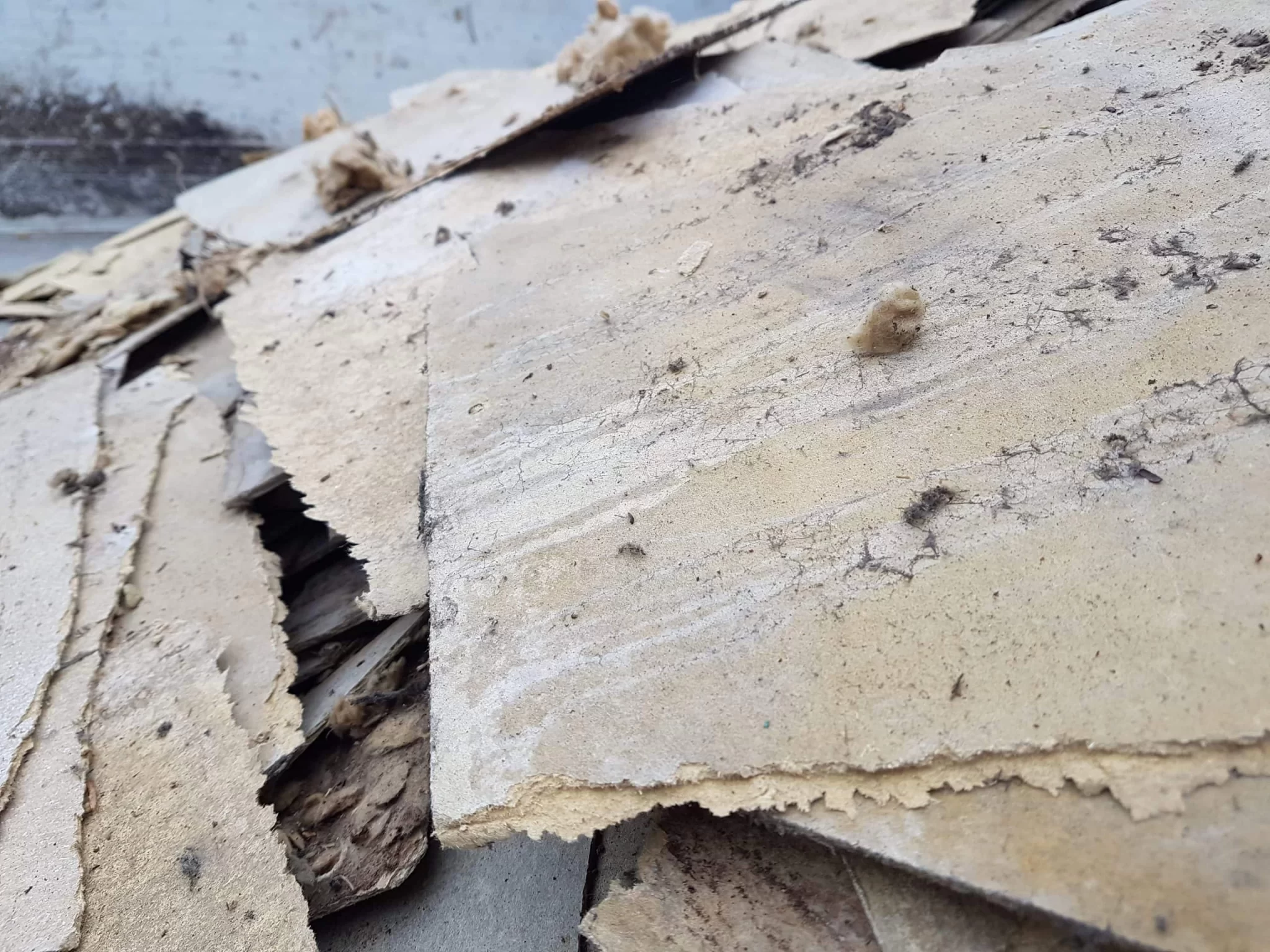
Asbestos tile removal is one of the most frequent calls we get from Albertson homeowners. The 9″x9″ floor tiles found in kitchens, basements, and utility rooms throughout the Hillside Terrace-at-Albertson development were almost universally manufactured with chrysotile asbestos binders before 1980. The tiles themselves are one concern — but the black mastic adhesive underneath them is often just as problematic and requires the same certified handling. DIY removal isn’t just risky here; it’s a code violation under New York State law.
Asbestos popcorn ceiling removal is the other common request, especially from homeowners renovating living rooms, hallways, and bedrooms in their 1950s and 1960s homes. Textured ceiling finishes applied before 1978 frequently contain asbestos, and disturbing them without proper abatement releases fibers into the air in ways that standard renovation dust control can’t address. If you’re updating a home in Albertson before listing it or simply upgrading your space, this is a step that can’t be skipped.
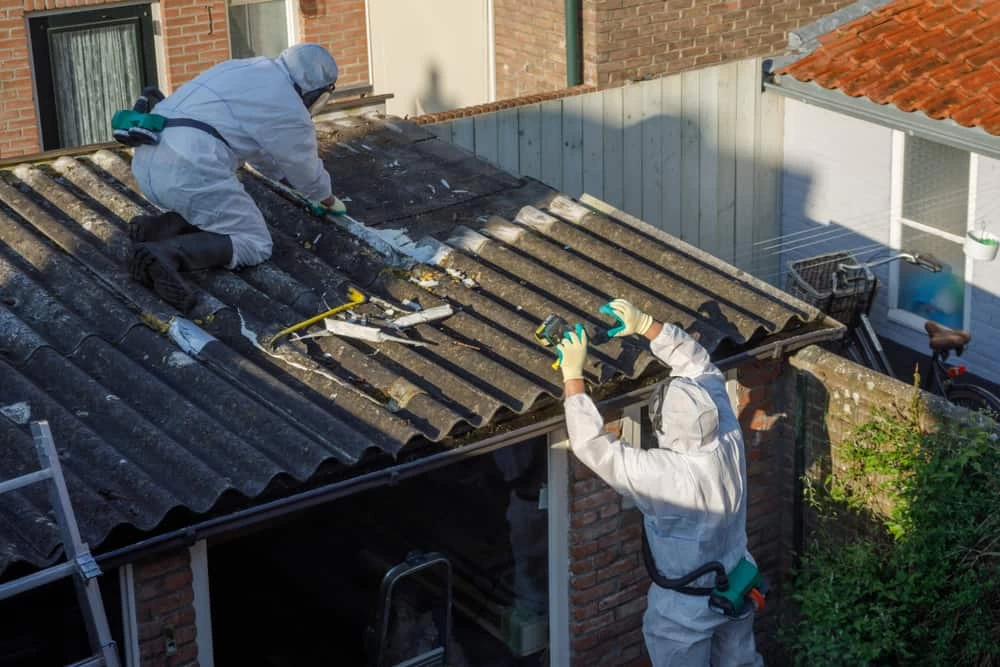
Beyond tile and ceiling work, we handle full asbestos remediation for pipe insulation, duct tape and wrap, joint compound, roof shingles, and exterior siding — all of which appear regularly in Nassau County’s postwar housing stock. Every project includes NYS DOL-compliant documentation, so whatever the scope, you walk away with a clear record of what was done.
Does my 1950s Albertson home likely have asbestos, and where would it be?
If your home was built during the postwar development boom in Albertson — particularly in the Hillside Terrace-at-Albertson area built around 1950 — there’s a strong likelihood that asbestos-containing materials are present somewhere in the structure. Homes from this era routinely used asbestos in floor tiles, the adhesive beneath them, pipe and duct insulation, textured ceiling finishes, joint compound, and sometimes roof shingles or exterior siding. These materials were standard across the industry during that period, and Levitt-era construction used consistent material suppliers across entire developments — meaning the same ACMs tend to show up in the same locations across homes on the same street in Albertson.
The good news is that asbestos in undisturbed condition isn’t necessarily an immediate hazard. The risk comes when materials are damaged, deteriorating, or disturbed during renovation. If you’re planning any work on your home — opening walls, replacing flooring, updating a kitchen or bathroom — a professional assessment before you start is the right move. It protects you, your contractor, and anyone else in the home during the project.
How much does asbestos removal cost for a home in Albertson, NY?
Asbestos removal in Albertson typically runs between $20 and $65 per square foot, depending on the material type, the extent of the affected area, and the complexity of the containment required. A small floor tile removal in a basement utility room is a very different project than a whole-home remediation that includes pipe insulation, ceiling texture, and multiple rooms of flooring. Most residential projects in Albertson fall somewhere in the range of several thousand dollars to well over $20,000 for larger scopes.
Given that homes in Albertson regularly sell for $1 million or more, the cost of certified abatement is almost always a fraction of what an undisclosed ACM issue can cost you during a sale — in price reductions, legal exposure, or a deal that falls apart at inspection. We provide transparent, itemized estimates. You’ll know exactly what’s included before any work begins, with no surprise fees after the fact.
What permits are required for asbestos abatement work in Albertson?
In Albertson, asbestos abatement is regulated at both the state and local level. At the state level, New York’s Industrial Code Rule 56 requires that licensed contractors notify the Department of Labor’s Asbestos Control Bureau before any qualifying abatement project begins. This notification isn’t optional — it’s a legal requirement, and skipping it can result in significant fines and project shutdowns.
At the local level, because Albertson is governed by the Town of North Hempstead rather than an independent village government, all building and demolition permits flow through the Town’s building department. Nassau County also maintains its own demolition permit requirements for certain project types. This layered permitting environment is something homeowners often don’t anticipate — and it’s one of the reasons hiring a contractor who already knows North Hempstead’s process matters. We handle all required notifications and permit coordination as part of the project, so you’re not left figuring out the paperwork on your own.
Do I need asbestos testing before selling my home in Albertson?
New York State doesn’t mandate a specific asbestos inspection before every home sale, but that doesn’t mean you’re off the hook. Seller disclosure obligations in New York require you to disclose known material defects — and if you’re aware that your home contains asbestos-containing materials, that’s something a buyer’s attorney will expect to see addressed. In Albertson’s high-value real estate market, buyers and their inspectors are thorough, and a home built before 1980 is going to raise the question whether you raise it first or not.
Getting a professional assessment before you list gives you control over the process. If ACMs are found and remediated before the sale, you walk into closing with clearance documentation in hand — which is a much stronger position than having a buyer’s inspector flag something mid-transaction. It also protects you from post-sale legal disputes. For a home worth $1 million or more in Albertson, a pre-listing asbestos assessment is one of the more straightforward ways to protect what you’ve built.
What's the difference between asbestos abatement and asbestos remediation?
The terms are often used interchangeably, but there’s a practical distinction worth understanding. Asbestos abatement refers specifically to the physical removal of asbestos-containing materials from a structure — taking out the floor tiles, stripping the pipe insulation, removing the textured ceiling. It’s the hands-on work done under containment by a licensed contractor.
Asbestos remediation is a broader term that can include abatement but also covers related work like encapsulation (sealing ACMs in place rather than removing them, when that’s an appropriate option), air quality testing, and the documentation process that confirms the space is safe for reoccupancy. In most residential renovation and pre-sale scenarios in Albertson, full removal is the preferred approach because it eliminates the material entirely and produces the clearance documentation that buyers and lenders expect. Encapsulation is sometimes used in situations where removal would cause more disruption than the risk warrants — but that determination should always come from a certified assessment, not a guess.
Can I stay in my home during asbestos abatement in Albertson?
Whether you can remain in your home during abatement depends on the scope and location of the work. For a contained, single-room project — like floor tile removal in a basement utility room — it’s sometimes possible to stay in unaffected parts of the home, provided the work area is properly sealed and under negative air pressure. For larger projects involving multiple rooms, pipe insulation throughout a basement or crawl space, or ceiling work in main living areas, temporary relocation is typically the safer and more practical choice.
In Albertson’s colder months, when homes are sealed tight and ventilation is limited, airborne fiber risk during larger abatement projects is a real consideration. We’ll walk you through what’s realistic for your specific project before work begins — including how long the job is expected to take, what areas will be inaccessible, and when the space will be cleared for reoccupancy based on air quality results. The goal is always to give you an honest picture of what to expect, not just tell you what’s easiest to hear.