If your Alligerville property was built before 1980 and most of them were asbestos abatement isn’t a maybe. We handle it the right way, from licensed removal to documented air clearance.
I needed a professional consultation explanation of procedure for safe removal of Asbestos in my apartment complex. Without having an account yet, I was very impressed with the caring, knowledgeable and generous advice offered by Jessica, and will look forward to doing business in the future. Thank you so much! I feel much more informed about a sometimes scary endeavor. Peace. Nancy Silva Mineola, NY.
Mia Munoz
Used this company to clean up some water flood in my house. They were fast and easy to work with.very professional, Would recommend to anyone!
Nini Valle
Great company, had a flood and they responded quickly and efficiently. Billed my insurance company directly. I highly recommend this company!
joe colapietro, jr
I had pipe freeze in my basement right before a snow storm and they made to within an hour to help start the clean up process. They we by our side throughout the entire process and even helped with the insurance company. They did such a great job with the cleanup, repair, remidiation, I contracted them to perform the repairs and finishes in the basement. They came with enough manpower and material to get the job done. Leo and Jessica were nothing but a pleasure to deal with!!
Cristian Arredondo c
I had some water damage in my home and Green Island was able to take care of my issue quickly and effectively. I am very pleased with the work they did. They responded quickly and were very professional.
Michael M
Outstanding service! From the office to the field crew everyone was friendly, helpful and responsive. I highly recommend Green Island Group.
You can move forward. That’s the short answer. Whether you’re mid-renovation on a canal-era farmhouse off Berme Road or preparing a 19th-century home for sale, asbestos stops everything until it’s handled properly. Once it is, your project timeline opens back up, your buyers stop hesitating, and you stop wondering what’s hiding inside those walls.
The homes in Alligerville’s historic district aren’t just old they’re layered. A Greek Revival built in the 1840s that got updated in the 1920s, re-insulated in the 1960s, and had the kitchen redone in the 1970s is essentially a timeline of every era when asbestos-containing materials were standard. Pipe insulation, floor tiles, plaster compounds, boiler wrapping it accumulates. And the Rondout Valley’s freeze-thaw winters don’t help. Temperature cycling accelerates deterioration in older insulation and building materials, which means materials that were once stable can become friable and airborne faster than most people expect.
After abatement, you get written air clearance results not just a verbal “looks good.” That documentation matters when you’re closing a real estate transaction, operating a short-term rental, or simply want proof that your family is safe in a home that’s been standing since before the Civil War.
Licensed Asbestos Contractor Serving Alligerville, NY
The License, the Process, and the Paperwork All Covered
We are a fully licensed environmental remediation contractor serving Alligerville and the surrounding Town of Rochester. The credential that actually matters under New York law is the NYS DOL Asbestos Handling License required under Industrial Code Rule 56 for any abatement project in the state. We hold it. A lot of contractors advertising asbestos services in Ulster County don’t.
Beyond licensing, we handle the full scope of what older properties in Alligerville actually need. Asbestos abatement, mold remediation, water damage restoration, lead abatement these hazards don’t show up one at a time in a 180-year-old home, and you shouldn’t need four separate contractors to address them. We already serve nearby Accord and Kerhonkson, which means we know this area, know the building stock, and aren’t guessing at what we’ll find when we walk through the door.
We also handle permit filings directly and bill insurance companies on your behalf, which removes two of the most frustrating parts of the process before you even have to think about them.
No Guesswork Here's Exactly What the Job Looks Like
It starts with a thorough inspection and material assessment. In a hamlet like Alligerville where homes routinely predate the Civil War and have been renovated multiple times since this step isn’t a formality. It’s where the full picture gets established: what materials are present, where they are, what condition they’re in, and what the abatement scope actually needs to be. Skipping or rushing this step is how projects go sideways.
Once the scope is confirmed, we file the required project notification with the NYS Department of Labor before any work begins. Under Industrial Code Rule 56, this isn’t optional it’s a legal requirement for any disturbance exceeding 10 square feet or 25 linear feet. We handle that filing directly, so you’re not navigating state paperwork on top of everything else. If your renovation requires a building permit from the Town of Rochester, the asbestos survey and abatement documentation will be part of what the town expects to see anyway.
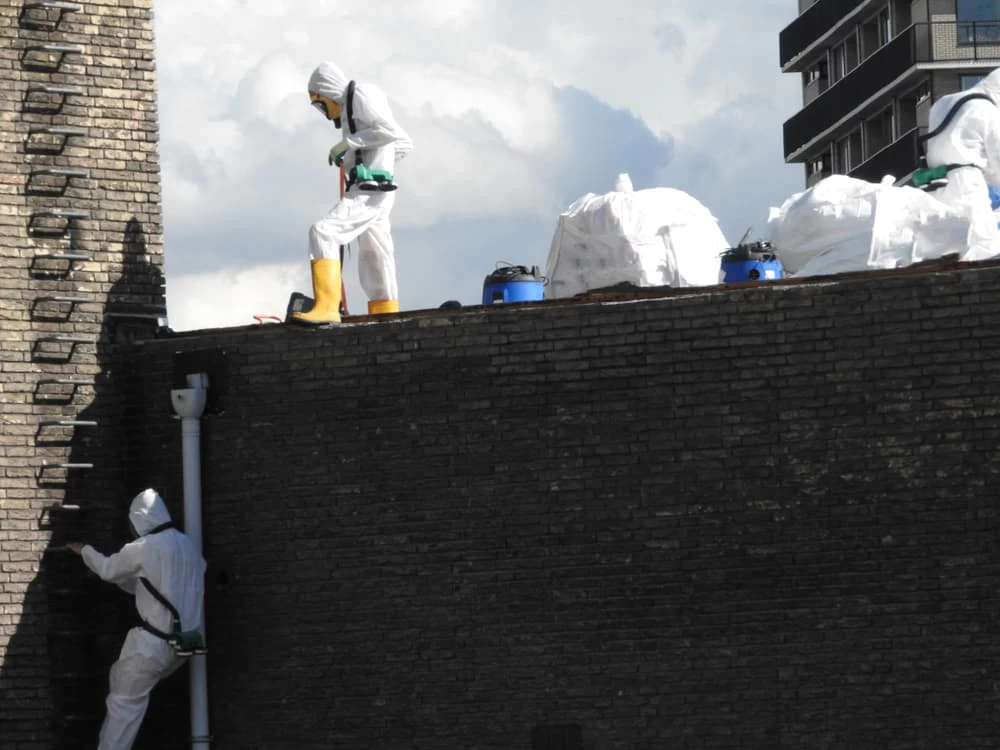
The removal itself is performed under full containment, with negative air pressure maintained throughout. Workers are equipped with proper respiratory protection and follow strict disposal protocols manifests, licensed transport, and compliant disposal facilities. When the work is done, we conduct air monitoring to confirm clearance, and you receive written documentation of the results. That’s the deliverable that actually closes the loop.
Asbestos Tile and Popcorn Ceiling Removal, Alligerville
Every Material Type, Handled Under One Licensed Roof
Asbestos doesn’t just show up in one place. In the older homes that make up most of Alligerville’s housing stock, it turns up in pipe and boiler insulation, 9×9 vinyl floor tiles, textured and popcorn ceilings, plaster and joint compounds, roofing materials, and window glazing. Each material type carries different risk levels and requires a different approach and the abatement method has to match the material, not just the general idea of “removing asbestos.”
We handle the full range. Asbestos tile removal, popcorn ceiling removal, pipe insulation abatement, and full structural remediation for larger projects all under the same NYS DOL license. For properties in the Alligerville Historic District, we work carefully to avoid unnecessary damage to surrounding historic fabric. That matters when you’re working on a structure that’s listed on the National Register of Historic Places and where the architectural character is part of the property’s value.
If your situation involves water damage or mold alongside the asbestos which is common in older Ulster County homes after a basement flood or a roof failure we can address all of it in the same scope of work. And if insurance is involved, we bill the carrier directly. You focus on the property. We handle the rest.
Does my Alligerville home actually need asbestos testing before I start renovating?
If your home was built before 1980, testing before renovation isn’t just a good idea it’s effectively required under New York State law. Under NYS Industrial Code Rule 56, any disturbance of suspect asbestos-containing materials that exceeds 10 square feet or 25 linear feet must be handled by a licensed abatement contractor. That threshold is easy to hit the moment you start pulling up floor tiles, opening walls, or disturbing ceiling texture.
In Alligerville specifically, the risk is higher than average. The hamlet’s historic district includes 81 contributing buildings, most developed after 1828 and renovated repeatedly through the 20th century. Those renovation layers 1920s pipe insulation, 1960s floor tiles, 1970s joint compound stack up. A professional inspection before demolition or renovation work tells you exactly what you’re dealing with, so you’re not making decisions blind in the middle of a project.
How much does asbestos abatement typically cost for a home in Ulster County?
For targeted residential removal a section of pipe insulation, a room of floor tiles, or a single popcorn ceiling costs in the Ulster County area typically run between $1,500 and $5,000. Larger projects involving multiple material types, whole-house abatement, or significant structural work can reach $15,000 to $30,000 or more, depending on the scope and the complexity of the containment required.
The age and condition of your home affects cost more than most people expect. In a hamlet like Alligerville, where many homes have multiple renovation layers from different eras, the initial inspection sometimes reveals more material than the homeowner anticipated. Getting a thorough inspection upfront gives you an accurate scope, which gives you an accurate cost.
What happens if asbestos is found during a renovation already in progress?
Stop the work. Seriously don’t try to finish the demo or cover it back up and move on. Once suspect material is disturbed, the situation changes legally and practically. Under NYS Industrial Code Rule 56, continuing to disturb asbestos-containing materials without a licensed contractor on-site creates liability for everyone involved, including the homeowner.
The practical step is to seal off the affected area as best you can, limit foot traffic through the space, and call us immediately. We’re available 24/7 for exactly this kind of situation. We’ll assess what was disturbed, determine whether air testing is needed right away, and get the abatement scoped and filed with the NYS DOL so the project can resume as quickly as possible. In older Rondout Valley homes where renovation discoveries are common, this scenario happens more often than people expect and the faster you respond, the faster you get back on schedule.
Is asbestos abatement required before selling a home in Alligerville, NY?
There’s no blanket legal requirement in New York State that forces a seller to abate asbestos before listing a property. However, disclosure requirements are real sellers are required to disclose known material defects, and known asbestos-containing materials in poor condition would typically qualify. Buyers and their inspectors are also increasingly aware of asbestos risk in older properties, and the presence of deteriorating asbestos materials is a common negotiating point that can delay or derail a transaction.
For Alligerville sellers specifically, the calculus is straightforward: the hamlet’s historic building stock means buyers are already coming in expecting to find older materials. A pre-sale abatement with documented air clearance removes the uncertainty from the transaction and gives buyers one less reason to renegotiate or walk. Many sellers find that the cost of abatement before listing is less than the price reduction they’d otherwise face and the sale closes cleaner and faster.
How do I know if my floor tiles or ceiling contain asbestos without testing?
You don’t and that’s the honest answer. Asbestos-containing materials look identical to non-asbestos materials. The 9×9 vinyl floor tiles common in mid-century renovations are a well-known risk, but so are the adhesives beneath them. Popcorn ceilings applied before 1980 frequently contain asbestos. Plaster compounds, pipe insulation, and roofing materials from the same era carry similar risk.
The only way to know for certain is sampling and laboratory analysis. A licensed inspector collects small samples of suspect materials and sends them to an accredited lab results typically come back within a few days. In Alligerville homes that have been renovated multiple times over 150-plus years, it’s common to find several different types of suspect materials in the same property. The inspection process identifies all of them at once, so you’re not going back for repeated testing every time a new material turns up during the project.
Can asbestos abatement be covered by homeowners insurance in New York?
It depends on what triggered the abatement. If asbestos-containing materials were disturbed or damaged as a result of a covered loss a pipe burst, flooding from a storm, fire damage there’s a reasonable case for insurance coverage, and many policies will cover abatement as part of the remediation scope. If the abatement is purely elective, driven by a renovation or a pre-sale decision, it typically isn’t covered.
For Alligerville homeowners, flooding is a realistic scenario. Properties near the Rondout Creek watershed have experienced storm-related water intrusion, and when water damages older pipe insulation or building materials in a basement or crawl space, that’s often a covered event. We bill insurance carriers directly, which means we handle the documentation, the communication with the adjuster, and the billing you don’t have to figure out how to submit an environmental remediation claim on your own. That capability alone has made a significant difference for homeowners navigating a stressful situation.