If your home was built before 1980 and in Amenia, most were asbestos removal isn’t a maybe. It’s a real conversation worth having before your renovation goes sideways.
I needed a professional consultation explanation of procedure for safe removal of Asbestos in my apartment complex. Without having an account yet, I was very impressed with the caring, knowledgeable and generous advice offered by Jessica, and will look forward to doing business in the future. Thank you so much! I feel much more informed about a sometimes scary endeavor. Peace. Nancy Silva Mineola, NY.
Mia Munoz
Used this company to clean up some water flood in my house. They were fast and easy to work with.very professional, Would recommend to anyone!
Nini Valle
Great company, had a flood and they responded quickly and efficiently. Billed my insurance company directly. I highly recommend this company!
joe colapietro, jr
I had pipe freeze in my basement right before a snow storm and they made to within an hour to help start the clean up process. They we by our side throughout the entire process and even helped with the insurance company. They did such a great job with the cleanup, repair, remidiation, I contracted them to perform the repairs and finishes in the basement. They came with enough manpower and material to get the job done. Leo and Jessica were nothing but a pleasure to deal with!!
Cristian Arredondo c
I had some water damage in my home and Green Island was able to take care of my issue quickly and effectively. I am very pleased with the work they did. They responded quickly and were very professional.
Michael M
Outstanding service! From the office to the field crew everyone was friendly, helpful and responsive. I highly recommend Green Island Group.
Most Amenia homeowners don’t call us because they were planning to. They call because a contractor pulled up the kitchen floor, or a pipe started sweating through old insulation, or a storm tore into a roof that hadn’t been touched since the 1960s. By the time you’re searching for help, something has already stopped you in your tracks and the clock is running.
When asbestos is properly removed and documented, you get your project back. The renovation moves forward. The sale doesn’t fall apart at inspection. Your family isn’t breathing something you can’t see. That’s just what life looks like when the problem is handled correctly instead of ignored or patched over.
Amenia’s climate makes this more urgent than people realize. With nearly 47 inches of rain per year and close to 48 inches of snow, the freeze-thaw cycles here physically stress old building materials season after season. Pipe insulation that was stable five years ago may be crumbling now. Floor tile adhesive loosens when basements flood. What an inspector called “non-friable and safe to leave” in 2018 may not be in the same condition today especially after a few hard Harlem Valley winters.
5,000 Projects Across Dutchess County None of Them a Surprise
We’ve been doing this work across New York State for over 12 years and more than 5,000 completed projects including properties throughout Dutchess County and the Harlem Valley corridor along Route 22. That’s not a number to impress you. It means that when our inspector walks into a pre-Civil War farmhouse off Route 44 or a converted barn near Wassaic, nothing we find is going to be a surprise.
We hold a current NYS Department of Labor Asbestos Contractor License, are fully compliant with Industrial Code Rule 56, and carry MWBE certification one of the few abatement contractors in this region that New York State has vetted and approved for public agency work. That level of credentialing matters when you’re trying to figure out who to trust with your home.
We also handle mold remediation, water damage restoration, and fire damage restoration under the same roof. For Amenia’s older properties where one problem rarely travels alone that means one call instead of three.
No Surprises Here's Exactly What the Process Looks Like
It starts with an inspection. One of our licensed inspectors comes to your property, assesses what’s there, identifies the material types, and gives you a clear picture of what you’re dealing with before any removal begins. In Amenia’s older homes, that often means checking more than one area. Pipe insulation, floor tiles, attic fill, ceiling texture, roofing materials pre-1980 construction in this part of Dutchess County tends to have asbestos in more places than people expect.
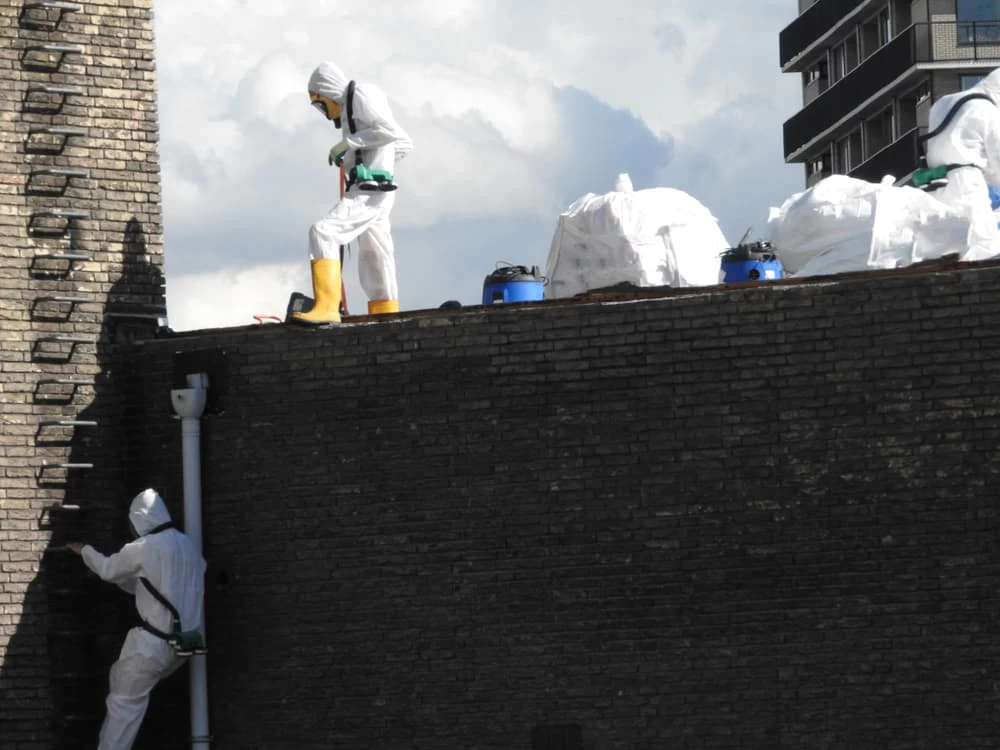
Once the scope is confirmed, we perform the abatement work under full containment protocols required by New York State’s Industrial Code Rule 56. The space is sealed, negative air pressure is maintained, and all removed materials are packaged and transported by licensed haulers to an approved disposal facility. Nothing gets bagged and left on the curb. Nothing gets shortcut because it’s inconvenient.
When the work is done, we perform post-abatement air clearance testing. You receive documentation lab-verified results confirming fiber levels are within safe limits before anyone reoccupies the space. That paperwork travels with your property. If you’re selling, it removes a major buyer objection. If you’re staying, it’s proof the job was finished not just started.
The asbestos materials most commonly found in Amenia properties aren’t exotic they’re the standard inventory of old Harlem Valley homes. Asbestos tile removal is one of our most frequent jobs, particularly the 9×9 vinyl floor tiles with black mastic adhesive that were standard in mid-century kitchen and bathroom renovations. Asbestos popcorn ceiling removal comes up constantly in pre-1980 homes that haven’t been touched since they were built. Pipe and boiler insulation is nearly universal in homes with original or early-20th-century heating systems. And in a town with as many agricultural structures as Amenia, barn roofing and outbuilding materials are a category all their own often in poor condition after decades of weather exposure, and frequently overlooked until a conversion project begins.
We handle all of it: inspection and testing, full asbestos removal, remediation, encapsulation assessment, clean-up, and compliant disposal. Every project is performed by workers holding individual NYS DOL Asbestos Handler or Supervisor licenses not general laborers handed a respirator. And because we bill insurance directly, if your abatement is connected to a covered event storm damage, flooding, a renovation claim you’re not left managing that paperwork on top of everything else.
We’re available 24 hours a day, seven days a week, with documented response times as fast as two hours. For a town in the far eastern corner of Dutchess County, where the nearest hospital is across the state line in Sharon, Connecticut, that kind of availability isn’t a marketing line. It’s just practical.
How do I know if my Amenia home actually has asbestos in it?
The honest answer is that you don’t know until it’s tested and in Amenia, the odds are not in your favor if your home was built before 1980. The town’s housing stock is among the oldest in Dutchess County, with structures dating back to the 1700s and 1800s that have been renovated in layers over generations. Each renovation era brought its own materials: asbestos floor tiles in the 1950s and 60s, textured ceiling products through the 1970s, pipe insulation that was standard practice for most of the 20th century.
The only way to confirm asbestos is through sample collection and laboratory analysis performed by a licensed inspector. Visual identification is not reliable asbestos-containing materials often look identical to non-asbestos versions. If your home is pre-1980 and you’re planning any renovation, a pre-project inspection is the right first move. It’s far less expensive than stopping a gut renovation mid-demo because something unexpected turned up.
What does asbestos abatement actually cost in Dutchess County?
Cost depends heavily on what’s there, how much of it there is, and what condition it’s in. For a single contained area one room of floor tile, one section of pipe insulation you’re typically looking at a range of roughly $1,300 to $3,100 in the New York market. Larger scopes, like full attic insulation removal or multi-room tile abatement in an older farmhouse, will run higher. The average residential asbestos removal project in New York comes in around $2,100 to $2,200.
What drives cost in Amenia specifically is the age and complexity of the building stock. A pre-1900 farmhouse with original pipe insulation, multiple generations of floor tile, and a deteriorating attic space is a different job than a 1975 ranch with one suspect ceiling. The condition of the material matters too friable asbestos that’s actively crumbling requires more containment and more careful removal than stable, non-friable material. We’ll give you a clear scope before any commitment is made.
Can I stay in my home while asbestos removal is being done?
It depends on where the work is happening and how large the scope is. For contained, single-area projects a basement utility room, one bathroom, a section of attic it’s often possible to remain in the home if the affected area is fully sealed off and you’re not accessing it during the work. For larger projects involving multiple areas or central spaces like main living areas or HVAC systems, temporary relocation during the active abatement phase is the safer and more practical choice.
We’ll give you a straight answer on this during the inspection phase, based on the specific layout of your home and the scope of the work. What you should not do is remain in an area where active removal is occurring or where containment hasn’t been established. Post-abatement air clearance testing confirms when it’s safe to reoccupy that’s not a judgment call, it’s a documented result.
Do I need a permit for asbestos removal in Amenia, NY?
In New York State, asbestos abatement is governed by Industrial Code Rule 56, enforced by the NYS Department of Labor Asbestos Control Bureau. For Dutchess County, that oversight falls under the Albany district office. The regulatory requirements apply to the contractor, not just the project meaning the abatement company must hold a current NYS DOL Asbestos Contractor License, workers must hold individual handler or supervisor licenses, and waste must be transported and disposed of through licensed haulers to approved facilities.
From a building permit standpoint, if you’re pulling a renovation or demolition permit in Amenia for a pre-1980 structure, asbestos inspection requirements are typically triggered as part of that process. Hiring an unlicensed contractor to avoid this doesn’t make the requirement go away it creates legal and financial exposure for you as the property owner. We handle all required notifications and compliance documentation as part of every project.
I found asbestos tiles during a renovation do I have to stop all work?
Yes, the right move is to stop work in that area immediately. Once a potential asbestos-containing material is disturbed or discovered, continuing demo work risks releasing fibers into the air and once that happens, the remediation scope gets significantly larger and more expensive. The area should be sealed off, ventilation to other parts of the home should be minimized, and a licensed abatement contractor should be called before anything else is touched.
This scenario is one of the most common calls we receive from Amenia homeowners particularly those in the middle of kitchen or bathroom renovations in older farmhouses along the Route 22 and Route 44 corridors. The good news is that a mid-renovation discovery doesn’t have to derail the whole project. With a fast inspection and a clear abatement scope, work can often resume within days. Our documented two-hour response time means you’re not waiting a week to find out where you stand.
Why does it matter which asbestos contractor I hire in Amenia?
Because the consequences of getting it wrong land on you, not the contractor. In New York State, property owners have legal obligations when it comes to asbestos and hiring an unlicensed or improperly credentialed operator doesn’t transfer that liability away from you. If work is performed without proper containment, disposal documentation, or post-abatement clearance testing, you’re left with a home that may not be provably safe, a paper trail that doesn’t hold up to scrutiny, and potential issues if you ever try to sell or refinance.
In a town like Amenia, where the real estate market draws buyers who are doing serious due diligence many of them coming from New York City with experienced agents and thorough inspectors a properly documented abatement is an asset. An undocumented or improperly performed one is a liability that follows the property. The difference between a contractor who cuts corners and one who doesn’t often isn’t visible during the job. It shows up later, when it matters most.