Amenia Union’s pre-war housing stock is beautiful and it almost certainly contains asbestos. We provide licensed asbestos abatement for Dutchess County homeowners who need it handled right the first time.
I needed a professional consultation explanation of procedure for safe removal of Asbestos in my apartment complex. Without having an account yet, I was very impressed with the caring, knowledgeable and generous advice offered by Jessica, and will look forward to doing business in the future. Thank you so much! I feel much more informed about a sometimes scary endeavor. Peace. Nancy Silva Mineola, NY.
Mia Munoz
Used this company to clean up some water flood in my house. They were fast and easy to work with.very professional, Would recommend to anyone!
Nini Valle
Great company, had a flood and they responded quickly and efficiently. Billed my insurance company directly. I highly recommend this company!
joe colapietro, jr
I had pipe freeze in my basement right before a snow storm and they made to within an hour to help start the clean up process. They we by our side throughout the entire process and even helped with the insurance company. They did such a great job with the cleanup, repair, remidiation, I contracted them to perform the repairs and finishes in the basement. They came with enough manpower and material to get the job done. Leo and Jessica were nothing but a pleasure to deal with!!
Cristian Arredondo c
I had some water damage in my home and Green Island was able to take care of my issue quickly and effectively. I am very pleased with the work they did. They responded quickly and were very professional.
Michael M
Outstanding service! From the office to the field crew everyone was friendly, helpful and responsive. I highly recommend Green Island Group.
When asbestos abatement is done properly, you’re not just removing a hazard you’re getting your home back. No more pausing the renovation. No more wondering if the air is safe. No more deals falling apart because a buyer’s attorney flagged an unresolved material concern. That’s what a finished, documented abatement project actually gives you.
In Amenia Union specifically, this matters more than most people realize. NeighborhoodScout identifies the Town of Amenia as having one of the highest concentrations of pre-World War II architecture in New York State. That means pipe insulation, floor tiles, plaster, and roofing materials from an era when asbestos was standard. If your home was built before 1980 and many here were built well before that the odds that asbestos-containing materials are somewhere in the structure are high.
The Harlem Valley’s freeze-thaw winters accelerate the problem. Cold seasons crack and degrade older insulation and building materials over time, turning what was once stable asbestos into something friable and airborne. A crumbling basement pipe wrap or deteriorating floor tile isn’t just cosmetic it’s a health risk that gets worse the longer it sits. Getting it properly removed means that risk is gone, and you have the clearance documentation to prove it.
5,000 Projects. Amenia Union and Dutchess County Are on That List.
We’ve been doing this work across New York State for over 12 years and have completed more than 5,000 restoration and abatement projects. That’s not a number pulled from a brochure it’s the kind of track record that only comes from consistently showing up and doing the job right, project after project, county after county.
Amenia Union isn’t a market we stumbled into. We serve Amenia, Amenia Union, and South Amenia as named locations within our Dutchess County service area which means when you call, you’re not explaining where you are to someone who’s never been east of the Taconic. We know the housing stock out here. We know what Route 22 farmhouses look like from the inside, and we know what materials were common in homes built along the Harlem Valley corridor.
We’re also MWBE-certified and approved as a contractor for New York State agencies a credential that requires independent state review, not just a checkbox. We bill insurance directly, respond around the clock, and handle asbestos alongside mold remediation, water damage, and fire restoration. For an older property with more than one issue, that’s a real advantage.
From First Call to Final Air Test Here's What to Expect
It starts with an inspection. Before any removal happens, the materials in question need to be properly identified and sampled. This isn’t optional in New York NYS Industrial Code Rule 56 requires that asbestos-containing materials be identified before renovation or demolition work begins. For Amenia Union homeowners, that means any project involving an older structure needs this step completed first, and the results need to be documented.
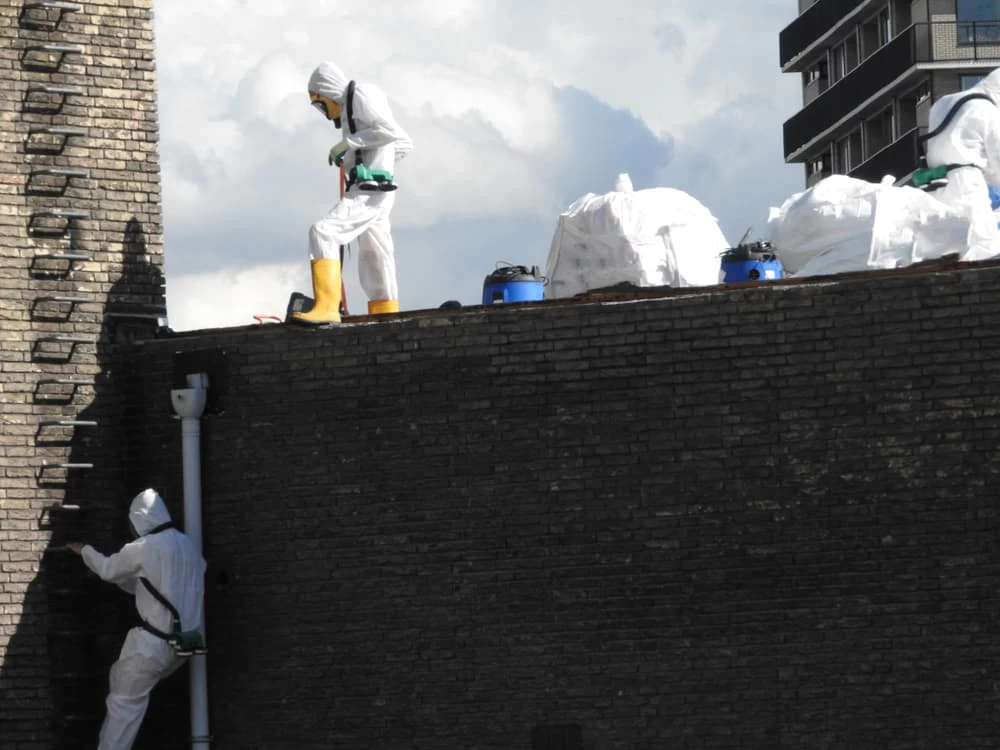
Once the scope is confirmed, the abatement work begins under full containment. The area is sealed, negative air pressure is established, and our licensed technicians remove the materials using approved methods. Nothing gets disturbed without the right controls in place. Asbestos waste is then packaged, transported by a licensed hauler, and disposed of at an NYS DEC-approved facility not just dropped at the nearest transfer station.
The final step is air clearance testing. After the work is complete, air samples are taken and analyzed to confirm that fiber concentrations are within safe limits. You receive written documentation of those results. If you’re selling a home in the current Amenia real estate market where buyers from New York City are increasingly represented by attorneys who ask about hazardous materials that clearance report is something your real estate agent will thank you for having. The Albany District Office of the NYS DOL Asbestos Control Bureau oversees compliance for Dutchess County, and every step of our process is built to meet those standards.
Asbestos abatement isn’t one thing it depends on what’s in your home and where it is. The most common materials found in Amenia Union’s older housing stock include pipe and boiler insulation, 9×9 vinyl asbestos floor tiles, textured and popcorn ceilings, roofing shingles, and plaster. Each of these requires a different removal approach, and each carries its own disposal requirements under New York State law.
Asbestos tile removal, for example, has to be handled carefully to avoid fracturing the tiles and releasing fibers into the air. Asbestos popcorn ceiling removal requires full containment of the affected room before a single square foot is touched. Pipe insulation removal in a basement or crawl space one of the most common scenarios in pre-1940 Harlem Valley homes involves working in tight, often poorly ventilated conditions where containment protocol is critical. Our team is trained and licensed for all of it.
Beyond the removal itself, the full scope includes pre-abatement inspection and sampling, proper containment setup, licensed waste transport and disposal, and post-abatement air clearance testing with written documentation. If your project also involves mold common in the same basements and crawl spaces where asbestos pipe insulation tends to deteriorate we handle that under the same roof. For homeowners managing a renovation, a sale, or a long-deferred maintenance issue on an older Dutchess County property, having one contractor who covers the full picture makes the process significantly less complicated.
Does my older Amenia Union home actually need an asbestos inspection before renovating?
If your home was built before 1980, yes and in Amenia Union, that covers a significant portion of the housing stock. New York State Industrial Code Rule 56 requires that asbestos-containing materials be identified before any renovation or demolition work begins. This applies to residential properties, not just commercial buildings. Skipping the inspection doesn’t eliminate the risk it just means you’re disturbing potentially hazardous materials without knowing it, which creates a much larger and more expensive problem.
The Town of Amenia has one of the highest concentrations of pre-World War II architecture in New York State, according to NeighborhoodScout. Some properties in Amenia Union date back to the 18th and 19th centuries. Homes that old were built with materials that are almost certain to contain asbestos somewhere whether in the basement insulation, the floor tiles, the plaster, or the roofing. An inspection before you start work is the only way to know what you’re dealing with, and it’s legally required anyway.
How much does asbestos removal typically cost for a home in Dutchess County?
For most residential projects in New York, asbestos removal runs between $1,296 and $3,050, with an average around $2,170. That range shifts based on what materials are involved, how much square footage is affected, and the complexity of the containment required. New York costs have also risen 8–12% in recent years due to updated NYS DOL licensing requirements and higher disposal fees at approved facilities so if you got a quote a few years ago, it’s worth getting a current one.
What matters more than finding the lowest number is understanding what’s included. A quote that doesn’t cover post-abatement air clearance testing, licensed waste disposal, or documentation isn’t a complete job it’s just part of one. In Dutchess County, where the Albany District Office of the NYS DOL Asbestos Control Bureau enforces compliance, cutting corners on any of those steps creates real liability. Get a quote that covers the full scope, and make sure the contractor is licensed under NYS Industrial Code Rule 56.
What materials in an old Harlem Valley farmhouse are most likely to contain asbestos?
The most common asbestos-containing materials found in pre-1980 homes in the Amenia area fall into a few categories. Pipe and boiler insulation is probably the most frequent discovery especially in older farmhouses with original heating systems. The insulation wrapped around basement pipes was almost universally made with asbestos through the mid-20th century. Nine-by-nine inch vinyl floor tiles are another common one; if your home has those old square tiles in the kitchen, basement, or utility areas, there’s a good chance they contain asbestos.
Popcorn and textured ceilings applied before 1980 frequently tested positive for asbestos as well, as do some plaster formulations and exterior roofing shingles from the same era. In Amenia Union’s older housing stock including 19th-century farmhouses that have been updated in layers over the decades it’s common to find multiple materials in the same structure. That’s not unusual, and it doesn’t mean the project is unmanageable. It just means the inspection phase matters, because you need to know the full picture before any work starts.
Can I stay in my home during asbestos abatement work in Amenia Union, NY?
It depends on the scope and location of the work. For smaller, contained projects like removing asbestos floor tiles in a single room it may be possible to remain in the home with proper containment in place and affected areas sealed off. For larger projects involving pipe insulation removal throughout a basement, or abatement work in central areas of the home, temporary relocation is usually the safer and more practical choice.
We assess each project individually and give you a clear picture of what to expect, including how long the work will take and what the reoccupancy timeline looks like. Post-abatement air clearance testing is the checkpoint that determines when it’s safe to return you don’t reoccupy based on a visual inspection or a gut call. You reoccupy when the air samples come back clean and the documentation confirms it.
I found what looks like damaged pipe insulation in my basement is that an emergency?
Damaged or deteriorating pipe insulation in a pre-1980 home should be treated as a priority, not necessarily a panic but not something to leave alone either. When asbestos-containing insulation becomes friable (meaning it crumbles or breaks apart easily), it can release fibers into the air. In a basement or crawl space, those fibers can migrate through the rest of the home through HVAC systems or air movement. The Harlem Valley’s cold winters and freeze-thaw cycling are hard on older basement insulation, which is part of why this is such a common issue in Amenia Union properties.
The right move is to stop disturbing the area don’t poke at it, vacuum it, or try to wrap it yourself and call a licensed abatement contractor for an assessment. We’re available 24 hours a day, seven days a week, and have documented response times as fast as two hours. If you’re dealing with damaged insulation and aren’t sure whether it contains asbestos, that uncertainty alone is reason enough to get it tested before your next HVAC season starts.
Does asbestos abatement affect a home sale in the Amenia real estate market?
It can cut both ways. Undisclosed or unresolved asbestos is increasingly flagged during home inspections in the Dutchess County market, and buyers particularly those coming from New York City who are accustomed to thorough due diligence are more likely than ever to be represented by attorneys who ask specific questions about hazardous materials. An unresolved asbestos issue can delay a closing, reduce your negotiating position, or cause a deal to fall through entirely.
On the other hand, a home with documented, professionally completed asbestos abatement is in a stronger position. When you can hand a buyer’s attorney a post-abatement air clearance report and a licensed contractor’s compliance documentation, you’re removing one of the most common friction points in a transaction. The Amenia area has an active market for older properties 1930s farmhouses, early 20th century homes, and historic rural estates are regularly bought and sold along the Route 22 corridor. Sellers who have addressed asbestos proactively tend to move through the process faster and with fewer surprises than those who leave it for the inspection to surface.