Most Babylon Village homes were built before asbestos was phased out and if yours is one of them, a renovation or home sale could expose more than you bargained for. We handle certified asbestos abatement in Babylon, NY from the first inspection to the final clearance test.
I needed a professional consultation explanation of procedure for safe removal of Asbestos in my apartment complex. Without having an account yet, I was very impressed with the caring, knowledgeable and generous advice offered by Jessica, and will look forward to doing business in the future. Thank you so much! I feel much more informed about a sometimes scary endeavor. Peace. Nancy Silva Mineola, NY.
Mia Munoz
Used this company to clean up some water flood in my house. They were fast and easy to work with.very professional, Would recommend to anyone!
Nini Valle
Great company, had a flood and they responded quickly and efficiently. Billed my insurance company directly. I highly recommend this company!
joe colapietro, jr
I had pipe freeze in my basement right before a snow storm and they made to within an hour to help start the clean up process. They we by our side throughout the entire process and even helped with the insurance company. They did such a great job with the cleanup, repair, remidiation, I contracted them to perform the repairs and finishes in the basement. They came with enough manpower and material to get the job done. Leo and Jessica were nothing but a pleasure to deal with!!
Cristian Arredondo c
I had some water damage in my home and Green Island was able to take care of my issue quickly and effectively. I am very pleased with the work they did. They responded quickly and were very professional.
Michael M
Outstanding service! From the office to the field crew everyone was friendly, helpful and responsive. I highly recommend Green Island Group.
You stop guessing. That’s the first thing. When asbestos-containing materials are properly identified, contained, and removed by a licensed team, you’re not just clearing a hazard you’re clearing the path for whatever comes next, whether that’s a renovation, a sale, or just knowing your home is safe to live in.
For Babylon Village homeowners, that matters more than people realize. Nearly 77% of homes here were built before 1970, which means floor tiles, pipe insulation, popcorn ceilings, and joint compound from that era are extremely common. The village’s location on the Great South Bay adds another layer coastal humidity, salt air, and decades of freeze-thaw cycles accelerate the breakdown of older building materials. Asbestos that was once stable can become friable over time, meaning it crumbles and releases fibers into the air you’re breathing.
Once abatement is complete and clearance air testing confirms the space is clean, you get documentation. That paperwork matters when you’re closing on a sale, pulling a renovation permit, or simply proving to yourself that the job was done right. It’s not just about removal it’s about having the record to back it up.
We Know Babylon's Housing Stock and Where Asbestos Hides in It
We’re a Long Island-based environmental services company that specializes in asbestos abatement, removal, and remediation across Suffolk County. We already serve Babylon Village, West Babylon, and North Babylon, so the housing stock here isn’t new to us. We know what a mid-century Cape Cod off Deer Park Avenue looks like from the inside, and we know where asbestos tends to hide in homes that were built during the post-war building boom that defined this part of the South Shore.
Every contractor on our team holds the certifications required under New York State’s Industrial Code Rule 56. That’s not a marketing point it’s a legal requirement, and it’s one we take seriously. We carry all required NYS Department of Labor licenses, manage every step of the compliance process, and never cut corners on the clearance air testing that has to happen before you can safely return to your space.
No Surprises Here's Exactly How the Work Gets Done
It starts with an inspection. Before anything is touched, a certified inspector assesses your home or property to identify where asbestos-containing materials are present, what condition they’re in, and whether they pose an immediate risk. In Babylon Village, that often means checking original floor tiles and the black mastic adhesive beneath them, textured ceilings, pipe and boiler insulation in older heating systems, and roofing or siding materials on homes that haven’t been updated since they were built.
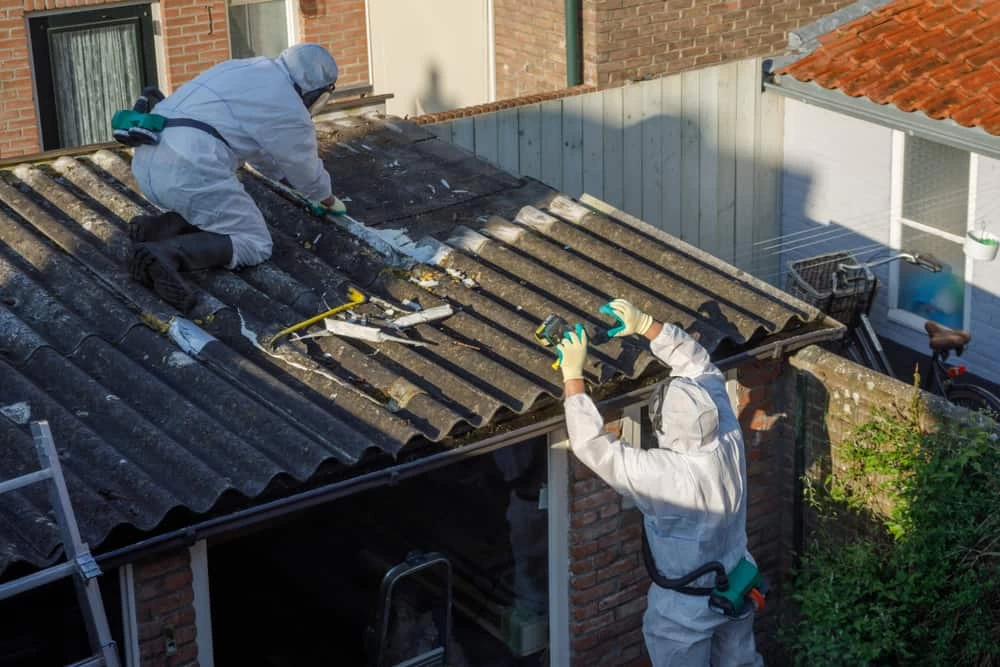
Once the scope is clear, we file the required work plan documentation with the New York State Department of Labor before any abatement begins. This is mandatory under Industrial Code Rule 56 for projects over 160 square feet or involving any friable asbestos and it protects you as much as it protects us. The abatement work itself is performed with full containment and negative air pressure systems to ensure fibers don’t migrate to other parts of your home during removal.
After the work is done, an independent third-party air sampling technician not us conducts clearance testing to confirm the space meets safety standards before you re-enter. You receive full documentation of that result. If you’re dealing with a real estate transaction or a permit-driven renovation, that paperwork is exactly what your attorney, lender, or building department will ask for.
Asbestos doesn’t show up in just one place, and in Babylon Village homes built between the 1940s and 1970s, it rarely does. The most common materials we address here are vinyl asbestos floor tiles the 9×9 and 12×12-inch tiles installed throughout post-war homes along with the black mastic adhesive underneath them, which frequently contains asbestos even when the tiles themselves don’t. Popcorn ceiling removal is another common request, particularly in homes being updated before a sale or renovation. Spray-applied textured ceilings installed before 1978 routinely tested positive for asbestos, and scraping them without proper abatement is both a health risk and a code violation.
We also handle pipe and boiler insulation removal, which is especially relevant in older Babylon Village homes that still run on steam heat systems. That insulation was commonly wrapped with asbestos-containing material and can become friable as it ages particularly in homes that have experienced water intrusion from coastal storms or flooding, which is a real and recurring issue on the South Shore.
Every service we provide is delivered in compliance with New York State DOL licensing requirements and NYSDEC waste transport regulations. That means licensed workers, proper containment, certified disposal, and independent clearance testing every time, without exception. If your project also requires a building permit through the Village of Babylon, we can walk you through how the abatement documentation connects to that process.
How do I know if my Babylon, NY home actually contains asbestos?
The only way to know for certain is to have a sample tested by a certified inspector visual identification alone isn’t reliable. That said, if your Babylon Village home was built before 1980, the statistical likelihood of asbestos-containing materials somewhere in the structure is very high. The village’s median construction year is 1961, and roughly 77% of homes here predate 1970, which puts them squarely in the era when asbestos was used in floor tiles, ceiling texture, pipe insulation, roofing, and joint compound.
Common trigger points that lead Babylon homeowners to get tested include planning a kitchen or bathroom renovation, replacing flooring, updating a heating system, or receiving a flag during a pre-sale home inspection. If any of those apply to your situation, scheduling an inspection before work begins isn’t overcautious it’s the practical move. Disturbing asbestos-containing materials without knowing what you’re dealing with can create a much more expensive and complicated problem than addressing it upfront.
What does asbestos abatement actually cost in the Babylon area?
Cost varies depending on what materials are present, how much square footage is involved, and how accessible the affected areas are. For a typical asbestos tile removal project in a Babylon Village home say, a kitchen or basement floor you’re generally looking at a range that reflects the size of the area, the condition of the tiles and mastic, and disposal costs. Popcorn ceiling removal in a single room runs differently than a whole-house project. Pipe insulation removal around a boiler system in an older Babylon home is its own scope entirely.
What drives cost up isn’t the removal itself it’s the compliance requirements. NYS Industrial Code Rule 56 mandates licensed workers, proper containment, certified waste disposal, and independent clearance air testing. Those aren’t optional add-ons. Any quote that doesn’t include all of those components isn’t a complete quote. When you’re comparing contractors in the Babylon area, make sure you’re comparing the same scope, not just the headline number. We provide clear, itemized estimates so you know exactly what you’re paying for before anything starts.
Is a licensed contractor required for asbestos removal in New York, or can I do it myself?
New York State law requires a licensed asbestos abatement contractor for any project involving more than 160 square feet of asbestos-containing material, or any quantity of friable asbestos meaning material that crumbles easily and can release fibers into the air. There is a narrow exception for owner-occupied single-family homes where the homeowner does the work themselves, but that exception does not apply to contractors, tenants, rental properties, or commercial spaces.
Even where the exception technically applies, it doesn’t eliminate the health risk it just removes the legal barrier. Asbestos fibers are odorless, invisible, and don’t cause immediate symptoms. Exposure-related illnesses like mesothelioma and asbestosis develop over years or decades, which is why the regulatory framework exists in the first place. For most Babylon homeowners, especially those dealing with aging materials in a pre-1970 home, the practical answer is to hire a licensed contractor, get the documentation, and not carry that risk forward. If you’re selling the home or pulling a renovation permit, you’ll need that paperwork anyway.
Can asbestos abatement be done while my family is still living in the house?
In most cases, the affected area of the home needs to be vacated during active abatement work. The containment systems we use sealed barriers, negative air pressure, HEPA filtration are designed to prevent fiber migration to other parts of the house, but the work area itself is off-limits until clearance air testing confirms it’s safe. Depending on the scope of the project, that could mean a few hours or a few days.
For most Babylon Village homeowners, the timeline is manageable. Smaller projects like a single room of floor tile or a contained ceiling section can often be completed in a day, with clearance testing results available shortly after. Larger projects full-floor tile removal, multiple rooms of ceiling texture, or pipe insulation throughout a basement take longer and may require temporary relocation from parts of the home. We walk through the expected timeline with every client before work begins so there are no surprises around scheduling, especially if you’re coordinating with a real estate closing or a renovation contractor who’s waiting on the space.
What happens to asbestos waste after it's removed from my home?
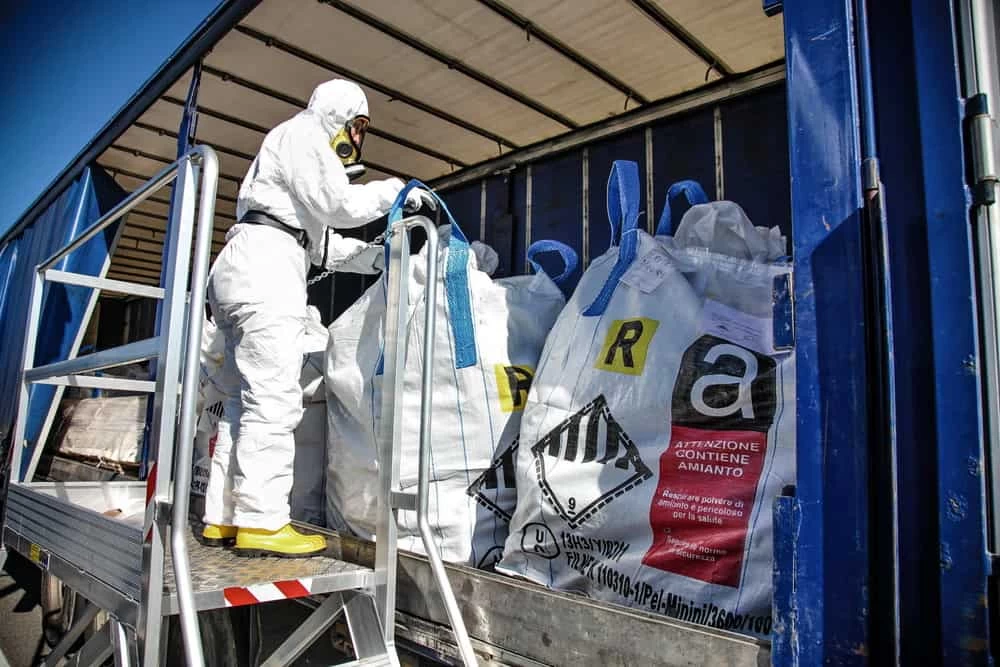
Asbestos waste is classified as a regulated hazardous material in New York State and can’t be disposed of in regular trash or at a standard municipal facility. Once materials are removed and sealed in approved containment bags, they have to be transported by a licensed waste hauler and disposed of at a facility permitted to accept asbestos under NYSDEC regulations specifically 6 NYCRR Parts 360 and 364.
This is part of the compliance chain that we handle end to end. When we complete a project in Babylon, the waste transport is documented and tracked, and that documentation becomes part of your project record. This matters if you’re ever asked to prove that the abatement was handled properly by a buyer, a lender, an insurance company, or a building department. It’s also why hiring a contractor who manages the full process, rather than just the physical removal, is worth the difference. Gaps in the documentation chain can create problems long after the job is done.
Does the Village of Babylon have any specific permit requirements related to asbestos abatement?
The Village of Babylon is an incorporated municipality with its own building department, which means local permit requirements can interact with your abatement project in ways that differ from unincorporated hamlets in the town. Any renovation that requires a building permit structural work, mechanical system changes, significant interior alterations will typically require the property owner to demonstrate that asbestos has been addressed in compliance with New York State DOL regulations before a certificate of occupancy is issued.
In practical terms, that means your abatement documentation the work plan, clearance air testing results, and waste disposal records may need to be submitted as part of the permitting process. If you’re planning a renovation in a pre-1970 home in Babylon Village and you haven’t had an asbestos inspection yet, it’s worth addressing that before you pull the permit, not after. Starting demolition without knowing what’s in the walls or floors can put your project on hold and create liability you didn’t anticipate. We’re familiar with how this plays out in the local permitting environment and can help you understand what documentation you’ll need before your contractor breaks ground.