If your Baldwin Place home was built before 1980, asbestos abatement isn’t a maybe it’s a conversation worth having before your next renovation or sale.
I needed a professional consultation explanation of procedure for safe removal of Asbestos in my apartment complex. Without having an account yet, I was very impressed with the caring, knowledgeable and generous advice offered by Jessica, and will look forward to doing business in the future. Thank you so much! I feel much more informed about a sometimes scary endeavor. Peace. Nancy Silva Mineola, NY.
Mia Munoz
Used this company to clean up some water flood in my house. They were fast and easy to work with.very professional, Would recommend to anyone!
Nini Valle
Great company, had a flood and they responded quickly and efficiently. Billed my insurance company directly. I highly recommend this company!
joe colapietro, jr
I had pipe freeze in my basement right before a snow storm and they made to within an hour to help start the clean up process. They we by our side throughout the entire process and even helped with the insurance company. They did such a great job with the cleanup, repair, remidiation, I contracted them to perform the repairs and finishes in the basement. They came with enough manpower and material to get the job done. Leo and Jessica were nothing but a pleasure to deal with!!
Cristian Arredondo c
I had some water damage in my home and Green Island was able to take care of my issue quickly and effectively. I am very pleased with the work they did. They responded quickly and were very professional.
Michael M
Outstanding service! From the office to the field crew everyone was friendly, helpful and responsive. I highly recommend Green Island Group.
Most homeowners in Baldwin Place don’t find out about asbestos because something went wrong. They find out mid-renovation when a contractor pulls up old vinyl floor tiles in a 1968 kitchen or cuts into pipe insulation in the basement. That moment of uncertainty is exactly what professional asbestos abatement is designed to resolve. Not just removal, but documentation that proves the space is safe for your family today and for any buyer or insurer down the road.
With median home values in ZIP 10505 approaching $900,000, the stakes of cutting corners aren’t abstract. A home that’s been remediated properly, with post-abatement air clearance results on file, is a home you can sell, renovate, or refinance without a disclosure problem hanging over it. That paper trail matters especially in a real estate market where buyers at this price point bring attorneys and inspectors who ask hard questions.
Baldwin Place sits entirely within the Croton Watershed the protected water supply system for New York City. Residents here already think carefully about what goes into the ground and the water. Proper asbestos disposal, through licensed facilities with documented chain of custody, isn’t just a regulatory requirement. It’s the standard this community expects.
We’ve been doing environmental remediation work across New York State for over 12 years. We hold a New York State Department of Labor Asbestos License the credential required under Industrial Code Rule 56 for any legal asbestos abatement in Westchester County. That license is verifiable. It’s not a membership badge or a marketing claim. It’s a state-issued credential with a number you can look up.
Beyond the license, we carry active certifications for lead, mold, and water and fire damage restoration under one roof. That matters for pre-1980 homes in northern Westchester like those throughout Baldwin Place, where asbestos rarely shows up alone. Our client roster includes the NYS Office of General Services, DASNY, and Nassau and Suffolk County governments institutional clients with compliance requirements that don’t leave room for shortcuts.
The same crews, the same protocols, and the same documentation standards we apply to a state government facility are applied to every residential job in Baldwin Place.
No Surprises Here's Exactly What the Process Looks Like
It starts with an inspection. A licensed inspector identifies any asbestos-containing materials in your home floor tiles, pipe insulation, popcorn ceilings, joint compound, roofing materials and documents what’s there, where it is, and whether it’s friable (meaning it can become airborne) or stable. That inspection report drives everything that follows.
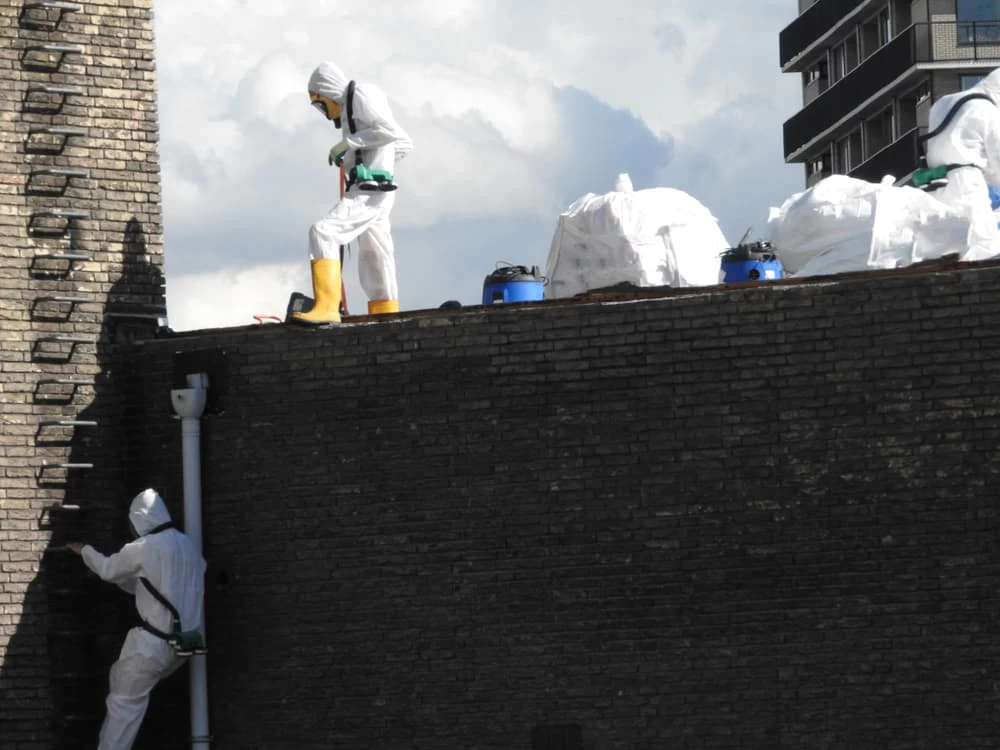
From there, we handle the permit coordination with the Town of Somers before any work begins. Once permits are in place, our abatement crew sets up full containment negative air pressure, sealed work zones, decontamination units at entry and exit points. All of this is required under NYS Industrial Code Rule 56, and it’s not optional. Materials are removed using wet methods to suppress fiber release, bagged, labeled, and transported to a licensed disposal facility. For a home in the Croton Watershed, that disposal chain is documented start to finish.
After removal, an independent licensed air monitoring contractor separate from our abatement crew conducts post-abatement air clearance testing. The space cannot be reoccupied until that test clears. Once it does, you receive the full compliance documentation package: inspection records, abatement logs, air clearance results, and disposal manifests. That’s the proof that the job was done right.
What's Covered and Why It Matters for Older Homes Here
The homes in Baldwin Place built in the 1950s, 1960s, and 1970s were constructed during the peak years of asbestos use in American residential building. Vinyl floor tiles and their adhesive backing are the most common discovery during kitchen and bathroom renovations. Spray-applied popcorn ceilings were standard through the 1970s. Pipe and boiler insulation in older heating systems, exterior siding panels, and the joint compound used in original drywall finishing are all materials that may contain asbestos and none of them are safe to disturb without proper containment.
We provide full-scope residential asbestos abatement: inspection, permit application with the Town of Somers, containment setup, licensed removal, regulated disposal, and coordination of independent post-abatement air clearance testing. Our work is performed under NYS DOL licensure, with full general liability and worker’s compensation insurance both certificates available before work begins. For Baldwin Place homeowners dealing with multiple hazards in an older home, we also hold USEPA Lead Certification and a NYS DOL Mold License, so if the inspection turns up more than asbestos, you’re not starting over with a different contractor.
The freeze-thaw cycle in northern Westchester accelerates deterioration in older building materials. Asbestos that was stable and non-friable a decade ago may not be today particularly in basements and crawl spaces where moisture from spring thaw and summer humidity does its work over time. If your Baldwin Place home hasn’t been inspected recently, that’s reason enough to schedule one before the next renovation season.
Does my Baldwin Place home actually need an asbestos inspection before renovation?
If your home was built before 1980, yes and in many cases, it’s not just a good idea, it’s legally required. Under New York State Industrial Code Rule 56, any renovation or demolition project that will disturb a regulated amount of asbestos-containing material requires a licensed inspection before work begins. The contractor performing the renovation is not the right person to make that call that determination has to come from a licensed asbestos inspector.
In Baldwin Place, where a significant portion of the housing stock dates to the 1950s through 1970s, this comes up constantly during kitchen renovations, bathroom remodels, and basement finishing projects. The most common surprise is vinyl floor tile it looks like ordinary old flooring until a lab test confirms it contains asbestos. The cost of an inspection is minor compared to the cost of discovering asbestos mid-project, stopping work, and bringing in an abatement contractor on an unplanned timeline.
How much does asbestos removal typically cost for a home in Westchester County?
The national average for asbestos removal runs around $2,200, with most residential jobs falling somewhere between $500 and $6,000 depending on the type of material, how much of it there is, and whether it’s friable or non-friable. Friable asbestos material that crumbles easily and releases fibers into the air requires more intensive containment and is generally more expensive to remove than intact, non-friable material.
For a Baldwin Place home at the higher end of the Westchester market, the more relevant question is usually not “how much does this cost” but “what does this documentation do for my home’s value.” A properly remediated home with post-abatement air clearance records on file is a cleaner asset to sell, insure, and refinance than one with an open question about hazardous materials. At median home values near $900,000 in ZIP 10505, the cost of abatement is a small fraction of what’s at stake if it’s handled improperly or not at all.
What materials in a 1960s or 1970s Baldwin Place home are most likely to contain asbestos?
The short list: vinyl floor tiles and the black mastic adhesive underneath them, spray-applied popcorn or textured ceilings, pipe and boiler insulation (especially on older steam heating systems), exterior siding panels sometimes called transite or cement-asbestos board, roofing felt and shingles, and the joint compound used in original drywall installations. Any of these can be present in a home built during that era, and some may contain asbestos even if they look perfectly intact.
The important distinction is between friable and non-friable asbestos. Floor tiles that are undamaged and uncut are generally considered non-friable meaning fibers aren’t being released into the air. But the moment you start demolition, drilling, sanding, or cutting, that changes. The freeze-thaw cycles common to northern Westchester also degrade older materials over time, which means basement pipe insulation or ceiling tiles that were stable years ago may have deteriorated to the point where they’re releasing fibers without any disturbance at all.
Do I need a permit for asbestos abatement work in Somers, NY?
Yes, on two levels. The Town of Somers requires a building permit for any work involving the removal or demolition of building materials so if you’re renovating a space where asbestos is present, that permit requirement applies. Separately, New York State Industrial Code Rule 56 requires that asbestos abatement projects be performed by a licensed contractor and that the project follow specific protocols including containment, wet-method removal, and post-abatement air clearance testing.
What this means practically is that you can’t just hire a general contractor to pull out old floor tiles or rip down a popcorn ceiling in a pre-1980 Baldwin Place home without going through the proper channels. The permit process and the NYS DOL requirements are separate but both apply. We handle the permit application with the Town of Somers as part of the project you don’t have to figure out who to call or what forms to file.
Can asbestos abatement be done while my family is still living in the house?
It depends on where the asbestos is and how much work is involved. For smaller, contained projects a section of floor tile in one room, or a limited area of pipe insulation it’s often possible to isolate the work area with proper containment while the rest of the house remains occupied. The containment setup under NYS Rule 56 creates a sealed negative-pressure environment that keeps fibers from migrating to other parts of the home.
For larger projects full-floor tile removal, extensive pipe insulation, or anything involving the HVAC system temporary relocation is usually the safer and more practical choice. We’ll walk you through what’s realistic during the inspection phase, before any work is scheduled. Given that most Baldwin Place residents are commuting out on the Taconic or heading into Westchester for work each day, the timeline and logistics can often be structured to minimize how much your routine is actually disrupted.
What happens after asbestos is removed how do I know the space is actually safe?
The abatement itself isn’t the final step air clearance testing is. After removal is complete and the work area has been cleaned, an independent licensed air monitoring contractor conducts post-abatement clearance testing. This is a separate party from our abatement crew, which is intentional it removes any conflict of interest from the verification process. The air samples are analyzed against OSHA and NIOSH clearance standards, and the space cannot be reoccupied until those results come back clean.
Once clearance is confirmed, you receive a complete documentation package: the original inspection report, abatement logs, air clearance results, and disposal manifests showing where the material went and how it was handled. For a Baldwin Place homeowner, that package is worth keeping. It’s what your real estate attorney will want if you sell, what your insurance carrier may ask for if a claim arises, and what protects you legally if any questions come up down the road. The job isn’t done until that paperwork is in your hands.