Baxter Estates Homes Were Built With It — We Remove It Safely
Most homes in Baxter Estates were built before asbestos was banned. If yours is one of them, you need a licensed contractor who knows exactly where it hides — and how to remove it legally.
I needed a professional consultation explanation of procedure for safe removal of Asbestos in my apartment complex. Without having an account yet, I was very impressed with the caring, knowledgeable and generous advice offered by Jessica, and will look forward to doing business in the future. Thank you so much! I feel much more informed about a sometimes scary endeavor. Peace. Nancy Silva Mineola, NY.
Mia Munoz
Used this company to clean up some water flood in my house. They were fast and easy to work with.very professional, Would recommend to anyone!
Nini Valle
Great company, had a flood and they responded quickly and efficiently. Billed my insurance company directly. I highly recommend this company!
joe colapietro, jr
I had pipe freeze in my basement right before a snow storm and they made to within an hour to help start the clean up process. They we by our side throughout the entire process and even helped with the insurance company. They did such a great job with the cleanup, repair, remidiation, I contracted them to perform the repairs and finishes in the basement. They came with enough manpower and material to get the job done. Leo and Jessica were nothing but a pleasure to deal with!!
Cristian Arredondo c
I had some water damage in my home and Green Island was able to take care of my issue quickly and effectively. I am very pleased with the work they did. They responded quickly and were very professional.
Michael M
Outstanding service! From the office to the field crew everyone was friendly, helpful and responsive. I highly recommend Green Island Group.
You stop wondering. That’s the first thing. Once a certified inspector has surveyed your home, the abatement is done properly, and you have clearance air monitoring results in hand — the uncertainty that was sitting in the back of your mind goes away. You’re not guessing whether those floor tiles are safe to disturb. You’re not hoping the popcorn ceiling in the upstairs bedroom isn’t a problem. You know.
For Baxter Estates homeowners specifically, that documentation matters beyond peace of mind. When homes in this village come to market — and they rarely do, given how long most residents stay — buyers’ attorneys look hard at pre-1980 construction. Undisclosed asbestos stops sales. Certified abatement records keep them moving. If you’ve been in your home since the 1970s or 1980s and you’re starting to think about what comes next, getting this handled now is one of the smarter moves you can make.
There’s also the renovation angle. A lot of Baxter Estates homes are mid-century originals — Cape Cods, Colonials, Tudors — that haven’t been fully updated. The moment a contractor opens a wall, pulls up a kitchen floor, or touches old pipe insulation near the boiler, they can disturb materials that were stable for decades. Coastal humidity and the freeze-thaw cycles Long Island sees every winter accelerate the breakdown of those materials over time. Getting ahead of it, before the renovation starts, is always easier than stopping a job mid-project.
We Know Baxter Estates Homes — And We Know Nassau County's Rules
We’re a licensed asbestos abatement contractor serving Nassau County, including the North Shore villages of the Cow Neck Peninsula like Baxter Estates. We hold the New York State Department of Labor certifications required under Article 32 and Industrial Code Rule 56 — the credentials the law requires, not optional credentials we added to a website.
What separates working in Baxter Estates from working in a newer community is the housing stock. The majority of homes here were built between 1940 and 1969, and some go back to 1913. That means asbestos-containing materials aren’t a remote possibility — they’re a near-certainty somewhere in the structure. We know where to look in mid-century North Shore homes because we’ve been doing this work in Nassau County long enough to recognize the patterns: the 9×9 vinyl tiles in the basement, the pipe wrap near the boiler, the textured ceiling that nobody’s touched since 1974.
Nassau County also adds its own layer of requirements on top of state law through the EHRP program. We work within that framework every day. Your permits close cleanly because we handle the paperwork correctly the first time.
No Surprises — Here's Exactly How the Work Gets Done
It starts with a certified asbestos survey. Before anything gets removed, a licensed inspector walks the property and identifies suspect materials — floors, ceilings, pipe insulation, roofing, siding, joint compound, wherever the age of the home suggests they might be. In Baxter Estates, that list is usually longer than homeowners expect, because mid-century construction used asbestos across multiple systems, not just one. The survey gives you a clear picture of what’s there, what’s stable, and what needs to come out.
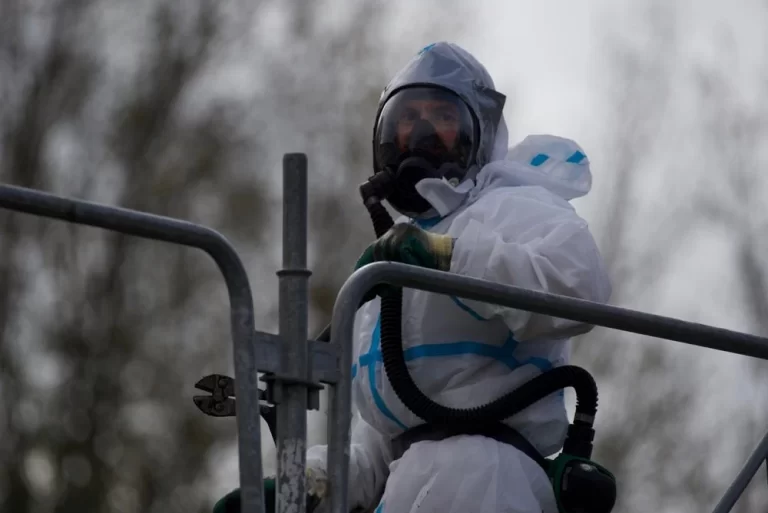
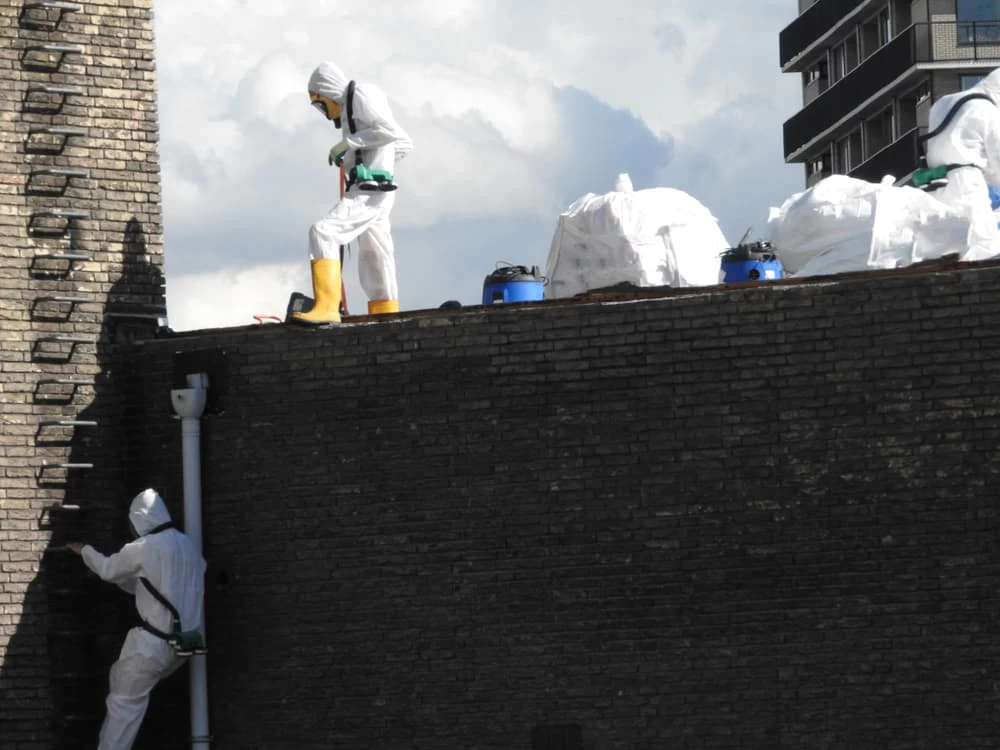
From there, we file the required notification with the New York State Department of Labor — that’s not optional under NYS Industrial Code Rule 56, and any contractor skipping that step is putting you at risk, not just themselves. Containment goes up, negative air pressure is established, and the abatement work begins. Every material removed is double-bagged, labeled, and transported to a licensed disposal facility. Nothing gets cut short on the back end because that’s where compliance problems tend to show up.
When the work is done, independent clearance air monitoring confirms the space is safe before containment comes down. You receive the complete documentation package: the survey report, the project notification, the abatement records, the disposal manifests, and the clearance results. That’s what your building permit requires, and that’s what a future buyer’s attorney is going to ask for. We make sure it’s all there.
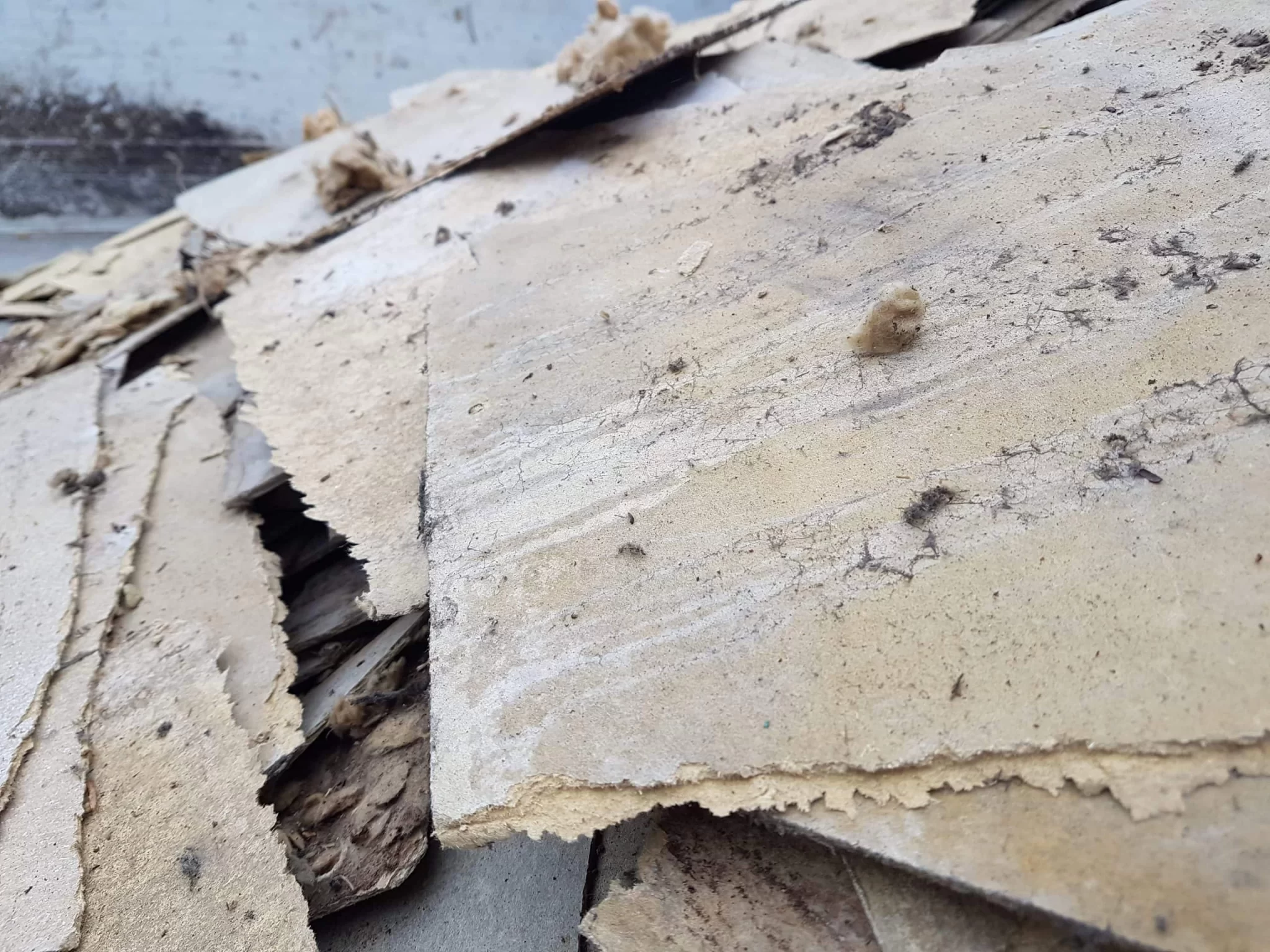
Asbestos abatement in a pre-1980 Baxter Estates home isn’t usually a single-material job. The 9×9 and 12×12 vinyl floor tiles common in mid-century kitchens and basements throughout the village are one of the most frequent starting points — homeowners discover them when they pull up carpet or start a kitchen renovation. Popcorn ceiling removal is another. Spray-applied textured ceilings from the 1960s and 1970s almost always contain chrysotile asbestos, and scraping them without testing first is both a health risk and a legal violation in New York State.
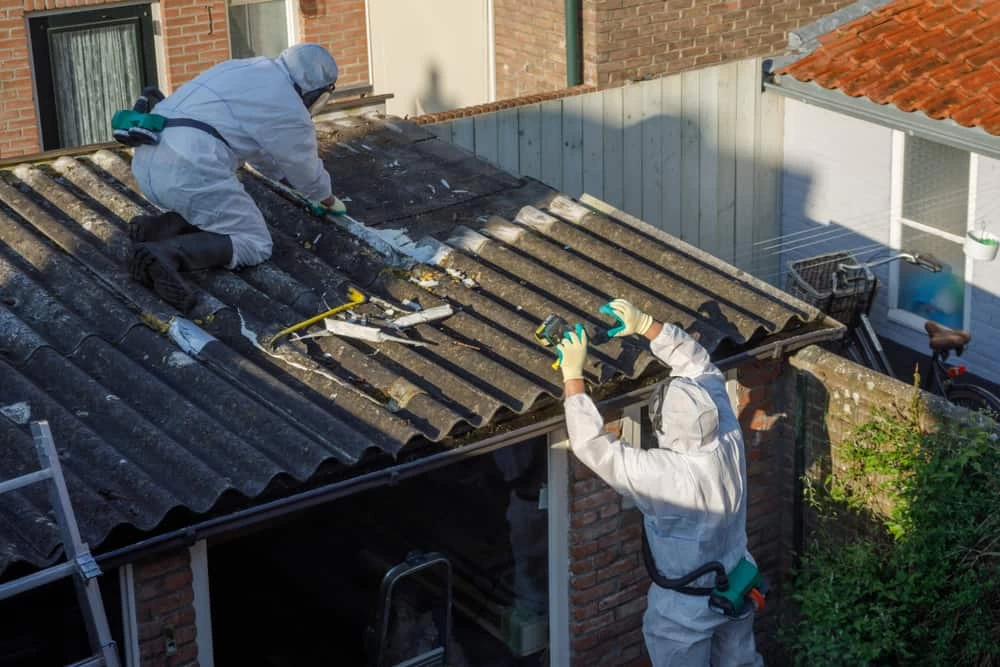
Pipe and boiler insulation is where things get more urgent. Older heating systems in homes from this era were routinely wrapped in asbestos insulation, and when that material starts to deteriorate — which coastal humidity and age accelerate — it becomes friable and can release fibers into living spaces. We handle pipe wrap removal, boiler insulation, asbestos-cement siding and roofing, plaster and joint compound, and window glazing compounds. If the material is suspect and the home is pre-1980, it gets tested before anyone disturbs it.
For homeowners in Baxter Estates dealing with storm damage — a nor’easter that takes out part of a roof, or water intrusion that compromises old insulation — we also respond to those scenarios. Repair work on a pre-1980 home requires asbestos assessment before the repair contractor starts. We help you get that done quickly so the rest of the project doesn’t stall.
Does my Baxter Estates home actually need asbestos testing before I renovate?
If your home was built before 1980, New York State law requires an asbestos survey before any renovation or demolition that will disturb suspect materials. This isn’t a recommendation — it’s a legal requirement under NYS Industrial Code Rule 56 and Article 32. The Town of North Hempstead, which governs Baxter Estates, requires asbestos assessment documentation before issuing building permits for work on pre-1980 structures.
Given that most homes in Baxter Estates were built between 1940 and 1969, this applies to the majority of properties in the village. The survey doesn’t have to be a lengthy process — a certified inspector walks the home, identifies suspect materials in the areas being disturbed, and gives you a clear report. If nothing regulated is found, you proceed. If something is found, you know exactly what you’re dealing with before your contractor accidentally disturbs it.
How much does asbestos abatement typically cost for a Nassau County home?
The honest answer is that it depends on what’s there and how much of it needs to come out. A single-material job — say, asbestos floor tile removal in one room — will cost significantly less than a whole-home abatement that includes pipe insulation, popcorn ceilings, and roofing. Testing and inspection typically run between $250 and $850 depending on the size of the home and the number of samples collected. Abatement costs vary from a few thousand dollars for a limited scope to significantly more for larger or more complex projects.
What’s worth keeping in mind for Baxter Estates specifically is the property value context. Homes in this village — particularly those with waterfront or near-waterfront exposure on Manhasset Bay — carry significant value. The cost of certified abatement is a fraction of what an undisclosed asbestos issue can do to a sale price or a deal timeline. Buyers in this market are sophisticated, and their inspectors are thorough. Getting it handled with proper documentation is an investment that protects what you’ve built here.
What's the difference between asbestos encapsulation and full removal in New York?
Encapsulation means sealing the asbestos-containing material so it can’t release fibers — it stays in place but is coated or covered to prevent disturbance. Full removal means the material is physically taken out, bagged, and disposed of at a licensed facility. Both are regulated under NYS Industrial Code Rule 56, and both require licensed contractors and proper notification to the NYS Department of Labor.
Which approach makes sense depends on the condition of the material and what you’re planning to do with the space. If the material is stable and the area isn’t being renovated, encapsulation can be a legitimate option. If you’re renovating, selling, or the material is already deteriorating — which is more common in Baxter Estates homes that have been through decades of coastal humidity and temperature cycling — full removal is usually the cleaner long-term answer. It also produces documentation that’s easier to work with in a future real estate transaction, because there’s no ongoing management obligation attached to it.
How long does asbestos abatement take, and will I need to leave my home?
For most residential jobs, abatement takes anywhere from one day to a few days depending on the scope. A limited project — one room, one material type — can often be completed in a single day. Larger projects involving multiple materials across several areas of the home will take longer. The timeline also includes the clearance air monitoring phase at the end, which needs to confirm the space is clean before containment comes down and the area is released for reoccupancy.
Whether you need to leave depends on where the work is being done and how the containment is set up. For work in occupied living spaces, temporary relocation during the abatement period is standard practice and is something we walk through with you before the project starts. For work confined to a basement, attic, or crawl space with proper containment, it may not be necessary. Every situation is a little different, and we give you a clear picture of what to expect before any work begins — not after.
Can I remove asbestos floor tiles myself in my Baxter Estates home?
No — not legally, and not safely. New York State law requires that asbestos abatement work be performed by a licensed contractor certified under NYS Article 32. DIY removal of asbestos-containing materials is a violation of state law regardless of the quantity involved, and it carries real legal and financial consequences. Beyond the legal issue, disturbing asbestos floor tiles without proper containment and air monitoring creates a genuine inhalation risk — not just for you, but for anyone else in the home.
The 9×9 and 12×12 vinyl asbestos tiles found in many Baxter Estates homes from the 1940s through the 1970s are considered a regulated material under New York State law once confirmed by testing. Even if the tiles appear intact, the adhesive beneath them — often called “black mastic” — frequently contains asbestos as well and becomes friable when disturbed. A licensed contractor handles both the tiles and the mastic under proper containment, disposes of the waste correctly, and provides the clearance documentation your permit requires.
Does asbestos abatement need to be disclosed when selling a home in Baxter Estates?
New York State’s property disclosure law requires sellers to disclose known environmental hazards, and asbestos is on that list. If you know asbestos-containing materials are present in the home, that information belongs in the disclosure. What changes the conversation is whether the abatement has been completed and documented — because a home with a clean certified abatement record is a very different transaction than one with a known, unaddressed hazard.
In Baxter Estates, where homes are deeply held and buyers tend to be educated, well-represented, and thorough, this matters more than in higher-turnover markets. Buyers’ attorneys in this area review pre-1980 construction carefully. A complete documentation package — survey report, NYS DOL project notification, abatement completion records, disposal manifests, and clearance air monitoring results — answers their questions before they become contingencies. Homeowners who handle abatement before listing typically move through the sale process more cleanly than those who leave it for the buyer to negotiate around.