If your Bay Park home was built before 1980, there’s a real chance asbestos is somewhere inside it — and a renovation, a flood repair, or even a heating system upgrade could disturb it. We handle licensed asbestos abatement on the South Shore, so you know exactly what you’re dealing with before anything gets torn out.
I needed a professional consultation explanation of procedure for safe removal of Asbestos in my apartment complex. Without having an account yet, I was very impressed with the caring, knowledgeable and generous advice offered by Jessica, and will look forward to doing business in the future. Thank you so much! I feel much more informed about a sometimes scary endeavor. Peace. Nancy Silva Mineola, NY.
Mia Munoz
Used this company to clean up some water flood in my house. They were fast and easy to work with.very professional, Would recommend to anyone!
Nini Valle
Great company, had a flood and they responded quickly and efficiently. Billed my insurance company directly. I highly recommend this company!
joe colapietro, jr
I had pipe freeze in my basement right before a snow storm and they made to within an hour to help start the clean up process. They we by our side throughout the entire process and even helped with the insurance company. They did such a great job with the cleanup, repair, remidiation, I contracted them to perform the repairs and finishes in the basement. They came with enough manpower and material to get the job done. Leo and Jessica were nothing but a pleasure to deal with!!
Cristian Arredondo c
I had some water damage in my home and Green Island was able to take care of my issue quickly and effectively. I am very pleased with the work they did. They responded quickly and were very professional.
Michael M
Outstanding service! From the office to the field crew everyone was friendly, helpful and responsive. I highly recommend Green Island Group.
Bay Park’s housing stock is dominated by prewar bungalows, Cape Cods, and ranch-style homes built right through the 1950s — exactly the era when asbestos was woven into floor tiles, ceiling texture, pipe insulation, and roofing materials as a matter of standard practice. When those materials get disturbed during a renovation or a post-flood gut job, the risk isn’t theoretical. It’s real, it’s regulated, and it needs to be handled correctly.
Once abatement is done right, you’re not just clearing a health risk — you’re clearing a legal one. In New York State, disturbing asbestos-containing materials without a licensed contractor on-site is a violation of Industrial Code Rule 56, and Nassau County adds its own layer of environmental health requirements on top of that. A documented, compliant abatement means your renovation can move forward, your home sale won’t get derailed, and you’re not sitting on a liability.
For Bay Park homeowners specifically, this matters in a way it doesn’t for every Nassau County community. Sandy flooded a significant number of homes here, and many were raised off their foundations during the recovery — a process that disturbs building materials in ways that trigger mandatory asbestos assessment. Even now, heavy rainstorms push water into basements and crawl spaces in this neighborhood. Every one of those events in a pre-1980 home is a potential asbestos trigger. Getting it handled once, correctly, with proper clearance documentation, is what actually puts the issue behind you.
We Know Bay Park's Housing Stock — and Its Regulations
We’re a licensed asbestos abatement contractor serving Nassau County, and Bay Park is explicitly part of our service area — not an afterthought tacked onto a radius map. We hold valid New York State Department of Labor asbestos contractor licenses as required under Industrial Code Rule 56, and every technician on a job carries individual worker certification. That’s not a marketing point — it’s the legal minimum required to do this work, and it’s verifiable.
What sets us apart in a community like Bay Park isn’t just licensing. It’s familiarity. We understand the housing stock along the South Shore — the 9×9 vinyl floor tiles in older kitchens, the textured ceilings in 1950s living rooms, the pipe wrap around steam heat systems in homes that have never had a mechanical upgrade. That’s the kind of working knowledge that changes how a job gets assessed and how it gets done.
We also know Nassau County’s regulatory environment — Town of Hempstead permit requirements, county-level EHRP notification rules, and NYSDEC disposal mandates. You won’t be explaining the local process to us.
No Guesswork — Here's What the Process Actually Looks Like
It starts with an inspection. Before anything is touched, a certified inspector assesses your home and takes bulk samples of suspected materials — floor tiles, ceiling texture, pipe insulation, whatever’s relevant to your project. Those samples go to an accredited lab. You get results that tell you exactly what you’re dealing with, not a guess based on the age of the house.
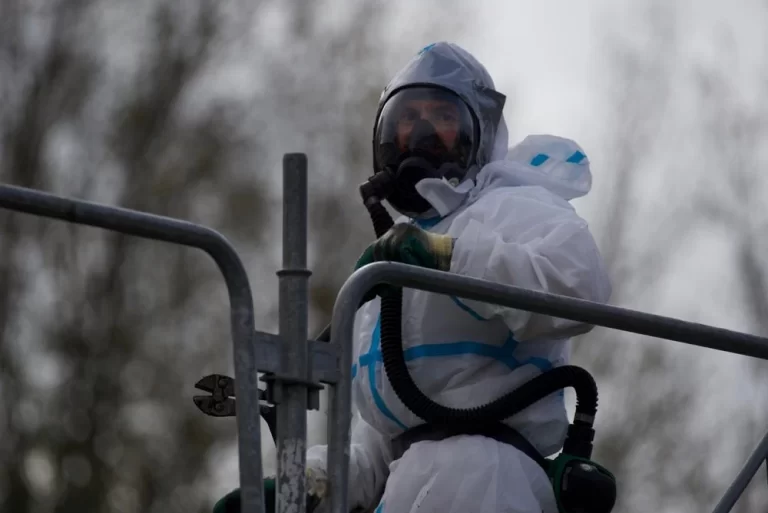
If asbestos is confirmed, the abatement scope gets defined based on what’s there and what’s being disturbed. In Bay Park, that often means working in older mechanical spaces with original pipe insulation, or in basements and kitchens where vintage floor tiles were installed with asbestos-containing adhesive. Containment goes up, negative air pressure is established, and the material is removed by certified workers following New York State Industrial Code Rule 56 protocols. Nassau County’s EHRP notification requirements are handled as part of the process — that’s not something you need to chase down on your own.
After removal, air monitoring confirms fiber levels are within clearance standards. You get a documented clearance report — the paperwork that satisfies a building inspector, a real estate attorney, or an insurance adjuster. From there, your renovation, your sale, or your repair can move forward without the asbestos question hanging over it.
We handle the complete range of asbestos abatement services relevant to Bay Park’s housing stock. Asbestos tile removal is one of the most common requests in this neighborhood — those 9×9 floor tiles installed in kitchens, bathrooms, and basements from the 1930s through the 1960s were manufactured with asbestos fibers and bonded with asbestos-containing mastic. Disturbing them during a renovation without proper containment releases fibers. Our removal process keeps that contained from start to finish.
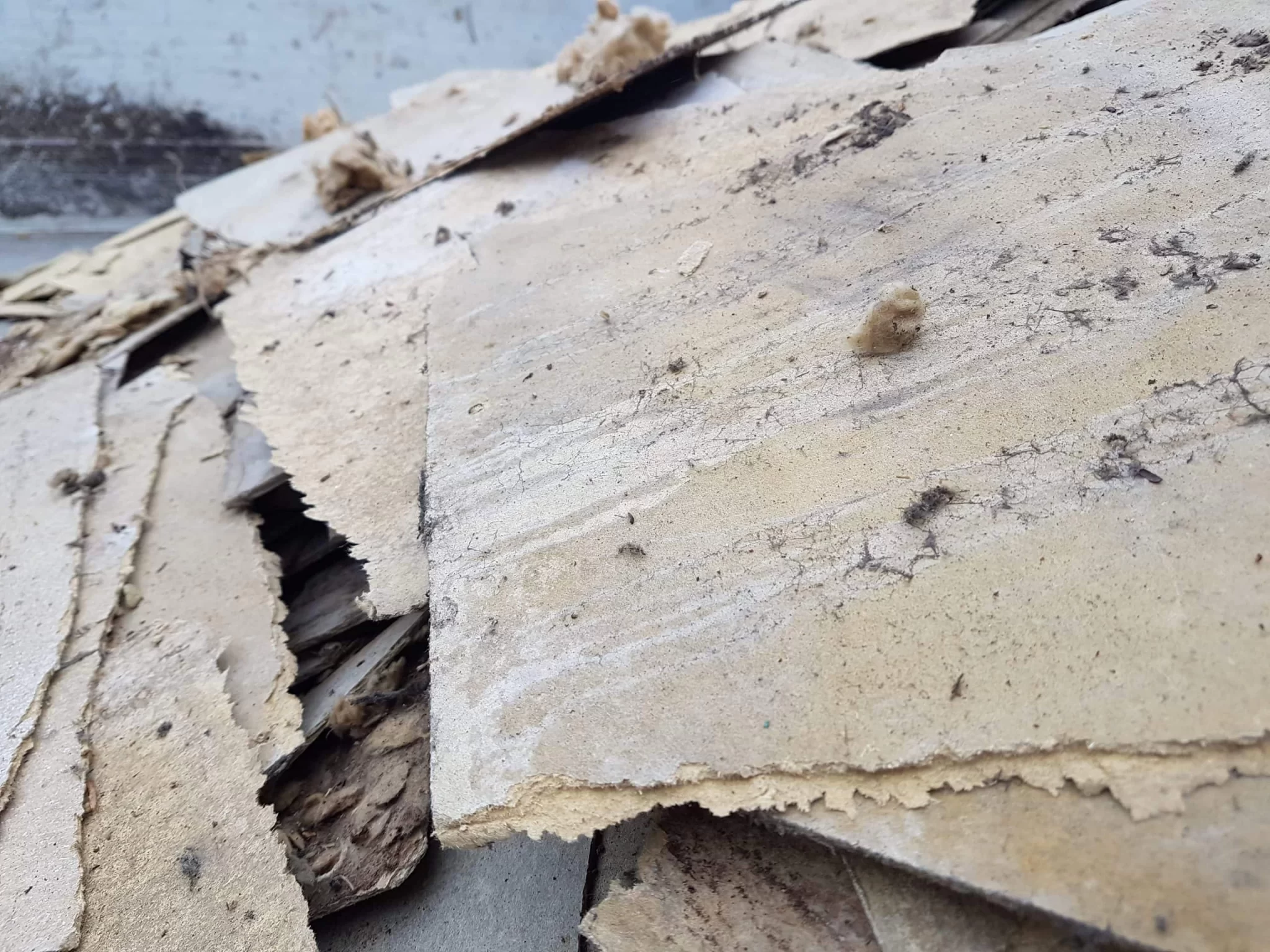
Asbestos popcorn ceiling removal is another frequent need in Bay Park’s older Cape Cods and bungalows. Spray-applied textured ceiling coatings were standard through the late 1970s, and many of them contained asbestos. Before you sand, scrape, or skim coat over them, they need to be tested — and if asbestos is present, removed by a licensed contractor under proper containment conditions.
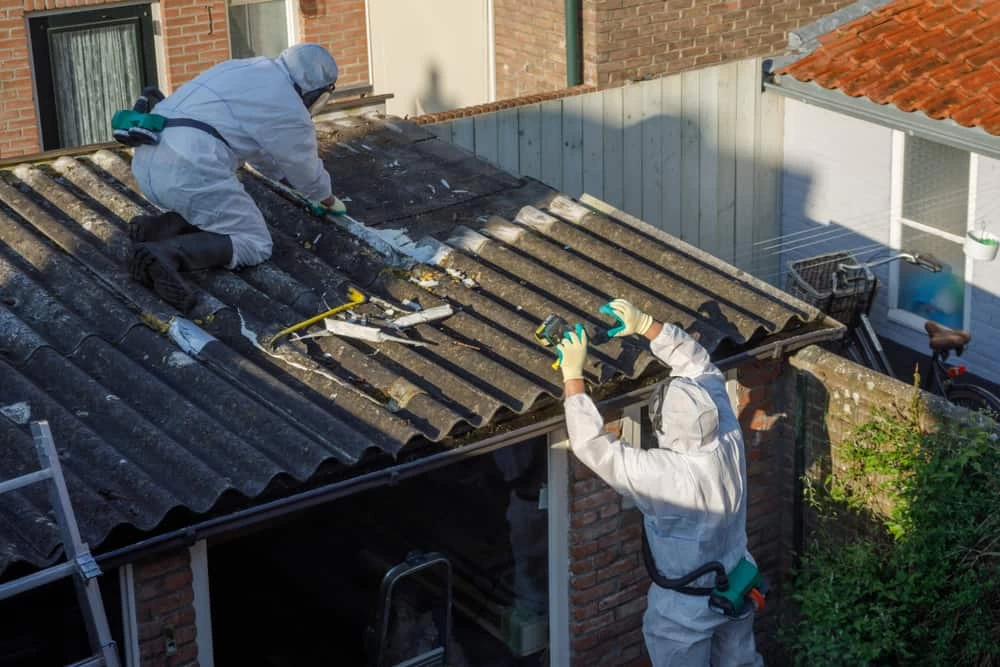
Beyond tiles and ceilings, we handle pipe and boiler insulation removal for homes with original steam heat systems, asbestos-cement roofing and siding assessment, and post-flood abatement for homes that have experienced water intrusion into older building materials. Every project ends with air clearance testing and full documentation — the kind that holds up when a buyer’s attorney, a building inspector, or an insurance carrier asks for proof that the work was done right.
Is asbestos actually common in Bay Park homes, or is this overstated?
It’s not overstated — it’s a straightforward function of when most Bay Park homes were built. The hamlet’s residential stock is heavily concentrated in the prewar era through the 1950s, and asbestos was used pervasively in American residential construction during that entire period. Floor tiles, ceiling texture, pipe insulation, roofing shingles, drywall joint compound, and boiler wrap all commonly contained asbestos in homes built before 1980.
The more relevant question is where it is in your specific home and whether it’s in a condition that poses a risk. Asbestos that’s intact and undisturbed is generally not an immediate hazard. The problem comes when it gets disturbed — during a renovation, a flood repair, a heating system replacement, or any project that cuts into, sands, or removes older building materials. In Bay Park, where a significant number of homes were gutted and rebuilt after Hurricane Sandy, and where ongoing flooding continues to send water into basements and crawl spaces, the likelihood of encountering asbestos during home repairs is genuinely higher than in communities with newer housing stock.
Can I legally remove asbestos myself in New York State?
No. New York State Industrial Code Rule 56 prohibits unlicensed individuals from removing, encapsulating, or disturbing regulated asbestos-containing materials. This isn’t a technicality — it’s an enforceable regulation with real penalties. Violations can run into tens of thousands of dollars, and that’s before you factor in the health liability of improper removal.
Nassau County adds another layer through its own environmental health regulations, which require certified supervisor oversight and project notification for friable material removal. The Town of Hempstead, which governs Bay Park, issues renovation and demolition permits that require compliance documentation when suspected asbestos-containing materials are involved. The bottom line is that in this regulatory environment, DIY asbestos removal isn’t just dangerous — it creates legal exposure that follows the property. If you sell your Bay Park home and it comes out that asbestos was removed without proper documentation, that’s a problem for the transaction and potentially for you personally.
How does asbestos abatement work when a home was flooded or water-damaged?
Post-flood abatement follows the same licensed process as any other project, but the conditions are more complex. When building materials have been saturated or partially damaged by water, some asbestos-containing products that were previously intact can become friable — meaning they crumble and release fibers more readily. That changes how they need to be handled and how the containment is set up.
For Bay Park specifically, this is a real and recurring scenario. The neighborhood experienced significant flooding during Hurricane Sandy, and many homes were gutted for reconstruction — a process that required asbestos surveys before demolition could legally begin. But Sandy wasn’t a one-time event for this community. Bay Park continues to flood in heavy rainstorms, and every time water gets into a basement or crawl space in a pre-1980 home and homeowners start pulling out damaged materials, there’s potential asbestos exposure. The process for post-flood abatement involves assessing the condition of materials in the damaged area, establishing proper containment, removing confirmed asbestos under certified supervision, and conducting air clearance before reconstruction begins. If you’re working with an insurance claim, the clearance documentation is also what your adjuster will need.
What does asbestos abatement actually cost in Nassau County?
The honest answer is that cost depends on what’s there and how much of it needs to be removed. A small, contained asbestos tile removal in a single room will cost significantly less than a whole-house abatement involving pipe insulation, ceiling texture, and floor tiles across multiple areas. For a straightforward single-material removal in a Bay Park home — say, asbestos floor tile in a kitchen or basement — you’re generally looking at a range that reflects the square footage involved, the disposal requirements, and the air clearance testing that follows.
What you should be cautious of is a quote that seems unusually low without a clear explanation of what’s included. Asbestos abatement in New York State requires licensed contractors, certified workers, proper containment, NYSDEC-compliant waste disposal, and air clearance testing. If a quote doesn’t account for all of those components, something is being left out — and that gap tends to show up later as an additional charge or, worse, as a compliance problem. Get itemized quotes, confirm the contractor’s NYS DOL license number, and make sure clearance documentation is included in what you’re paying for.
Do I need asbestos testing before removing a popcorn ceiling in my Bay Park home?
Yes — if your home was built before 1978, testing is strongly recommended before any popcorn ceiling removal, and in many renovation scenarios it’s effectively required. Spray-applied textured ceiling coatings were manufactured with asbestos through the late 1970s, and the only way to know whether yours contains it is to have a sample tested by an accredited laboratory.
The risk of skipping the test isn’t just regulatory. Sanding or scraping a popcorn ceiling that contains asbestos releases fibers into the air throughout your home. In a Bay Park Cape Cod or bungalow where the ceiling texture may have been original to the 1950s or 1960s construction, that’s a meaningful exposure risk for anyone in the house. The testing process is straightforward — a certified inspector takes a small bulk sample, it goes to an accredited lab, and you get results within a few days. If asbestos is present, removal proceeds under proper containment. If it’s not, your contractor can proceed with the renovation without restriction. Either way, you know what you’re working with before anyone picks up a scraper.
How do I know if a contractor is actually licensed for asbestos abatement in New York?
The New York State Department of Labor maintains a public listing of licensed asbestos contractors that you can check directly on their website. Every licensed contractor has an assigned license number, and you can verify that the license is current and in good standing before signing anything. This takes about two minutes and is worth doing — especially in a market like Nassau County where the regulatory requirements are strict and the consequences of hiring an unlicensed operator fall on the property owner, not just the contractor.
Beyond the state license, look for individual worker certifications. Under Industrial Code Rule 56, it’s not enough for the company to be licensed — the workers performing the abatement must hold their own certifications, and a certified supervisor must be on-site during regulated work. Ask for documentation of both before work begins. For Bay Park homeowners specifically, also confirm that the contractor is familiar with Nassau County’s EHRP project notification requirements and Town of Hempstead permit processes — these are county and municipal layers that sit on top of state requirements, and a contractor who isn’t aware of them can create compliance gaps that become your problem after the job is done.