I needed a professional consultation explanation of procedure for safe removal of Asbestos in my apartment complex. Without having an account yet, I was very impressed with the caring, knowledgeable and generous advice offered by Jessica, and will look forward to doing business in the future. Thank you so much! I feel much more informed about a sometimes scary endeavor. Peace. Nancy Silva Mineola, NY.
Mia Munoz
Used this company to clean up some water flood in my house. They were fast and easy to work with.very professional, Would recommend to anyone!
Nini Valle
Great company, had a flood and they responded quickly and efficiently. Billed my insurance company directly. I highly recommend this company!
joe colapietro, jr
I had pipe freeze in my basement right before a snow storm and they made to within an hour to help start the clean up process. They we by our side throughout the entire process and even helped with the insurance company. They did such a great job with the cleanup, repair, remidiation, I contracted them to perform the repairs and finishes in the basement. They came with enough manpower and material to get the job done. Leo and Jessica were nothing but a pleasure to deal with!!
Cristian Arredondo c
I had some water damage in my home and Green Island was able to take care of my issue quickly and effectively. I am very pleased with the work they did. They responded quickly and were very professional.
Michael M
Outstanding service! From the office to the field crew everyone was friendly, helpful and responsive. I highly recommend Green Island Group.
Most Bay Terrace residents don’t think about asbestos until a renovation stops them in their tracks. A contractor opens a wall, pulls up a floor tile, or disturbs a ceiling and suddenly the whole project is on hold. That pause is actually a good thing, because what happens next determines whether your home is safe, your co-op board stays satisfied, and your investment holds its value.
Bay Terrace’s housing stock was built almost entirely between the early 1950s and late 1960s the Cord Meyer cooperative buildings starting in 1952, the shopping center in 1958, and the Towers at Water’s Edge in the late 1960s. That means virtually every building in this neighborhood falls within the window when asbestos was used in floor tiles, pipe insulation, boiler wrapping, ceiling texture, and joint compound as a matter of routine. When you renovate, sell, or respond to water damage in a building like this, asbestos isn’t a remote possibility it’s a real probability that needs a real answer.
When we handle abatement properly, you get more than a cleared space. You get a post-removal air clearance certificate your co-op board will actually accept, documentation your real estate attorney can use at closing, and the confidence that no one in your home is breathing something they shouldn’t. In a neighborhood where median home values are pushing $700,000 and co-op boards require certified documentation before any work is authorized, cutting corners isn’t just a health risk it’s a financial one.
We’re a full-service environmental remediation and restoration contractor serving all five New York City boroughs, Long Island, and the surrounding area. We hold NYS DOL Asbestos licensing, NYC General Contractor licensing, USEPA Lead and RRP certifications, IICRC certification for water and fire damage, and NYC MBE, WBE, and MWBE certifications every credential required to work legally and completely in a New York City cooperative apartment building.
Bay Terrace is a named service area on our Queens County coverage, which means this isn’t a generic regional claim. We’ve worked in northeastern Queens, we understand how co-op boards in buildings like the Bay Terrace Cooperative sections operate, and we know what NYC DEP requires before, during, and after an abatement project. That familiarity matters when your board is waiting on documentation before they’ll authorize a single hour of work.
Beyond credentials, what sets us apart is the full-service scope. We don’t hand the job off after the asbestos is gone we handle inspection, abatement, post-removal air clearance verification, and reconstruction under one roof. One contractor. One timeline. One approval process with your building management.
It starts with an inspection. A certified asbestos investigator surveys the materials in question floor tiles, ceiling texture, pipe insulation, boiler wrap, drywall compound and takes samples for laboratory testing. In Bay Terrace’s pre-1980 buildings, this step isn’t optional. NYC DEP regulations require an asbestos survey before any renovation or demolition work begins on a pre-1987 building, and the NYC Department of Buildings won’t issue a renovation permit without it.
Once testing confirms the presence of asbestos-containing materials, we file with NYC DEP through the Asbestos Reporting and Tracking System at least seven days before work begins, as required by city regulation. This filing is what your co-op board needs to see before they authorize contractor access. It’s also what protects you as a property owner if questions ever come up later.
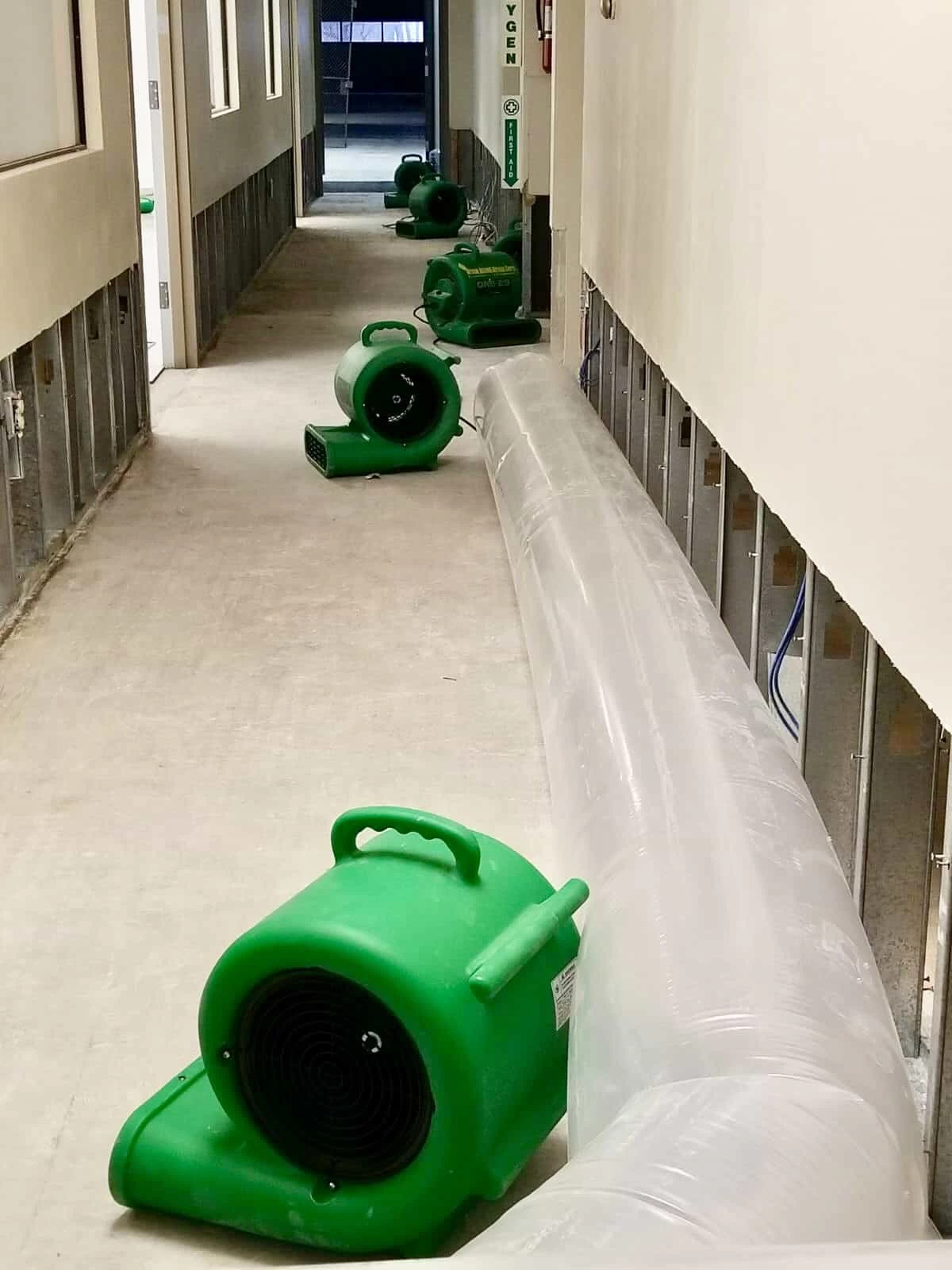
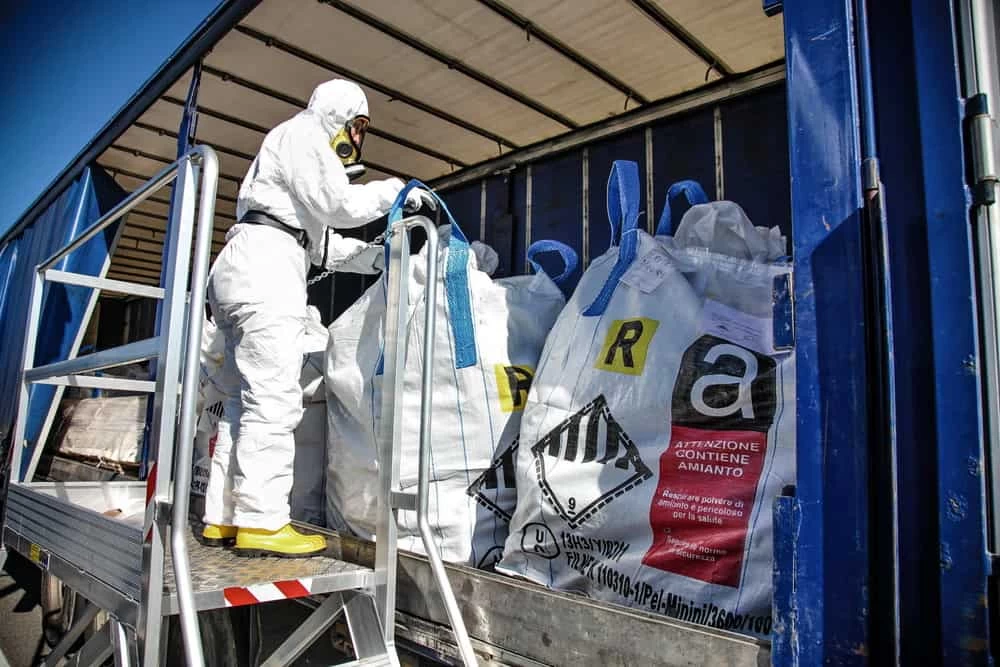
During abatement, the work area is fully contained and Microtrap air scrubbers run throughout the project to keep fibers from migrating into adjacent spaces important in a shared-hallway cooperative building where your neighbors are on the other side of the wall. When the removal is complete, post-removal air clearance testing confirms the space is clean. That clearance certificate is the document your board, your real estate attorney, and your insurance adjuster will ask for and it’s included as a standard part of every project, not an add-on.
Built for the Buildings Bay Terrace Is Actually Made Of
Our asbestos abatement service covers the full scope of what Bay Terrace properties actually need. That includes asbestos tile removal for the 9×9-inch vinyl floor tiles common in postwar cooperative apartments, asbestos popcorn ceiling removal for the textured ceilings installed throughout the neighborhood’s 1950s and 1960s construction, pipe and boiler insulation removal in basement mechanical rooms, and asbestos remediation in walls and joint compound disturbed during kitchen and bathroom renovations. If your building also has pre-1978 lead paint which many Bay Terrace properties do our USEPA Lead and RRP certifications mean both hazards can be addressed under one contract.
For Bay Terrace co-op shareholders specifically, the process is designed to work within your building’s approval requirements. We handle the NYC DEP filing, produce the documentation your board needs before work starts, and deliver a post-abatement clearance certificate when it’s done. If your project involves water damage a real concern in a waterfront neighborhood that saw significant flooding along the Cross Island Parkway corridor as recently as July 2025 our IICRC-certified water damage restoration team can step in immediately after abatement is complete, so the restoration doesn’t sit waiting for a second contractor.
We also bill insurance companies directly. For Bay Terrace residents dealing with a storm-related or water damage claim that uncovers asbestos, that means one less thing to manage during an already stressful situation.
Does my Bay Terrace co-op board require documentation before asbestos removal begins?
Yes and it’s not just your co-op board. NYC DEP requires that asbestos projects be filed at least seven days before work starts using the city’s Asbestos Reporting and Tracking System. The NYC Department of Buildings also requires an asbestos assessment before issuing any renovation permit for a pre-1987 building. Your co-op board’s documentation requirement sits on top of those city rules, and most boards in Bay Terrace’s cooperative apartment sections won’t authorize contractor access until they’ve seen proof of certification, a DEP filing confirmation, and a plan for post-abatement clearance testing.
We handle all of this as part of the project not as an extra step you have to manage separately. When the work is done, you receive a post-removal air clearance certificate that satisfies both the city’s requirements and your board’s. If you’re in the middle of a renovation or planning one, getting this documentation in order before the contractor shows up is the difference between a project that moves forward and one that stalls for weeks.
How do I know if my 1960s Bay Terrace apartment actually contains asbestos?
The honest answer is: you don’t know until it’s tested. Under OSHA guidelines, all materials in buildings constructed before 1980 are presumed to contain asbestos until a certified inspector tests them and says otherwise. Given that the median year built for Bay Terrace’s housing stock is 1966, that presumption applies to virtually every building in the neighborhood.
The materials most commonly found to contain asbestos in Bay Terrace’s postwar cooperative buildings include 9×9-inch vinyl floor tiles, popcorn ceiling texture, pipe and boiler insulation, drywall joint compound, and roofing materials. You can’t identify asbestos by looking at it the only way to know is sampling by a certified asbestos investigator followed by lab analysis. If you’re planning any renovation that involves disturbing walls, floors, ceilings, or mechanical systems, testing before you start is both legally required and genuinely the right call for anyone living in the space.
What happens if water damage in my Bay Terrace building exposes asbestos-containing materials?
This is a situation Bay Terrace residents face more than most. The neighborhood sits on a waterfront peninsula, and flooding is a documented local reality the July 2025 storm event along the Cross Island Parkway corridor is a recent example of how quickly water can enter older buildings in this area. When water saturates walls, ceilings, or floors in a pre-1980 building, it can damage asbestos-containing materials and create an emergency abatement situation before any restoration work can legally proceed.
In that scenario, the sequence matters. Asbestos abatement has to happen before water damage restoration can begin you can’t dry out and rebuild a space that contains disturbed asbestos-containing materials. We handle both sides of that equation. Our certified abatement team addresses the asbestos first, and our IICRC-certified water damage restoration crew takes over immediately after clearance testing confirms the space is clean. We also bill insurance companies directly, which matters when you’re already dealing with a claim and don’t want to manage a separate billing process on top of it.
Is asbestos encapsulation a viable option instead of full removal in a Queens co-op?
Sometimes, yes but it depends on the condition of the material, what you’re planning to do with the space, and what your co-op board and NYC DEP will accept. Encapsulation involves sealing the asbestos-containing material so fibers can’t be released, rather than physically removing it. It’s a legitimate approach when the material is in good condition and won’t be disturbed by future renovation work.
That said, encapsulation has real limitations in a Bay Terrace cooperative apartment context. If you’re selling your unit, a buyer’s attorney may push for full removal and a clearance certificate rather than accepting encapsulation documentation. If your co-op board requires full removal as a condition of renovation approval, encapsulation won’t satisfy that requirement. And if the material is in poor condition which is common in buildings that are 60 to 70 years old encapsulation may not be the right answer regardless. A certified inspection is the only way to determine which approach is appropriate for your specific situation, and we can walk you through both options with a clear explanation of what each one means for your building and your plans.
How long does asbestos abatement typically take in a cooperative apartment?
For a standard residential abatement in a Bay Terrace cooperative apartment floor tile removal, popcorn ceiling removal, or pipe insulation in a single unit the physical work typically takes one to three days. The more time-sensitive part is what happens before the work starts. NYC DEP requires a minimum seven-day advance filing before any asbestos project begins, and your co-op board’s approval process adds additional lead time depending on how quickly they review contractor documentation.
The full timeline from initial inspection to post-abatement clearance certificate is usually one to two weeks for a straightforward residential project, assuming testing results come back promptly and DEP filing is submitted without delay. Larger projects full apartment renovations, basement mechanical room abatement, or building-wide work take longer and require more coordination with building management. If you’re working toward a closing date or a renovation start date, the practical advice is to start the inspection and testing process as early as possible. Waiting until the last minute creates real scheduling pressure, especially during the spring and summer renovation season when demand is highest.
What does asbestos abatement cost for a Bay Terrace home or apartment?
Cost varies depending on the type of material, the size of the area, and the complexity of the containment required. As a general reference point, asbestos removal runs roughly $5 to $20 per square foot for most interior materials. Popcorn ceiling removal typically falls in the $9 to $20 per square foot range. A typical residential project averages around $2,000 to $3,000, though larger scopes full apartment renovations, multiple rooms, or basement mechanical systems will run higher.
In Bay Terrace specifically, the more relevant number is what improper abatement costs. With median home values around $625,000 to $759,000 and co-op boards that require certified documentation before authorizing any work, a failed clearance, a DEP violation, or a rejected renovation application creates financial exposure that far exceeds the cost of doing it right the first time. If your project involves a pre-sale inspection or a real estate transaction, the clearance certificate produced by a properly executed abatement is a document with real dollar value attached to it. We provide free consultations, so if you want a clear picture of what your specific project involves before committing to anything, that’s the right first step.