Your Bayside Hills Home Deserves More Than a Guess
Most Bayside Hills homes were built in the 1940s and 50s and nearly all of them were built with asbestos. We handle the testing, removal, and clearance so you know exactly what you’re dealing with.
I needed a professional consultation explanation of procedure for safe removal of Asbestos in my apartment complex. Without having an account yet, I was very impressed with the caring, knowledgeable and generous advice offered by Jessica, and will look forward to doing business in the future. Thank you so much! I feel much more informed about a sometimes scary endeavor. Peace. Nancy Silva Mineola, NY.
Mia Munoz
Used this company to clean up some water flood in my house. They were fast and easy to work with.very professional, Would recommend to anyone!
Nini Valle
Great company, had a flood and they responded quickly and efficiently. Billed my insurance company directly. I highly recommend this company!
joe colapietro, jr
I had pipe freeze in my basement right before a snow storm and they made to within an hour to help start the clean up process. They we by our side throughout the entire process and even helped with the insurance company. They did such a great job with the cleanup, repair, remidiation, I contracted them to perform the repairs and finishes in the basement. They came with enough manpower and material to get the job done. Leo and Jessica were nothing but a pleasure to deal with!!
Cristian Arredondo c
I had some water damage in my home and Green Island was able to take care of my issue quickly and effectively. I am very pleased with the work they did. They responded quickly and were very professional.
Michael M
Outstanding service! From the office to the field crew everyone was friendly, helpful and responsive. I highly recommend Green Island Group.
You stop guessing. That’s the first thing. Whether you found something suspicious under the floor tiles during a kitchen renovation or your inspector flagged it before closing, the uncertainty is the hardest part and it’s the part that goes away when the work is done right and documented properly.
For Bayside Hills homeowners, this isn’t abstract. The Tudor-style homes along 48th Avenue and throughout the neighborhood were built when asbestos was the standard in the floor tiles, the pipe wrap, the boiler insulation, the popcorn ceilings added in the 60s and 70s. These materials don’t announce themselves. They look like everything else until someone tests them.
Once abatement is complete and air clearance is verified, you get something most contractors don’t hand you: a paper trail. A clearance certificate that holds up for your insurance company, your real estate attorney, and any future buyer. In a market where Bayside Hills homes are selling fast and closing timelines are tight, that documentation isn’t a formality it’s what keeps your transaction moving.
We’re a full-service environmental remediation and restoration contractor serving all five boroughs, including Queens. We hold the NYS DOL Asbestos license the legal requirement to perform regulated asbestos work in New York State along with USEPA Lead/RRP certification, an NYC General Contractor license, and NYC BIC certification. That’s not a list of acronyms. It’s documented proof that every phase of your project, from the initial assessment through final waste disposal, is covered.
What separates us from most abatement shops in the Queens area is what happens after the removal. We can take a project from asbestos discovery through reconstruction, mold remediation, and full restoration under one contract. For a homeowner in Bayside Hills dealing with a renovation stoppage or a water damage event that uncovered something unexpected behind the boiler, that matters. You’re not coordinating three separate contractors during an already stressful situation. You’re making one call.
No Surprises Here's Exactly What the Process Looks Like
It starts with an inspection and testing. A certified asbestos investigator assesses the areas in question and collects samples for lab analysis. You’ll know what you have, where it is, and what the appropriate next step is before any physical work begins. For Bayside Hills homeowners with a permitted renovation in progress, this step also determines whether an ACP-5 or ACP-7 form needs to be filed with the NYC Department of Environmental Protection because in New York City, the DOB won’t issue your renovation permit until asbestos compliance is confirmed. That’s a Queens-specific requirement that not every contractor knows how to navigate.
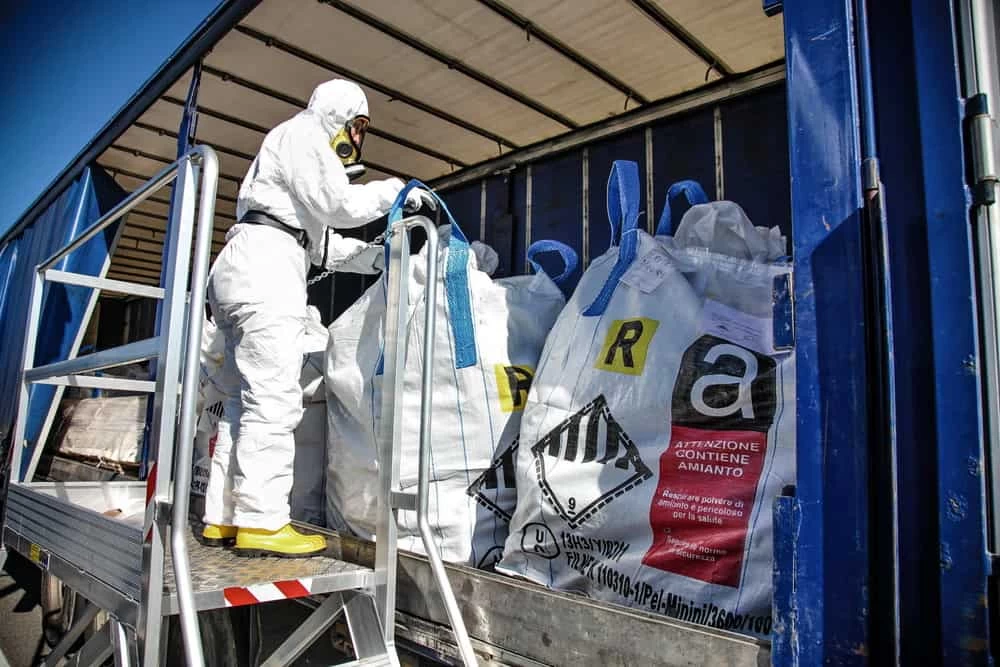
Once the scope is confirmed, the abatement begins. Containment is established, negative air pressure is maintained, and Microtrap air scrubbers run throughout the entire removal process. Whether it’s asbestos tile removal from original 1950s flooring, pipe insulation in a full basement, or popcorn ceiling texture that was applied decades ago, the physical removal follows the same protocol: contained, controlled, and fully licensed.
When the removal is complete, post-clearance air testing is conducted before containment comes down. That’s not optional it’s how you confirm the job actually worked. You receive documentation of the clearance, which satisfies the NYC DEP requirements and gives you a clean record for your property going forward.
Asbestos Remediation Services in Bayside Hills, NY
Built for Queens Homes, Not a Generic Checklist
Our asbestos abatement service covers the full scope of what Bayside Hills homeowners actually encounter. Asbestos tile removal for the original 9×9 vinyl floor tiles common in mid-century homes. Pipe and boiler insulation removal in full basements one of the most frequently disturbed areas during HVAC replacements and plumbing repairs in pre-1960 houses. Asbestos popcorn ceiling removal for the textured ceilings applied throughout the neighborhood during the 1950s through 1970s. And because virtually every home in Bayside Hills was also built before 1978, our USEPA Lead/RRP certification means we can assess and manage lead paint in the same inspection no second contractor required.
The regulatory side is handled as part of the service. ACP form filing with the NYC DEP, coordination with the NYC DOB permit process, and compliance with the 2025 DEP Asbestos Control Program amendments are all part of what you get. This matters specifically in Queens, where the city’s regulatory layer sits on top of the standard NYS DOL requirements. A contractor who doesn’t know the difference between an ACP-5 and an ACP-7 can freeze your renovation for weeks.
If the asbestos discovery happened in the context of a water damage event a pipe freeze, a burst line, a flooding situation we handle both the water damage remediation and the asbestos abatement under a single contract, with direct insurance billing available.
Do older homes in Bayside Hills actually have asbestos, or is that overstated?
It’s not overstated. The median construction year for homes in Bayside Hills is 1956, and the Tudor and Cape Cod homes that define the neighborhood were built almost entirely between the late 1930s and early 1960s. During that era, asbestos was a standard construction material not an edge case. It was used in floor tiles, pipe insulation, boiler wrap, joint compound, roof shingles, and ceiling texture. If your home was built before 1980 and you haven’t had it tested, you likely have asbestos-containing materials somewhere in the structure.
The key word is “containing.” Asbestos that is intact and undisturbed is generally not an immediate danger. The risk comes when those materials are cut, sanded, drilled, or demolished which is exactly what happens during a renovation. If you’re updating a kitchen, finishing a basement, replacing flooring, or swapping out an old boiler in a Bayside Hills home, testing before you disturb anything is the responsible first step.
What permits or forms are required for asbestos removal in Queens, NY?
Because Bayside Hills is within New York City, asbestos abatement here is regulated by the NYC Department of Environmental Protection not just the NYS Department of Labor. That’s an additional layer that doesn’t exist in Nassau or Suffolk County, and it directly affects the permit process for any renovation project.
Before the NYC Department of Buildings will issue a renovation permit, you need to demonstrate that asbestos compliance has been addressed. Depending on the scope of work, that means filing either an ACP-5 form (for projects that don’t constitute a formal asbestos project) or an ACP-7 form (for those that do). When the abatement is complete, DEP issues completion forms ACP-20 and ACP-21 which are then submitted to the DOB to move the permit forward. The NYC DEP also updated its Asbestos Control Program rules in January 2025, effective February 14, 2025, so any contractor you hire should be current on those amendments. We handle the full ACP form process as part of the abatement service.
How long does asbestos abatement take in a typical Bayside Hills home?
Timeline depends on the scope specifically what materials are affected and how much square footage is involved. A focused asbestos tile removal in a single room of a Bayside Hills home might be completed in one to two days. A more involved project covering pipe insulation throughout a full basement, plus popcorn ceiling removal on a main floor, could run three to five days or more. The regulatory process in New York City adds some time as well ACP form filing, DEP notification, and post-clearance air testing all have to happen in sequence, and that process can’t be rushed.
If your project has a hard deadline a closing date, a renovation contract start date, a permit expiration communicate that upfront. We operate 24/7 and can mobilize quickly for time-sensitive situations. The Bayside Hills real estate market moves fast, and abatement that holds up a closing is a real problem. Getting the timeline mapped out clearly at the start prevents most of those issues.
What happens if asbestos is discovered during a renovation that's already started?
Stop the work. That’s the first and most important step. If a contractor is mid-demolition in a pre-1960 Bayside Hills home and encounters material that looks like it could be asbestos fibrous pipe wrap, old floor tiles, suspicious ceiling texture the responsible move is to stop, secure the area, and call for testing before continuing. Disturbing asbestos without proper containment releases fibers that are invisible, odorless, and permanently lodge in lung tissue. There’s no reversing that exposure once it happens.
The practical reality is that a renovation stoppage in Queens also has a regulatory dimension. If you’re working under a DOB permit and asbestos is discovered mid-project, the permit process may need to be updated to reflect the asbestos project scope. We can assess the situation, determine what ACP forms apply, and get the abatement done in a way that keeps your project compliant and your contractor legally able to return to work. The goal is to get you moving again correctly, with documentation that protects you.
Can asbestos abatement be covered by homeowner's insurance in Bayside Hills?
It depends on the trigger. Asbestos abatement that is part of a planned renovation is generally not covered by standard homeowner’s insurance it’s treated as a maintenance or improvement cost. However, when asbestos is discovered or disturbed as a result of a covered event a pipe burst, water damage, a fire the abatement required to complete the remediation may fall within the scope of the insurance claim.
This is actually a common scenario in Bayside Hills. The older plumbing and heating systems in mid-century homes are susceptible to freeze events during harsh winters, and when a pipe goes, the water damage cleanup frequently uncovers asbestos-wrapped pipes or damaged floor tiles that need to be addressed before restoration can continue. We have experience navigating insurance claims and can bill the insurance company directly in qualifying situations. Our clients have specifically noted this as a differentiator it removes the back-and-forth of coordinating between a remediation contractor and an adjuster on your own.
How much does asbestos removal cost for a home in Bayside Hills, NY?
Nationally, residential asbestos removal averages around $2,200 for a typical project, with per-square-foot costs running roughly $5 to $20 for interior work and $9 to $20 for popcorn ceiling removal specifically. In the New York City market and Queens in particular pricing runs toward the higher end of those ranges. The reason is straightforward: NYC-specific regulatory compliance, ACP form filing, licensed waste disposal under NYC BIC requirements, and the labor market in the metro area all add real cost that doesn’t exist in a Long Island or upstate project.
For Bayside Hills homeowners, the more useful framing is what you’re actually getting for that cost. You’re getting a licensed NYS DOL asbestos contractor, proper containment and air scrubbing throughout the job, post-removal air clearance testing, and the documentation package that satisfies NYC DEP and DOB requirements. In a neighborhood where single-family homes routinely sell for over $1 million, cutting corners on asbestos remediation to save a few hundred dollars creates liability for your family’s health, for your permit record, and for any future buyer. The cost of doing it right is a fraction of the cost of doing it twice.