Beechhurst's Older Homes Deserve More Than a Guess
Most homes in Beechhurst were built in the 1940s and 50s right when asbestos was standard. If you’re renovating, dealing with water damage, or preparing to sell, we give you a licensed, documented answer.
I needed a professional consultation explanation of procedure for safe removal of Asbestos in my apartment complex. Without having an account yet, I was very impressed with the caring, knowledgeable and generous advice offered by Jessica, and will look forward to doing business in the future. Thank you so much! I feel much more informed about a sometimes scary endeavor. Peace. Nancy Silva Mineola, NY.
Mia Munoz
Used this company to clean up some water flood in my house. They were fast and easy to work with.very professional, Would recommend to anyone!
Nini Valle
Great company, had a flood and they responded quickly and efficiently. Billed my insurance company directly. I highly recommend this company!
joe colapietro, jr
I had pipe freeze in my basement right before a snow storm and they made to within an hour to help start the clean up process. They we by our side throughout the entire process and even helped with the insurance company. They did such a great job with the cleanup, repair, remidiation, I contracted them to perform the repairs and finishes in the basement. They came with enough manpower and material to get the job done. Leo and Jessica were nothing but a pleasure to deal with!!
Cristian Arredondo c
I had some water damage in my home and Green Island was able to take care of my issue quickly and effectively. I am very pleased with the work they did. They responded quickly and were very professional.
Michael M
Outstanding service! From the office to the field crew everyone was friendly, helpful and responsive. I highly recommend Green Island Group.
Know Exactly What You're Dealing With And What Comes Next
Discovering asbestos in your Beechhurst home doesn’t have to spiral into a months-long headache. What most homeowners actually want is simple: a straight answer on what’s there, a licensed team to remove it properly, and documentation that holds up whether that’s for a DOB permit, a real estate closing, or a co-op board review. That’s exactly what we deliver.
Beechhurst’s waterfront location adds a layer most inland Queens neighborhoods don’t face. When storm surge, a pipe freeze, or moisture infiltration hits a home built in 1952, it doesn’t just mean wet walls it can disturb pipe insulation, ceiling tiles, and floor materials that were installed with asbestos as a matter of course. Water damage and asbestos abatement aren’t separate problems here. They often show up together, and we handle both under one roof.
The real estate angle matters too. With Beechhurst median home values sitting near $800,000 and prices climbing sharply, a pre-sale asbestos issue isn’t a minor inconvenience it’s a deal-breaker or a forced price cut. Getting ahead of it with proper abatement and a clearance certificate means your closing stays on track and your buyer’s inspector doesn’t find anything that surprises anyone.
The Credentials That Actually Matter in New York City
We’re a full-service environmental remediation and restoration contractor based in New York, serving all five boroughs including Queens. That means Beechhurst, Whitestone, Malba, Bay Terrace, and the surrounding northeastern Queens communities are squarely in our wheelhouse, not an afterthought on a list.
In New York City, the bar for asbestos work is higher than almost anywhere else in the country. You need a contractor holding a valid NYS Department of Labor Asbestos license, someone who understands the NYC DEP permitting process, and a team that can produce the ACP-5 and ACP-21 documentation your attorney, co-op board, or DOB inspector will ask for. We check every one of those boxes along with USEPA Lead/RRP certification, IICRC water and fire damage credentials, and NADCA HVAC certification, among 15-plus total certifications.
We’re not a referral service. We’re the crew that shows up, does the work, and hands you a clearance certificate you can actually use.
From First Call to Clearance Certificate No Guesswork
It starts with an inspection. Before anything is touched, a certified asbestos investigator assesses your property and identifies any asbestos-containing materials floor tiles, pipe insulation, popcorn ceilings, drywall joint compound, boiler wrap, or roofing materials. In a Beechhurst home built before 1960, there’s a real chance more than one of those is present. The inspection tells you exactly what you’re working with.
From there, if abatement is needed, we handle the NYC DEP notification and the ACP-5 filing required before the Department of Buildings will issue your renovation permit. This step trips up a lot of homeowners who didn’t know it was required and it can stall an entire project or a real estate closing if it’s skipped. We manage that process so it doesn’t slow you down.
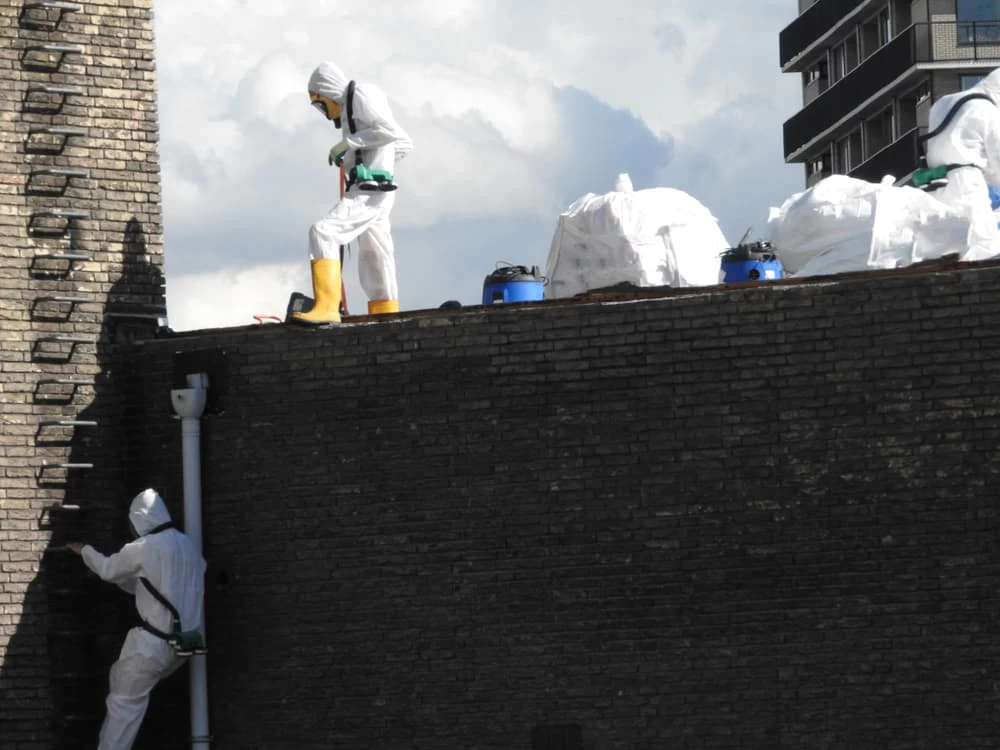
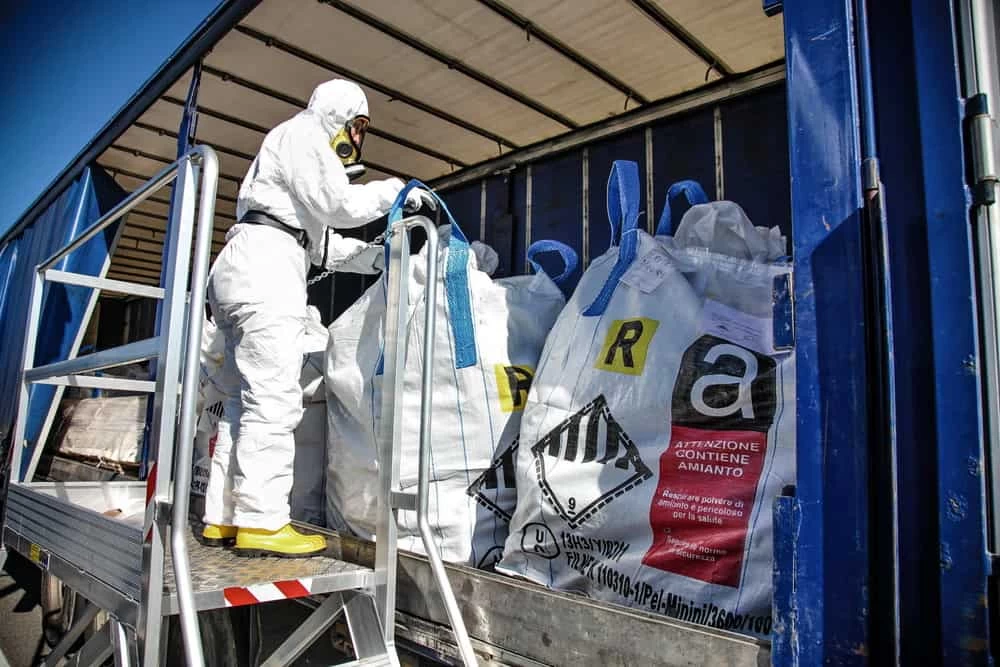
The removal itself follows strict containment protocols. The work area is sealed, negative air pressure is maintained, and materials are disposed of properly under New York State and federal guidelines. When abatement is complete, post-removal air clearance testing is conducted not as a formality, but because it’s required for ACP-21 documentation and because it’s the only way to confirm the space is actually clear. You get that clearance certificate in writing. If your project also involves reconstruction putting the space back together after the asbestos is out we handle that too, so you’re not managing a second contractor.
Built for the Homes and Buildings That Actually Exist Here
Beechhurst isn’t a neighborhood of new construction. It’s a neighborhood of pre-war and mid-century single-family homes and landmark co-op towers Le Havre on the Water (built 1958), Cryder House, Cryder Point, and The Towers at Beechhurst among them. Every one of those buildings was constructed during the decades when asbestos was standard in residential and commercial construction. That shapes what asbestos abatement actually looks like here.
For single-family homeowners in Beechhurst, the most common materials we encounter are vinyl asbestos floor tiles, textured popcorn ceilings, pipe and boiler insulation, and drywall joint compound all typical of 1940s through 1960s construction. For co-op unit owners and building managers, the scope often extends to shared mechanical systems, common area finishes, and building envelope materials that require coordination with the co-op board and compliance with NYC DEP oversight. We have experience working in occupied multi-family buildings, which means we understand how to contain and remediate without turning a building’s common areas into a construction zone.
Every project includes the full compliance package: certified inspection, DEP-compliant abatement, post-removal air quality verification, and complete documentation. If lead paint is also present which is likely in any Beechhurst home built before 1978 our USEPA Lead/RRP certification means we can address both hazards in the same project. One contractor, one scope, one set of paperwork.
Do Beechhurst homes built in the 1950s typically contain asbestos-containing materials?
The short answer is yes it’s very common. Homes built in the 1940s through the late 1960s were constructed during the peak era of asbestos use in American residential construction, and Beechhurst’s housing stock falls almost entirely within that window. The materials most frequently found in homes of this era include vinyl floor tiles (sometimes called VAT vinyl asbestos tile), textured or popcorn ceilings, pipe and boiler insulation, drywall joint compound, roofing shingles, and HVAC duct wrap.
The presence of these materials doesn’t automatically mean you have an emergency. Asbestos that is intact and undisturbed is generally not an immediate hazard. The risk comes when those materials are cut, sanded, drilled, or otherwise disturbed which is exactly what happens during a kitchen renovation, a bathroom gut, or a basement waterproofing project. If your Beechhurst home was built before 1970 and you’re planning any work that touches walls, floors, ceilings, or mechanical systems, having a certified inspection done first is the right call both for your family’s safety and for your DOB permit compliance.
What is the ACP-5 form and do I need one for my Beechhurst renovation?
The ACP-5 is a form required by the NYC Department of Buildings before they’ll issue a work permit for any renovation or demolition project in a building constructed before 1987. It documents the results of a certified asbestos survey essentially, it tells the DOB that a qualified inspector has assessed the property and either confirmed no asbestos-containing materials are present, or that any present materials have been properly abated. Without a completed ACP-5, your permit application goes nowhere.
Because virtually every home and co-op building in Beechhurst predates 1987 and most predate 1970 the ACP-5 requirement applies to nearly every permitted renovation project in the neighborhood. This catches a lot of homeowners off guard, especially those who assume the rule only applies to large commercial projects. It doesn’t. A kitchen remodel, a bathroom renovation, a basement finishing project if it requires a DOB permit and the building is pre-1987, you need the ACP-5. We handle the inspection and the filing so that step doesn’t stall your project or your closing timeline.
Can a flood or water damage event disturb asbestos in my older Beechhurst home?
Yes and this is one of the more overlooked risks for homeowners in waterfront communities like Beechhurst. When water infiltrates a pre-1960 home, it doesn’t just damage drywall and flooring. It can soak through and compromise materials that contain asbestos pipe insulation that gets wet and begins to deteriorate, ceiling tiles that absorb moisture and crack, or vinyl floor tiles that lift and break apart. Once those materials are disturbed, the asbestos fibers they contain can become airborne.
This is why our combination of IICRC water damage restoration certification and NYS DOL asbestos abatement licensing matters in a neighborhood like this. When a storm event or a pipe failure brings water into a 1950s home near Powells Cove Boulevard, you may be dealing with two problems at once and you need a contractor who can assess and address both without you having to coordinate separate teams. We can evaluate the water damage and the asbestos risk in the same visit, and manage both scopes under one contract.
How does asbestos abatement work in a co-op building like Le Havre or Cryder Point?
Co-op abatement involves a few layers that single-family work doesn’t. First, the co-op board typically has its own approval process for any work that affects common areas, shared mechanical systems, or building structure so any abatement project needs to be coordinated with building management in addition to satisfying NYC DEP requirements. Second, because these are occupied buildings, containment and access protocols have to account for neighbors, common hallways, and shared HVAC systems in a way that a standalone house project doesn’t.
Le Havre on the Water was built in 1958. Cryder Point, Cryder House, and The Towers at Beechhurst were all constructed in the same general era. Every one of those buildings was built during peak asbestos use, and any renovation or capital improvement project that disturbs building materials flooring, pipe insulation, ceiling finishes, mechanical room materials requires asbestos assessment under NYC DEP rules. We have experience working in occupied residential buildings and understand the operational constraints that come with that environment. We work within the building’s schedule, maintain proper containment, and produce the documentation your co-op board and the DEP will require.
If I'm selling my home in Beechhurst, do I need to disclose or remove asbestos first?
New York does not require sellers to remove asbestos before listing a property, but the practical reality of selling a high-value home in Beechhurst tells a different story. With median home values approaching $800,000 and a buyer’s inspector almost certain to flag suspected asbestos-containing materials in a 1950s home, leaving it unaddressed is a negotiating liability. Buyers can use an asbestos finding to demand a price reduction, request abatement as a closing condition, or walk away entirely.
Sellers who get ahead of it having a certified inspection done, completing any necessary abatement, and obtaining a post-removal air clearance certificate remove that variable from the negotiation entirely. You can hand your real estate attorney a clean documentation package that shows the work was done by a licensed contractor under NYC DEP compliance. That’s a meaningful advantage in a market where Beechhurst prices have climbed over 37% year-over-year. The cost of abatement is almost always less than the price reduction a buyer will demand if they find it themselves.
How long does asbestos abatement typically take for a home in Beechhurst, NY?
Timeline depends on the scope what materials are present, how much square footage is involved, and whether the project is in a single-family home or a co-op unit with building management coordination requirements. For a focused scope like asbestos floor tile removal in a single room or pipe insulation in a mechanical area, the abatement work itself may take one to two days. Larger projects involving multiple material types across several rooms can run a week or more.
What adds time in New York City specifically is the regulatory process. The NYC DEP requires notification before abatement begins, and the ACP-5 filing has to be in place before the DOB will issue your renovation permit. Post-removal air clearance testing adds time at the back end but it’s not optional, and it’s what produces the clearance certificate you’ll need for permit closeout, your real estate transaction, or your co-op board. We walk you through the full timeline upfront so you’re not caught off guard mid-project. If your renovation has a hard deadline a closing date, a co-op board meeting, a contractor scheduled to start work tell us that on the first call and we’ll structure the scope accordingly.