Bellaire's Pre-War Homes Deserve More Than a Guess
Most homes along Bellaire’s brick-lined streets were built before 1940 and that means asbestos is less of a possibility and more of a probability. We handle the inspection, abatement, and clearance so you know exactly what you’re dealing with.
I needed a professional consultation explanation of procedure for safe removal of Asbestos in my apartment complex. Without having an account yet, I was very impressed with the caring, knowledgeable and generous advice offered by Jessica, and will look forward to doing business in the future. Thank you so much! I feel much more informed about a sometimes scary endeavor. Peace. Nancy Silva Mineola, NY.
Mia Munoz
Used this company to clean up some water flood in my house. They were fast and easy to work with.very professional, Would recommend to anyone!
Nini Valle
Great company, had a flood and they responded quickly and efficiently. Billed my insurance company directly. I highly recommend this company!
joe colapietro, jr
I had pipe freeze in my basement right before a snow storm and they made to within an hour to help start the clean up process. They we by our side throughout the entire process and even helped with the insurance company. They did such a great job with the cleanup, repair, remidiation, I contracted them to perform the repairs and finishes in the basement. They came with enough manpower and material to get the job done. Leo and Jessica were nothing but a pleasure to deal with!!
Cristian Arredondo c
I had some water damage in my home and Green Island was able to take care of my issue quickly and effectively. I am very pleased with the work they did. They responded quickly and were very professional.
Michael M
Outstanding service! From the office to the field crew everyone was friendly, helpful and responsive. I highly recommend Green Island Group.
When asbestos is handled correctly, you stop guessing. You stop wondering whether the floor tiles in your basement are safe, whether the pipe wrap around your boiler is crumbling, or whether the contractor you hired last spring disturbed something they shouldn’t have. That uncertainty goes away and what replaces it is documented proof that your home is clear.
For Bellaire homeowners, that documentation matters more than most people realize. If you’re selling, your buyer’s attorney is going to ask for it. If you’re renovating, the NYC Department of Buildings won’t issue your permit until the asbestos question is answered in writing, on the right form. A post-abatement air clearance certificate isn’t just a nice-to-have. In this city, it’s the thing that keeps your project moving.
The older housing stock in Bellaire the Tudor Revivals, the brick Colonials, the frame houses that fill the streets between Hollis Avenue and Hillside Avenue was built during the decades when asbestos was used in almost everything. Floor tile adhesive, pipe insulation, roofing felt, plaster, HVAC duct wrap. When a pipe bursts in winter and water tears through an original basement ceiling, it doesn’t just cause water damage. It can expose materials that have been undisturbed for 80 years. Getting ahead of that, with a team that handles both the abatement and what comes after, is what makes the difference between a manageable situation and a prolonged one.
We are a full-service environmental remediation contractor serving Queens County and the broader New York City area. Our team holds NYS DOL Asbestos licensing, NYC DEP compliance capability, USEPA Lead/RRP certification, NYS DOL Mold licensing, and IICRC certification for water and fire damage which matters in Bellaire because these problems rarely show up alone.
When you open a wall in a 1920s Tudor on a street off Mall 211 and find asbestos pipe insulation, there’s often mold behind it. Sometimes water damage. Sometimes lead paint on the same surface. We are built to handle all of it under one contract, with one crew, without handing you off to three different companies mid-project.
We operate 24 hours a day, seven days a week, and work directly with insurance companies on covered losses something that comes up often when water or fire events expose materials that have been sealed inside Bellaire’s older homes for decades.
No Surprises Here's What the Process Actually Looks Like
It starts with an inspection. A certified asbestos investigator surveys the affected area of your home, identifies any suspected asbestos-containing materials, and determines what needs to happen next. In New York City, this step isn’t optional it’s the legal requirement that precedes any permitted renovation work. If asbestos is present, the inspector files the appropriate form with the NYC DEP before anything is disturbed. As of early 2026, those filings are digital only, which means working with a contractor who knows the current DEP process is not a minor detail.
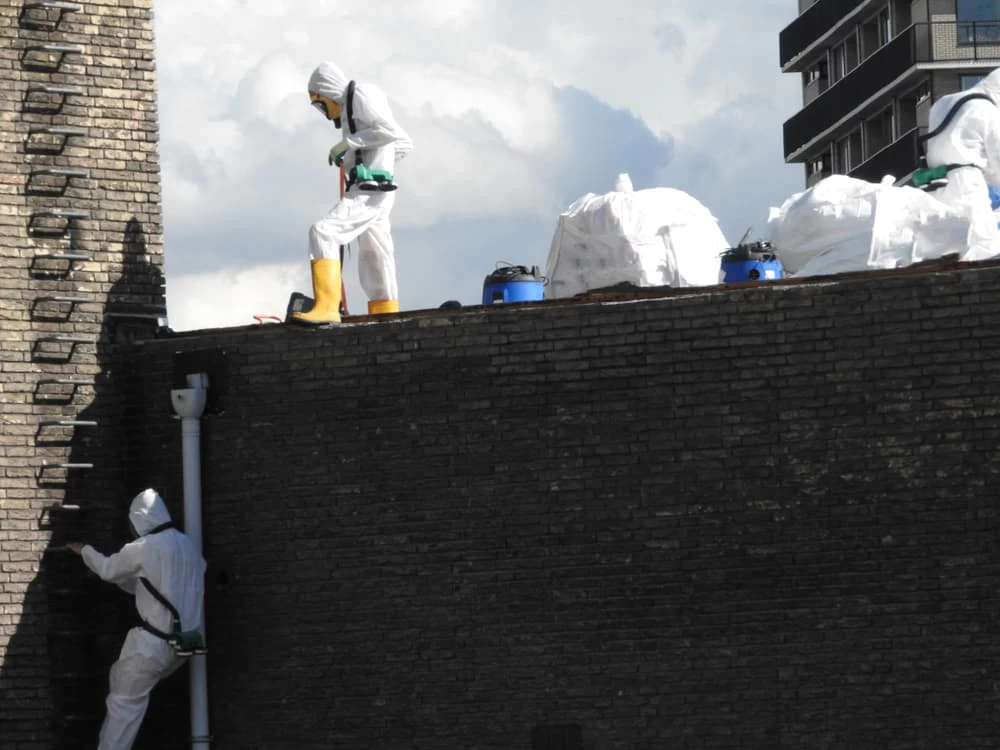
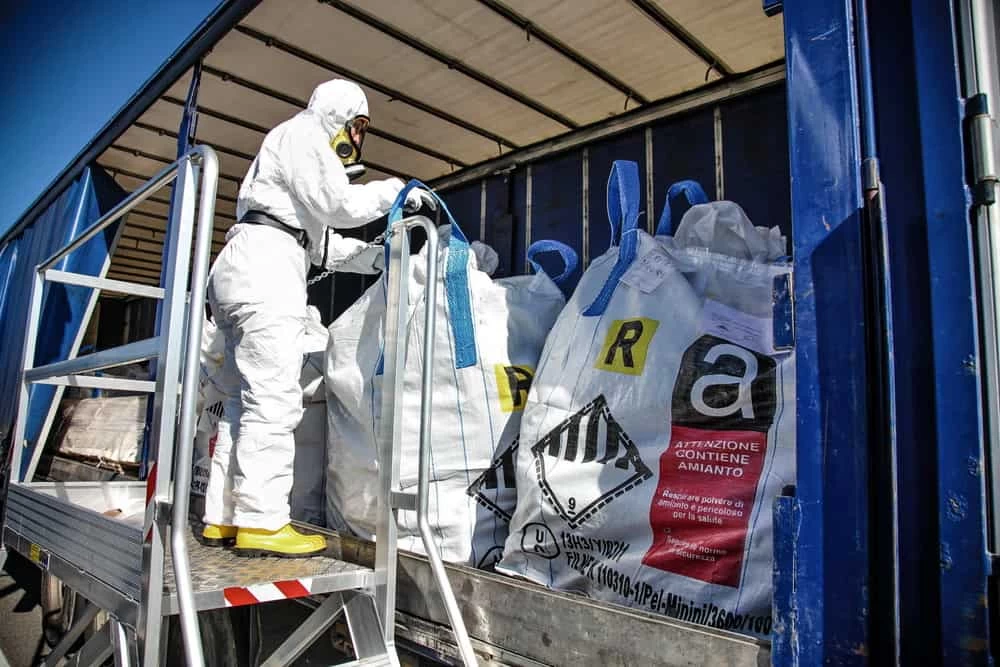
Once the regulatory paperwork is in order, the abatement begins. The work area is sealed and contained, Microtrap air scrubbers run throughout the job, and materials are removed and disposed of according to NYC and EPA requirements. For Bellaire homes where asbestos is commonly found in floor tiles, pipe insulation, boiler wrap, and ceiling texture the scope varies by project, but the containment and air quality standards don’t.
When the removal is complete, post-abatement air clearance testing confirms that the space is safe and that the work meets regulatory standards. You receive that clearance documentation in writing. Whether you need it for a building permit, a real estate closing, or your own records, it’s there.
Built for the Homes That Actually Exist in Bellaire
Bellaire’s housing stock is specific. Most of it predates 1940, which means asbestos tile removal is one of the most common requests we handle in this neighborhood. The 9×9 vinyl asbestos floor tiles found under linoleum in Bellaire basements and kitchens are a known issue in homes of this era and so is the black mastic adhesive underneath them, which often contains asbestos even when the tile itself doesn’t. Both require proper testing, proper containment, and proper disposal.
Asbestos popcorn ceiling removal is another frequent need in Queens homes from the mid-20th century. Textured ceilings applied before 1978 commonly contain asbestos, and disturbing them without testing first is a code violation in New York City not just a risk. We test before anything is touched, and the removal process follows full DEP protocol.
Beyond tile and ceiling work, we regularly handle pipe and boiler insulation removal, HVAC duct wrap, roofing material abatement, and full interior asbestos remediation for renovation and pre-sale projects across Queens County. If you’re also dealing with mold, water damage, or lead paint in the same space common in Bellaire’s pre-war homes that work can be folded into the same project without starting over with a new contractor.
Do I legally need an asbestos inspection before renovating my Bellaire home?
Yes and this is one of the most important things to understand before you start any renovation project in Bellaire. New York City requires that any building built before 1987 have an asbestos survey completed by a certified asbestos investigator before renovation, alteration, or demolition work begins. The NYC Department of Buildings will not issue a building permit until the asbestos requirement has been satisfied through the proper DEP filing either an ACP-5 form if no asbestos is present or won’t be disturbed, or an ACP-7 form if abatement is needed.
For Bellaire specifically, where the majority of homes were built before 1939, this requirement applies to virtually every property on the block. Skipping the inspection doesn’t just put your family at risk it puts your permit, your contractor’s license, and your project timeline at risk. The inspection is the starting point, not an obstacle.
What does asbestos abatement actually cost for a Queens home?
Cost depends on what materials are present, how much needs to be removed, and how accessible the work area is. For a typical residential project in Queens say, asbestos floor tile removal in a basement or pipe insulation removal around a boiler you’re generally looking at somewhere in the range of $1,500 to $5,000 depending on scope. Inspection and testing typically add $250 to $800 before abatement begins. Larger projects involving multiple material types or full-room remediation will run higher.
In New York City, pricing tends to run at the higher end of national averages because of the regulatory complexity involved DEP filings, certified investigators, air clearance testing, and licensed disposal all add real cost. What you’re paying for isn’t just the removal itself. It’s the documentation, the compliance, and the clearance certificate that protects you legally and keeps your project moving forward.
How do I know if my Bellaire home's floor tiles contain asbestos?
You can’t know just by looking. The 9×9 and 12×12 vinyl tiles that were standard in homes built from the 1920s through the 1960s frequently contained asbestos and the black adhesive mastic underneath them often did too, even when the tiles themselves tested clean. In Bellaire, where most of the housing stock was built during exactly that period, these tiles are extremely common under layers of linoleum, carpet, or newer flooring that was installed on top over the decades.
The only way to know for certain is to have a sample tested by a certified lab. A licensed asbestos investigator takes a small sample from the suspect material, sends it for analysis, and gives you a definitive answer. That result determines whether the material can stay in place, needs to be encapsulated, or requires full removal. Don’t assume it’s fine because it looks intact asbestos tile can be stable for years and still require abatement the moment you disturb it during a renovation.
Does homeowners insurance cover asbestos removal in New York City?
It depends on how the asbestos was discovered and what triggered the need for removal. Standard homeowners insurance policies in New York generally do not cover asbestos abatement as a standalone project meaning if you simply decide to renovate and find asbestos, that’s typically out of pocket. However, if the asbestos exposure was caused by a covered event a burst pipe in winter, water damage from a storm, a fire the remediation that follows may be covered as part of the larger claim.
This comes up regularly in Bellaire, where older homes are vulnerable to freeze-thaw pipe failures every winter. When a pipe bursts near original asbestos insulation and the water damage exposes it, the entire event water mitigation, asbestos abatement, and reconstruction may fall under one insurance claim. We bill insurance companies directly and can help you navigate that process so you’re not managing the paperwork on top of everything else.
What types of asbestos materials are most common in Bellaire's older homes?
Given that most homes in Bellaire were built before 1940, the most common asbestos-containing materials we find are pipe and boiler insulation, floor tile and tile adhesive, roofing shingles and felt underlayment, exterior cement board siding, plaster and joint compound, and HVAC duct insulation. These aren’t rare findings they’re standard in homes of this era, and in many cases multiple material types are present in the same property.
The materials that tend to generate the most urgent calls are pipe insulation and boiler wrap, because they’re often in deteriorating condition in Bellaire’s older mechanical systems and can become friable meaning they crumble and release fibers without any renovation activity at all. If you have an original boiler system in your basement and haven’t had the insulation inspected, it’s worth knowing what you’re dealing with before you start any work nearby.
How long does asbestos abatement take for a typical Bellaire residential project?
Most standard residential abatement projects in Bellaire floor tile removal, pipe insulation, or a single-room remediation take one to three days of active work once the regulatory filings are in place. The timeline before work begins depends on how quickly the DEP review and notification requirements are satisfied, which is why working with a contractor who knows the current NYC DEP process matters. Delays at the filing stage are the most common source of project slowdowns, not the abatement itself.
After the removal is complete, post-abatement air clearance testing needs to be conducted and results confirmed before the space is re-occupied or turned back over to other contractors. That step typically adds a day. For larger projects full basement remediation, multi-material removal, or situations where mold or water damage is also being addressed the overall timeline extends accordingly. We’ll give you a realistic project schedule upfront so your renovation contractor, your real estate attorney, or your insurance adjuster knows what to expect.