If you’re renovating, repairing, or just finally getting around to that project on your Belle Ayr property, asbestos abatement may be the first call you need to make not the last.
I needed a professional consultation explanation of procedure for safe removal of Asbestos in my apartment complex. Without having an account yet, I was very impressed with the caring, knowledgeable and generous advice offered by Jessica, and will look forward to doing business in the future. Thank you so much! I feel much more informed about a sometimes scary endeavor. Peace. Nancy Silva Mineola, NY.
Mia Munoz
Used this company to clean up some water flood in my house. They were fast and easy to work with.very professional, Would recommend to anyone!
Nini Valle
Great company, had a flood and they responded quickly and efficiently. Billed my insurance company directly. I highly recommend this company!
joe colapietro, jr
I had pipe freeze in my basement right before a snow storm and they made to within an hour to help start the clean up process. They we by our side throughout the entire process and even helped with the insurance company. They did such a great job with the cleanup, repair, remidiation, I contracted them to perform the repairs and finishes in the basement. They came with enough manpower and material to get the job done. Leo and Jessica were nothing but a pleasure to deal with!!
Cristian Arredondo c
I had some water damage in my home and Green Island was able to take care of my issue quickly and effectively. I am very pleased with the work they did. They responded quickly and were very professional.
Michael M
Outstanding service! From the office to the field crew everyone was friendly, helpful and responsive. I highly recommend Green Island Group.
Most homeowners in Belle Ayr aren’t thinking about asbestos until a contractor pulls up a floor tile or opens a wall and stops cold. At that point, the renovation stalls, the questions start, and suddenly you’re trying to figure out who’s licensed, what the law requires, and how long this is going to take. That’s a frustrating place to be and it’s avoidable.
The housing stock in Belle Ayr and throughout this part of the Catskills is genuinely old. Shandaken was settled in the late 1700s, and many of the homes along the Route 28 corridor farmhouses, seasonal cabins, mountain cottages were built long before asbestos was phased out of building materials. Pipe insulation on old steam-heat systems, 9×9 floor tiles with black mastic adhesive underneath, textured ceilings, drywall joint compound these are the materials that come up again and again in pre-1980 construction out here.
When we complete the work correctly, you get more than a clean space. You get written clearance documentation from post-abatement air monitoring the kind of paperwork your general contractor needs to move forward, that a home inspector will ask about, and that protects you if you ever sell. Living in a remote part of Ulster County doesn’t mean you should accept less than that standard.
We're Licensed, Certified, and We Actually Service Belle Ayr
We hold a New York State Department of Labor Asbestos Handling License the specific, state-issued credential that legally authorizes asbestos abatement work in New York. Under NYS Industrial Code Rule 56, that license isn’t optional. It’s the law. And it’s something you should verify before anyone touches a material in your home.
Beyond the license, we’re fully certified and compliant with OSHA and USEPA standards, and hold NYS MBE, WBE, and SBE certifications government-verified credentials that reflect real institutional accountability.
What matters most to Belle Ayr residents is this: we actually come out here. Western Ulster County deep in the Esopus Creek valley, well past Kingston on Route 28 isn’t a market most downstate contractors bother with. We list Belle Ayr explicitly as a service area, handle projects throughout the Shandaken corridor, and bring the same documentation standards to a remote mountain property that we bring anywhere else. When you call us for asbestos abatement in Belle Ayr, you’re not getting a contractor who treats the job as an inconvenient drive. You’re getting a company that knows the area, understands the housing stock, and has built a track record here.
What Actually Happens From First Call to Final Clearance
It starts with an inspection by a NYS-certified asbestos inspector not a visual scan, but a real assessment of the materials in your home. In older Belle Ayr properties, that often means checking multiple locations: the boiler room, pipe runs, flooring layers, ceiling applications, and anywhere previous renovations may have left disturbed material behind. Samples are collected and sent to a lab. You get a clear picture of what’s there before any decisions are made.
If abatement is needed, we handle the permit filings with the NYS DOL directly. Ulster County falls under the Albany District Asbestos Control Bureau, and navigating that process on your own while also managing a renovation timeline is a real headache. Having that handled for you matters, especially when you’re trying to keep a contractor schedule on track in a part of the county where scheduling windows are tight.
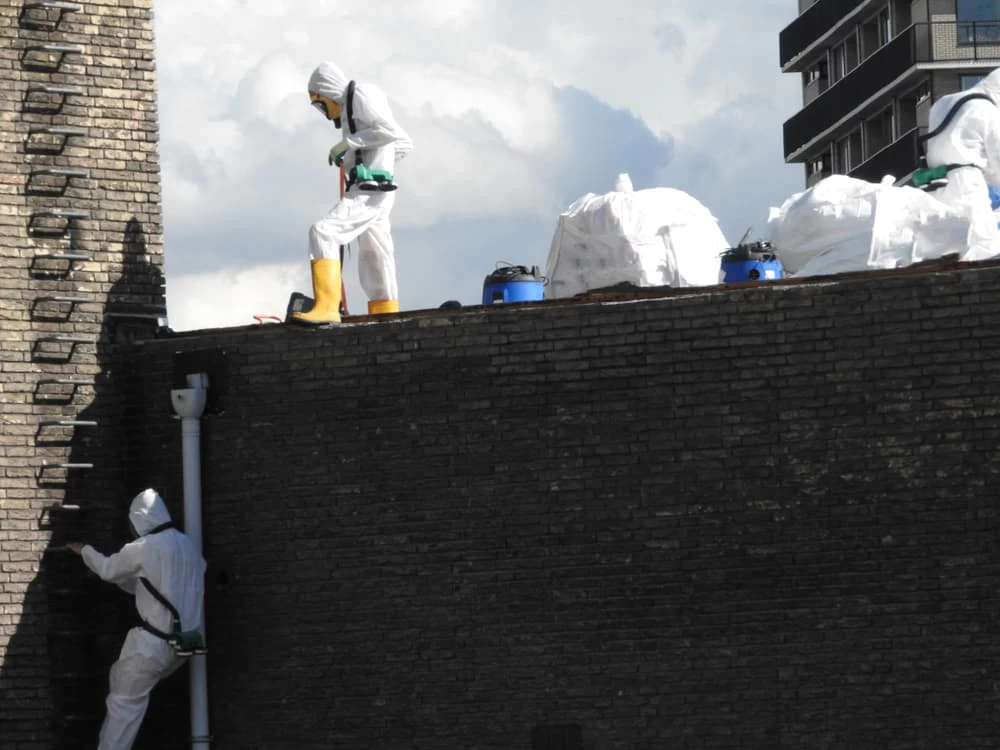
The abatement itself is done under full containment with certified workers. When the work is complete, post-abatement air monitoring is conducted and documented. That clearance report is yours for your records, your contractor, your insurance, or a future sale. The job isn’t considered finished until that documentation is in your hands.
Every Material, Every Layer, Handled Under One Roof
Asbestos abatement in a Belle Ayr property rarely involves just one material. Older homes in the Shandaken corridor especially those built before 1980 tend to have multiple suspect materials stacked across generations of renovation. Asbestos tile removal is one of the most common services we provide in this area, particularly the 9×9 vinyl floor tiles and the black mastic adhesive underneath them. Asbestos popcorn ceiling removal comes up frequently in mid-century vacation cabins and cottages throughout Belle Ayr. Pipe and boiler insulation, drywall joint compound, window glazing, and roofing shingles round out the list.
We handle all of it asbestos abatement, mold remediation, water damage restoration, lead abatement, HVAC cleaning, and demolition without you needing to coordinate multiple specialty contractors across a remote mountain location. For a property in Belle Ayr, that’s not a small thing. Getting two or three separate crews out to this part of Route 28 on compatible schedules is a genuine logistical challenge. One company, one point of contact, one timeline.
If flooding from the Esopus Creek has affected your property and disturbed building materials, that’s an emergency situation we handle as well 24 hours a day, seven days a week. Water damage and asbestos exposure can happen at the same time, and having a contractor who addresses both simultaneously means the problem gets resolved faster and more completely.
Does New York State require an asbestos inspection before renovating in Belle Ayr?
Yes and this applies to every property in Belle Ayr, regardless of size or scope of work. Under New York State Industrial Code Rule 56, any demolition, renovation, remodeling, or repair of a building requires a prior asbestos survey conducted by a NYS-certified asbestos inspector before work begins. This isn’t a guideline it’s a legal requirement enforced by the NYS Department of Labor’s Albany District Asbestos Control Bureau, which covers Ulster County.
For homeowners in the Shandaken corridor who are pulling renovation permits through the Town of Shandaken, this survey is a required step before permitted work can proceed. If you skip it and disturb asbestos-containing material during a renovation, you’re looking at potential regulatory violations, project shutdowns, and cleanup costs that dwarf what the survey would have cost upfront. If you’re not sure whether your Belle Ayr property requires one, the safest assumption for any pre-1980 home in this area is that it does.
How much does asbestos removal typically cost for a Catskills home?
Asbestos removal in New York State generally ranges from around $1,500 on the low end for a small, contained scope to $30,000 or more for whole-house or multi-material projects. For interior work, $5 to $20 per square foot is a common range. Exterior materials roofing shingles, siding tend to run higher, sometimes $49 to $147 per square foot depending on the material and access conditions.
For a Belle Ayr property, a few things can affect where your project lands in that range. Older farmhouses and mountain cabins in this area frequently have multiple asbestos-containing materials floor tiles, pipe insulation, ceiling texture which means the scope can expand once a thorough inspection is done. Travel logistics to western Ulster County can also factor into project costs, and it’s worth asking any contractor to be upfront about that. What you should expect from us is a clear, itemized breakdown before work begins not a number that shifts after the crew shows up.
What materials in an old Belle Ayr home are most likely to contain asbestos?
In Belle Ayr and throughout the Catskills, the materials that come up most often in pre-1980 homes are pipe and boiler insulation particularly in older farmhouses with steam-heat systems, which are common throughout the Shandaken corridor and 9×9 vinyl floor tiles along with the black mastic adhesive used to install them. Textured or popcorn ceiling applications, drywall joint compound, window glazing putty, and roofing and siding shingles also frequently tested positive for asbestos in construction from that era.
The layered nature of older Catskills construction is worth understanding. Many properties in the Belle Ayr area have seen multiple generations of renovation new flooring installed over old, ceilings re-textured, walls patched and re-drywalled. Each of those layers can contain materials from a different decade, and some of those decades predate modern material standards. A thorough inspection looks at all of it, not just what’s visible on the surface.
Can I stay in my home during asbestos abatement work?
It depends on the scope and location of the work. For contained, small-area projects a single room or isolated pipe section it may be possible to remain in other parts of the home while work is underway, provided proper containment barriers are in place. For larger projects involving multiple rooms, whole-floor tile removal, or work in shared HVAC spaces, temporary displacement is typically the safer and more practical choice.
For full-time residents in Belle Ayr, this is a real consideration not an abstract one. This is a remote mountain community, and finding temporary accommodations while work is completed takes some planning. We communicate clearly about what the containment setup looks like, how long the work is expected to take, and when post-abatement air clearance testing will confirm that re-occupancy is safe. You shouldn’t have to guess about any of that. A clear timeline upfront is part of what makes the process manageable for homeowners who live here year-round.
What is post-abatement air clearance testing and why does it matter?
Post-abatement air clearance testing is conducted after all abatement work is complete and containment has been removed. Air samples are collected and analyzed to confirm that asbestos fiber concentrations in the space are within safe, regulated limits before the area is re-occupied or handed back to other contractors. It’s a required step under NYS Industrial Code Rule 56, not an optional add-on.
What it means practically is that you have written documentation a lab-verified clearance report proving the space is safe. For Belle Ayr homeowners in the middle of a renovation, that report is what your general contractor needs to proceed with permitted work. For anyone selling a property in the Catskills market, it’s the kind of documentation that prevents last-minute renegotiations or deal-killing inspection flags. And for anyone who simply wants to know the job was done right, it’s the clearest answer available. We provide this documentation as a standard part of every abatement project not something you have to ask for separately.
Does flooding near the Esopus Creek create an asbestos emergency situation?
It can, yes. The Esopus Creek runs through the valley floor along Route 28, and properties in the Belle Ayr area have documented exposure to flooding during heavy rain events and snowmelt. When floodwater reaches a basement with old pipe insulation, saturates a floor with original tile and mastic underneath, or damages a ceiling, it can disturb asbestos-containing materials that were previously stable and undisturbed turning a slow-moving renovation decision into an immediate safety concern.
When that happens, the situation involves two problems at once: water damage and potential asbestos exposure. We handle both water damage restoration and asbestos abatement and are available 24 hours a day, seven days a week for exactly this kind of event. Calling one company that can assess both issues simultaneously, rather than trying to coordinate two separate specialty contractors to a remote location on the same emergency timeline, makes a real difference in how quickly and safely the situation gets resolved.