Most Belle Harbor homes were built before 1955 and nearly all of them contain asbestos somewhere. We find it, remove it safely, and give you the documentation to move forward.
I needed a professional consultation explanation of procedure for safe removal of Asbestos in my apartment complex. Without having an account yet, I was very impressed with the caring, knowledgeable and generous advice offered by Jessica, and will look forward to doing business in the future. Thank you so much! I feel much more informed about a sometimes scary endeavor. Peace. Nancy Silva Mineola, NY.
Mia Munoz
Used this company to clean up some water flood in my house. They were fast and easy to work with.very professional, Would recommend to anyone!
Nini Valle
Great company, had a flood and they responded quickly and efficiently. Billed my insurance company directly. I highly recommend this company!
joe colapietro, jr
I had pipe freeze in my basement right before a snow storm and they made to within an hour to help start the clean up process. They we by our side throughout the entire process and even helped with the insurance company. They did such a great job with the cleanup, repair, remidiation, I contracted them to perform the repairs and finishes in the basement. They came with enough manpower and material to get the job done. Leo and Jessica were nothing but a pleasure to deal with!!
Cristian Arredondo c
I had some water damage in my home and Green Island was able to take care of my issue quickly and effectively. I am very pleased with the work they did. They responded quickly and were very professional.
Michael M
Outstanding service! From the office to the field crew everyone was friendly, helpful and responsive. I highly recommend Green Island Group.
You stop guessing. That’s the biggest thing. Whether you discovered it mid-renovation, during a pre-sale inspection, or after a storm pushed water into places it shouldn’t have been the moment you know asbestos is present, everything pauses. The renovation stalls. The listing gets complicated. The questions pile up. Getting it properly removed means all of that moves again.
For Belle Harbor homeowners specifically, there’s a layer here that doesn’t apply to most of Queens. The housing stock on this peninsula is genuinely old we’re talking 1910s through the early 1950s for the majority of homes. Pipe insulation, floor tiles, boiler wrap, roofing materials asbestos was standard in all of it during that era. And because Belle Harbor sits on the ocean, salt air and coastal humidity accelerate the deterioration of those materials faster than you’d see in an inland neighborhood. Something that might stay stable for decades in Flushing or Kew Gardens Hills can degrade much faster here.
Then there’s Sandy. If your home was gutted, elevated, or significantly repaired after 2012, those older materials were disturbed. Some were properly addressed. Some weren’t. If you’re now doing secondary renovations finishing work, updates, pre-sale prep and you’re not sure what was handled back then, that uncertainty is worth resolving. A proper abatement with post-removal air clearance verification gives you a definitive answer, in writing, that you can hand to a buyer, an inspector, or your own peace of mind.
Every Credential That Queens Requires Under One Roof
We are a full-service environmental remediation contractor based in Bohemia, NY, serving all five boroughs, Long Island, Westchester, and the Hudson Valley. We hold a NYS DOL Asbestos License, NYC General Contractor license, NYC BIC certification, USEPA Lead/RRP certification, IICRC Water Damage certification, and NYS DOL Mold Remediation License among others. That combination matters in New York City in a way it simply doesn’t elsewhere.
Working in Queens means working under NYC DEP oversight on top of state requirements. The ACP-5 inspection and certification process, project notifications, post-abatement clearance protocols these are layers that contractors who primarily work in Nassau or Suffolk County don’t always navigate cleanly. We do this work in the five boroughs regularly, and we know the difference.
Belle Harbor is a community we take seriously. The homes here are significant financially and historically and the people who own them have high expectations. We answer the phone 24/7, we handle insurance billing directly, and we don’t leave until the air clearance confirms the job is done.
From First Call to Clearance Certificate Here's the Sequence
It starts with a call and a site assessment. We come out, inspect the materials in question, and collect samples for lab testing. In Belle Harbor, that typically means checking the areas most common in homes of this era floor tiles in kitchens and basements, pipe and boiler insulation in mechanical rooms, roofing materials, and ceiling texture in any postwar additions. We tell you exactly what we found and what the test results show before any work is scheduled.
If abatement is needed, we handle the NYC DEP requirements before work begins. For any renovation or demolition project in a pre-1987 building in New York City, an ACP-5 Asbestos Certification Form is required before the Department of Buildings will issue a permit. Virtually every home in Belle Harbor was built before 1987 most before 1960 so this step applies almost universally here. We manage that process so your renovation doesn’t stall waiting on paperwork.
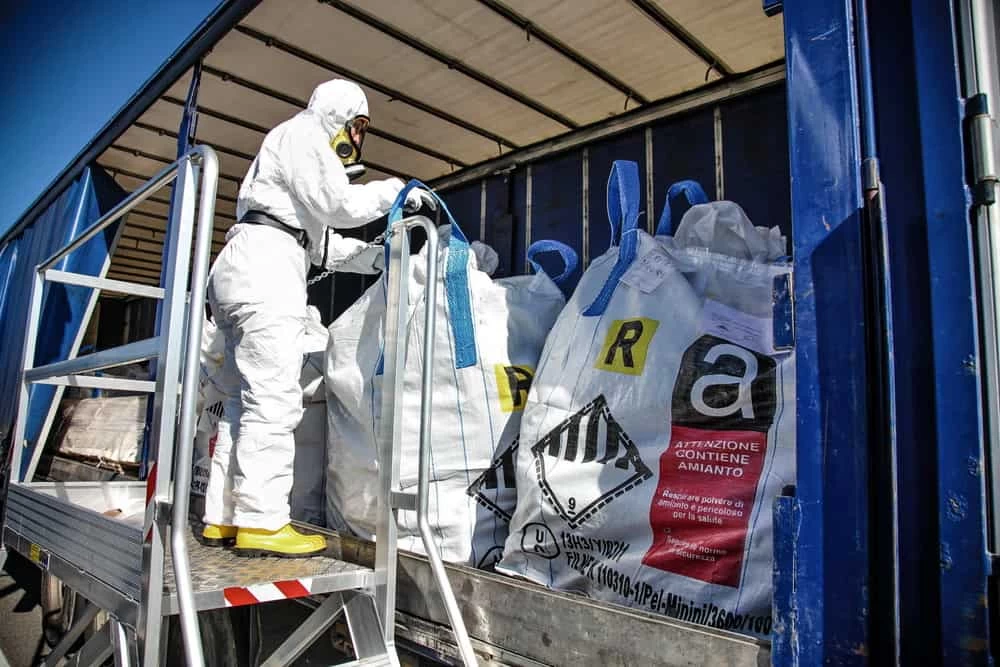
The removal itself is done under full containment. Negative air pressure, Microtrap air scrubbers, proper protective equipment, and strict disposal protocols in line with NYS and NYC requirements. When the physical work is complete, we conduct post-removal air clearance testing. That’s not optional it’s the step that produces the documentation you actually need. The clearance certificate is what your contractor, your buyer’s inspector, your real estate attorney, and your insurance company will ask for. We don’t consider the job done until you have it.
Asbestos abatement in Belle Harbor covers more ground than most homeowners expect going in. It’s not just pulling out the material it’s the inspection, the lab testing, the NYC DEP compliance documentation, the containment setup, the removal itself, the air clearance verification, and the final paperwork. We handle all of it. You’re not coordinating between an inspector, an abatement contractor, and a separate testing firm. One team, one contract, one point of contact.
Because nearly every home in Belle Harbor predates 1978, lead paint and asbestos frequently co-exist in the same spaces. Our USEPA Lead/RRP certification means we can identify and address both hazards under the same visit rather than requiring you to bring in a separate contractor for lead. That matters when you’re already managing a renovation or a pre-sale timeline.
For homes that need reconstruction after abatement new flooring after tile removal, drywall work after pipe insulation is stripped, mechanical updates after boiler wrap comes out we handle that too. Given the access realities of the Rockaway Peninsula, having one contractor who can take you from abatement through reconstruction without a handoff gap is a practical advantage, not just a convenience. We also bill insurance directly when the abatement is connected to a covered water damage or storm event, which is relevant for a neighborhood that knows exactly how complicated post-storm insurance claims can get.
Do Belle Harbor homes actually have asbestos, or is that just a precaution?
It’s not just a precaution it’s genuinely likely. The majority of homes in Belle Harbor were built between the 1910s and early 1950s, which is squarely within the era when asbestos was a standard construction material. Floor tiles, pipe insulation, boiler wrap, roofing shingles, ceiling texture, and drywall joint compound all routinely contained asbestos during that period. If your home was built before 1980 and hasn’t been fully gutted and rebuilt, there’s a reasonable chance asbestos-containing materials are present somewhere in the structure.
The only way to know for certain is to have a licensed inspector collect samples and send them to a certified lab. Visual identification alone isn’t reliable asbestos fibers aren’t visible to the naked eye, and many materials that contain it look completely ordinary. Testing is the only definitive answer, and in New York City, an asbestos survey is required before renovation permits are issued for pre-1987 buildings anyway. So if you’re planning any work on an older Belle Harbor home, testing isn’t optional it’s part of the process.
What is the ACP-5 form and do I need one for my Belle Harbor renovation?
The ACP-5 is an Asbestos Certification Form required by the NYC Department of Environmental Protection. Before the NYC Department of Buildings will issue a renovation or demolition permit for any building constructed before 1987, a DEP-Certified Asbestos Investigator must complete an asbestos survey and submit the ACP-5 confirming either that the property is asbestos-free or that any asbestos has been properly abated. The filing fee is $47 to DEP, but the bigger cost of skipping it is a Stop Work Order or a failed permit application.
Given that virtually every home in Belle Harbor was built before 1987 and the vast majority before 1960 this requirement applies to almost every renovation project in the neighborhood. Kitchen remodels, bathroom guts, basement finishing, HVAC upgrades, roof replacements if you’re pulling a permit, you need the ACP-5 first. We manage this process as part of our abatement work, so you’re not navigating the DEP paperwork on your own while also trying to keep your renovation on schedule.
My home was repaired after Hurricane Sandy does asbestos still apply to me?
Possibly, yes and it’s worth finding out. When Sandy hit Belle Harbor in October 2012, the rebuilding process involved gutting flood-damaged interiors, replacing mechanical systems, elevating foundations, and in some cases full demolition and reconstruction. FEMA’s own Hurricane Sandy recovery guidance explicitly flagged asbestos and lead paint as hazards during post-flood cleanup and rebuilding. Some homes had asbestos-containing materials properly abated during that process. Others did not.
If your home was significantly repaired or renovated post-Sandy and you’re now undertaking additional work finishing a space that was deferred, updating systems, or preparing the home for sale the question of what was addressed in 2012–2016 and what wasn’t is a real one. The only way to resolve it cleanly is a current inspection and testing. If materials were disturbed but not properly abated during the Sandy rebuild, that’s something a buyer’s inspector will likely flag. Better to know now than at the closing table on a home worth close to a million dollars.
How long does asbestos abatement take in a typical Belle Harbor home?
It depends on the scope, but for a typical single-family home in Belle Harbor, a focused abatement project say, floor tile removal in a basement or kitchen, or pipe insulation in a mechanical room generally takes one to three days for the physical removal work. Larger projects involving multiple material types or multiple areas of the home can run longer. The full timeline from initial inspection to final clearance certificate, including lab testing turnaround, typically runs one to two weeks.
One thing worth planning for in Belle Harbor specifically is the access factor. The Rockaway Peninsula has two road bridges the Marine Parkway–Gil Hodges Memorial Bridge and the Cross Bay Veterans Memorial Bridge and scheduling logistics for contractors coming from the mainland can affect timing. We account for this in project scheduling, and because we handle inspection, abatement, and clearance in-house rather than coordinating between separate firms, the overall timeline is tighter than it would be if you were managing multiple vendors. We’ll give you a realistic timeline upfront before any work begins.
Can asbestos abatement be covered by homeowners insurance?
It depends on how the asbestos was discovered and what triggered the need for removal. Asbestos abatement that is directly connected to a covered loss water damage from a burst pipe, storm damage, or flooding that disturbed asbestos-containing materials is often at least partially covered under a standard homeowners policy. Abatement that’s purely elective, like removing materials that are intact and undisturbed as part of a planned renovation, is typically not covered.
For Belle Harbor homeowners, the connection between water damage and asbestos is particularly relevant. Coastal flooding, nor’easters, and pipe freezes in older homes can all disturb asbestos-containing materials in basements, mechanical rooms, and lower floors. When that happens, the abatement may qualify as part of a covered claim. We bill insurance directly in those situations we work with your adjuster so you’re not stuck in the middle managing the paperwork between your contractor and your insurance company. Given that many Belle Harbor residents went through exactly this process after Sandy, it’s a dynamic most people here are already familiar with.
Is asbestos popcorn ceiling removal different from other types of asbestos abatement?
The process is similar in terms of containment and disposal requirements, but popcorn ceiling removal does have some specific considerations. Spray-applied texture what most people call popcorn ceiling was commonly used from the late 1950s through the 1970s and frequently contained asbestos. In Belle Harbor, homes with postwar additions or renovations from that era are likely candidates. The material is particularly problematic when it’s in poor condition or gets disturbed, because it can release fibers more readily than a hard tile or intact pipe insulation.
Before any popcorn ceiling is touched, testing is required to determine whether it contains asbestos. If it does, removal must be done under full containment plastic sheeting, negative air pressure, proper respiratory protection, and licensed disposal. It cannot be scraped, sanded, or covered over without abatement first. After removal, post-abatement air clearance testing confirms the space is safe. The clearance documentation is especially important if you’re renovating before a sale, since a buyer’s inspector will ask whether the ceiling material was tested and how the removal was handled. We handle asbestos popcorn ceiling removal as part of our standard abatement services, with full documentation from start to finish.