Your 1950s Bellerose Home Deserves a Clean Bill of Health
Most homes in Bellerose were built in the 1940s and 1950s and nearly all of them were built with asbestos. We handle the testing, removal, and clearance so you know exactly what you’re dealing with.
I needed a professional consultation explanation of procedure for safe removal of Asbestos in my apartment complex. Without having an account yet, I was very impressed with the caring, knowledgeable and generous advice offered by Jessica, and will look forward to doing business in the future. Thank you so much! I feel much more informed about a sometimes scary endeavor. Peace. Nancy Silva Mineola, NY.
Mia Munoz
Used this company to clean up some water flood in my house. They were fast and easy to work with.very professional, Would recommend to anyone!
Nini Valle
Great company, had a flood and they responded quickly and efficiently. Billed my insurance company directly. I highly recommend this company!
joe colapietro, jr
I had pipe freeze in my basement right before a snow storm and they made to within an hour to help start the clean up process. They we by our side throughout the entire process and even helped with the insurance company. They did such a great job with the cleanup, repair, remidiation, I contracted them to perform the repairs and finishes in the basement. They came with enough manpower and material to get the job done. Leo and Jessica were nothing but a pleasure to deal with!!
Cristian Arredondo c
I had some water damage in my home and Green Island was able to take care of my issue quickly and effectively. I am very pleased with the work they did. They responded quickly and were very professional.
Michael M
Outstanding service! From the office to the field crew everyone was friendly, helpful and responsive. I highly recommend Green Island Group.
When you’re renovating a Cape Cod in Bellerose, replacing a boiler in a 1955 Colonial, or getting ready to list your home, the last thing you want is to hit a wall because someone found suspicious floor tile or deteriorating pipe wrap in the basement. That pause contractor stopped, permit stalled, closing date in jeopardy is exactly what proper asbestos abatement prevents.
Bellerose sits squarely in Queens, which means your home falls under NYC DEP jurisdiction, not Nassau County rules. That matters more than most people realize. Before the NYC Department of Buildings will issue a renovation permit for any pre-1987 home here, you need either an asbestos exemption on file or documented proof that abatement is complete. With the average home in Bellerose built around 1955, that requirement applies to almost every house on every block.
Once the work is done right with clearance testing, proper disposal documentation, and DEP-compliant paperwork you get your renovation back on track, your permit approved, and your home sale moving forward. More importantly, you stop wondering whether the materials your family has been living around for years are a problem. That peace of mind is the real outcome.
We hold NYS DOL Asbestos certification and operate fully within NYC DEP requirements both of which apply to asbestos work in Bellerose. That dual-jurisdiction competence matters here specifically, because Bellerose sits right on the Queens-Nassau line. Contractors who only know Nassau County rules aren’t equipped for a Queens project, and the gap shows up fast when permit documentation is due.
Beyond asbestos, we carry USEPA Lead and RRP certifications, NYC and Nassau County General Contractor licenses, IICRC certification, and NYC BIC registration. For a pre-1960 Bellerose home that may have both asbestos and lead paint, that full credential stack means one contractor handles the whole picture.
We serve eastern Queens and Long Island as a primary territory not as an afterthought. We already work in Bellerose Manor next door, Queens Village to the west, and communities throughout Nassau County just across Little Neck Parkway. This isn’t coverage claimed on a map. It’s where we actually work.
It starts with an inspection. A certified technician walks your home and identifies any materials that are suspected to contain asbestos floor tile, ceiling texture, pipe insulation, duct wrap, joint compound, roofing materials. Samples are collected and sent to an accredited lab. You get a clear answer on what’s there and what needs to happen next.
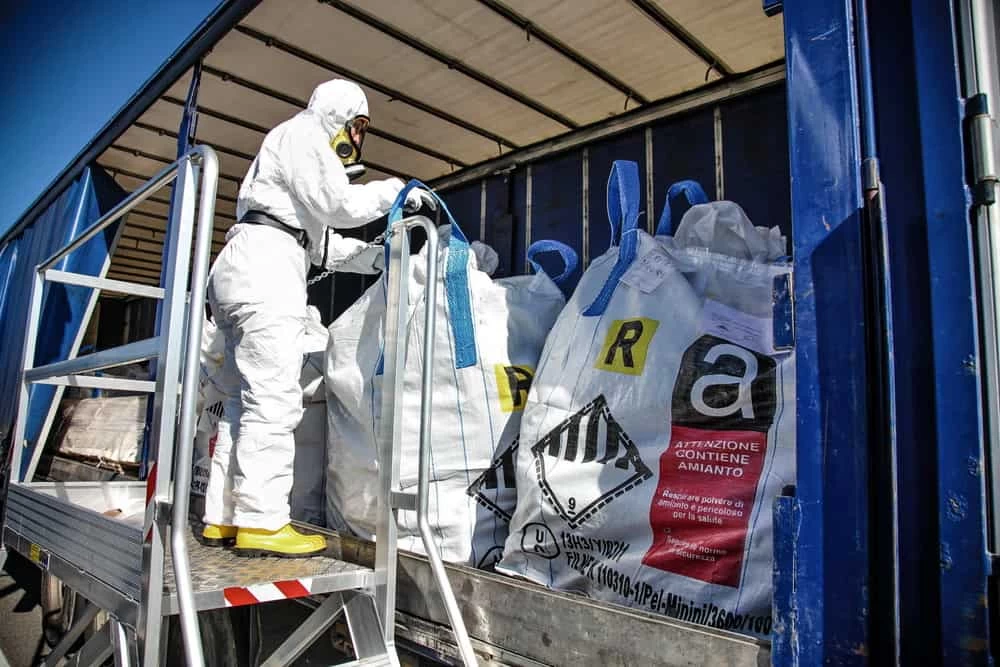
If abatement is needed, we file the required ACP7 notification with NYC DEP through the ARTS system before any work begins. That filing has to be approved by DEP’s Asbestos Technical Review Unit it’s not optional, and it’s not something you want a contractor to skip or fumble. The abatement itself is performed under full containment, with Microtrap air scrubbers running throughout the work area to keep fibers from spreading to the rest of your home.
When the removal is complete, post-abatement air monitoring is conducted to confirm that fiber levels are within safe limits. You receive a clearance certificate the actual documentation your real estate attorney, insurance company, or DOB permit application will require. For Bellerose homeowners dealing with a basement water event that’s disturbed original pipe insulation, we also respond 24/7 for emergency situations. The process doesn’t change it just moves faster.
Built for Bellerose's Housing Stock, Not a Generic Checklist
The homes in Bellerose the Cape Cods, brick Colonials, and Tudor-style houses that line the streets between Hillside Avenue and the Grand Central Parkway are exactly the housing type where asbestos shows up most consistently. Nine-inch vinyl floor tiles in the kitchen and basement. Sprayed acoustic texture on finished ceilings. Pipe and boiler insulation in the mechanical room. Drywall joint compound in rooms that have never been touched since they were built. We’ve worked in these homes. We know where to look.
Our full scope of services includes asbestos inspection and lab testing, abatement and removal, encapsulation where appropriate, post-removal air quality verification, and all required regulatory documentation for NYC DEP and NYS DOL compliance. For Bellerose homes with both asbestos and lead paint common in pre-1960 construction USEPA RRP-certified lead-safe work practices are applied in the same project visit.
Because we also hold active general contractor licenses for New York City and Nassau County, we can handle the reconstruction that follows abatement subfloor repair after tile removal, ceiling skim-coating after popcorn removal, new pipe insulation after a boiler-room clearance. One contractor, start to finish, with a single point of accountability.
Does my Bellerose home actually need asbestos testing before I renovate?
If your home was built before 1987 which covers virtually every house in Bellerose the NYC Department of Buildings requires either an asbestos exemption certification or documented proof of completed abatement before a renovation permit is issued. This isn’t a recommendation. It’s a hard stop in the permitting process.
Beyond the permit requirement, the practical answer is yes, testing matters. The dominant construction era in Bellerose runs from the 1940s through the late 1960s, and homes from that period routinely contain asbestos in floor tile, ceiling texture, pipe insulation, and joint compound. You don’t have to assume it’s there but you do have to find out before any of those materials are disturbed. Testing is the only way to know for certain, and it’s the first step before any renovation work begins in a home of this age.
What does asbestos abatement actually cost for a Queens home?
The cost depends on the material type, the square footage involved, and the scope of the project. For a typical residential job in Bellerose asbestos floor tile in one or two rooms, or a popcorn ceiling in a finished basement most homeowners are looking at somewhere in the $1,500 to $4,000 range for the abatement itself. Inspection and lab testing typically adds $250 to $800 on top of that.
What drives the number up is scope: a full basement with original pipe insulation, floor tile, and boiler-room materials will cost more than a single-room tile removal. NYC DEP compliance requirements the ACP7 filing, post-abatement air monitoring, and clearance certification are part of every legitimate Queens project and should be included in any quote you receive. If a contractor gives you a price that doesn’t mention DEP documentation, ask why. That paperwork is not optional in Bellerose, and skipping it creates real liability down the road.
How long does the abatement process take, and do I need to leave my home?
For a contained single-room project a bedroom with asbestos tile, or a basement ceiling section the physical removal typically takes one to two days. The full timeline from inspection to final clearance certificate, including lab results and DEP filing, usually runs one to two weeks depending on project size and scheduling.
Whether you need to vacate depends on the scope and location of the work. For a basement or single-room abatement in a Bellerose Cape Cod or Colonial, it’s often possible to remain in unaffected parts of the home while containment barriers are in place. For larger or more invasive projects, temporary relocation for the duration of the abatement phase is the safer choice especially in homes with children or elderly residents. We’ll walk you through what’s realistic for your specific layout before any work begins, so you’re not guessing about your family’s routine.
What happens if water damage in my basement disturbs asbestos materials?
This is one of the more common situations we handle in Bellerose. The neighborhood’s post-WWII housing stock particularly the full and partial basements common in Capes and Colonials is prone to water intrusion during spring thaws and summer storms. When that water reaches original pipe insulation, floor tile, or boiler-room materials from the 1950s, you may have an active asbestos exposure situation on your hands, not just a water cleanup.
If you suspect the water damage has disturbed asbestos-containing materials, stop work immediately and don’t try to clean it up yourself. Disturbed asbestos releases fibers that aren’t visible and don’t settle quickly. We operate 24/7 for exactly this kind of emergency we can assess the situation, contain the affected area, and begin the abatement process without waiting for a scheduled appointment. The same DEP compliance requirements apply in an emergency, but the response timeline is compressed to match the urgency.
How do I know the asbestos is actually gone after the work is done?
The only objective answer to that question is a post-abatement air clearance test. After the removal is complete and the work area has been cleaned, air samples are collected and analyzed to confirm that airborne asbestos fiber levels are within the limits set by NYC DEP and federal EPA standards. If the results come back within acceptable range, you receive a clearance certificate documenting that the space is safe for re-occupancy.
This step is required under NYC DEP regulations for asbestos projects in Queens it’s not an optional add-on, and it’s not something a legitimate contractor should offer as an upgrade. We include post-removal air quality verification as a standard part of every project. That clearance certificate is also the document your real estate attorney will ask for before closing, your insurance company will want for a covered claim, and the NYC DOB will require as part of your permit file. It’s the proof, not just the promise.
Can I sell my Bellerose home if it has asbestos, or does it have to be removed first?
Asbestos that is intact and undisturbed floor tile in good condition, for example is not always required to be removed before a sale. But in practice, the Bellerose real estate market at a median sale price approaching $773,000 means buyers are represented by attorneys and conducting thorough inspections. When asbestos-containing materials are identified during a home inspection, buyers routinely request either abatement before closing or a price reduction to account for it.
More directly, if the sale involves any renovation work and most buyers at this price point have plans the NYC DOB permit requirement kicks in immediately. Any pre-1987 home in Bellerose that the new owner wants to renovate will require asbestos documentation before a permit is issued. Getting ahead of that before listing with a completed inspection, abatement if needed, and a clearance certificate in hand removes a common deal-breaker from the transaction and gives buyers confidence that the home has been properly handled. It also protects you from liability claims after the sale closes.