Bellmore's Post-War Homes Deserve More Than a Guess
If your home was built between the late 1940s and the mid-1970s, asbestos isn’t a maybe — it’s a real possibility. We handle asbestos abatement in Bellmore, NY with the licensing, process, and local knowledge to do it right.
I needed a professional consultation explanation of procedure for safe removal of Asbestos in my apartment complex. Without having an account yet, I was very impressed with the caring, knowledgeable and generous advice offered by Jessica, and will look forward to doing business in the future. Thank you so much! I feel much more informed about a sometimes scary endeavor. Peace. Nancy Silva Mineola, NY.
Mia Munoz
Used this company to clean up some water flood in my house. They were fast and easy to work with.very professional, Would recommend to anyone!
Nini Valle
Great company, had a flood and they responded quickly and efficiently. Billed my insurance company directly. I highly recommend this company!
joe colapietro, jr
I had pipe freeze in my basement right before a snow storm and they made to within an hour to help start the clean up process. They we by our side throughout the entire process and even helped with the insurance company. They did such a great job with the cleanup, repair, remidiation, I contracted them to perform the repairs and finishes in the basement. They came with enough manpower and material to get the job done. Leo and Jessica were nothing but a pleasure to deal with!!
Cristian Arredondo c
I had some water damage in my home and Green Island was able to take care of my issue quickly and effectively. I am very pleased with the work they did. They responded quickly and were very professional.
Michael M
Outstanding service! From the office to the field crew everyone was friendly, helpful and responsive. I highly recommend Green Island Group.
Your Bellmore Renovation Shouldn't Stop at the Basement Floor
A lot of Bellmore homeowners don’t find out about asbestos until they’re already mid-project. You pull up old vinyl floor tiles in the kitchen, or a contractor starts scraping that textured ceiling in the back bedroom, and suddenly everything stops. That’s just what happens in homes built during this era, and Bellmore has thousands of them.
The 1950s ranches and Cape Cods off Newbridge Road weren’t built with anything exotic. They were built with the standard materials of the time — 9-inch vinyl asbestos floor tiles, pipe insulation in the basement, popcorn ceilings applied right through the 1970s. When you’re finally finishing that basement or opening up the floor plan, those materials don’t just disappear. They need to be properly tested, removed, and documented by a licensed contractor before the real work can begin.
Bellmore’s South Shore location adds another layer a lot of people don’t think about. Coastal flooding and storm damage from nor’easters can tear into walls, floors, and ceilings in older homes — and when that happens, you’re not just dealing with water damage. You’re potentially dealing with disturbed asbestos-containing materials that require abatement before any repairs can start. Getting this handled correctly the first time protects your home, your family, and your renovation timeline.
We Know Bellmore's Housing Stock — Not Just the Rulebook
We’re a NYS DOL-licensed asbestos abatement contractor serving Bellmore and the surrounding South Shore communities, including North Bellmore, Merrick, Seaford, and Wantagh. We’re not a national franchise with a local phone number. We’re a team that has worked in the specific homes this area is known for — post-war ranches, split-levels, and Cape Cods that were built when asbestos was the default, not the exception.
Nassau County has its own regulatory requirements on top of New York State’s Industrial Code Rule 56, and navigating both correctly isn’t something you want to figure out on the fly. We’ve done it here, in Bellmore and the surrounding communities, on homes like yours — and we handle the permits, notifications, and disposal documentation so you don’t have to.
When you call us, you’re talking to people who have worked off Newbridge Road, who know what the housing stock in the 11710 ZIP code looks like from the inside, and who understand what’s actually at stake when a family is living in the home during a renovation.
It starts with an inspection. A licensed asbestos inspector walks the property, identifies any materials that may contain asbestos — floor tiles, pipe insulation, ceiling texture, joint compound, roofing — and collects samples for laboratory analysis. In Bellmore’s older housing stock, it’s common to find more than one type of asbestos-containing material in the same home, so a thorough inspection upfront saves a lot of problems later.
Once the lab results come back, we put together a project design that meets NYS DOL requirements and accounts for Nassau County’s local notification and permit process. This step matters — skipping or shortcutting it is how homeowners end up with compliance problems that delay closings or create liability. We handle all of it, and we keep you informed throughout.
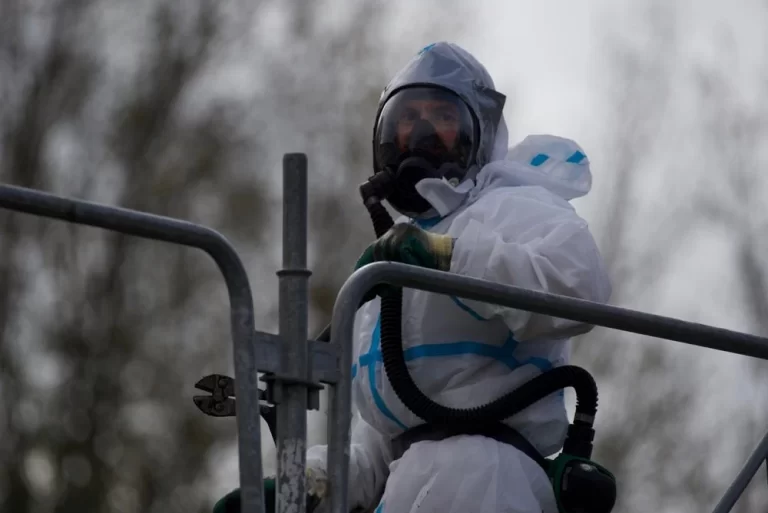
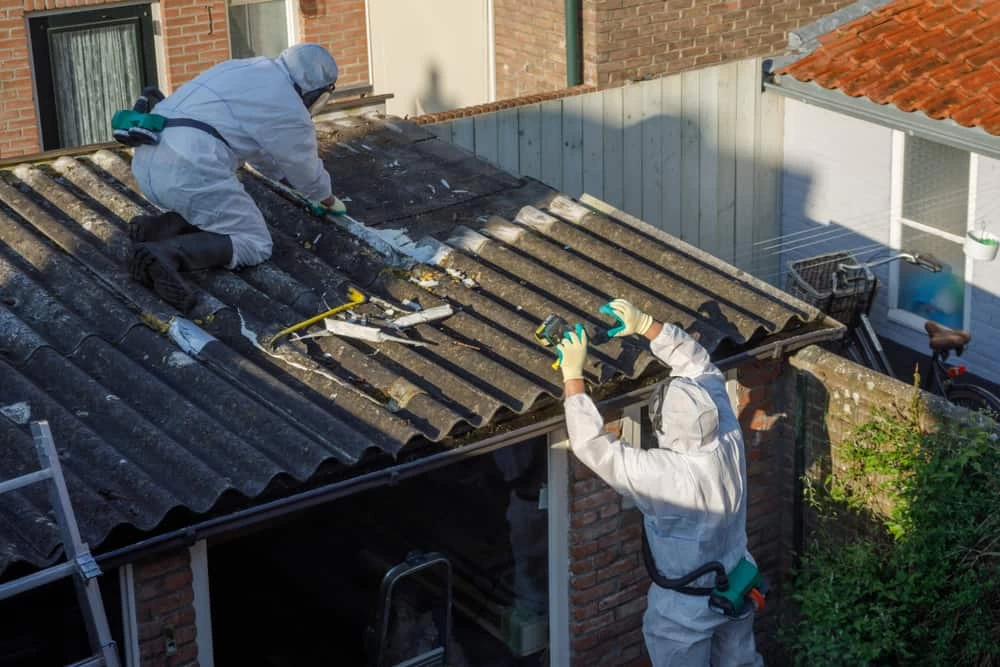
The abatement itself is done under full containment. Negative air pressure, HEPA filtration, proper wet methods — the process is designed to keep fibers from migrating to any other part of your home. When the work is complete, we conduct final air clearance testing to confirm the space is clean. You receive full written documentation of everything: the inspection findings, the abatement records, and the clearance results. That paperwork matters whether you’re renovating, selling, or simply want a record for your own peace of mind.
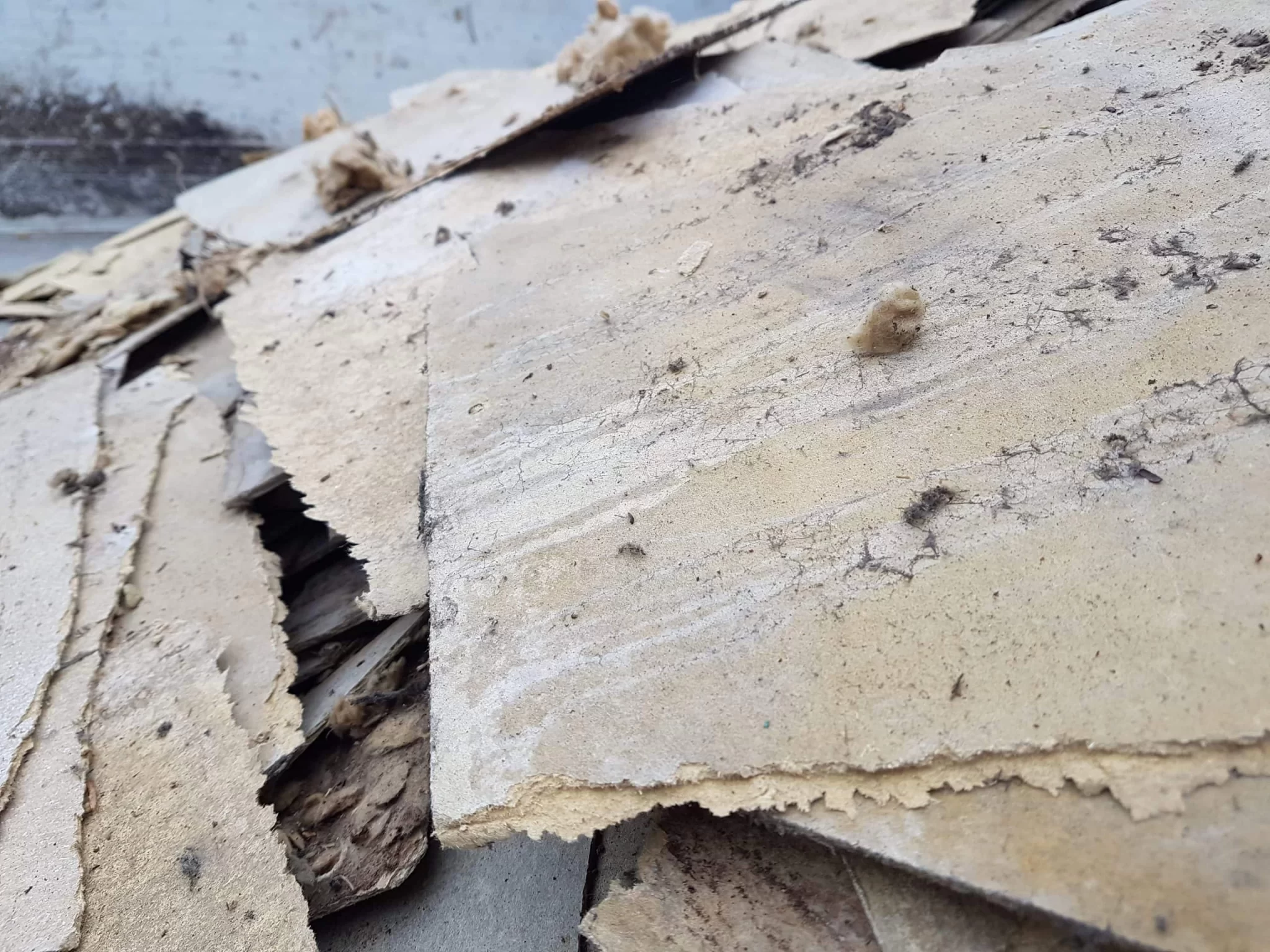
The asbestos-containing materials most commonly found in Bellmore homes fall into a few well-known categories. Vinyl asbestos floor tiles — the 9-inch and 12-inch squares found in kitchens, bathrooms, and basements — are among the most frequent. The black mastic adhesive used to install them often contains asbestos too, which is something a lot of homeowners don’t realize until they’re already mid-demo. Textured popcorn ceilings applied in the 1960s and 1970s are another common find, as is pipe and duct insulation in basement utility rooms. Asbestos removal in any of these areas requires proper containment, wet removal methods, and licensed disposal under NYS DEC regulations.
We also handle pre-sale asbestos abatement — a service that’s become increasingly relevant in Bellmore’s real estate market, where median home values are pushing well above $700,000. When a buyer’s inspector flags suspected asbestos-containing materials, deals can stall fast. Having a licensed contractor complete abatement and provide written clearance documentation before listing — or as a condition of closing — keeps transactions on track and removes one of the most common deal-killers in pre-1980 home sales.
For storm-damaged properties, we provide rapid-response assessment and abatement when flood or wind damage has disturbed materials in older Bellmore homes. Given how frequently Southern Nassau County sees coastal flood advisories, this isn’t a niche scenario — it’s a real and recurring need for South Shore homeowners.
Does my Bellmore home actually need asbestos testing before I renovate?
If your home was built before 1980 — which covers the vast majority of Bellmore’s residential housing stock — then yes, testing before renovation is strongly recommended and in many cases legally required. Under New York State Industrial Code Rule 56, any disturbance of asbestos-containing materials above the regulatory threshold requires a licensed contractor. That threshold isn’t as high as most people assume, and common renovation work like pulling up old floor tiles, scraping a textured ceiling, or opening walls in a pre-1980 Bellmore home can easily cross it.
The practical reality is that Bellmore’s post-war homes were built with asbestos in multiple locations — sometimes in the same room. A kitchen renovation might involve asbestos floor tiles and asbestos-containing joint compound in the same project scope. Testing upfront tells you exactly what you’re dealing with so your renovation contractor isn’t stopped mid-job waiting on an emergency abatement call. It’s a straightforward step that prevents a much bigger disruption down the road.
How do I know if my floor tiles in Bellmore contain asbestos?
You can’t tell by looking at them. The 9-inch and 12-inch vinyl floor tiles that were standard in homes built throughout the 1950s, 1960s, and into the 1970s frequently contain asbestos — but there’s no visual indicator that separates an asbestos tile from a non-asbestos tile. The only way to know for certain is to have a sample collected by a licensed asbestos inspector and sent to an accredited laboratory for analysis.
What you can do on your own is note the tile size and the age of your Bellmore home. If you’re in a ranch or Cape Cod built before 1980 and the kitchen or basement floor has older 9-inch square tiles — especially with a dark, tar-like adhesive underneath — the probability of asbestos content is high enough to warrant testing before you do anything that disturbs them. The same applies to the black mastic adhesive itself, which is commonly asbestos-containing even when the tiles above it are not.
What happens if flood damage disturbs asbestos materials in my older Bellmore home?
This is a situation that comes up more often on the South Shore than most homeowners realize. When a coastal flooding event or a significant nor’easter causes water damage to a pre-1980 home in Bellmore, the remediation work that follows — tearing out wet drywall, pulling up damaged flooring, removing soaked insulation — can disturb asbestos-containing materials. At that point, what started as a water damage repair becomes an asbestos abatement project that has to be handled by a licensed contractor before the restoration work can continue.
The key is not to start demolition or removal of water-damaged materials in an older Bellmore home without first having the affected areas assessed for asbestos. It feels like an extra step when you’re already dealing with the stress of flood damage, but disturbing asbestos without proper containment and abatement creates a health hazard that’s far more serious and costly to address after the fact. If your home has taken storm damage and you’re not sure what’s in the walls or floors, call for an assessment before the demo crews start.
Does asbestos abatement in Bellmore require a permit or notification to the county?
Yes — and this is one of the areas where hiring a contractor who actually works in Nassau County makes a real difference. New York State Industrial Code Rule 56 requires that asbestos abatement projects above the regulatory threshold be reported to the NYS Department of Labor prior to the start of work. On top of that, Nassau County has its own Environmental Health Review Process that adds a local compliance layer contractors need to be familiar with.
These aren’t optional steps. Performing abatement without the required notifications can result in stop-work orders, fines, and complications that affect your ability to sell the property later. When we take on a project in Bellmore, we handle all required notifications, permits, and documentation — including the disposal records required under NYS DEC regulations. You don’t have to figure out which forms go where or which agency needs to be notified. That’s part of what you’re hiring a licensed contractor to manage.
We're selling our Bellmore home — do we need asbestos abatement before listing?
Not always required, but increasingly expected — and in Bellmore’s current market, it’s worth thinking about strategically. With median home values in the area well above $700,000, a buyer’s inspector flagging suspected asbestos-containing materials can trigger price renegotiations, delayed closings, or deals falling apart entirely. Buyers, their attorneys, and their lenders are paying close attention to environmental disclosures on pre-1980 homes, and “suspected asbestos — not tested” is a red flag that gives buyers leverage.
Having a licensed abatement contractor test, document, and if necessary remediate before you list removes that leverage entirely. You go to market with a clean report, written clearance documentation, and one fewer thing for a buyer to use as a negotiating chip. For sellers in Bellmore who are already dealing with the complexity of a real estate transaction, getting the asbestos question answered in advance is one of the cleaner ways to protect the value you’ve built in your home.
How long does asbestos abatement take in a typical Bellmore home?
It depends on what’s being removed and how much of it there is, but for a typical Bellmore ranch or Cape Cod with a defined scope — a basement floor with asbestos tiles, a single room with a popcorn ceiling, or insulated pipes in a utility room — the abatement work itself usually takes one to three days. What adds time to the overall project is the inspection and lab analysis phase at the front end, and the final air clearance testing at the back end. From initial inspection to final clearance documentation, most standard residential projects run about one to two weeks total.
If your renovation is on hold pending abatement, that timeline matters. We’re upfront about scheduling and turnaround from the first conversation, so you and your contractor can plan accordingly. For post-storm situations where repairs are urgent, we prioritize assessment and abatement as quickly as the regulatory process allows — which in Nassau County means making sure the required DOL notifications are submitted correctly so there are no compliance delays on the back end.