If your Berea home was built anywhere between the late 1940s and the late 1970s which describes most of the housing stock along this corridor there’s a real chance asbestos is somewhere inside it. We provide licensed asbestos abatement in Berea, NY, with full documentation and clearance testing when the job is done.
I needed a professional consultation explanation of procedure for safe removal of Asbestos in my apartment complex. Without having an account yet, I was very impressed with the caring, knowledgeable and generous advice offered by Jessica, and will look forward to doing business in the future. Thank you so much! I feel much more informed about a sometimes scary endeavor. Peace. Nancy Silva Mineola, NY.
Mia Munoz
Used this company to clean up some water flood in my house. They were fast and easy to work with.very professional, Would recommend to anyone!
Nini Valle
Great company, had a flood and they responded quickly and efficiently. Billed my insurance company directly. I highly recommend this company!
joe colapietro, jr
I had pipe freeze in my basement right before a snow storm and they made to within an hour to help start the clean up process. They we by our side throughout the entire process and even helped with the insurance company. They did such a great job with the cleanup, repair, remidiation, I contracted them to perform the repairs and finishes in the basement. They came with enough manpower and material to get the job done. Leo and Jessica were nothing but a pleasure to deal with!!
Cristian Arredondo c
I had some water damage in my home and Green Island was able to take care of my issue quickly and effectively. I am very pleased with the work they did. They responded quickly and were very professional.
Michael M
Outstanding service! From the office to the field crew everyone was friendly, helpful and responsive. I highly recommend Green Island Group.
The moment you find out your home might have asbestos, everything slows down. The renovation pauses. The real estate deal stalls. Your family’s in a house you’re suddenly not sure about. That uncertainty is the real problem and it doesn’t go away until someone with the right license, the right process, and the right documentation comes in and handles it properly.
Berea’s housing stock is a direct reflection of its history. The neighborhood grew up around the same era as Berea Elementary School built in 1969 and homes from that period routinely contain asbestos floor tiles, pipe insulation, popcorn ceilings, and joint compound. This is just what was standard in residential construction at the time. Orange County’s freeze-thaw winters don’t help either they stress older pipe insulation and exterior materials in ways that can turn a stable material into an airborne one.
When the abatement is done correctly, you get more than an empty room. You get a written clearance certificate from an independent industrial hygienist confirming the air is safe. You get documentation your lender, your buyer’s attorney, and your home inspector can actually use. And you get to move forward with the renovation, the sale, or just the peace of mind that your family is not being exposed to something that should have been removed years ago.
We have been handling environmental remediation across Orange County and the Hudson Valley for over a decade. We hold the New York State Department of Labor Asbestos Contractor License required under 12 NYCRR Part 56 the specific license that makes asbestos removal legal in New York State along with USEPA Lead/RRP Certification and general contractor licenses for New York City, Nassau County, and Suffolk County. That’s not a list of marketing credentials. That’s the legal foundation for doing this work correctly.
Beyond the licenses, we carry dual Minority/Women-Owned Business Enterprise certification from both New York State and New York City a government-vetted designation that requires ongoing compliance and periodic audit. We have performed work for the NYS Office of General Services, DASNY, and the NYS Office of Mental Health. Those agencies vet every contractor before awarding a contract. That track record matters when you’re trying to figure out who to trust in a category where the wrong hire can cost you far more than the job itself.
For Berea homeowners along the Route 17K corridor, that kind of verifiable accountability is exactly what this decision calls for.
From First Call to Clearance Certificate No Guesswork
It starts with a written estimate. Before any work is scheduled, you know what the scope is, what it covers, and what it costs. No verbal agreements, no surprise additions after the crew shows up. For Berea homeowners who are mid-renovation or navigating a real estate transaction with a deadline attached, that clarity matters from the first conversation.
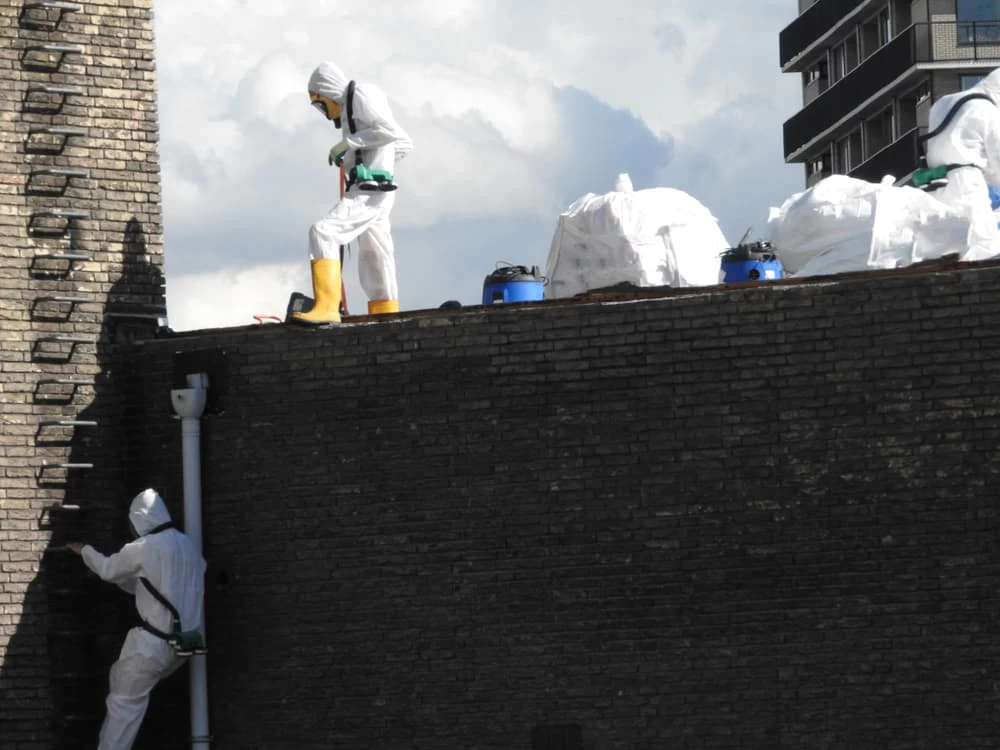
Once the scope is confirmed, we seal and contain the work area using negative air pressure and HEPA filtration standard protocol under New York State’s 12 NYCRR Part 56 regulations, which govern all asbestos abatement work statewide. The Town of Montgomery doesn’t layer on additional permitting beyond the state framework, but compliance with the state requirements is non-negotiable and fully managed on your behalf. All removed material is packaged, labeled, and transported to a licensed Class II disposal facility in accordance with NYS DEC requirements. Nothing gets cut loose informally.
After removal, an independent industrial hygienist performs post-abatement air monitoring. This is not a step that gets skipped to save time. The clearance certificate they issue is the document that proves the job is finished not our word, but a third-party confirmation that the air in your home meets safe thresholds. That’s what closes the loop for your family, your real estate attorney, and anyone else who needs to sign off before you move forward.
Asbestos shows up in older homes in a lot of different places, and the homes along and near Route 17K in Berea are no exception. The most common materials we encounter in this area include 9×9 and 12×12 vinyl asbestos floor tiles nearly universal in mid-century kitchens and basements along with popcorn acoustic ceiling spray, pipe insulation on older heating systems, asbestos cement siding, roofing felt, and joint compound. If your Berea home was built before 1980, there’s a reasonable chance at least one of these materials is present somewhere.
Asbestos tile removal and popcorn ceiling removal are among the most frequent requests from Berea homeowners, especially those undertaking kitchen or bathroom renovations where old flooring is being pulled or ceilings are being updated. Each project is scoped individually with a written estimate before work begins. We offer financing up to $200,000 at 0% APR for qualifying projects a real option for homeowners who didn’t budget for an abatement discovery mid-renovation. If the damage event that uncovered the asbestos is insurance-covered, we bill the insurer directly and manage the claims process on your behalf.
We also handle mold remediation, lead paint abatement, water damage restoration, and fire damage restoration. For a 1960s or 1970s home in Berea, those issues rarely travel alone and having one contractor who can address all of them means your project doesn’t stall waiting on four separate schedules.
How do I know if my Berea home actually contains asbestos?
The only way to know for certain is to have a sample tested by a licensed professional. Asbestos cannot be identified visually a floor tile, ceiling texture, or pipe wrap can look completely normal and still contain asbestos fibers. If your home was built before 1980, the safest assumption going into any renovation is that ACMs may be present until testing proves otherwise.
For homes in Berea and the surrounding Route 17K corridor, the most common locations are vinyl floor tiles in kitchens and basements, acoustic ceiling spray in living areas and bedrooms, and pipe insulation on older heating systems. Homes built between the late 1940s and the late 1970s which covers a substantial portion of the local housing stock fall squarely in the highest-risk window. Before you pull flooring, open walls, or disturb any ceiling material in a home of that age, a professional assessment is worth the time and cost.
Does a licensed contractor need to handle asbestos removal in New York State?
Yes. New York State law under 12 NYCRR Part 56 requires that all asbestos abatement work above de minimis thresholds be performed by a licensed asbestos contractor not a general contractor, not a handyman, and not a homeowner doing their own demo. The NYS Department of Labor issues this license separately from a standard contractor’s license, and many operators in the Orange County market do not hold it.
Hiring someone without the proper license doesn’t just create a safety risk it creates a legal one. If unlicensed work is discovered, the property owner can face liability, the work will not produce valid clearance documentation, and any insurance claim tied to the event may be voided. The license number for any contractor you’re considering can be verified directly on the NYS DOL website. We hold the full NYS DOL Asbestos Contractor License and operate in full compliance with all state requirements for projects in Berea and across Orange County.
What triggers asbestos abatement during a home sale in the Town of Montgomery?
The most common trigger is a home inspection. When a buyer’s inspector identifies suspect materials in a pre-1980 home floor tiles, popcorn ceilings, pipe insulation the buyer’s attorney or lender will typically require testing and, if confirmed, abatement before closing. In an active real estate market like the Town of Montgomery, where homes are turning over as new commuters move into the area, this scenario comes up regularly.
The timeline pressure is real. Real estate transactions in this area often have firm closing dates, and an abatement discovery mid-contract can threaten the deal if it isn’t handled quickly. We work on timelines that reflect that urgency written estimates are provided before work begins, and the post-abatement clearance certificate is issued by an independent industrial hygienist as soon as air monitoring confirms safe conditions. That documentation is what your attorney and the buyer’s lender need to move forward, and it’s built into every project from the start.
How long does asbestos abatement take, and do we need to leave the house?
The honest answer depends on the scope of work. A single-room floor tile removal in a Berea home might be completed in one to two days. A more involved project multiple rooms, pipe insulation throughout a basement, or a combination of materials can take longer. The written estimate you receive before work begins will include a projected timeline so you’re not guessing.
As for displacement, it depends on where the work is being done and how the containment is set up. In many cases, work can be contained to a specific area of the home and the rest remains livable. In others particularly when HVAC systems are involved or when work spans multiple floors temporary displacement is the safer call. This is something that gets discussed during the scoping process, not after the crew shows up. For families in Berea without easy nearby lodging options, that advance planning conversation is an important part of how the job gets structured.
What does asbestos abatement typically cost for an Orange County home?
Cost varies based on the type of material, the amount present, and the accessibility of the work area. A straightforward asbestos tile removal in a single room might run in the range of $1,500 to $3,500. A more complex project involving pipe insulation, popcorn ceilings across multiple rooms, or exterior siding can move into the $8,000 to $20,000 range depending on scope. These are real-world ranges not guarantees and the only accurate number for your specific home comes from a written estimate after a proper assessment.
What’s worth knowing is that the cost of doing it wrong is almost always higher than the cost of doing it right. Incomplete removal, improper disposal, or missing clearance documentation can surface during a future sale, trigger regulatory action, or require the work to be redone entirely. For homeowners in Berea managing a renovation budget on a median household income, the 0% APR financing option up to $200,000 is available for qualifying projects so an unexpected abatement discovery doesn’t have to derail everything else.
Can a water damage event in my basement expose my family to asbestos?
It can, and this is one of the more underappreciated risks in older Orange County homes. When water intrudes into a mid-century basement whether from a burst pipe during a hard freeze, seasonal flooding near the Wallkill River corridor, or a storm event it often damages the pipe insulation on older heating systems. That insulation, in homes built before the late 1970s, frequently contains asbestos. Water damage that would otherwise be a straightforward restoration job can become an asbestos exposure event if the insulation is disturbed during cleanup.
The same dynamic applies to flooring. Water-damaged vinyl floor tiles in a pre-1980 home may contain asbestos, and pulling them without testing first which is a common instinct during emergency cleanup can release fibers into the air. We handle both water damage restoration and asbestos abatement, which means when these two problems show up together, they get addressed together. One call, one scope, one timeline rather than two separate contractors trying to coordinate around each other while the damage continues to spread.