Older Homes in Berkshire Terrace Hide More Than Most Owners Expect
Most homes in Berkshire Terrace were built between the 1940s and 1980s the exact window when asbestos was used in nearly everything. If you’re renovating, selling, or just dealing with something that doesn’t look right, professional asbestos abatement is the only safe next step.
I needed a professional consultation explanation of procedure for safe removal of Asbestos in my apartment complex. Without having an account yet, I was very impressed with the caring, knowledgeable and generous advice offered by Jessica, and will look forward to doing business in the future. Thank you so much! I feel much more informed about a sometimes scary endeavor. Peace. Nancy Silva Mineola, NY.
Mia Munoz
Used this company to clean up some water flood in my house. They were fast and easy to work with.very professional, Would recommend to anyone!
Nini Valle
Great company, had a flood and they responded quickly and efficiently. Billed my insurance company directly. I highly recommend this company!
joe colapietro, jr
I had pipe freeze in my basement right before a snow storm and they made to within an hour to help start the clean up process. They we by our side throughout the entire process and even helped with the insurance company. They did such a great job with the cleanup, repair, remidiation, I contracted them to perform the repairs and finishes in the basement. They came with enough manpower and material to get the job done. Leo and Jessica were nothing but a pleasure to deal with!!
Cristian Arredondo c
I had some water damage in my home and Green Island was able to take care of my issue quickly and effectively. I am very pleased with the work they did. They responded quickly and were very professional.
Michael M
Outstanding service! From the office to the field crew everyone was friendly, helpful and responsive. I highly recommend Green Island Group.
What Changes When Your Berkshire Terrace Home Is Actually Remediated
When asbestos is properly removed and documented, you stop carrying the liability. You can renovate without stopping mid-project. You can list your home without an environmental contingency blowing up your closing. That’s what professional abatement actually gives you not just clean air, but the ability to move forward.
Berkshire Terrace has a meaningful share of seasonal and vacation homes, and Putnam County winters are hard on older materials. Freeze-thaw cycles crack pipe insulation. Moisture gets into floor adhesive. What was stable last spring may not be by the time you return in April. Catching that early before it becomes airborne is exactly why a professional assessment matters here.
The housing stock in Berkshire Terrace skews older. A home built in the 1950s or 1960s can have asbestos in the floor tiles, the ceiling, the pipe wrap, the attic insulation, and the exterior siding sometimes all at once. Knowing what you have, and having it removed correctly, is what gives you real peace of mind rather than just a hope that nothing’s wrong.
We hold a New York State Department of Labor Asbestos License the credential required by law under Industrial Code Rule 56 to perform abatement in Putnam County. That’s not a marketing claim. It’s a matter of public record, and you can look it up. We also carry USEPA Lead and RRP Certifications, a NYS DOL Mold License, and full liability and worker’s compensation insurance.
Berkshire Terrace is listed specifically in our Putnam County service territory not because it’s a keyword, but because we actively serve this area. We know the Town of Carmel’s permit process, the NYS DOL notification requirements, and what the housing stock in Berkshire Terrace typically contains.
We have completed abatement work for the NYS Office of General Services, the NYS Office of Mental Health, DASNY, and Nassau and Suffolk County government. These are clients with rigorous vetting standards. When you hire us for your Berkshire Terrace home, you’re getting the same licensed, documented process New York State uses for its own buildings.
Asbestos Remediation Process in Berkshire Terrace, NY
No Guesswork Here's Exactly What Happens
It starts with an inspection. A licensed professional walks the property, identifies suspect materials, and collects samples for laboratory analysis. For a pre-1980 home in Berkshire Terrace which describes a large portion of the neighborhood this step alone tells you what you’re actually dealing with before any renovation work begins. Under New York State’s Industrial Code Rule 56, this isn’t optional if you’re planning work that could disturb those materials.
Once the lab results confirm what’s present, we handle the permit application with the Town of Carmel Building Department and file the required NYS DOL notification. You don’t have to figure out which forms go where or how long approvals take. That’s handled.
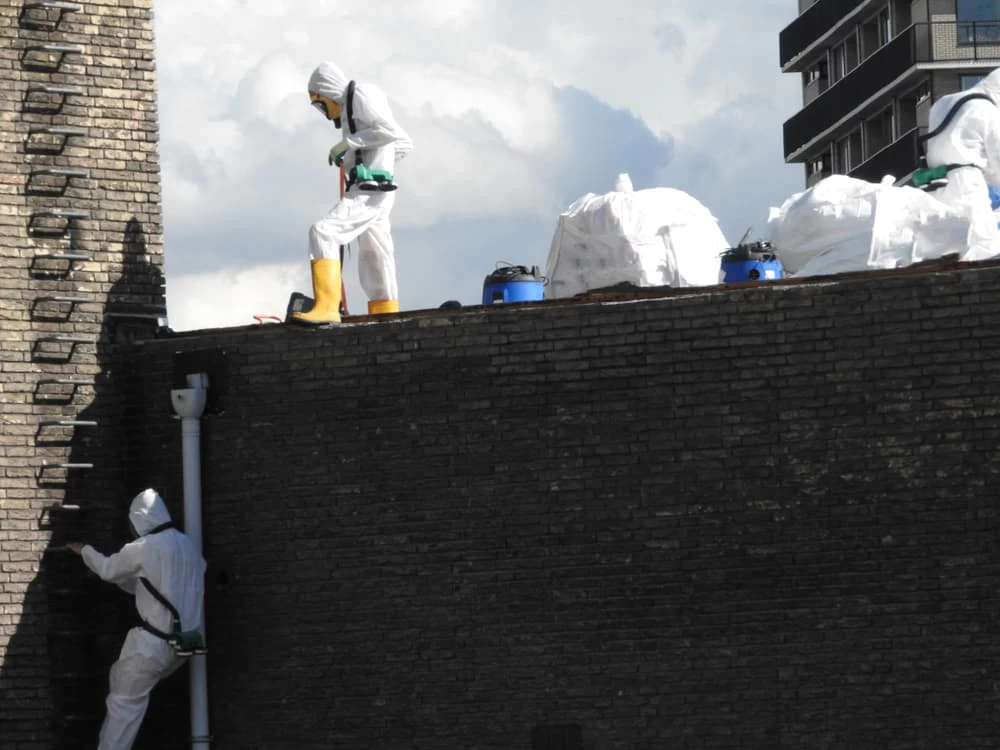
The physical removal uses wet methods and negative air pressure containment both required under NYS law to keep fibers from becoming airborne during the process. After removal, the space is decontaminated and an independent laboratory performs post-abatement air clearance testing. You receive a full compliance documentation package at the end. If you’re selling your home or managing a real estate transaction, that paperwork is what gives buyers and their lenders confidence that the work was done correctly.
We cover the full scope inspection, lab coordination, permit filing, physical removal, decontamination, air clearance testing, and final documentation. For a Berkshire Terrace homeowner who commutes, manages a seasonal property, or simply doesn’t have time to coordinate three separate vendors, this matters. One call, one licensed contractor, one documented outcome.
The materials most commonly found in homes of this area’s vintage include vinyl floor tiles and their adhesive backing, popcorn and textured acoustic ceilings, pipe and duct insulation, attic insulation, roof shingles, cement-asbestos board siding, and joint compound. Any one of these can be present in a home built between the 1940s and 1980s, and several can exist in the same structure. Our multi-certification profile asbestos, lead, and mold all under one license set means that if your older Berkshire Terrace home has more than one hazardous material, you’re not starting over with a new contractor.
For seasonal property owners in Berkshire Terrace, we’re available for rapid assessment when you return to find something that doesn’t look right after a winter away. For pre-sale sellers, the compliance documentation we provide is exactly what buyers and real estate attorneys look for before closing. Whatever the trigger, the process is the same: thorough, licensed, and fully documented.
Does my older Berkshire Terrace home actually need an asbestos inspection before renovating?
If your home was built before 1980, the answer in New York State is yes and it’s not just a recommendation. Under NYS Industrial Code Rule 56, any renovation or demolition work that could disturb suspect asbestos-containing materials in a pre-1980 building requires professional assessment before work begins. This applies to kitchens, bathrooms, basements, attic conversions, and exterior re-siding projects the kinds of updates that are common in Berkshire Terrace’s older housing stock.
The practical reason matters too. A general contractor who opens up a wall or pulls up floor tiles in a 1960s Berkshire Terrace home without prior testing can unknowingly release asbestos fibers into the air. At that point, the project stops, the area has to be cleared, and you’re dealing with emergency remediation rather than a planned removal. Getting the inspection done first is both legally required and significantly cheaper than handling it after the fact.
How much does asbestos removal typically cost for a home in Putnam County?
Cost varies depending on what materials are present, how many areas are affected, and whether the asbestos is friable meaning it can crumble and release fibers or non-friable and still intact. Nationally, most homeowners spend somewhere between $1,500 and $5,000 for a residential abatement project, though smaller single-material jobs can come in lower and larger whole-home projects can go higher.
For a Berkshire Terrace home with multiple suspect materials floor tiles, pipe insulation, and a popcorn ceiling, for example the scope will naturally be broader than a single-room tile removal. The inspection phase is what determines actual scope and cost, which is why it’s the first step rather than a ballpark conversation. What you want from any licensed contractor is transparent, itemized pricing based on what’s actually in your home not a flat quote that may not account for what’s found once work begins.
What happens if asbestos is found in my Berkshire Terrace home during a real estate transaction?
It depends on the timing and the contract terms, but in most cases an asbestos discovery during a buyer’s inspection creates a contingency that has to be resolved before closing. The buyer’s lender may require remediation as a condition of financing. If the seller hasn’t disclosed a known asbestos issue, there can be legal exposure on top of the deal risk.
The cleaner path is proactive. Sellers in the Berkshire Terrace real estate market who address asbestos before listing and have the documentation to prove it remove one of the most common deal-killers from the table. Our post-abatement compliance package is specifically what buyers’ attorneys and lenders look for: independent air clearance testing results, NYS DOL permit records, and written documentation that the work was performed by a licensed contractor under Industrial Code Rule 56. That paperwork doesn’t just protect the sale it protects you after it closes.
Can asbestos in a seasonal Berkshire Terrace home become more dangerous after sitting empty through winter?
Yes, and this is a real concern for Berkshire Terrace specifically, given the neighborhood’s notably high rate of seasonally occupied homes. Putnam County winters bring repeated freeze-thaw cycles that stress aging building materials in ways that warmer, more stable climates don’t. Pipe insulation that was intact last fall can crack over a winter. Floor adhesive can lose its bond under repeated thermal stress. Attic insulation can shift and degrade.
When previously stable, non-friable asbestos-containing materials become damaged or crumbly, they become friable meaning fibers can become airborne with minimal disturbance. If you return to your seasonal property in Berkshire Terrace in spring and find crumbling insulation around old pipes, a damaged ceiling, or deteriorating floor materials, that is not a situation for a shop vac and a YouTube tutorial. It requires a licensed abatement contractor who can assess whether the material is disturbed, contain the area properly, and remove it following NYS DOL protocol.
What types of materials in older homes most commonly contain asbestos?
In homes built between the 1940s and 1980s which covers a significant portion of Berkshire Terrace’s housing stock asbestos was used in a wide range of building materials. The most common ones found in residential properties of this era include vinyl floor tiles and the black mastic adhesive underneath them, textured or popcorn ceiling coatings, pipe and duct insulation, boiler and furnace wrap, loose-fill attic insulation (particularly vermiculite), roof shingles, cement-asbestos board exterior siding, and joint compound used in drywall finishing.
The important thing to understand is that asbestos in these materials isn’t always visible or obvious. Floor tiles that look like standard 9×9 or 12×12 vinyl squares are a classic example they look completely ordinary and can contain asbestos without any visible indication. The only way to confirm whether a material contains asbestos is laboratory testing of a collected sample. Visual identification alone, by a homeowner or a general contractor, is not reliable and is not accepted under NYS law as a substitute for professional testing.
How do I know if an asbestos contractor is actually licensed to work in Berkshire Terrace, NY?
New York State maintains a public database of licensed asbestos contractors through the NYS Department of Labor. You can search it directly at the DOL’s website using the contractor’s business name. Any contractor performing asbestos abatement in Berkshire Terrace or anywhere in New York is required by law to hold a current NYS DOL Asbestos License under Industrial Code Rule 56. This is not a certification they can print themselves or purchase through a trade association. It’s a state-issued license with annual renewal and training requirements.
Beyond the license itself, ask whether the contractor carries both liability insurance and worker’s compensation. In Putnam County, where most properties are owner-occupied single-family homes, an uninsured worker injured on your property can become your financial liability. Also ask who performs the post-abatement air clearance testing it should be an independent laboratory, not the same company doing the removal. Our license is current, verifiable, and covers Putnam County. The air clearance testing is always independent. That’s not an upsell it’s how compliant abatement is supposed to work.