If your Big Island property was built before 1980, there’s a real chance asbestos is somewhere inside it and the only way to know for sure is to test. We handle asbestos abatement the right way: licensed, documented, and cleared by an independent hygienist before you move on.
I needed a professional consultation explanation of procedure for safe removal of Asbestos in my apartment complex. Without having an account yet, I was very impressed with the caring, knowledgeable and generous advice offered by Jessica, and will look forward to doing business in the future. Thank you so much! I feel much more informed about a sometimes scary endeavor. Peace. Nancy Silva Mineola, NY.
Mia Munoz
Used this company to clean up some water flood in my house. They were fast and easy to work with.very professional, Would recommend to anyone!
Nini Valle
Great company, had a flood and they responded quickly and efficiently. Billed my insurance company directly. I highly recommend this company!
joe colapietro, jr
I had pipe freeze in my basement right before a snow storm and they made to within an hour to help start the clean up process. They we by our side throughout the entire process and even helped with the insurance company. They did such a great job with the cleanup, repair, remidiation, I contracted them to perform the repairs and finishes in the basement. They came with enough manpower and material to get the job done. Leo and Jessica were nothing but a pleasure to deal with!!
Cristian Arredondo c
I had some water damage in my home and Green Island was able to take care of my issue quickly and effectively. I am very pleased with the work they did. They responded quickly and were very professional.
Michael M
Outstanding service! From the office to the field crew everyone was friendly, helpful and responsive. I highly recommend Green Island Group.
You get to move forward. Whether you’re mid-renovation on a farmhouse in Big Island, trying to close a sale, or just found something suspicious under old flooring the moment you have a clearance certificate in hand, everything that was on hold starts moving again. That document is what your real estate attorney needs, what your lender asks for, and what gives you actual proof the space is safe.
In Big Island and throughout rural Orange County, the housing stock tells a specific story. A lot of homes out here were built in the 40s, 50s, and 60s and they haven’t always been touched since. That means original pipe insulation, original floor tiles, original popcorn ceilings. Not because anyone was careless, but because the house just sat. When renovation finally happens, the odds of finding asbestos-containing materials are high, and having a licensed contractor who knows how to handle it and document it makes the difference between a project that stalls and one that finishes.
The other thing that changes is the anxiety. Asbestos exposure doesn’t show up immediately. The health consequences can take decades to surface, which is exactly why discovering it mid-project feels so unsettling. Once it’s properly removed and the air has been tested clean, that weight lifts. You’re not wondering anymore.
We’ve been doing environmental remediation work across New York for over 12 years, with deep roots in the Big Island area and surrounding Orange County communities. We hold a New York State Department of Labor Asbestos Contractor License the specific license required by NYS Industrial Code Rule 56 to legally perform this work anywhere in the state, including right here in the Town of Goshen where Big Island is located. That license is publicly searchable. You can verify it yourself before you ever pick up the phone.
Beyond the license, our work speaks through our clients. We’ve completed abatement projects for NYS Office of General Services, the Dormitory Authority of the State of New York, and multiple county governments. Those agencies don’t hand out contracts without vetting a contractor’s insurance, safety record, and compliance history. That same standard applies to every residential job in Big Island and Orange County.
We’re also dual-certified as a Minority/Women-Owned Business Enterprise by both New York State and New York City a government-verified designation that requires ongoing compliance, not just a one-time application.
It starts with an inspection and testing. A certified inspector collects samples from the suspected materials floor tiles, pipe insulation, ceiling texture, roofing felt, whatever applies to your property and sends them to an accredited lab. You get results, not guesses. If asbestos is confirmed, the scope of work is defined clearly in writing before anything else happens.
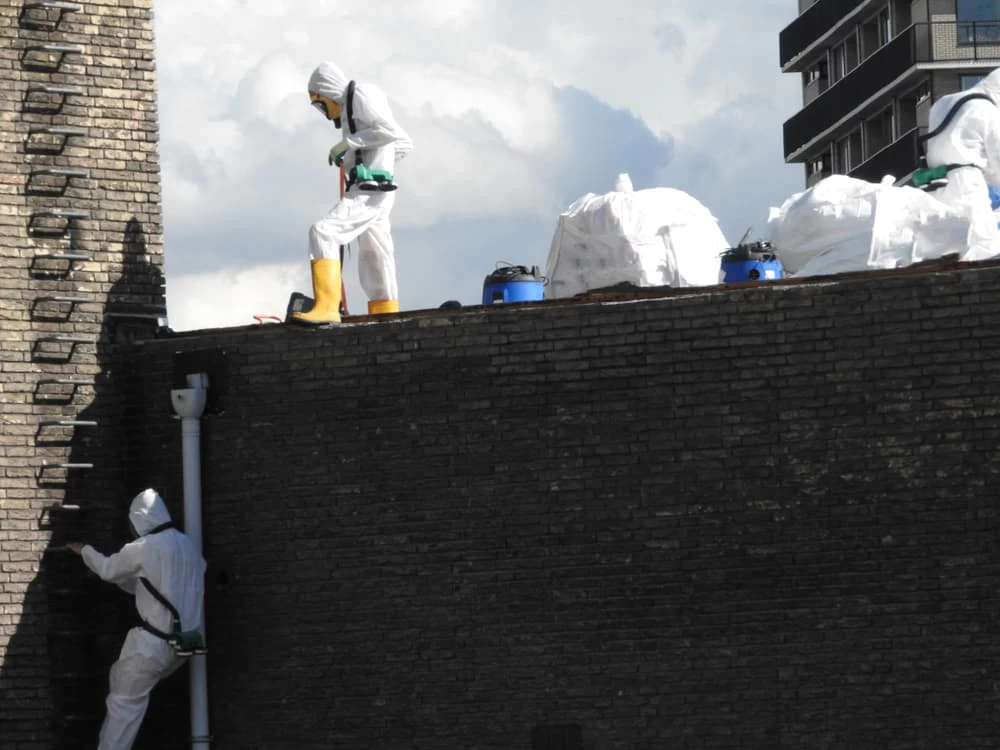
From there, our abatement crew sets up full containment around the work area. Negative air pressure, poly barriers, HEPA filtration this isn’t a shortcut process. Under NYS Industrial Code Rule 56, every step has a required protocol, and we follow it. For properties in Big Island and the Town of Goshen, that also means proper notification to the NYS Department of Environmental Conservation before work begins on projects that meet the regulated threshold, and coordination with the town’s building department if the abatement is tied to a permitted renovation.
Once the materials are removed, they’re wetted, double-bagged in 6-mil poly, labeled per OSHA requirements, and transported to a licensed disposal facility. Then and this is the part most contractors gloss over an independent licensed industrial hygienist performs post-abatement air monitoring. If the results come back clean, you receive a written clearance certificate. That’s the document that closes deals, satisfies lenders, and lets your general contractor get back to work.
Every Material, Every Scenario We Cover It Completely
The older homes throughout Big Island and the Town of Goshen tend to have asbestos in predictable places: 9×9 and 12×12 vinyl floor tiles, pipe and boiler insulation in basements, popcorn or textured ceilings, roofing felt under shingles, and transite siding on exterior walls. We handle all of it asbestos tile removal, popcorn ceiling removal, pipe insulation abatement, siding removal, and full interior remediation for properties undergoing gut renovations or pre-sale preparation.
For rural properties in Big Island and this area including older farmhouses, outbuildings, and structures that haven’t been touched in decades the scope sometimes goes beyond what a standard residential job looks like. We also handle mold, lead paint, water damage, and fire damage under the same roof, which matters when you’re dealing with an older Orange County property that has more than one issue going on at once. One contractor, one timeline, one documentation package.
Insurance claims are billed directly, which helps when storm damage or a water event has disturbed asbestos-containing materials and you’re already managing a claim. Financing is available at 0% APR for qualifying projects up to $200,000 because an unexpected abatement requirement on top of a renovation budget is a real financial pressure, and you shouldn’t have to choose between doing it right and doing it at all.
How do I know if my Big Island home actually contains asbestos?
The only way to know for sure is to test. Visual inspection alone isn’t reliable asbestos-containing materials often look identical to non-asbestos materials, and there’s no way to tell the difference without lab analysis. If your home was built before 1980, the most common places to check are vinyl floor tiles (especially 9×9 inch tiles), pipe and boiler insulation in the basement, textured or popcorn ceilings, roofing felt under existing shingles, and joint compound on drywall seams.
For homes in Big Island and throughout the Town of Goshen, a lot of the housing stock falls squarely in the pre-1980 range many of these properties were built in the 40s, 50s, and 60s and haven’t had significant renovation work since. That means original materials are often still in place. A certified inspector will collect physical samples, send them to an accredited lab, and give you a written report with confirmed results. From there, you’ll know exactly what you’re dealing with and what needs to happen next.
Does asbestos abatement always mean the material has to be removed?
Not always. There are two approaches: removal (abatement) and encapsulation. Encapsulation means sealing the asbestos-containing material so it can’t release fibers it stays in place but is treated with a binding agent or covered with a barrier. This is sometimes appropriate when the material is in good condition and won’t be disturbed. Removal is required when the material is damaged, deteriorating, or when the area is being renovated and the material would otherwise be disturbed during demo work.
In practice, most renovation and pre-sale scenarios in Big Island and Orange County require full removal because the work involves opening walls, pulling up floors, or tearing out ceilings. If you’re in the middle of a renovation or preparing a property for sale, encapsulation usually isn’t enough buyers, lenders, and building departments want documentation that the material is gone, not just covered. We can walk you through which approach applies to your specific situation after the inspection results come back.
What does asbestos abatement cost for a home in Big Island?
Cost depends on the type of material, how much of it there is, and where it’s located. As a general range for the New York metro area: popcorn ceiling removal typically runs $3 to $8 per square foot, vinyl floor tile removal runs $5 to $15 per square foot, and pipe insulation abatement runs $25 to $75 per linear foot. A full residential project can range from around $1,500 on the low end for a small, contained scope to $30,000 or more for a larger property with multiple affected areas.
For older homes in Big Island particularly farmhouses or rural properties that haven’t been renovated in decades it’s not uncommon to find asbestos in multiple locations at once, which affects the total scope. The best way to get an accurate number is a written estimate after the inspection. We provide written estimates so you know exactly what you’re committing to before work begins. And if the cost is a concern, 0% APR financing is available for qualifying projects up to $200,000.
Can I stay in my home during asbestos abatement work?
It depends on the scope and location of the work. For small, contained jobs like a single room with damaged floor tiles it may be possible to remain in other parts of the house while work is underway, provided proper containment is in place and the work area is fully isolated. For larger projects involving multiple rooms, HVAC systems, or significant demolition, temporary relocation is usually the safer and more practical option.
Under NYS Industrial Code Rule 56, our abatement crew is required to establish a regulated work area with negative air pressure and HEPA filtration to prevent fiber migration to adjacent spaces. That containment is effective, but the safest approach for families especially those with children or anyone with respiratory sensitivities is to be out of the building during active abatement. We’ll tell you exactly what to expect before any work begins, not after the job starts.
How long does asbestos abatement take from start to finish?
For a typical residential project, the abatement work itself usually takes one to three days depending on the scope. But the full timeline from initial inspection through lab results, abatement, post-abatement air monitoring, and final clearance generally runs one to two weeks when everything moves efficiently. If you’re working against a real estate closing deadline or a renovation schedule, that timeline matters, and it’s worth discussing upfront so there are no surprises.
In Big Island and Orange County, projects that involve regulated quantities of asbestos also require advance notification to the NYS Department of Environmental Conservation before work begins. That notification has to be submitted before the job starts, so it’s factored into the scheduling process. We handle that paperwork as part of the project you don’t have to figure out the regulatory side on your own. The clearance certificate from the independent industrial hygienist is the last step, and that’s what officially closes out the job.
Is asbestos a real concern for older farm properties and outbuildings in Big Island?
Yes, and it’s one of the more overlooked scenarios in rural Orange County. The conversation around asbestos tends to focus on residential homes, but older agricultural structures barns, equipment sheds, farm offices, and outbuildings were also built with materials that commonly contained asbestos. Transite roofing panels, asbestos-cement siding, and pipe insulation were all widely used in agricultural construction through the 1970s. If you’re converting, renovating, or demolishing an older outbuilding on a Big Island-area property, testing before demo work is the right first step.
The Big Island area sits in a part of western Orange County where agricultural land and older farm structures are part of the landscape. As properties change hands whether through inheritance, sale, or conversion to residential use these structures often get renovated or torn down without anyone thinking to test first. That’s when exposure risk is highest. We can assess the materials in an outbuilding the same way we would a house, and the same NYS regulations apply. Don’t assume the rules only apply to residential structures they apply to any building where regulated materials are present.